Most “2024 motorcycle models” pages are catalogs. Eight hundred bikes in a filterable grid, every spec, zero opinion. Useful if you already know what you want. Useless if you’re standing in the showroom trying to decide whether the Trident or the MT-07 is the smarter buy.
This is the other thing. Fewer bikes, sorted by what you actually plan to do with them, with a clear verdict on each. Beginner commuter, adventure tourer, cruiser, the one that gives you the most bike per dollar, and the electric that’s finally worth a real look. Every pick gets the numbers that matter and a straight answer on who it’s for.
Table of Contents
- The Short Version
- Best Beginner Bike: Honda CB300R
- Best Adventure-Touring: Suzuki V-Strom 800DE
- Best Cruiser: Harley-Davidson Nightster
- Best Value: Yamaha MT-07
- Best Electric: Zero DSR/X
- How to Actually Choose
The Short Version {#the-short-version}
If you don’t want to read all of it, here’s where each category lands.
| Category | Pick | Engine | Power | Weight | MSRP (2024) |
|---|---|---|---|---|---|
| Beginner | Honda CB300R | 286cc single | ~30 hp | 313 lb | $4,949 |
| Adventure | Suzuki V-Strom 800DE | 776cc parallel-twin | ~83 hp | 507 lb | $11,349 |
| Cruiser | Harley-Davidson Nightster | 975cc V-twin | ~89 hp | 481 lb | $9,999 |
| Value | Yamaha MT-07 | 689cc parallel-twin | ~73 hp | 406 lb | $8,199 |
| Electric | Zero DSR/X | Z-Force motor | 100 hp | 545 lb | $24,495 |
Weights are wet/curb where the manufacturer publishes them. Prices are base MSRP and move around with freight and dealer markup, so treat them as a starting line, not a final number.
Best Beginner Bike: Honda CB300R {#best-beginner}
The hard part of a first bike isn’t the top speed you’ll never use. It’s low-speed balance, clutch feel, and not being intimidated every time you swing a leg over it. The CB300R nails all three because it weighs 313 pounds, which is roughly a third less than the middleweights people get talked into.
That single-cylinder 286cc engine makes about 30 horsepower. On paper that sounds thin. In a parking lot or stop-and-go traffic, it’s exactly right — enough to merge and hold 70 on the highway, not enough to launch you into a hedge when you’re still learning throttle control. The seat sits at 31.5 inches, low enough for most riders to flat-foot at a stop, which is the single biggest confidence factor for a new rider.
The 2024 update that matters: Honda kept the assist/slipper clutch, so the lever pull is light and an aggressive downshift won’t lock the rear. Standard ABS is on the radial-mount front caliper too. For a license class that’s still building habits, both of those are real safety features, not spec-sheet decoration.
Who it’s for: Anyone with a fresh license or an A2 restriction who wants a bike they won’t outgrow in three months but won’t fear in week one. If you’re 6’2″ you might want the larger CB500F instead — the 300 will feel small after a season.
Best Adventure-Touring: Suzuki V-Strom 800DE {#best-adventure}
Adventure bikes got heavy and expensive. The big GS and Multistrada are brilliant machines that also cost more than a used car and weigh 550-plus pounds before you load luggage. The V-Strom 800DE is Suzuki’s answer to riders who want real dirt capability without remortgaging anything.
The 776cc parallel-twin is genuinely new for the platform, with a 270-degree firing order that gives it a V-twin-style pulse instead of the flat drone older parallel-twins had. It makes around 83 horsepower, which is plenty for two-up touring and fast enough on a fire road to get you in trouble. The “DE” matters: it ships with a 21-inch front wheel, longer travel suspension, and a full bash plate, which is the difference between a bike that can go off-road and one that’s actually set up for it.
The standout 2024 feature is the gravel-specific traction control mode (Suzuki calls it the G mode) that lets the rear wheel slip in a controlled way on loose surfaces instead of cutting power the instant it spins. On dirt, that’s the setting that keeps you moving instead of bogging down. There’s a switchable rear ABS too, because locking the back wheel on a downhill gravel descent is sometimes exactly what you want.
Who it’s for: The rider who actually leaves pavement, or sincerely intends to. If 90% of your miles are highway slab, a road-biased ADV like the Tracer will be comfier. The 800DE earns its keep when the road runs out.
Best Cruiser: Harley-Davidson Nightster {#best-cruiser}
Cruisers are where personal taste runs strongest, so this pick is going to annoy some people. The Nightster gets it because it’s the cruiser that fixed the thing that kept newer riders away from Harley: the weight and the heat.
The Revolution Max 975T engine is liquid-cooled, makes about 89 horsepower, and revs in a way that traditional air-cooled Harleys never did. At 481 pounds it’s light for the brand. The seat height is a low 27.1 inches, so it carries that low-slung cruiser planted feel without being a chore to back out of a parking spot. According to the National Highway Traffic Safety Administration, cruisers’ low centers of gravity are part of why they’re forgiving at low speed, and the Nightster leans into that.
The 2024-relevant update is the engine itself doing double duty as a stressed member of the frame, which cuts weight and tightens the handling versus the old Sportster it replaced. It corners like it wants to, not like it’s tolerating the request. The fuel tank under the seat (the “tank” up front is an airbox cover) keeps the mass low, and you feel it the first time you push it into a turn.
Who it’s for: The rider who wants the Harley badge and sound but rides real corners and real traffic, not just straight boulevards. Old-school riders who want the big air-cooled thump will still want a Softail. Everyone else should test-ride this first.
Best Value: Yamaha MT-07 {#best-value}
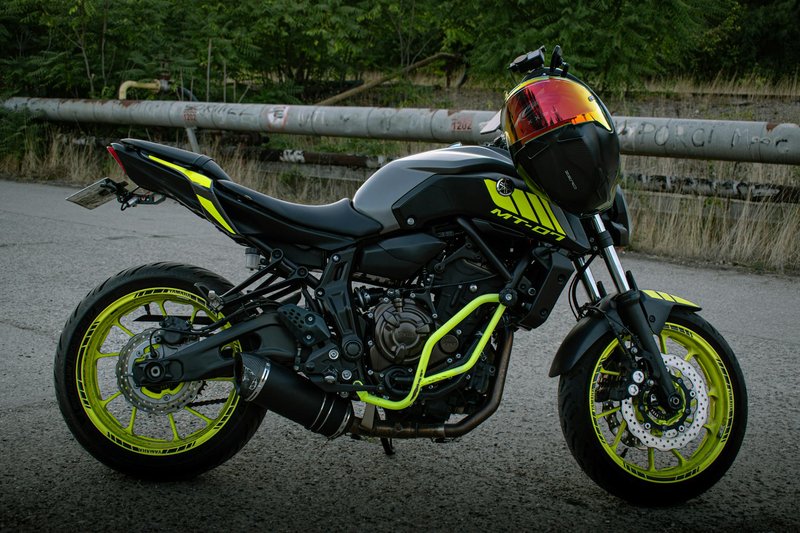
If someone with one bike of budget asked me what to buy, this is the answer more often than any other. The MT-07 has been the value benchmark for years, and the 2024 version sharpens it without inflating the price past reason.
The 689cc CP2 parallel-twin is the star. That crossplane-crank twin makes around 73 horsepower with a fat torque curve that arrives early, so you don’t have to wring its neck to make progress. At 406 pounds it flicks side to side with almost no effort. The whole bike is built around the idea that a great engine in a light chassis beats a bigger spec sheet, and it’s right.
The 2024 refresh brought sharper bodywork, a new full-LED face, and — finally — a TFT dash with smartphone connectivity, dragging the cockpit up to modern standard without touching the formula underneath. The brakes got a bump too. None of it changed what makes the bike good; it just stopped feeling a generation behind on the details.
Who it’s for: Almost anyone past the beginner stage who wants one do-everything bike and a price that leaves money for gear and a track day. Commuter, weekend canyon bike, first big-twin — it does all three competently. The only people who shouldn’t buy it are those who specifically need a fairing for long highway days, and even they should consider the faired Tracer 7 version.
Best Electric: Zero DSR/X {#best-electric}
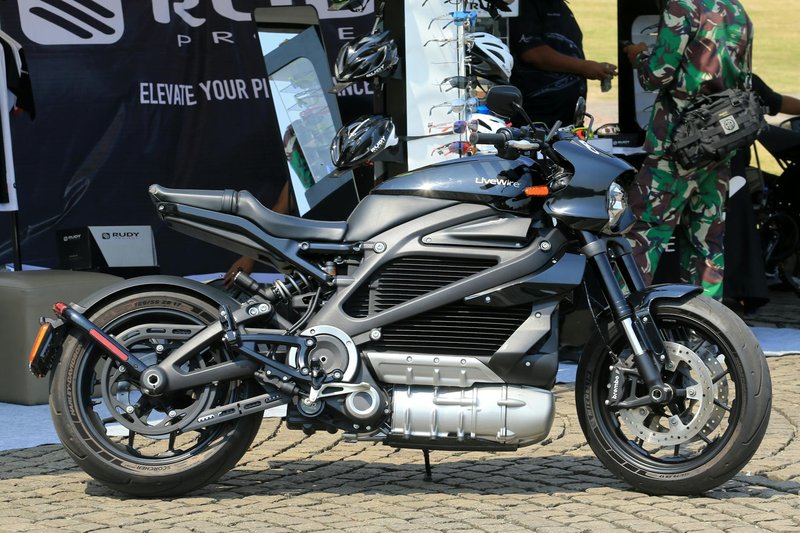
Electric motorcycles spent a decade being a science project. In 2024 a couple of them are finally real motorcycles that happen to be electric, and the DSR/X is the most convincing of the bunch because it’s an adventure bike, which is the use-case where electric’s weaknesses hurt least.
The Z-Force motor makes 100 horsepower and a frankly silly 166 lb-ft of torque, available from zero rpm. On a trail, instant torque with no clutch and no gearbox to manage is genuinely easier than a combustion ADV — you point and the bike goes. Range is the honest sticking point: real-world numbers land well below the optimistic city figure once you’re at highway speed, so this is a day-trip-and-back machine, not a cross-country tourer. Charging at home overnight is the realistic refuel plan.
The reason it makes this list over cheaper electrics is build quality and the parts list: Showa suspension, Bosch stability control, and a chassis that doesn’t flinch when you load it. The U.S. Department of Energy notes that electric motors convert a far higher share of energy to motion than combustion engines, and on a bike that efficiency shows up as torque you can actually use. The catch stays the price — $24,495 is premium-ADV money for a bike with day-trip range.
Who it’s for: The early adopter with a garage outlet and a riding pattern built around shorter loops, who wants the silent instant-torque experience and can stomach the price. If your rides routinely top 150 miles in a day, the technology isn’t there yet — get the V-Strom.
How to Actually Choose {#how-to-choose}
The 2024 lineup is the deepest it’s been in a while, which is exactly why the catalog approach fails you. More options means the filter has to be your use-case, not the spec sheet.
Start with what you’ll do 80% of the time, not the fantasy ride. A bike bought for the one annual mountain trip but ridden daily in traffic is the wrong bike 364 days a year. Match the category to your real miles first, then pick within it. Seat height and weight matter more for daily satisfaction than horsepower — a bike you can flat-foot and pick up is a bike you’ll actually ride.
And whatever the spec sheet says, test-ride before you buy. The MT-07 and the Nightster make similar power on paper and feel like entirely different machines under you. Numbers narrow the list. Your own right wrist makes the call.

Sarah Thornton
More from Sarah ThorntonHow we reviewed this article
This article was researched against manufacturer records and editorially reviewed before publishing. We accept no payment for coverage.