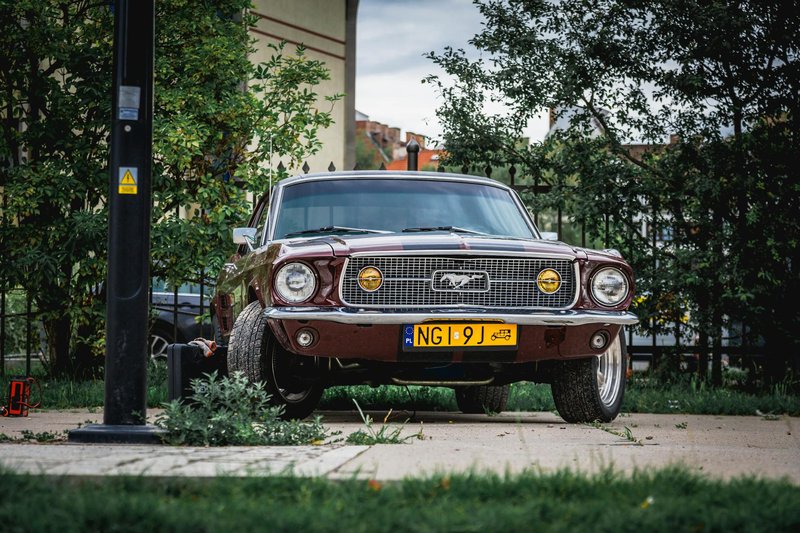
1999 was the year the SN95 Mustang grew up. Ford gave the fourth-generation car a sharp redesign it called “New Edge” — creased body panels, larger wheel arches, and headlights that finally looked like they belonged on a sports car instead of a rental fleet. Underneath, the lineup was the familiar three-tier setup: a V6 for the masses, a GT for people who wanted the looks and the rumble, and an SVT Cobra for the ones who actually wanted to go fast. On top of all that, Ford slipped in a 35th Anniversary edition to mark the car’s birthday.
If you’re shopping a used one, restoring a survivor, or just trying to figure out which trim is parked at the curb, here’s the full breakdown — engines, horsepower, prices, and what’s worth knowing before you hand over cash.
Table of Contents
- The Quick Answer
- The “New Edge” Redesign
- 1999 Mustang V6 (Base)
- 1999 Mustang GT
- 1999 SVT Cobra
- 1999 Mustang 35th Anniversary Edition
- Coupe vs. Convertible
- Spec Comparison Table
- Production Numbers and Identification
- Buyer’s Notes: What to Inspect and What It’s Worth
The Quick Answer
The 1999 Mustang came in four flavors. The base V6 makes 190 hp from a 3.8L Essex and is the cheap, easy-to-own daily. The GT steps up to a 4.6L 2-valve V8 at 260 hp — the sweet spot for most buyers. The SVT Cobra is the real performance car: a 320-hp 32-valve 4.6L with independent rear suspension, the only ’99 Mustang that didn’t ride on a solid axle. The 35th Anniversary Edition is a cosmetic appearance package built on the GT, and it’s the one collectors chase.
If you want the most car for the money and don’t need a garage queen, buy a GT. If you want the collectible, find a clean 35th Anniversary. If you want speed and a smoother ride, hunt down a Cobra — and read the buyer’s notes first, because 1999 was a complicated year for that car.
The “New Edge” Redesign
Ford didn’t build a new Mustang in 1999 — it reskinned the 1994–1998 SN95 platform and called the look “New Edge.” The chassis, the wheelbase, and most of the hard points carried over. What changed was the sheet metal and the attitude.
The smooth, rounded body of the earlier SN95 gave way to sharp creases, defined character lines, and noticeably flared wheel arches. The headlights grew and gained a more aggressive shape, the side scoops got bigger, and the rear taillights kept the three-bar vertical layout that’s been Mustang signature since 1965. Inside, the changes were minor — same basic dashboard architecture with revised trim. It reads as a much newer car than a 1998 from ten feet away, which is exactly what Ford wanted.
This matters for buyers because the New Edge styling is the easiest way to date a fourth-gen Mustang at a glance. Rounded and soft means 1994–1998. Creased and sharp means 1999–2004. If you want to trace how the trims and styling shifted year by year, the broader decade-long history of 1990s Mustang models lays out exactly where 1999 fits in the timeline.
1999 Mustang V6 (Base)
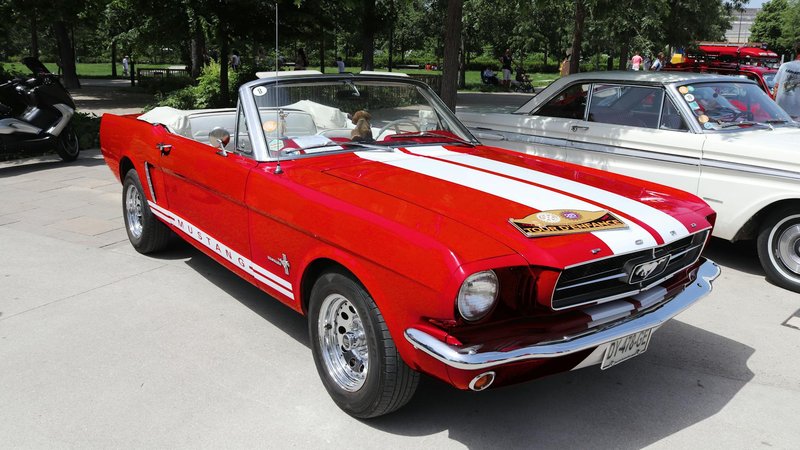
The base car ran the 3.8L Essex V6, rated at 190 horsepower and 220 lb-ft of torque — a bump over the 150 hp the same engine made in 1998, thanks to a revised head design and a split-port induction system. It paired with a 5-speed manual or a 4-speed automatic.
Nobody bought a V6 Mustang to win a stoplight drag race, and this one won’t. But it’s the trim that keeps the model affordable and easy to live with. Insurance is cheaper, parts are everywhere, and the Essex V6 is a known quantity that’ll run a long time if maintained. The split-port intake on these did develop a reputation for failing plastic runners, so that’s the one thing to listen for.
For a daily-driver classic that still looks the part, the V6 is the honest budget pick. Just don’t pay GT money for it.
1999 Mustang GT
The GT is the one most people picture. It used the 4.6L 2-valve SOHC modular V8, rated at 260 horsepower and 302 lb-ft of torque for 1999 — up from 225 hp the year before, again courtesy of better-flowing heads and intake. Transmission choices were the Tremec 3650-style 5-speed manual or the 4R70W 4-speed automatic.
The 260-hp number put the GT on solid footing against the era’s Camaro and Firebird, though those F-bodies still had more displacement. If you’re cross-shopping the competition, it’s worth seeing how the GT stacks up against the rest of the 1990s American muscle cars that defined the decade — the Mustang held its own on attitude even when it gave up cubic inches. What the GT had going for it was the modular V8’s smoothness and the New Edge looks. It rode on a solid rear axle like the V6, so it’ll hop and skitter over rough pavement under power — that’s a fourth-gen trait, not a defect.
This is the value play of the lineup. GTs were built in big numbers, parts and aftermarket support are endless, and a clean one delivers most of the Mustang experience for a fraction of Cobra money.
1999 SVT Cobra
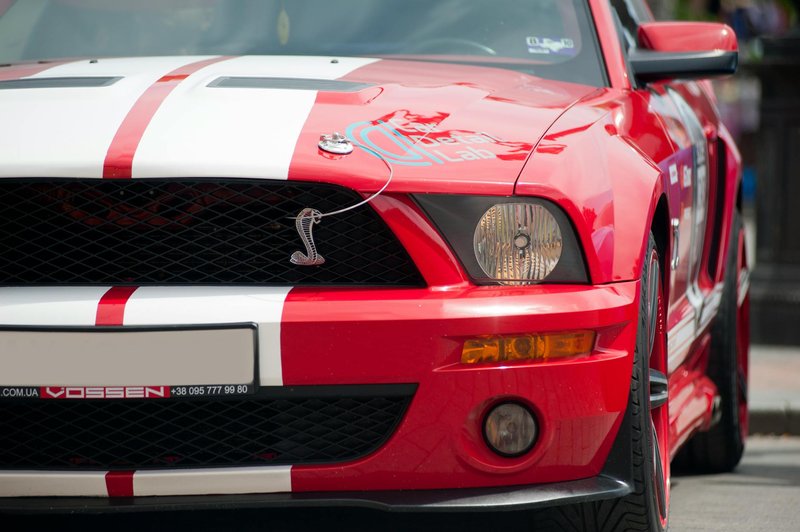
The Cobra is where 1999 gets serious — and complicated. Ford’s Special Vehicle Team fitted the 4.6L modular V8 with dual-overhead-cam, 32-valve heads good for 320 horsepower and 317 lb-ft of torque. More importantly, the Cobra was the only ’99 Mustang with an independent rear suspension instead of the solid live axle, giving it a real handling advantage and a more composed ride.
Here’s the catch: many 1999 Cobras didn’t make their advertised power out of the box. SVT discovered an intake and exhaust restriction issue and launched a recall, fixing affected cars with revised intake manifolds and tuning to deliver the rated 320 hp. The fallout was severe enough that SVT didn’t build a Cobra for the 2000 model year at all (the wild 2000 Cobra R aside). If you’re buying a ’99 Cobra, confirming the recall fix was performed is the single most important thing on the checklist.
When sorted, the SVT Cobra is the driver’s choice of the bunch — quicker, better-handling, and rarer than the GT. Its closest cross-town rival was Chevrolet’s F-body, and a glance at the 1999 Chevrolet lineup shows just how directly the Camaro SS squared off against the Cobra that year.
1999 Mustang 35th Anniversary Edition
To mark 35 years of Mustang, Ford built a limited 35th Anniversary Edition as an appearance package on the GT. It wasn’t a performance upgrade — power stayed at GT spec — but it got a distinct visual treatment: raised hood scoop, side scoops, a black honeycomb rear panel, unique 17-inch wheels, special badging, and a two-tone interior with silver leather inserts and embroidered seatbacks.
Ford offered it in four colors — Black, Performance Red, Crystal White, and Silver — and produced a limited run, which is exactly why it’s the trim collectors single out. A documented, low-mileage 35th Anniversary GT carries a premium over a standard GT, and clean examples have held value better than almost any other ’99 trim. If you find one with the build documentation intact, that paperwork is worth real money.
Coupe vs. Convertible
Every 1999 trim except the rarest Cobra configurations came as either a coupe (notchback) or a convertible. The coupe is stiffer, lighter, and the better choice if you ever plan to track or hard-launch the car — convertibles of this era add weight and lose chassis rigidity, which exaggerates the solid-axle cars’ tendency to flex over bumps.
The convertible trades that away for open-top appeal, and they’re genuinely pleasant cruisers. Just inspect the top mechanism, the rear plastic window for yellowing or cracks, and the floors and frame rails for rust that convertibles hide better than coupes do.
Spec Comparison Table
| Trim | Engine | Horsepower | Torque | 0–60 (approx.) | Base MSRP (1999) |
|---|---|---|---|---|---|
| V6 (Base) | 3.8L Essex V6 | 190 hp | 220 lb-ft | ~8.0 sec | ~$16,000 |
| GT | 4.6L 2-valve V8 | 260 hp | 302 lb-ft | ~6.0 sec | ~$21,000 |
| SVT Cobra | 4.6L 32-valve DOHC V8 | 320 hp | 317 lb-ft | ~5.5 sec | ~$28,000 |
| 35th Anniversary | 4.6L 2-valve V8 (GT) | 260 hp | 302 lb-ft | ~6.0 sec | ~$24,000 |
Prices are approximate base figures and varied by body style and options. Convertibles ran several thousand more than coupes across every trim.
Production Numbers and Identification
Ford built roughly 133,907 Mustangs for the 1999 model year across all trims, with the V6 and GT making up the bulk and the Cobra and 35th Anniversary cars far rarer.
The fastest way to confirm what you’re looking at is the VIN. On a 1999 Mustang the eighth digit of the vehicle identification number encodes the engine — a quick decode tells you whether a car wearing GT badges actually left the factory with the V8. Pair that with the door-jamb build sticker, which lists the original color, axle ratio, and trim codes. For anything claiming to be a 35th Anniversary or a Cobra, the VIN and build documentation are how you separate a real one from a clone with badges.
For the deepest reference on production breakdowns and option codes, the Ford Mustang historical record and SVT registry communities are the go-to. The basic generational history is also well documented on Britannica’s Ford Motor Company entry.
Buyer’s Notes: What to Inspect and What It’s Worth
A few things to check before buying any 1999 Mustang:
- Rust. Look at the floor pans, frame rails, rear shock towers, and the area around the rear window on coupes. Northern cars hide rot under fresh paint.
- Modular V8 issues. The 4.6L is durable but watch for failed coil packs, oil leaks at the valve covers, and worn intake manifolds — early 4.6L plastic intakes were prone to cracking at the coolant crossover.
- V6 split-port intake. Listen for vacuum leaks and check for the known plastic runner failure.
- Cobra recall. For a ’99 Cobra, verify the intake/exhaust recall fix was completed, or you may be buying a car that never made its rated power.
- Solid-axle wear. Clunks from the rear under acceleration can mean tired control-arm bushings — cheap to fix, but a negotiating point.
As for values, a tidy V6 is the affordable entry, GTs sit in the comfortable middle, and clean SVT Cobras and documented 35th Anniversary cars command the premiums. The market rewards originality and paperwork here more than horsepower — a stock, documented car beats a modified one for resale almost every time. If you’re buying to keep, the GT is the smart money. If you’re buying to appreciate, chase a 35th Anniversary or a recall-corrected Cobra and keep every receipt.
Whichever way you go, the 1999 Mustang holds a specific place in the model’s history: the year the fourth-gen got its edge, and the last gasp of the solid-axle Cobra before Ford rethought the whole car. That makes even the base V6 a more interesting buy than the spec sheet suggests.

Marco Delantero
More from Marco DelanteroHow we reviewed this article
This article was researched against manufacturer records and editorially reviewed before publishing. We accept no payment for coverage.