1986 was the year Toyota stopped being the brand you bought because it would last and started being the brand you bought because you wanted it. The MR2 was a year old and selling faster than dealers could stock it. The Supra had just split from the Celica and gone its own way. And the Corolla had quietly flipped from rear-drive to front-drive, except for the one trim that didn’t — and that one became a legend.
So if you’re trying to figure out exactly what Toyota sold in 1986, what it cost, and which of these are worth chasing down four decades later, here’s the whole roster. Eleven models, no “Not on File” gaps, with the context the spec databases leave out.
Contents
- The 1986 Toyota lineup at a glance
- Tercel
- Corolla
- Camry
- Celica
- Supra
- MR2
- Cressida
- Van
- 4Runner
- Land Cruiser
- Pickup
- Which 1986 Toyotas are worth buying now?
- FAQ
The 1986 Toyota lineup at a glance
Eleven model lines, ranging from a $5,448 economy hatchback to a body-on-frame off-roader that cost three times as much. Prices below are original base MSRP in 1986 dollars. Toyota wasn’t alone in fielding a deep roster that year — for context on what the rest of the industry was building, see the full rundown of every 1986 car model on the market.
| Model | Body styles | Engine(s) | Base MSRP | Why it mattered |
|---|---|---|---|---|
| Tercel | 3/5-dr hatch, sedan, wagon | 1.5L I4 | ~$5,448 | Cheapest Toyota; the 4WD wagon was a cult oddball |
| Corolla | Sedan, coupe, hatch, wagon | 1.6L I4 | ~$6,598 | Switched to FWD — except the rear-drive AE86 |
| Camry | Sedan, hatchback | 2.0L I4 | ~$9,178 | The family-sedan template that ate America |
| Celica | Coupe, liftback, convertible | 2.0L I4 | ~$10,318 | Went front-drive, lost its inline-six |
| Supra | Liftback | 2.8L I6 | ~$16,558 | First standalone Supra (A70 launched mid-year) |
| MR2 | Coupe | 1.6L I4 | ~$11,348 | Mid-engine, under $12k — nothing else did that |
| Cressida | Sedan | 2.8L I6 | ~$16,000 | Toyota’s near-luxury car before Lexus existed |
| Van | Minivan | 2.0L I4 | ~$10,000 | Cab-over “space egg,” engine under the seats |
| 4Runner | SUV | 2.4L I4 (or diesel) | ~$11,000 | Removable fiberglass top, truck underneath |
| Land Cruiser | SUV (FJ60) | 4.2L I6 | ~$15,000 | The indestructible one; UN-fleet famous |
| Pickup | Regular/Xtracab | 2.4L I4, 2.4L diesel | ~$6,500 | The “Toyota Hilux” the world couldn’t kill |
Tercel
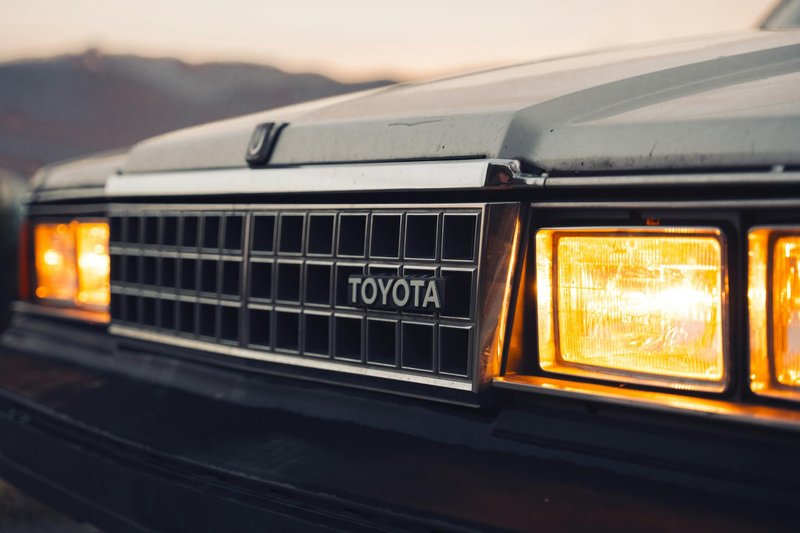
The Tercel was the bottom of the range, and in 1986 that meant a 1.5-liter four making 62 to 70 horsepower depending on trim. Slow on paper, but the thing weighed about a ton and would return 40-plus mpg if you weren’t in a hurry. As far as 1980s hatchbacks go, it was about as honest and unpretentious as the segment got.
The one worth knowing about is the Tercel 4WD wagon. It had a dash-mounted “Extra-Low” button and a part-time four-wheel-drive system in a tall, boxy wagon body — basically a Subaru rival before everyone agreed Subaru owned that category. Ski-town mechanics still talk about them. They’re the Tercel anyone remembers.
Corolla
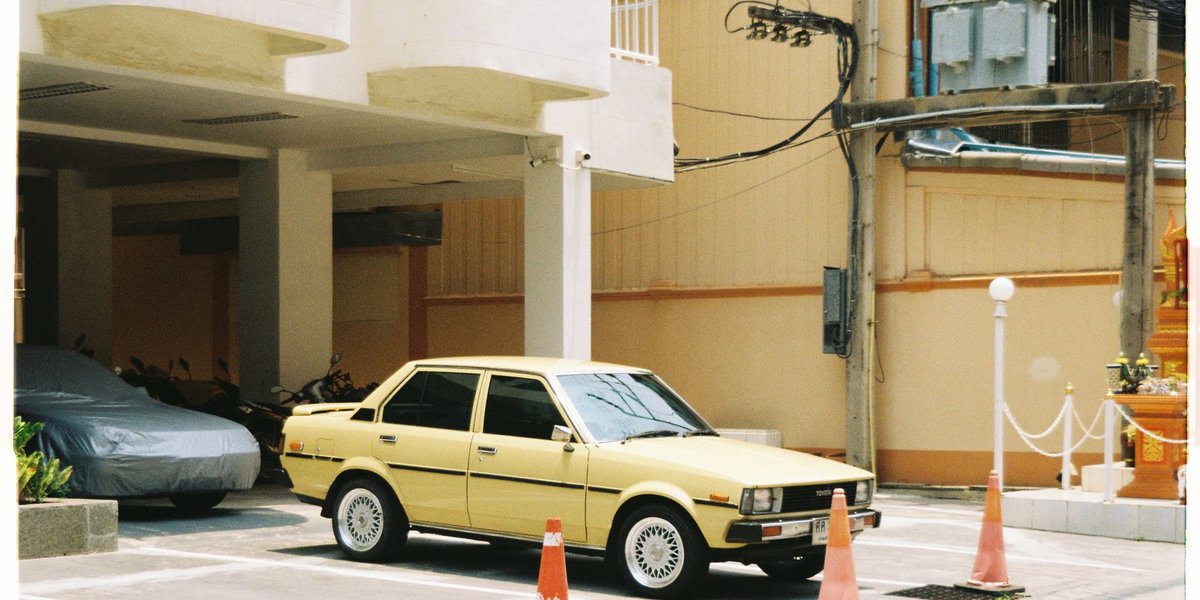
1986 is the Corolla’s hinge year. The whole line moved to front-wheel drive for better packaging and economy — sedans, the FX hatchback, the wagon. Smart, sensible, sold by the boatload.
Except for one. The Corolla GT-S and SR5 coupe kept the old rear-drive chassis, and that car is the AE86 — the “Hachi-Roku.” A 4A-GE 1.6-liter twin-cam four spinning to 7,500 rpm, a balanced rear-drive layout, and a curb weight around 2,200 pounds. It became the patron saint of drifting and the most collectible economy Toyota ever built, and it sits near the top of any list of Toyota’s JDM legends. A clean GT-S that cost $9,000 new can clear $40,000 today, and that’s not a typo.
Camry
The second car to wear the Camry name, and the one that set the recipe Toyota’s been printing money with ever since. Front-wheel drive, a 2.0-liter four, available as a sedan or a five-door hatchback (the hatch didn’t last — America wanted the trunk).
Nothing about the 1986 Camry is exciting, and that was the entire point. It was roomy, quiet, and it started every morning. Consumer reliability data has put Toyota at or near the top of long-term dependability rankings for decades, and the mid-’80s Camry is a big reason the reputation stuck.
Celica
The Celica also went front-wheel drive in 1986, ending its run as a rear-drive coupe. Three flavors: the ST, the GT, and the sportier GT-S, plus a convertible built in low numbers. Engines were 2.0-liter fours; the GT-S got the twin-cam.
Purists mourned the switch — the old rear-drive Celica with the available inline-six had a following. But the new front-drive car drove well, looked sharp with its pop-up headlights, and freed up the Supra to become its own thing.
Supra
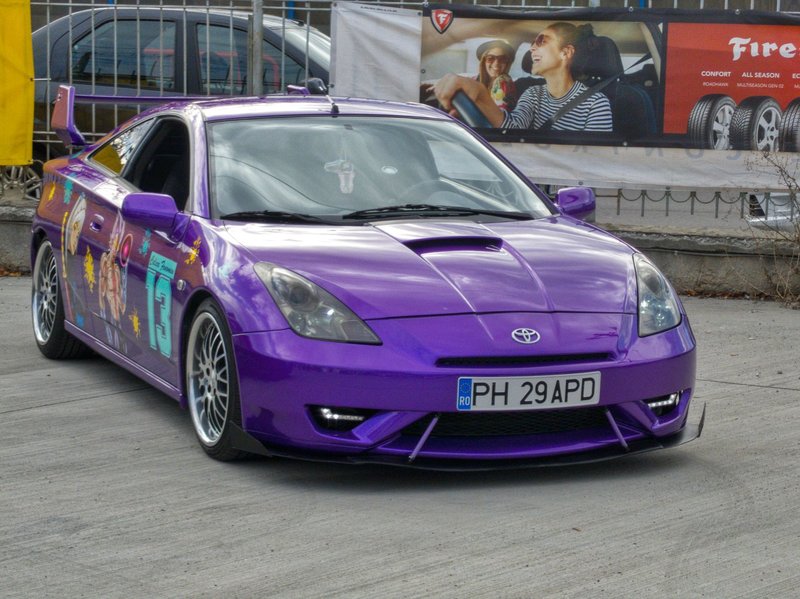
This is the big one. For years the Supra was just a Celica with a longer nose and a six. In 1986 they finally divorced. The Celica went front-drive; the Supra stayed rear-drive and became a standalone car — the A70 generation arrived during the model year.
Under the hood: a 2.8-liter inline-six (the 7M-GE) making around 200 horsepower, with a turbocharged version following. Pop-up headlights, available targa top, and genuine grand-touring credentials. The 1986–86.5 Supra is where the nameplate’s legend actually starts. If you’ve ever cared about a Supra, this is the ancestor.
MR2
Nothing else on the market in 1986 did what the MR2 did. A mid-engine, two-seat sports car for around $11,000 — Ferrari layout, Corolla money. The “AW11” used the same screaming 4A-GE 1.6-liter twin-cam from the AE86, mounted behind the seats, driving the rear wheels.
It weighed about 2,300 pounds, so 112 horsepower felt like plenty. The handling was razor-sharp and a little tail-happy if you got greedy. Toyota added a supercharged version soon after. The first-gen MR2 is one of the great cheap-thrills cars of the era, and clean ones are climbing in value as buyers wise up.
Cressida
Before there was Lexus, there was the Cressida — Toyota’s quiet shot at near-luxury. Rear-wheel drive, a smooth 2.8-liter inline-six, power everything, and a digital dash if you ticked the right box. It cost about as much as a Supra and aimed at buyers who wanted comfort over flash.
The Cressida is underrated today. That 5M/7M six and rear-drive chassis make it a sleeper-build favorite, and survivors are cheap because nobody’s been told to want one yet.
Van
Officially the “Van,” unofficially the space egg. This was Toyota’s cab-over minivan, with the engine mounted under and between the front seats and the driver sitting basically over the front axle. There was an access panel between the seats so you could check the oil from inside the cabin, which tells you everything about the packaging.
It came with optional features that were wild for a van in 1986 — an icemaker fridge, twin sunroofs, multiple cup-holding everything. They’re rare survivors now and a niche-collector favorite for exactly how strange they are.
4Runner
The first-generation 4Runner was, structurally, a Pickup with a removable fiberglass top over the bed and a back seat dropped in. That’s not an insult — it’s why it was so capable. Solid front axle, body-on-frame, real low-range four-wheel drive.
In 1986 the standard engine was the 2.4-liter 22R/22R-E four, with a turbodiesel offered. Take the top off and you had an open-air trail truck. These first-gen 4Runners are genuinely sought-after now; rust-free examples command serious money because the formula was so honest.
Land Cruiser
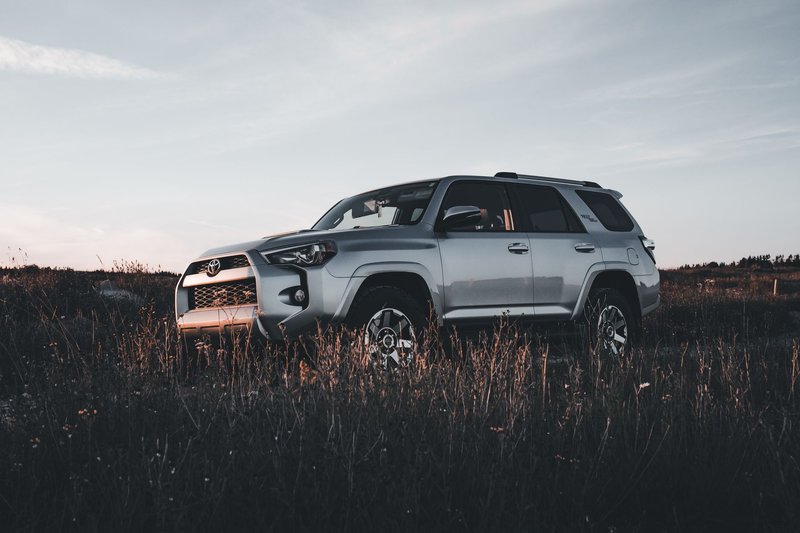
The 1986 Land Cruiser was the FJ60 — the boxy, two-door-evolved-into-four-door wagon with a 4.2-liter inline-six (the 2F, with the fuel-injected 3F-E arriving as the line updated). Not fast. Not refined. Built like a vault.
This is the truck that earned Toyota’s global indestructible reputation, the one you see in old footage crossing deserts and serving as aid-fleet transport on every continent. The Land Cruiser’s standing as one of the most durable vehicles ever made is well documented, and the FJ60 is a big part of why. Clean ones are blue-chip collector trucks today.
Pickup
The 1986 Toyota Pickup is the truck the rest of the world calls the Hilux — the one that became a byword for “won’t die.” Available as a regular cab or the Xtracab, two-wheel or four-wheel drive, with the bulletproof 2.4-liter 22R/22R-E four or a 2.4-liter diesel.
1986 marked a chassis update for the line. The 22R engine in particular has a near-mythical reputation for crossing 300,000 miles with basic maintenance. These trucks are the reason your neighbor’s grandfather still drives an ’80s Toyota. Solid-axle 4×4 versions are now the prize of the vintage-truck crowd.
Which 1986 Toyotas are worth buying now?
If you’re shopping the 1986 lineup as a collector or an enthusiast, the pecking order is pretty clear:
- Corolla GT-S (AE86) — the blue-chip pick. Rear-drive, high-revving, and culturally enormous. Prices have gone vertical.
- MR2 — the smart-money buy. Still attainable, still rising, and nothing else delivers a mid-engine experience for the price.
- Supra (A70) — the start of the legend; values track condition and turbo status closely.
- 4Runner / Pickup 4×4 / Land Cruiser FJ60 — the off-road trio. Rust-free, unmolested examples are the holy grail, and prices reflect it.
- Cressida and Tercel 4WD wagon — the sleepers. Cheap now, interesting forever, and the people who get it really get it.
The economy of the thing is simple: the cars Toyota built to be fun (MR2, AE86, Supra) and the trucks it built to be unkillable (Pickup, 4Runner, Land Cruiser) are the ones holding value. The sensible sedans did their job, lasted forever, and got driven into the ground — which is exactly why clean ones are now hard to find.
FAQ
How many car models did Toyota make in 1986? Eleven distinct model lines for the US market: Tercel, Corolla, Camry, Celica, Supra, MR2, Cressida, Van, 4Runner, Land Cruiser, and the Pickup.
What was the most expensive 1986 Toyota? The Supra topped the car range at roughly $16,500 base, with the Cressida and Land Cruiser in similar territory depending on options.
Did the 1986 Toyota Supra share a body with the Celica? No — 1986 is the year they split. The Celica moved to front-wheel drive while the Supra became a standalone rear-drive car (the A70 generation).
What’s the most collectible 1986 Toyota? The rear-drive Corolla GT-S coupe — the AE86 “Hachi-Roku.” Clean examples now sell for many times their original price, driven by drifting culture and its high-revving 4A-GE engine.
Are 1986 Toyotas reliable? Famously so. The 22R engine in the Pickup and 4Runner and the 4.2-liter six in the Land Cruiser routinely cross 300,000 miles, and the era cemented Toyota’s long-running place at the top of dependability rankings.

Tyler Bridges
More from Tyler BridgesHow we reviewed this article
This article was researched against manufacturer records and editorially reviewed before publishing. We accept no payment for coverage.