If you’ve searched “1996 Dodge models,” you’ve probably already hit three database pages that disagree with each other. One lists ten vehicles. Another lists 165. A couple sneak in a Caliber or a Durango that didn’t exist yet. None of them tell you which ones were actually any good.
Here’s the real 1996 Dodge lineup, organized the way a human would think about it: passenger cars, minivans, trucks, full-size vans, and the two halo cars that made the brand fun. For each one you get the starting price, the engines you could order, what changed for that model year, and an honest note on whether it’s worth tracking down three decades later.
1996 was a transition year for Dodge. The cab-forward sedans were hitting their stride, the second-generation Ram had just blown up the full-size truck market with its big-rig face, and the Viper was about to get a roof. Good year to be a fan.
Table of Contents
- The Quick Reference Table
- Passenger Cars
- Minivans
- Trucks
- Full-Size Vans
- The Halo Cars: Viper and Stealth
- Which 1996 Dodge Should You Actually Buy?
The Quick Reference Table
Prices below are approximate base MSRP in 1996 dollars. Fuel economy is the original EPA city/highway estimate under the standards of the day, so treat it as a rough guide rather than gospel.
| Model | Body style | Base price | Common engine | EPA mpg (city/hwy) |
|---|---|---|---|---|
| Neon | Compact coupe/sedan | ~$11,000 | 2.0L I4 | 29/38 |
| Stratus | Midsize sedan | ~$15,000 | 2.0L / 2.4L I4, 2.5L V6 | 22/31 |
| Avenger | Sport coupe | ~$15,000 | 2.0L I4 / 2.5L V6 | 22/30 |
| Intrepid | Full-size sedan | ~$18,000 | 3.3L / 3.5L V6 | 19/27 |
| Caravan | Minivan | ~$16,000 | 2.4L I4 / 3.0L / 3.3L / 3.8L V6 | 20/25 |
| Grand Caravan | Extended minivan | ~$19,000 | 3.3L / 3.8L V6 | 18/24 |
| Dakota | Midsize pickup | ~$12,000 | 2.5L I4, 3.9L V6, 5.2L V8 | 16/21 |
| Ram 1500 | Full-size pickup | ~$15,000 | 3.9L V6, 5.2L/5.9L V8 | 13/18 |
| Ram 2500/3500 | HD pickup | ~$18,000+ | 5.9L V8, 5.9L Cummins diesel, 8.0L V10 | varies |
| Ram Van/Wagon | Full-size van | ~$17,000 | 3.9L V6, 5.2L/5.9L V8 | 13/17 |
| Stealth | GT sport coupe | ~$28,000 | 3.0L V6 (twin-turbo on R/T TT) | 18/24 |
| Viper RT/10 & GTS | Roadster / coupe | ~$60,000–66,000 | 8.0L V10 | 12/21 |
Passenger Cars
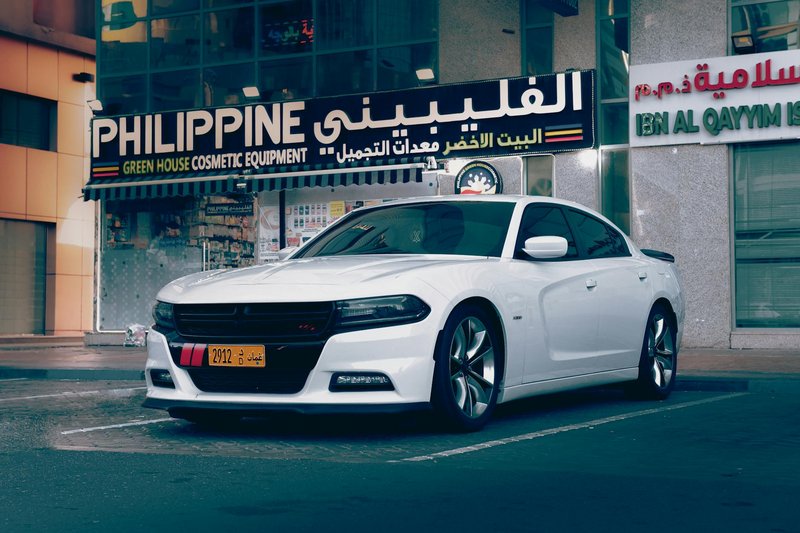
Dodge’s car side in 1996 was riding the “cab-forward” design language Chrysler had bet the company on: wheels pushed to the corners, short overhangs, a roomy cabin for the footprint. It looked modern then and it still photographs well now. If you want to see how this generation fits into the bigger picture, the full roster of 1990s Dodge car models traces how the brand’s sedans and coupes evolved across the decade.
Neon. The cheeky little compact with the “Hi.” ad campaign. The 2.0-liter four made 132 horsepower in the single-cam version and 150 in the DOHC, which was genuinely punchy for an economy car under $12,000. It handled better than it had any right to, which is why Neons ended up dominating SCCA showroom-stock racing. The catch: head gasket failures were common, and these cars rusted. A clean, rust-free DOHC Neon is a cheap autocross weapon today. A rough one is a money pit.
Stratus. The midsize sedan that replaced the Spirit. For 1996 you could get a 2.0 or 2.4 four, or a 2.5-liter Mitsubishi-sourced V6. Spacious, comfortable, utterly anonymous. These were rental-fleet staples and there’s a reason you rarely see one now: they were used up and scrapped. Not collectible, not trying to be.
Avenger. The sleek two-door coupe built on Mitsubishi’s platform alongside the Eclipse and Sebring coupe. The 2.5 V6 ES is the one to want for the styling and the sound. It’s a cruiser, not a corner-carver, but it looks far more expensive than it was.
Intrepid. The full-size flagship and the best showcase of cab-forward design. The interior space was limousine-grade for the price. The 3.3 and 3.5-liter V6s moved it along fine. The 3.5 in particular gave it a smoother, more upscale character. As a cheap, comfortable highway sedan, a well-kept Intrepid still makes sense, though parts for the trickier electronics can be a scavenger hunt — and if you appreciate this format, it sits comfortably among the broader history of classic American sedans that prized space and comfort over outright sport.
Minivans
This is the franchise. Chrysler invented the modern minivan in 1984, and by 1996 it had just launched the third-generation NS body — the one with the optional driver-side sliding door, an industry first that everyone copied. Chrysler’s minivans defined the segment for two decades, and 1996 is the year they arguably perfected the formula.
Caravan. The standard-wheelbase version. Engines ranged from a base 2.4-liter four (gutless when loaded) up through 3.0, 3.3, and 3.8-liter V6s. The 3.3 is the sweet spot: enough grunt, reasonably durable. The dual sliding doors and the fold-and-stow seating made these the default family hauler of the late ’90s.
Grand Caravan. Same van, longer wheelbase, more cargo and third-row room. Almost always optioned with the 3.3 or 3.8 V6 because the four-cylinder couldn’t cope with the extra mass. The known weakness across both: the four-speed automatic transmission, which earned a reputation for early failure. A 1996 Caravan with a documented transmission rebuild is worth more than one without, every time.
Trucks
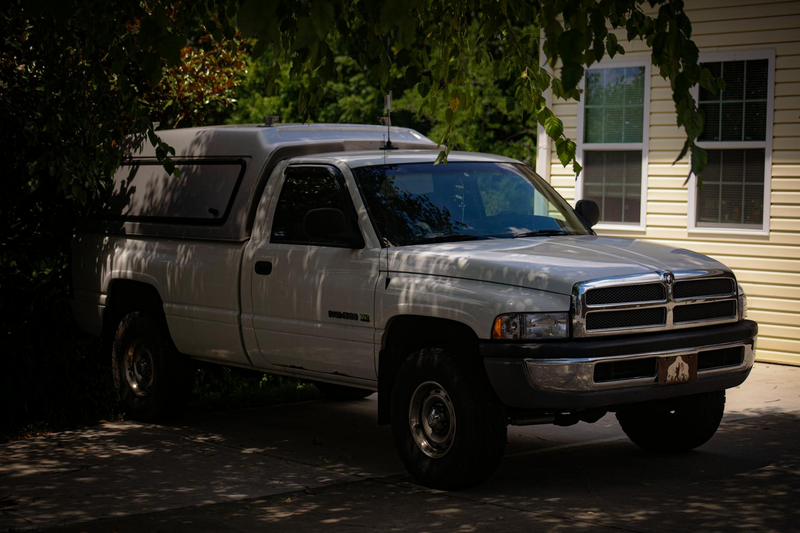
The 1996 trucks are where this lineup gets genuinely collectible. The second-generation Ram, launched for 1994, had already turned Dodge from a distant third in full-size trucks into a real contender — the bold, semi-truck-inspired front end made Ford and Chevy look timid overnight.
Dakota. The midsize pickup that split the difference between a compact and a full-size. You could get a 2.5 four, a 3.9 V6, or — and this was the party trick — a 5.2-liter Magnum V8, making the Dakota the only midsize truck you could buy with eight cylinders. The V8 Dakota Sport is a sleeper that enthusiasts still hunt for.
Ram 1500. The half-ton. The 3.9 V6 was the base, but most buyers stepped up to the 5.2 or 5.9-liter Magnum V8. Comfortable, capable, and the styling has aged into “cool” rather than “dated.” Clean low-mileage examples have started climbing in value.
Ram 2500 and 3500. The heavy-duty trucks, and home to the engine that makes these legendary: the 5.9-liter Cummins turbo-diesel inline-six. The 12-valve Cummins of this era is famous for crossing 300,000 miles without drama, and a well-maintained 1996 Cummins Ram is one of the more sought-after used diesels on the market. There was also an 8.0-liter V10 gas option for people who wanted maximum power and didn’t care about fuel bills. The EPA’s fuel economy database still lists figures for these if you want to see just how thirsty the V10 was.
Full-Size Vans
Ram Van and Ram Wagon. The big body-on-frame vans — Ram Van for cargo, Ram Wagon for passengers (up to 15). These were the workhorses behind countless contractors, churches, and shuttle services. Engine choices mirrored the trucks: 3.9 V6 or 5.2/5.9 V8. Nobody’s restoring these for a show, but as cheap, simple, fixable haulers and camper-conversion bases, the survivors still earn their keep.
The Halo Cars: Viper and Stealth
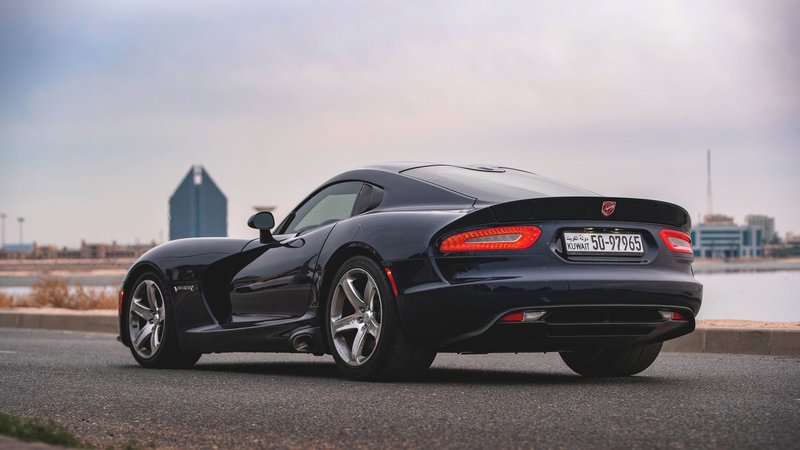
Every brand needs something to put on the bedroom wall. Dodge had two.
Viper RT/10 and GTS. 1996 is a landmark Viper year. The original RT/10 roadster — all 8.0 liters and 415 horsepower of unfiltered V10, with no airbags, no traction control, and side exhaust pipes that could brand your leg — got a refresh, while the brand-new GTS coupe arrived with the now-iconic double-bubble roof. The GTS made 450 horsepower, weighed less than the roadster despite adding a roof, and looked like a Le Mans car you could license. A 1996 GTS is a milestone collectible; values have moved firmly upward as people realized how special the first coupe was.
Stealth. The other halo car, and the one people forget. A rebadged Mitsubishi 3000GT, the Stealth came in front-drive base trims up to the R/T Turbo, which packed a twin-turbo 3.0-liter V6, all-wheel drive, all-wheel steering, and active aero. It was a technological showcase — arguably more advanced than the Viper, just less charismatic. 1996 was the Stealth’s final year in the U.S., which makes a clean R/T Turbo a quietly desirable piece of ’90s tech. For context on the field it was up against, the wider catalog of 1996 car models shows just how crowded the performance-coupe market had become by then.
Which 1996 Dodge Should You Actually Buy?
Depends on what you’re after.
- Want a fun cheap project? A rust-free DOHC Neon. Light, tossable, dirt cheap, huge aftermarket.
- Want a tool that won’t quit? A 12-valve Cummins Ram 2500. It’s the diesel everyone wishes they’d bought when they were cheap. They aren’t cheap anymore.
- Want a sleeper? A 5.2 V8 Dakota Sport. The only V8 midsize truck of its era.
- Want the wall poster? The Viper GTS, no contest. The first-year coupe is the one collectors chase.
- Just need cheap reliable transport? A Grand Caravan with a 3.3 V6 and proof the transmission was rebuilt.
The directory pages will hand you a list. The thing they can’t tell you is that a 1996 Dodge can be a $1,500 commuter or a $100,000 collectible, and the difference comes down to which model, which engine, and how honest the maintenance records are. Now you know which is which.

Tyler Bridges
More from Tyler BridgesHow we reviewed this article
This article was researched against manufacturer records and editorially reviewed before publishing. We accept no payment for coverage.