Most lists of discontinued Renault models do one of two things. They dump an alphabetical catalog with three lines per car, or they show you pretty period photos and call it a day. Neither tells you the thing you actually want to know: why Renault pulled the plug, and what (if anything) replaced it.
So that’s what this is. A chronological walk through the Renaults that no longer roll off the line, split into the classics that built the brand and the recent casualties of the EV pivot and platform housekeeping. Every entry gets the production years, the successor where there is one, and the actual reason it died.
Table of Contents
- Quick-reference table
- The classics (1940s–1990s)
- Renault 4CV
- Renault Dauphine
- Renault 4
- Renault 5
- Renault 16
- Renault Fuego
- Renault Espace (original)
- The modern axings (2000s–today)
- Renault Safrane
- Renault Vel Satis
- Renault Modus
- Renault Twizy
- Renault Kadjar
- Renault Zoe
- The pattern behind the cuts
Quick-reference table
| Model | Production years | Replaced by |
|---|---|---|
| 4CV | 1947–1961 | Dauphine |
| Dauphine | 1956–1967 | Renault 8 / 10 |
| Renault 4 | 1961–1994 | Twingo / Clio (informally) |
| Renault 5 | 1972–1996 | Clio (revived as 5 E-Tech in 2024) |
| Renault 16 | 1965–1980 | Renault 20 / 30 |
| Fuego | 1980–1986 | Nothing direct |
| Espace (original) | 1984–1991 | Espace II |
| Safrane | 1992–2000 | Vel Satis |
| Vel Satis | 2002–2009 | Latitude / nothing |
| Modus | 2004–2012 | Captur |
| Twizy | 2012–2023 | Mobilize Duo |
| Kadjar | 2015–2022 | Austral |
| Zoe | 2012–2024 | Renault 5 E-Tech |
The classics (1940s–1990s)
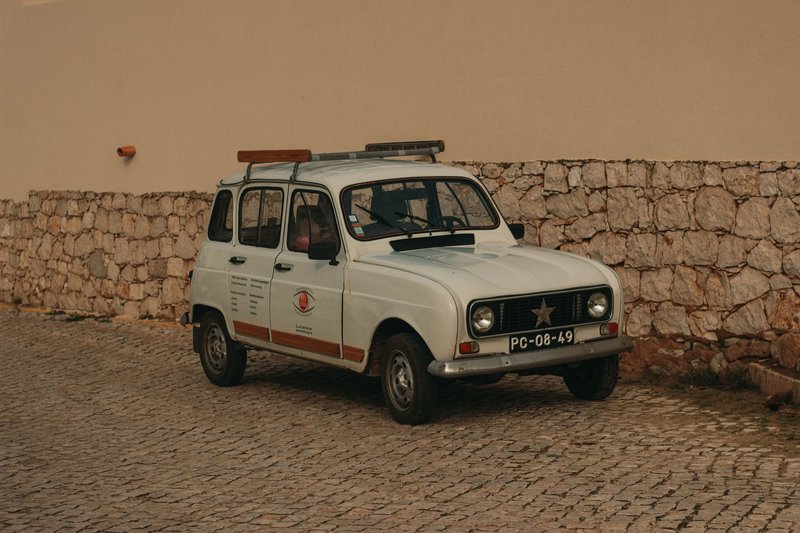
These are the cars that made Renault a household name across Europe. Most died of old age and natural succession rather than any dramatic failure, but the details are where it gets interesting.
Renault 4CV (1947–1961)
The rear-engined 4CV was France’s first homegrown million-seller, and it arrived at exactly the right moment. Postwar France needed cheap, simple transport, and the little “motte de beurre” (slab of butter, after its early sand-yellow paint, reportedly leftover Afrika Korps stock) delivered four seats and 760cc of engine for a price ordinary families could swallow.
It was discontinued in 1961 after the Dauphine had already taken over as the volume seller. The 4CV had done its job — get a wrecked nation moving — and the company had bigger, slightly less spartan ambitions.
Renault Dauphine (1956–1967)
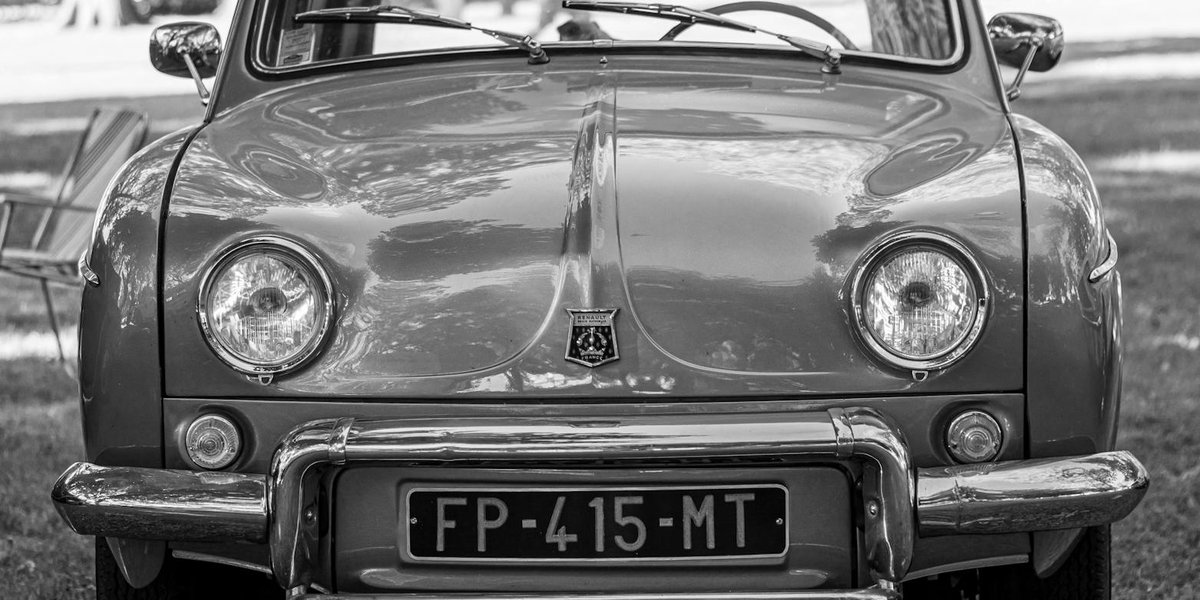
The Dauphine was the 4CV’s successor and a genuine global phenomenon, selling over two million units and becoming a surprise hit in the United States before German imports ate its lunch. Pretty, rear-engined, and famously prone to rust, it handled like you’d expect a tail-heavy 1950s economy car to handle.
Renault retired it as the front-engined, front-drive era loomed. The Renault 8 and 10 carried the saloon torch, but the Dauphine’s real successor in spirit was the front-wheel-drive revolution the company was about to fully commit to.
Renault 4 (1961–1994)
Here’s a number that puts most cars to shame: over eight million Renault 4s built across a 33-year run. The “Quatrelle” was Renault’s answer to the Citroën 2CV, and it arguably did the job better — a flat floor, a gear lever that poked out of the dashboard, and torsion-bar suspension that meant the wheelbase was different on the left and right sides of the car.
It soldiered on until 1994, by which point it was an anachronism kept alive in markets that still valued cheap and indestructible over modern. Emissions and safety regulations finally made it impossible to justify. The Twingo and Clio had long since covered the small-car ground, and in 2024 Renault confirmed a revived R4 as an electric crossover, trading on exactly the nostalgia the original earned.
Renault 5 (1972–1996)
The R5 is the one enthusiasts get misty about. It defined the supermini before “supermini” was a category, and the bonkers mid-engined Renault 5 Turbo — a rally homologation special with the engine where the back seats should be — turned a humble hatchback into a giant-killer on tarmac stages.
The original R5 ran until 1984, the second-generation “Supercinq” until 1996, when the Clio fully absorbed its role. The nameplate sat dormant for nearly three decades until the Renault 5 E-Tech electric revived it in 2024, and that reborn 5 is now effectively the spiritual replacement for the Zoe as well.
Renault 16 (1965–1980)
The R16 invented a body style we now take for granted: the large family hatchback. A folding rear seat that let you reconfigure the cabin for passengers or cargo was radical in 1965, and it won the inaugural European Car of the Year award for good reason.
It was discontinued in 1980 as the Renault 20 and 30 took over the upper-medium segment. The 16’s hatchback idea, meanwhile, quietly conquered the entire industry.
Renault Fuego (1980–1986)
The Fuego was Renault’s wedge-shaped sport coupe, and it earned a footnote in automotive history as the first production car with a remote central locking key fob. It was also, briefly, the best-selling coupe in Europe.
It died in 1986 with no direct successor. Coupe demand was softening, the underlying platform was aging, and Renault simply chose not to replace it. The Fuego’s afterlife was mostly in South America, where it stayed in production locally for a few more years.
Renault Espace (original, 1984–1991)
The first-generation Espace more or less created the European MPV. Co-developed with Matra and built with a fiberglass body on a galvanized steel frame, it sold slowly at first — fewer than ten units a day in its opening month, the story goes — before the family-hauler concept caught fire.
The original was “discontinued” only in the sense that it was replaced by the Espace II in 1991. The nameplate lived on for decades; it’s the first-gen, with its van-like silhouette and aircraft-inspired dashboard, that’s now a genuine classic.
The modern axings (2000s–today)
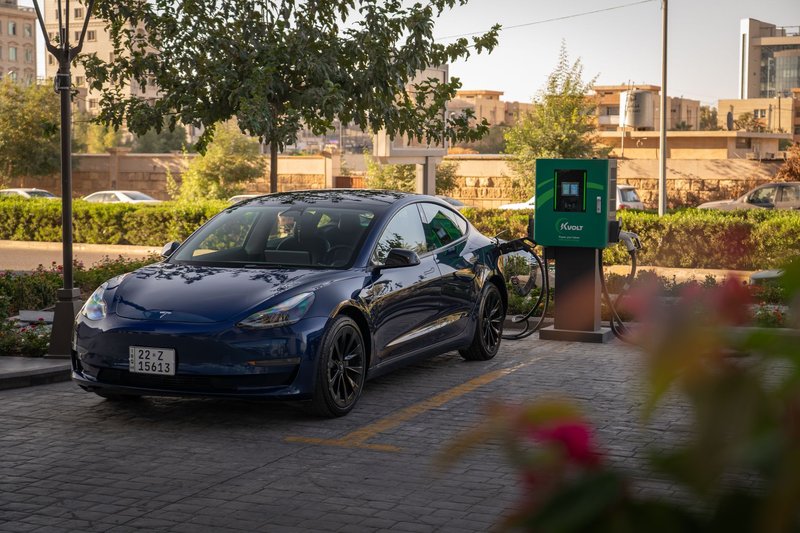
This is where the story shifts. The recent discontinuations aren’t about old age — they’re about Renault rationalizing its lineup and reorganizing the entire company around electrification and the new Mobilize and Alpine sub-brands.
Renault Safrane (1992–2000)
The Safrane was Renault’s executive flagship in the 1990s, competing — optimistically — against the BMW 5 Series and Mercedes E-Class. The Biturbo version, hand-finished by Hartge, made it a genuinely fast luxury barge that almost nobody bought.
Renault killed it in 2000 because French manufacturers have always struggled to sell premium saloons to buyers who default to German badges. Its replacement, the Vel Satis, would prove the point even more emphatically.
Renault Vel Satis (2002–2009)
The Vel Satis is a cult car precisely because it was a commercial flop. Tall, oddly proportioned, and aggressively un-German, it was Renault’s attempt to win the executive class by ignoring the rulebook entirely — a hatchback flagship with a lounge-like cabin.
Buyers didn’t bite. Production ended in 2009, and Renault effectively abandoned the large-luxury segment in Europe. The later Latitude was a badge-engineered Samsung from one of South Korea’s car brands, not a real successor. The Vel Satis’s failure is the reason Renault stopped chasing the premium saloon dream altogether.
Renault Modus (2004–2012)
The Modus was a tall, clever little mini-MPV based on the Clio platform, and it was actually a strong safety performer with a flexible “Triptic” boot. The problem was timing: just as it launched, buyers started abandoning boxy small MPVs for small SUVs.
Renault discontinued it in 2012 and let the Captur crossover inherit its small-family-car role. The Modus did everything the Captur did, except look like an SUV — which, by the 2010s, was the only thing that mattered.
Renault Twizy (2012–2023)
The Twizy was gloriously strange: a two-seat (one behind the other), tandem electric quadricycle with scissor doors and, in base trim, no side windows. It was less a car than a covered scooter, and it found a niche with urban delivery fleets and people who thought a regular city car was overkill.
Production ended in 2023. The Twizy didn’t fail so much as get reassigned — Renault folded its small-EV ambitions into the new Mobilize brand, and the Twizy’s spiritual replacement is the Mobilize Duo, a more refined take on the same one-plus-one urban pod. If you’ve wondered what happened to the Twizy, that’s it: rebranded, not abandoned.
Renault Kadjar (2015–2022)
The Kadjar was Renault’s compact SUV, sharing its bones with the Nissan Qashqai — Nissan being one of Japan’s many car brands and Renault’s long-time alliance partner — and it sold perfectly well. So why discontinue a popular car? Because Renault decided the name had to go. Under the company’s “Renaulution” strategy, the awkward made-up “Kadjar” badge was scrapped in favor of evocative real-world names.
Its 2022 replacement, the Austral, is the same kind of car — a C-segment SUV — with a cleaner design, a hybrid powertrain, and a name people can actually pronounce. The Kadjar wasn’t killed for poor performance; it was a casualty of a deliberate rebrand.
Renault Zoe (2012–2024)
The Zoe deserves more credit than it gets. For years it was Europe’s best-selling electric car, a supermini that made EV ownership normal before Tesla made it aspirational, with a battery-leasing scheme that brought the upfront price down to something reasonable.
Its problem at the end was age and safety. The Zoe scored a damning zero stars in a 2021 Euro NCAP test as standards tightened, and the platform simply couldn’t keep pace. Renault ended production in 2024 and handed the small-electric crown to the new Renault 5 E-Tech, which is both its replacement and a nostalgia play wrapped into one car.
The pattern behind the cuts
Look across the whole list and two distinct forces emerge. The classics — the 4CV, the Dauphine, the 4, the 16 — died of honest succession. They were replaced because something better, safer, or more modern came along, which is exactly how a healthy carmaker is supposed to work.
The recent cuts are a different animal. The Safrane and Vel Satis were Renault giving up on a segment it could never crack. The Modus lost to the SUV tidal wave. The Kadjar was sacrificed to a rebrand, the Twizy was shuffled off to Mobilize, and the Zoe aged out as safety standards moved past it. Almost every modern discontinuation traces back to one of three things: the death of the family MPV, Renault’s retreat from premium saloons, or the company reorganizing itself around electrification and new sub-brands.
The genuinely interesting twist is that Renault has figured out its back catalog is an asset. The R4 and R5 are back as electric models, trading directly on the affection the originals earned over decades. Discontinued, it turns out, doesn’t always mean gone for good.

Marco Delantero
More from Marco DelanteroHow we reviewed this article
This article was researched against manufacturer records and editorially reviewed before publishing. We accept no payment for coverage.