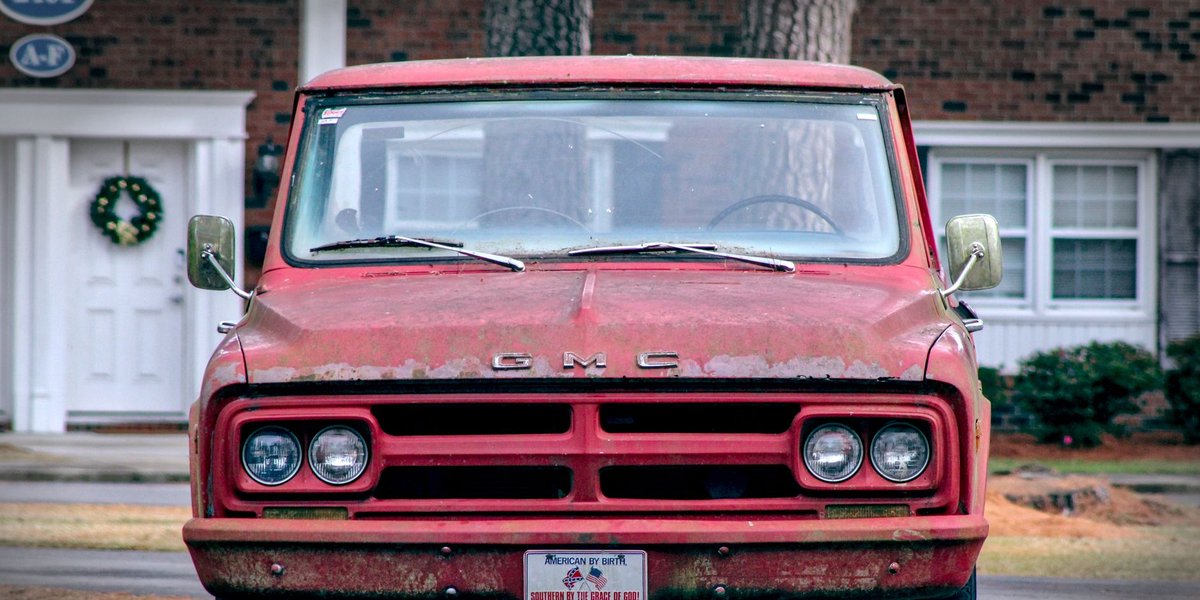
GMC has always been the quieter half of General Motors’ truck story. While Chevy got the volume and the ad budget, GMC built a parallel lineup — often the same trucks wearing a different grille, sometimes something genuinely its own. Over the decades a lot of those nameplates disappeared. Some died because nobody bought them. A couple died because they were too weird and wonderful to survive a spreadsheet.
This is the full list of GMC models that no longer exist, what each one actually was, why it got discontinued, and which ones are worth chasing on the used market today. If you came here panicking that your 2026 GMC is about to vanish, skip to the 2026 section — the short answer is calmer than the headlines suggest.
Table of Contents
- The performance legends: Syclone and Typhoon
- The Jimmy: GMC’s long-running SUV
- The Envoy
- The Safari van
- Sonoma and the compact pickups
- The rest of the graveyard
- Quick-reference table
- What’s discontinued for 2026?
- FAQ
The performance legends: Syclone and Typhoon {#the-performance-legends}
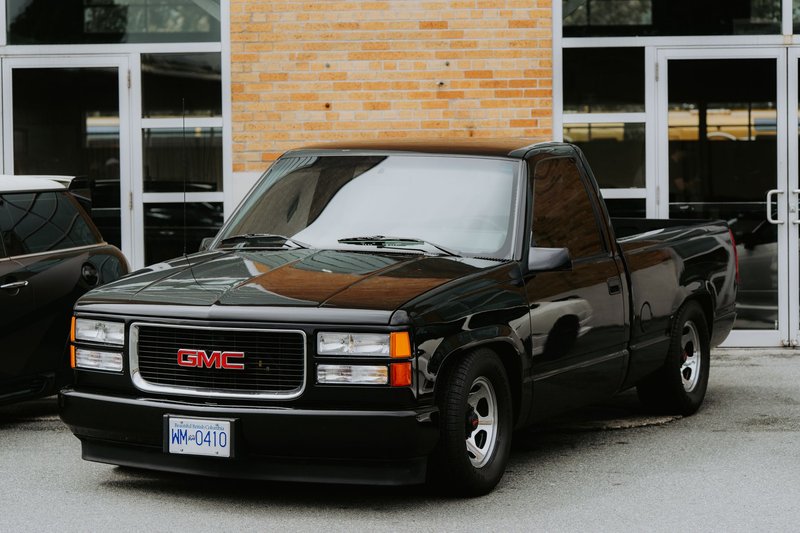
If GMC ever built something that belongs in a museum, it’s these two. In 1991 GMC took the humble Sonoma pickup, stuffed in a turbocharged 4.3-liter V6 making 280 horsepower, bolted on all-wheel drive, and called it the Syclone. The result embarrassed sports cars. Car and Driver famously ran one against a Ferrari 348 in a straight line and the truck won the 0–60 sprint. A pickup. With a bed.
GMC built it for a single model year, 1991, with a tiny run into early 1992 — fewer than 3,000 total. The reason it died is almost comically simple: it was expensive to build, sold in microscopic numbers, and was never meant to be a profit center. It was a halo, and the halo flickered out fast.
The Typhoon followed in 1992 as the SUV version, dropping the same drivetrain into a two-door Jimmy body. Slightly more civilized, slightly more practical, and built through 1993 in larger numbers (around 4,700). Both vanished because they were boutique experiments riding on a platform GM wanted to move on from.
Today these are the crown jewels of any GMC collection. Clean Syclones regularly cross auction blocks well into the five figures, and values have climbed steadily as ’90s performance metal gets its nostalgia moment. If you find one that hasn’t been beaten on, it’s the closest thing GMC ever made to a blue-chip collectible.
The Jimmy: GMC’s long-running SUV {#the-jimmy}
The Jimmy name had two distinct lives. The full-size Jimmy launched in 1970 as GMC’s version of the Chevy K5 Blazer — a removable-top, body-on-frame brute. That ran through 1991. Then the name shifted to the compact S-15 Jimmy (later just S Jimmy), GMC’s twin to the Chevy S-10 Blazer, which carried on until 2005.
By the early 2000s the compact Jimmy was badly dated. It was still selling, but against newer crossovers it felt like a relic — leaf-sprung, truck-stiff, and thirsty. If you want a sense of just how much the segment had moved on, it’s worth scanning a snapshot of the cars that were on sale in 2000 — the unibody crossover wave was already cresting, and buyers stopped wanting a small body-on-frame SUV. GM retired the Jimmy as that shift took hold. The name briefly resurfaced as a trim concept idea, but the Jimmy as a model was done in 2005.
It’s worth noting how much of GMC’s identity ran through this nameplate — for 35 years there was almost always a Jimmy in the showroom. When it left, GMC’s SUV lineup tilted hard toward the bigger, more expensive end where it still lives today.
The Envoy {#the-envoy}
The Envoy started in 1998 as a gussied-up top trim of that compact Jimmy, then became a standalone midsize SUV in 2002 — GMC’s version of the Chevy TrailBlazer, built on GM’s GMT360 platform. For a few years it was a genuine sales success. The Envoy XL stretched it for a third row, and the oddball Envoy XUV had a retractable rear roof that almost nobody asked for.
The Envoy died after 2009. Two things killed it. First, GM’s bankruptcy and restructuring forced a brutal trimming of overlapping models, and the Envoy overlapped heavily with the Acadia, which had launched in 2007 as a more modern crossover. Second, the body-on-frame midsize SUV segment cratered when gas prices spiked and crossovers took over. The Envoy was the right vehicle for 2003 and the wrong one for 2009.
You can still find Envoys cheap. They’re not collectible and probably never will be, but a well-kept inline-six XUV is at least a conversation piece.
The Safari van {#the-safari-van}
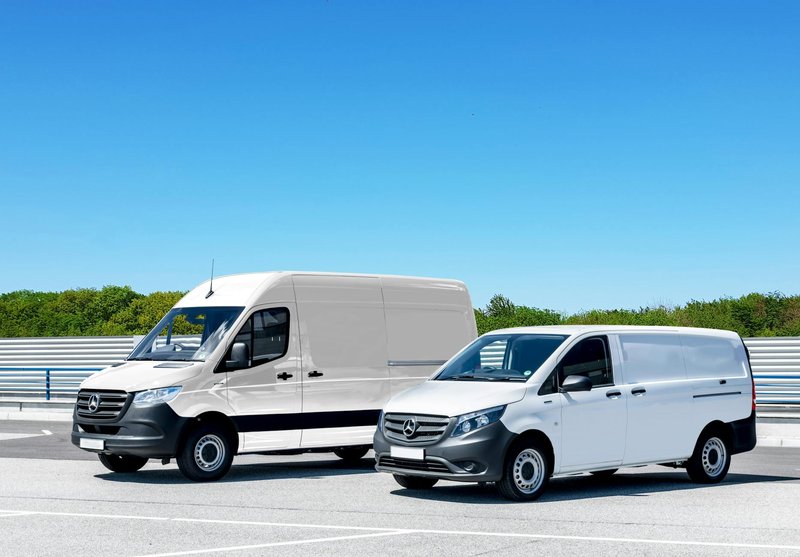
The Safari was GMC’s rear-wheel-drive minivan — twin to the Chevy Astro — built from 1985 to 2005. Unlike the front-drive minivans that came to define the segment, the Safari was built like a small truck, which made it genuinely useful: it could tow, it offered all-wheel drive, and tradespeople loved it as a cargo hauler.
It died in 2005 for the obvious reason. Modern minivan buyers wanted car-like ride, sliding doors on both sides, and better safety scores, and the truck-based Safari couldn’t deliver any of that without a ground-up redesign GM wasn’t going to fund. It soldiered on for years mostly on fleet and commercial demand before GM finally pulled it.
There’s a small, devoted following for AWD Safaris among overlanders and van-life builders who want a compact, mechanically simple, rear-drive platform. According to the EPA’s fuel economy database, the old 4.3-liter V6 wasn’t efficient by today’s standards, but it’s cheap and easy to keep running.
Sonoma and the compact pickups {#sonoma-and-compact-pickups}
The Sonoma was GMC’s compact pickup, the twin to the Chevy S-10, sold under that name from 1991 to 2004 (it was the S-15 before that). It’s the donor truck the Syclone was built from, which gives it a bit of reflected glory.
The Sonoma ended in 2004 when GM replaced the entire compact-truck line with the midsize Canyon (and its Chevy Colorado twin). It wasn’t really discontinued so much as renamed and upsized — the compact-truck class was shrinking and GM bet on a slightly larger footprint.
Worth a quick mention: the Caballero, GMC’s version of the Chevy El Camino car-pickup, which ran from 1978 to 1987 and died with the whole El Camino concept when GM stopped building rear-drive midsize coupes. And the Sprint, the Caballero’s even older predecessor from the early ’70s.
The rest of the graveyard {#the-rest-of-the-graveyard}
A few more GMC nameplates that didn’t make it:
- GMC Tracker — a rebadged Suzuki/Geo compact SUV sold briefly in the early 2000s in some markets. Forgettable and short-lived.
- GMC Suburban — yes, GMC sold its own Suburban for decades. It was folded into the Yukon XL name in 2000, so the Suburban badge effectively retired from GMC even though the vehicle lives on as a Chevy.
- GMC S-15 / Sierra Classic naming — the old C/K-era pickup naming gave way to the Sierra badge in 1987, retiring a string of alphanumeric designations.
None of these are collector targets, but they round out the picture: GMC has spent decades quietly rotating, renaming, and retiring nameplates, usually to consolidate with Chevy twins or to chase a shifting market. It’s a pattern you’ll find across plenty of different car brands, but GMC’s near-total overlap with Chevy makes it one of the more aggressive practitioners.
Quick-reference table {#quick-reference-table}
| Model | Years produced | Why it was discontinued |
|---|---|---|
| Syclone | 1991 | Boutique halo truck, tiny volume, costly to build |
| Typhoon | 1992–1993 | Same as Syclone — limited-run experiment |
| Jimmy (full-size) | 1970–1991 | Replaced by Yukon |
| Jimmy (compact) | 1983–2005 | Dated body-on-frame design; crossover shift |
| Envoy | 1998–2009 | GM bankruptcy cuts; overlapped with Acadia |
| Safari | 1985–2005 | Truck-based minivan couldn’t compete with modern vans |
| Sonoma | 1991–2004 | Replaced by midsize Canyon |
| Caballero | 1978–1987 | End of the car-pickup (El Camino) concept |
| Suburban (GMC) | through 1999 | Rebadged as Yukon XL |
What’s discontinued for 2026? {#whats-discontinued-for-2026}
Here’s where a lot of recent searches come from, so let’s be clear: GMC has not announced a wave of model cancellations for 2026. Most of the “is GMC discontinuing my truck?” anxiety online traces back to trim and configuration shuffles, not whole nameplates disappearing.
The current GMC lineup — Sierra, Canyon, Terrain, Acadia, Yukon, and the electric Hummer EV and Sierra EV — is intact heading into 2026. What does change year to year is the menu of trims, packages, and powertrains. A specific engine option or a niche trim getting dropped is normal product housekeeping, not a discontinuation. If you’re buying, the safe read is: the core models you see on the lot now are sticking around. The thing most likely to vanish is a particular configuration, not the truck itself.
If a salesperson or a forum post tells you a whole GMC model is being axed for 2026, ask for the source. As of now, GMC’s published lineup doesn’t support the panic.
FAQ {#faq}
What was the fastest discontinued GMC? The Syclone. With 280 horsepower, all-wheel drive, and a sub-5-second 0–60, it outran sports cars of its era and remains the quickest truck GMC ever sold.
Why did GMC discontinue the Envoy? A combination of GM’s 2009 bankruptcy restructuring and the collapse of the body-on-frame midsize SUV market. The newer Acadia crossover covered the same buyers more efficiently.
Is the GMC Jimmy coming back? There’s no confirmed production Jimmy. The name carries strong nostalgia, and GMC has shown it’ll revive heritage badges (see the Hummer), but nothing official exists.
Which discontinued GMC is the best collector buy? The Syclone and Typhoon, easily. Low production, real performance history, and rising values make them the standouts. A clean, unmodified Syclone is the trophy.
Did GMC make its own Suburban? Yes, for decades. GMC’s Suburban was renamed the Yukon XL in 2000, so the badge retired even though the vehicle continues as a Chevrolet.

Tyler Bridges
More from Tyler BridgesHow we reviewed this article
This article was researched against manufacturer records and editorially reviewed before publishing. We accept no payment for coverage.