Most lists of 1950s motorcycles blur the whole decade into one bucket and call it a day. That’s fine if you just want pretty pictures. But 1950 specifically was a hinge year: Norton dropped the featherbed frame that rewrote handling, Harley bolted hydraulic forks onto a flathead and called it the Hydra-Glide, and Triumph’s Thunderbird showed up just in time to get immortalized on screen. So this is the year-anchored version — the bikes that either launched in 1950 or hit their stride right around it, each with the numbers, the reason it mattered, and roughly what one costs today.
Prices below are ballpark figures for running, presentable examples in 2026 — not basket cases, not concours trailer queens. Restoration-grade survivors and documented race history push values well past these.
Table of Contents
- The quick verdict
- 1. Triumph 6T Thunderbird
- 2. Norton Manx
- 3. Harley-Davidson FL Hydra-Glide
- 4. Vincent Rapide Series C
- 5. BSA Gold Star
- 6. Moto Guzzi Falcone
- 7. BMW R51/3
- How to read these as a buyer
- At a glance: spec comparison
The quick verdict
If you want the single most consequential 1950 model, it’s the Norton Manx — the featherbed frame it introduced that year set the template every sport bike chassis chased for two decades. If you want the most gettable icon, the Triumph Thunderbird is the one: enough were built that you can actually find one, and parts support is excellent. And if your taste runs to rolling thunder rather than razor handling, the Harley Hydra-Glide is the 1950 bike that looks exactly like what a non-rider pictures when they hear “vintage motorcycle.”
The full list, in no particular order beyond grouping by personality.
1. Triumph 6T Thunderbird
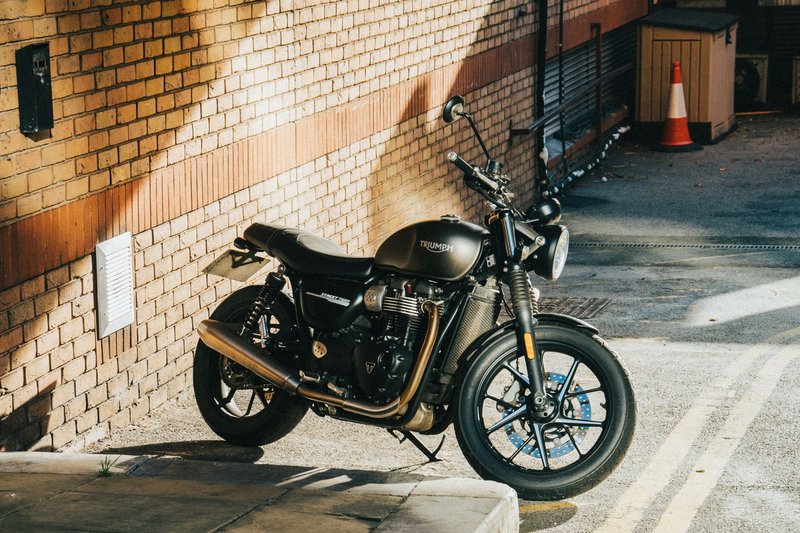
Triumph built the Thunderbird for one reason: Americans kept asking the 500cc Speed Twin to do highway speeds it wasn’t designed for. So Edward Turner bored the parallel twin out to 650cc and, to prove the point, sent three of them to the Montlhéry track near Paris in late 1949 where each ran 500 miles at over 90 mph and finished with a flying lap above 100. The bike went on sale as a 1950 model.
The name stuck in the culture because Marlon Brando rode a 1950 Thunderbird in The Wild One. That single piece of casting did more for the model’s legend than any spec sheet.
What you get is a 649cc air-cooled parallel twin, around 34 horsepower, a top speed near 100 mph, and a dry weight of about 385 lbs. It originally sold for roughly $700 in the US.
- Engine: 649cc OHV parallel twin
- Power: ~34 hp
- Top speed: ~100 mph
- Original price: ~$700 (1950, US)
- Why it mattered: Brought real highway-capable power to the mass market and became the on-screen face of the era.
- Collector value today: $9,000–$18,000
2. Norton Manx
The Manx is the racer’s racer, and 1950 is its landmark year because that’s when the McCandless brothers’ featherbed frame arrived. The story goes that Geoff Duke rode the prototype and the duplex-cradle chassis was so much better than anything before it that the name “featherbed” came from a rider describing how it felt — like riding on one. It won the Senior and Junior TT that year and Duke took the world championship soon after.
The featherbed wasn’t a tweak. It was the chassis architecture the rest of the industry spent the 1950s copying.
Under the rider sits a 499cc single-overhead-cam (or DOHC on the works bikes) single, good for around 47 hp in 500cc trim, with a top speed past 120 mph depending on gearing. These were sold as competition machines, not road bikes, so originals are scarce and documented race history matters enormously to value.
- Engine: 499cc SOHC/DOHC single
- Power: ~47 hp (500cc)
- Top speed: 120+ mph
- Original purpose: Grand Prix and TT racing
- Why it mattered: The featherbed frame redefined motorcycle handling for a generation.
- Collector value today: $45,000–$120,000+ (documented examples)
3. Harley-Davidson FL Hydra-Glide
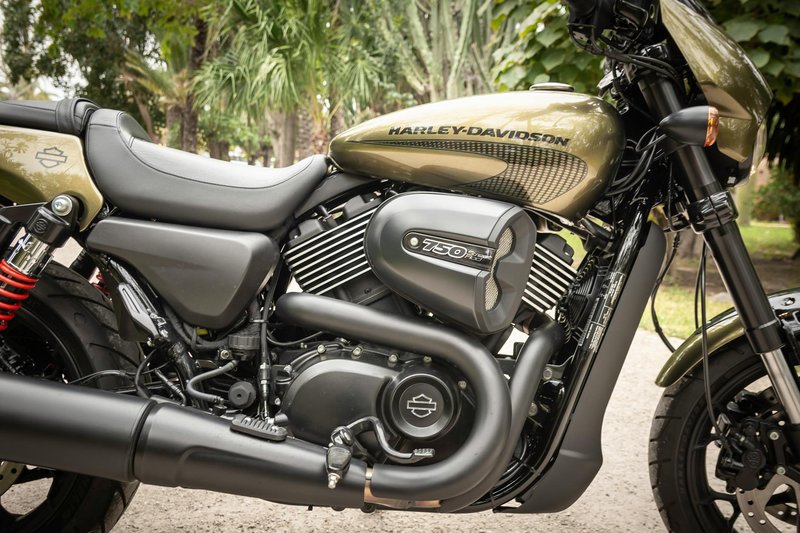
1949 is when Harley introduced the hydraulic telescopic front fork, and the 1950 FL is where that fork settled into the model that defined the look: the big chrome-shrouded front end that’s still echoed in the Heritage and Road King today. Hence “Hydra-Glide” — the glide came from finally ditching the harsh springer front.
The 1950 FL ran the 74-cubic-inch (1200cc) “Panhead” V-twin, the engine Harley introduced in 1948 with aluminum heads and those distinctive rocker covers shaped like upside-down pans. Roughly 55 hp, a top speed around 100 mph, and a curb weight north of 550 lbs. It is not a fast-handling motorcycle. It was never trying to be.
- Engine: 1200cc (74 ci) Panhead V-twin
- Power: ~55 hp
- Top speed: ~100 mph
- Original price: ~$985 (1950, US)
- Why it mattered: Established the front-end silhouette that still defines the Harley big twin.
- Collector value today: $20,000–$40,000
4. Vincent Rapide Series C
In 1950 the Vincent Rapide Series C was, by most measures, the closest thing to a superbike the world had. A 998cc 50-degree V-twin in a bike that used the engine as a stressed member instead of a conventional frame, with the now-famous Girdraulic front fork. The Rapide made about 45 hp and would do roughly 110 mph; its hotter sibling, the Black Shadow, pushed past 120.
The detail enthusiasts love: Vincent fitted twin brake drums on each wheel because a single drum couldn’t reliably haul the thing down from those speeds. Production was always tiny and the company folded in 1955, which is exactly why a good Rapide commands the money it does.
- Engine: 998cc OHV V-twin
- Power: ~45 hp
- Top speed: ~110 mph
- Original price: ~£300 (1950, UK)
- Why it mattered: The fastest standard production motorcycle of its day and a feat of engineering compression.
- Collector value today: $50,000–$90,000 (Black Shadow variants higher)
5. BSA Gold Star
The Gold Star name came from an Earl’s Court-to-Brooklands tradition: lap the Brooklands circuit at over 100 mph and you earned a gold star lapel pin. BSA built a bike to do exactly that and named it accordingly. By 1950 the postwar Gold Star was hitting its stride as the clubman racer of choice — the bike a young rider bought, rode to the track, raced, and rode home.
It’s a 348cc or 499cc OHV single depending on spec, hand-built and blueprinted, making around 30 hp in 500 trim with a genuine 100+ mph capability in race tune. The Gold Star is the most accessible serious-performance single on this list, and it’s the one with the strongest “I’ll actually ride it” case.
- Engine: 348cc / 499cc OHV single
- Power: ~30 hp (500cc)
- Top speed: 100+ mph (tuned)
- Why it mattered: The definitive amateur clubman racer — fast, tunable, and ridden to the track.
- Collector value today: $12,000–$25,000
6. Moto Guzzi Falcone
The Italian entry, and the one most American lists skip entirely. The Falcone arrived in 1950 running the Moto Guzzi signature: a 498cc horizontal single laid flat in the frame, with the enormous external “bacon slicer” flywheel spinning on the right side. It’s mechanically unlike everything else here.
About 23 hp, a top speed near 85 mph in the touring Turismo trim and more in Sport guise. The Falcone matters because that horizontal-single layout stayed in Guzzi production, in one form or another, into the 1970s — and because it’s proof the British and American makers didn’t have a monopoly on character. If the flat-single layout grabs you, it’s worth seeing how it evolved across the rest of Moto Guzzi’s 1950s lineup, where the same architecture turned up in everything from workhorse singles to sportier variants.
- Engine: 498cc OHV horizontal single
- Power: ~23 hp
- Top speed: ~85 mph
- Why it mattered: Carried Guzzi’s distinctive flat-single architecture into the postwar era.
- Collector value today: $14,000–$28,000
7. BMW R51/3
The German contribution to 1950 is the R51/3, BMW’s first all-new postwar boxer twin. After the war BMW had been rebuilding from prewar tooling; the R51/3 introduced a fresh 494cc opposed-twin engine with a single camshaft and a redesigned timing chest, plus the telescopic front and plunger rear suspension that made it a genuinely comfortable distance bike.
It made about 24 hp and would cruise all day at 75–80 mph, which was the whole point. Shaft drive, no oily chain to maintain, and the kind of build quality that meant a lot of them survived. The R51/3 is the sensible-shoes pick here, and the one you can most realistically tour on. The boxer-and-shaft formula it leaned on runs through much of the country’s output, and it sits comfortably among the other classic German motorcycles that built their reputation on exactly that kind of durable, long-distance engineering.
- Engine: 494cc OHV boxer twin
- Power: ~24 hp
- Top speed: ~84 mph
- Why it mattered: BMW’s clean-sheet postwar boxer, built around shaft drive and long-distance comfort.
- Collector value today: $12,000–$22,000
How to read these as a buyer
A few things separate a smart purchase from an expensive mistake with bikes this old.
Matching numbers matter more on the racers. On a Manx or a Vincent, frame and engine number matching plus documented provenance can triple the value. On a Thunderbird or a Hydra-Glide, originality is nice but a well-sorted runner with a few correct-spec replacement parts is a perfectly good buy.
British electrics are the recurring headache. Lucas magnetos and dynamos from this era are the most common thing to need rebuilding. Budget for it. A non-running British single or twin almost always has an electrical or carburetion gremlin before it has a serious engine fault.
Parts support is wildly uneven. Triumph and BSA have excellent specialist supply — you can build one from a catalog. Vincent and Moto Guzzi parts exist but cost real money and take patience. Factor that into the purchase price, because a cheap Vincent is rarely actually cheap.
Verify the year, not just the model. Many sellers list a “1950s” bike that’s actually a 1954 or 1957 with different specs. If the specific 1950 build matters to you — and for the featherbed Norton or the early Hydra-Glide it should — check the frame and engine number against the marque registry before you wire money. The Vintage Motor Cycle Club maintains dating records that settle most arguments.
At a glance: spec comparison
| Model | Country | Engine | Power | Top speed | Value today |
|---|---|---|---|---|---|
| Triumph 6T Thunderbird | UK | 649cc parallel twin | ~34 hp | ~100 mph | $9k–$18k |
| Norton Manx | UK | 499cc SOHC/DOHC single | ~47 hp | 120+ mph | $45k–$120k+ |
| Harley FL Hydra-Glide | USA | 1200cc V-twin | ~55 hp | ~100 mph | $20k–$40k |
| Vincent Rapide Series C | UK | 998cc V-twin | ~45 hp | ~110 mph | $50k–$90k |
| BSA Gold Star | UK | 499cc single | ~30 hp | 100+ mph | $12k–$25k |
| Moto Guzzi Falcone | Italy | 498cc flat single | ~23 hp | ~85 mph | $14k–$28k |
| BMW R51/3 | Germany | 494cc boxer twin | ~24 hp | ~84 mph | $12k–$22k |
Seven 1950 motorcycle models, four countries, and not one of them interchangeable with another. That’s the thing the year-by-decade lists miss: 1950 wasn’t a single style, it was the moment Britain, America, Germany, and Italy were each pulling in their own direction at full strength. Pick the one whose personality matches yours, then go check the engine number twice before you fall for the photos.

Marco Delantero
More from Marco DelanteroHow we reviewed this article
This article was researched against manufacturer records and editorially reviewed before publishing. We accept no payment for coverage.