
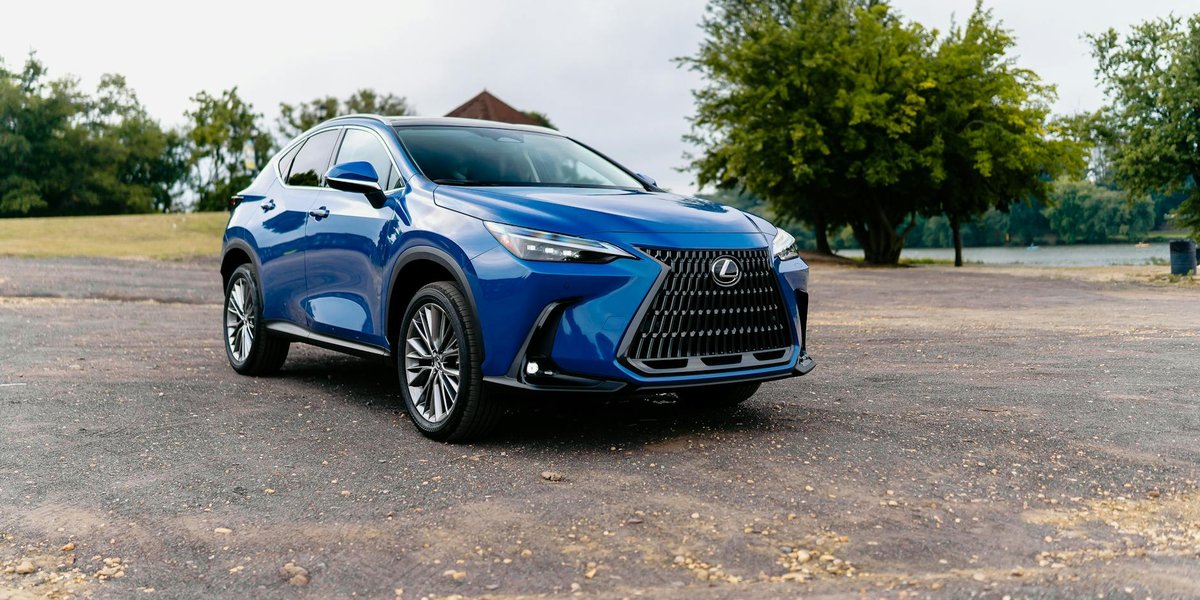
The decade Lexus spent the 2010s coasting on the RX is over. Since 2020 the brand has rebuilt its entire range: a sharper, more cohesive design language, V8-powered F Sport sedans, a hybrid option on nearly everything, its first real EV in the RZ, and a brand-new three-row SUV in the TX that finally gives big American families a Lexus that fits them.
The problem is that nobody has put the whole thing in one place. Manufacturer hubs show you card grids of MSRPs with no context. The enthusiast listicles cover their five favorites and skip the rest. So here’s the full 2020s lineup, organized the way you’d actually shop it, plus the models that have proven worth the money.
Contents
- The short version
- How Lexus changed in the 2020s
- Lexus sedans
- Lexus SUVs
- Electrified and electric models
- The full lineup at a glance
- The best 2020s Lexus models
- Which one should you buy?
The short version
If you want the safest used buy, get an RX 450h from this decade. The RX Hybrid has earned a 5/5 reliability verdict across model years, and it’s the closest thing to a sure thing in the lineup. If you want something newer and smaller, the NX and NX Hybrid sit at the top of their class for dependability. Want a body-on-frame tank that’ll outlive you? The GX. Want to go electric? The RZ is the only fully electric Lexus, and it’s fine rather than great, so cross-shop it carefully.
Avoid overpaying for the LX unless you genuinely need the off-road hardware, and treat the brand-new TX as a first-model-year vehicle, because it is one.
How Lexus changed in the 2020s
Three shifts define the decade.
First, the styling settled down. The spindle grille that everyone argued about in the 2010s evolved into a cleaner “spindle body” treatment on the newer SUVs, where the grille blends into the bodywork instead of stamping a giant hourglass on the nose. Love it or not, the range finally looks like it was designed by one team.
Second, performance came back. The 2022 IS 500 dropped a naturally aspirated 5.0-liter V8 making 472 horsepower into a compact sedan, at a moment when the rest of the industry was deleting V8s as fast as it could. F Sport Performance became a real trim, not a body kit.
Third, electrification went wide. Hybrids spread from the ES and RX to nearly every model, plug-in hybrids arrived on the RX and NX, and the RZ became the brand’s first ground-up EV. Lexus moved slower on EVs than its rivals, but the hybrid breadth is genuinely the deepest in the luxury segment.
Lexus sedans
The car side of the lineup shrank during the decade as SUVs took over, but two sedans carried through and one of them got a lot more interesting.
ES
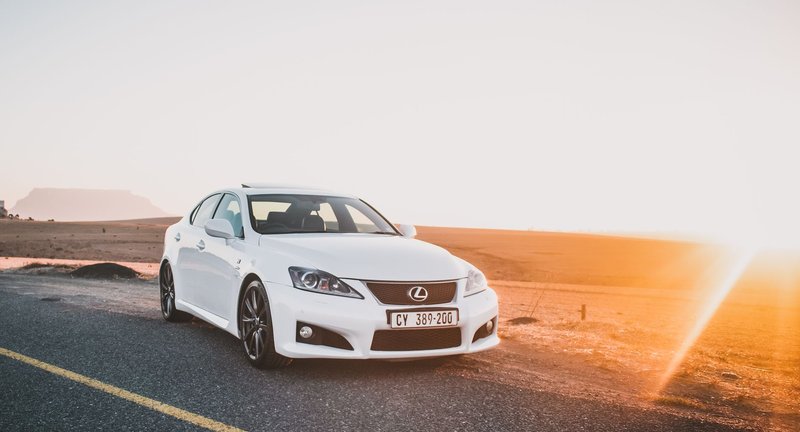
The ES is the comfort default: a front-wheel-drive (later available with AWD) midsize sedan built around a quiet ride and a roomy back seat rather than corner-carving. Through most of the decade you could get it as the V6 ES 350 or the four-cylinder hybrid ES 300h, with the hybrid being the smarter long-term pick for fuel economy and resale. It’s the Lexus people buy when they want a Camry’s reliability with a nicer interior and a badge that doesn’t shout.
IS
The IS is the compact sport sedan, rear-wheel-drive, and the one enthusiasts actually like. The IS 300 and IS 350 cover the volume sales, but the headline is the IS 500 F Sport Performance, which slots that 472-hp V8 under a relatively affordable hood. It launched around $56,500, which made it one of the cheapest ways into a naturally aspirated V8 luxury sedan, and that engine isn’t long for this world. If you care about driving and you’re shopping the 2020s, this is the sedan to watch.
Lexus SUVs
This is where the real volume and the real variety live. Lexus runs seven SUVs in the 2020s, and they’re genuinely different vehicles rather than the same crossover in three sizes.
UX
The entry point. A subcompact crossover that’s really a tall hatchback, the UX is small, efficient, and easy to park, and it switched to a hybrid-only UX 300h that starts under $40,000. City-dweller transport with a premium cabin. Don’t expect cargo space.
NX
The sweet spot of the lineup. A compact crossover redesigned for 2022, the NX offers gas, hybrid (NX 350h), and plug-in hybrid (NX 450h+) powertrains, a modern touchscreen interface, and class-leading reliability. For a lot of buyers this is the right-sized, right-priced Lexus, and the data backs that up.
RX
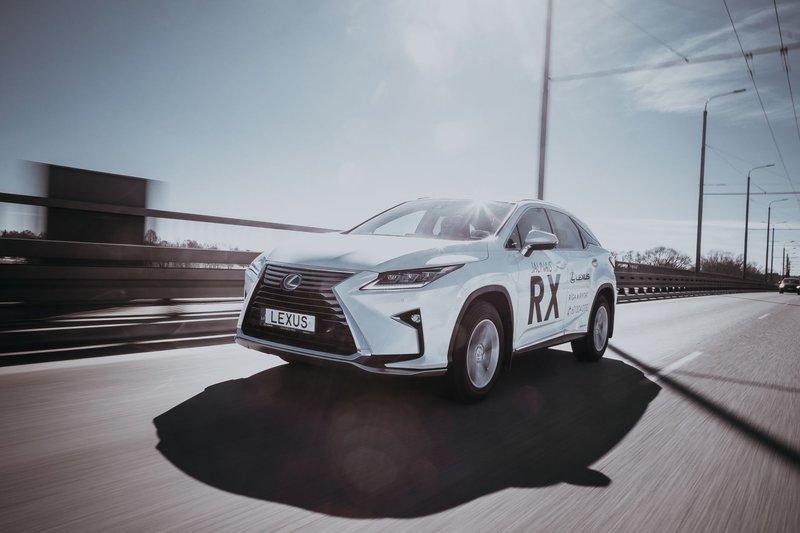
The car that built the brand, now in its fifth generation. The RX is the midsize two-row SUV everyone pictures when they think “Lexus SUV,” and it starts around $52,000. Across gas, hybrid, and plug-in versions, the RX Hybrid is the reliability benchmark for the whole company. If you want one vehicle that captures what Lexus does well, it’s this.
GX
The body-on-frame outlier. The GX is built on truck underpinnings, which makes it heavy and thirsty on pavement but nearly unkillable and properly capable off it. The current generation modernized the look while keeping the rugged bones. Buyers who tow, go overlanding, or just want something that shrugs off abuse gravitate here, and it starts in the high $60,000s.
TX
The newest model, and the one Lexus needed for years. The TX is a three-row, family-hauler SUV sized for actual American families, with gas, hybrid, and plug-in hybrid options starting around $58,000. It finally gives Lexus a competitor to the larger three-row luxury SUVs without forcing buyers into the much bigger, much pricier LX. Just remember it’s an early-production model.
LX
The flagship. The LX is a full-size, body-on-frame luxury SUV based on the Land Cruiser, with serious off-road hardware and a six-figure starting price north of $108,000. It’s overbuilt in the best way, but most buyers don’t need what it offers. Get it if you tow heavy, travel rough roads, or specifically want the most capable Lexus made. Otherwise the GX or TX makes more sense.
Electrified and electric models
Hybrids are woven through the lineup, so the “electrified” story isn’t a separate section so much as a feature you can add to almost any model: ES 300h, UX 300h, NX 350h, RX 350h, GX 550h, TX 350h/550h+, LX 700h. The plug-in hybrids (NX 450h+, RX 450h+, TX 550h+) add real all-electric commuting range on top.

The genuinely new thing is the RZ, Lexus’s first ground-up electric vehicle. Starting around $47,000, the RZ shares its platform with the Toyota bZ4X and slots between the NX and RX in size. It’s a competent luxury EV with a comfortable cabin, but its range and charging speed lag the EV leaders, so it reads more like a careful first step than a class leader. If you want an electric Lexus today, it’s your only option, and you should cross-shop it against rivals before committing.
The full lineup at a glance
| Model | Segment | Body type | Powertrains | Starting MSRP (approx.) |
|---|---|---|---|---|
| IS | Compact sport sedan | Sedan (RWD) | Gas; V8 (IS 500) | ~$40,000 / IS 500 ~$60,000 |
| ES | Midsize luxury sedan | Sedan (FWD/AWD) | Gas, Hybrid | ~$43,000 |
| UX | Subcompact crossover | SUV | Hybrid | ~$37,000 |
| NX | Compact crossover | SUV | Gas, Hybrid, Plug-in | ~$42,000 |
| RZ | Compact-midsize EV | SUV | Electric | ~$47,000 |
| RX | Midsize two-row | SUV | Gas, Hybrid, Plug-in | ~$52,000 |
| TX | Midsize three-row | SUV | Gas, Hybrid, Plug-in | ~$58,000 |
| GX | Midsize off-road | SUV (body-on-frame) | Gas, Hybrid | ~$68,000 |
| LX | Full-size flagship | SUV (body-on-frame) | Gas, Hybrid | ~$108,000 |
Prices are approximate base MSRPs for recent model years and vary by year and trim. Treat them as ballpark, not quotes.
The best 2020s Lexus models
Reliability is the reason most people buy a Lexus, so that’s how I’d rank the decade’s standouts. Lexus was named the most reliable brand in Consumer Reports’ latest annual reliability survey, and a few models stand out even within that.
RX Hybrid — the safe bet. The RX 450h has posted a 5/5 reliability verdict across model years, with the kind of year-to-year consistency that’s rare for any hybrid SUV. If you want to buy once and not think about it, this is the pick.
NX and NX Hybrid — the modern all-rounder. The redesigned NX sits at the top of the luxury compact crossover class for dependability, with a reliability score in the high 80s out of 100. Newer tech, right size, strong record.
GX — the durability play. Its body-on-frame design and proven mechanicals make it a favorite for families and adventurers who plan to keep a vehicle for a long time. Reliability has slipped from “excellent” to merely “average” on the newest generation, so for maximum peace of mind, an earlier GX is the move.
TX Hybrid — the new high scorer. Among the latest model year, the TX Hybrid earned excellent reliability marks from Consumer Reports right out of the gate, which is encouraging for a brand-new model. Promising, but it has the shortest track record here.
Which one should you buy?
Match the model to how you actually live.
Buying used and want zero drama: RX 450h. It’s the most proven vehicle Lexus made this decade.
Daily driver for one or two people: NX, or NX Hybrid if you do a lot of miles. Right-sized and dependable.
Family with three rows of seats to fill: TX if you want new, with the understanding that you’re an early adopter. If you’d rather have a longer track record, look at a used RX for a smaller family or an LX if budget and towing needs justify it.
You drive off pavement or tow: GX for most people, LX if you need the heaviest-duty hardware.
You want to go electric: RZ, but test-drive the competition first. It’s a solid luxury EV that doesn’t lead its class on range or charging.
You care about driving: IS 500, full stop. A 472-hp V8 in a compact sedan is the kind of thing that won’t exist much longer, and it’s the most distinctive car Lexus built this decade.
Across the board, the move is the same one that’s always worked with Lexus: pick the hybrid when it’s offered, buy the model that fits your life instead of the biggest one you can afford, and let the reliability do the rest.

Marco Delantero
More from Marco DelanteroHow we reviewed this article
This article was researched against manufacturer records and editorially reviewed before publishing. We accept no payment for coverage.