The 2003 model year was a genuinely interesting moment for Honda. They had a freshly redesigned Accord hitting showrooms, a brand-new Element that nobody quite knew what to make of, and a Civic Hybrid that was just starting to prove hybrids weren’t a gimmick. Meanwhile, the S2000 was doing what it had always done — making BMW roadster owners feel slightly embarrassed about their life choices.
If you’re researching the 2003 Honda lineup — to buy one, to settle an argument, or just because you’re curious what Honda was selling 20+ years ago — here’s the full picture.
Table of Contents
- The 2003 Honda Lineup at a Glance
- 2003 Honda Accord
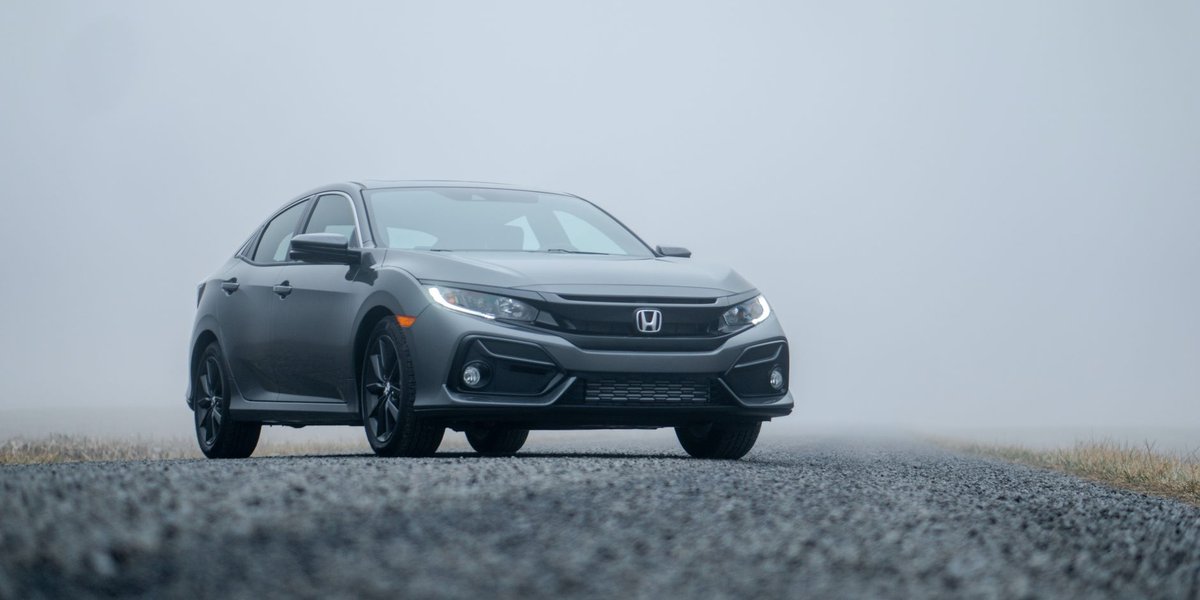
- 2003 Honda Civic
- 2003 Honda Civic Hybrid
- 2003 Honda Civic Si
- 2003 Honda CR-V
- 2003 Honda Element
- 2003 Honda Insight
- 2003 Honda Odyssey
- 2003 Honda Pilot
- 2003 Honda S2000
- 2003 Honda FCX
- Which 2003 Honda Is Worth Buying Today?
The 2003 Honda Lineup at a Glance
| Model | Body Style | Starting MSRP (2003) | Key Feature |
|---|---|---|---|
| Accord | Sedan / Coupe | ~$18,900 | Full redesign, available nav system |
| Civic | Sedan / Coupe / Hatchback | ~$13,100 | 7th gen, strong base value |
| Civic Hybrid | Sedan | ~$19,550 | First Civic Hybrid ever sold |
| Civic Si | Hatchback | ~$16,010 | 160 hp, enthusiast favorite |
| CR-V | SUV | ~$18,800 | Practical, reliable compact SUV |
| Element | SUV | ~$16,450 | Debut year, washable rubber floors |
| Insight | Hatchback | ~$18,960 | 2-seat hybrid, 60+ mpg city |
| Odyssey | Minivan | ~$25,200 | Best-in-class sliding door layout |
| Pilot | SUV | ~$28,700 | Second-year model, 8-passenger |
| S2000 | Roadster | ~$31,200 | 9,000 rpm redline, no passengers needed |
| FCX | Sedan | ~$0 (lease only) | Hydrogen fuel cell concept, 5 built |
2003 Honda Accord
The Accord entered 2003 as a completely new car — the seventh generation landed for the 2003 model year and grew in almost every dimension. The wheelbase stretched by nearly two inches, the rear seat gained real legroom, and the interior finally felt like it belonged in a car priced above $20K.
Engine options: a 2.4L i-VTEC four-cylinder (160 hp) or a 3.0L V6 (240 hp). The V6 was available on both the sedan and the coupe, and Honda offered a six-speed manual transmission with it — a combination that’s genuinely hard to find for this money on the used market today.
The navigation system option was notable for 2003. It was a factory DVD-based nav, not a graft-on afterthought, and it held up reasonably well as an integrated unit.
Common issues to know: The 2003 Accord V6 with automatic transmission is known for transmission failures. The 4-cylinder automatics are significantly more reliable. If you’re shopping for one today, the 4-cylinder manual is the smart play.
2003 Honda Civic
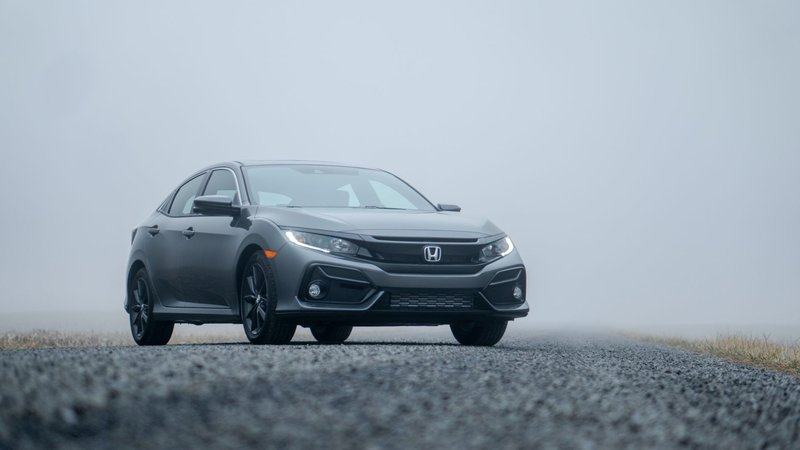
The Civic was in the second year of its seventh-generation run, which means most of the debut-year quirks had been shaken out. It came in three body styles: the four-door sedan, a two-door coupe, and a three-door hatchback (sold as the Civic HX in the US market). The hatchback body style was part of a broader wave of practical small cars that defined the decade — the complete list of 2000s hatchbacks shows just how many options buyers had in that era.
Base engines were a 1.7L SOHC four-cylinder making 115 hp in standard trim. Fuel economy hovered around 32 mpg highway — nothing flashy, but solid and consistent.
The 7th-gen Civic is one of the easiest used cars to recommend at almost any price point. Parts are everywhere, independent mechanics know these cars well, and rust aside, they just don’t die. If you find a clean one with under 150,000 miles, it’s a reasonable buy.
2003 Honda Civic Hybrid
The Civic Hybrid debuted for 2003, and it’s easy to forget how unusual that was at the time. Toyota had the Prius, Honda had the Insight — but neither looked like a normal car. The Civic Hybrid wore a Civic body with no visual badge of weirdness, and that mattered.
It used Honda’s Integrated Motor Assist (IMA) system — a thin electric motor sandwiched between the 1.3L engine and the CVT transmission — rather than a full hybrid setup. The electric motor assisted acceleration; it couldn’t drive the car on its own. Combined output was 93 hp.
Fuel economy: around 46 city / 51 highway. Impressive for 2003.
Buying caveat: The IMA battery pack degrades. Replacement packs were expensive through dealers; aftermarket options have made this more manageable, but a 20-year-old hybrid battery should always be part of the inspection conversation.
2003 Honda Civic Si
The EP3 Civic Si — the hatchback version sold in the US — gets a complicated reputation, and most of it is deserved. The 2.0L i-VTEC engine (160 hp, 132 lb-ft) was good. The suspension was well-tuned. The hatchback body was practical.
The problem was the engine’s power delivery: it was extremely rev-dependent, with almost nothing happening below 4,000 rpm and then a distinct VTEC surge above it. Honda tuned this way intentionally, and enthusiasts either loved it or resented it.
That said, the Si at high revs is a legitimately entertaining car, and a clean example with documented maintenance is still a satisfying driver twenty years later.
2003 Honda CR-V
The CR-V was in the second year of its second generation. The platform shared bones with the Civic, which kept weight low and handling reasonable for a compact SUV. Power came from a 2.4L i-VTEC four-cylinder making 160 hp — the same engine as the new Accord four-cylinder.
All-wheel drive was available and popular, though Honda’s system was a passive setup that transferred power rearward only when the front wheels slipped. It’s fine for light snow and loose surfaces; don’t take it on anything technical.
The CR-V is probably the most straightforwardly reliable car on this list. They’re simple, parts are cheap, and the drivetrain issues that plague other models don’t really apply here. The main thing to check on high-mileage examples is the timing chain (not a belt — no scheduled replacement needed, but high-mileage chains can rattle at startup).
2003 Honda Element
The Element was Honda’s answer to a question nobody had asked clearly: what if an SUV prioritized cargo versatility over everything else, including conventional aesthetics? They came up with flat-folding rear seats, a completely flat cargo floor, no B-pillar (the rear doors are “suicide” rear-hinged), and rubber floor surfaces that could be hosed down.
It was built on the CR-V platform, powered by the same 2.4L engine (160 hp), and launched in two trim levels: DX and EX. AWD was optional.
The Element sold better than critics predicted — its target was young buyers who surfed, camped, or carried bikes. It developed a secondary following among dog owners, who appreciated the washable interior possibly more than the original audience. Honda eventually retired it, and it’s now among the Honda discontinued models that enthusiasts wish had continued.
Durability note: Elements rust. Not just a little — the wheel arch areas and the underbody are particularly vulnerable in northern climates. Inspect carefully before buying.
2003 Honda Insight
The Insight is the purist’s choice in the 2003 hybrid lineup. A two-seater aluminum-frame hatchback with an EPA-rated 60 city / 66 highway, it was the most fuel-efficient gasoline-powered car sold in the US at the time.
It used the same IMA hybrid system as the Civic Hybrid, with a 1.0L three-cylinder and a 5-speed manual or CVT. The manual transmission version returned slightly better real-world economy than the CVT and is the one worth looking for.
The catch: it’s a two-seater, and the cargo area behind the seats is genuinely small. It was never meant to be practical. It was meant to be efficient, and it was.
Like the Civic Hybrid, battery degradation is the main issue on aging examples.
2003 Honda Odyssey
The Odyssey was in its third generation by 2003, and Honda had figured out the minivan formula. The power sliding doors on both sides, a rearmost seat that folded flush into the floor, and a 3.5L V6 (240 hp) made it one of the best family haulers on the market.
It was quieter than most competitors, handled more like a tall car than a bus, and the VCM (Variable Cylinder Management) system on V6 models cut to three cylinders on the highway to save fuel. The VCM system has since developed a reputation for oil consumption issues in some units — check maintenance records.
The 2003 Odyssey is still a solid used buy if the sliding door mechanisms and VCM system check out. Parts are widely available.
2003 Honda Pilot
The Pilot was in only its second year of production — introduced for 2003 as a brand-new model, then technically “2003” means it was the debut. An 8-passenger three-row SUV built on a car-based platform, it sat between the CR-V and a full-size truck-frame SUV in size and capability.
Power: a 3.5L V6 with 240 hp, paired with a five-speed automatic. Real-time AWD similar to the CR-V’s system. Towing capacity was rated at 4,500 lbs.
The Pilot carved out a niche for families who wanted SUV practicality without the truck-like dynamics of a Tahoe or Expedition. Reliability has been generally good, though the automatic transmission in high-mileage examples warrants inspection.
2003 Honda S2000
The S2000 didn’t change much for 2003, and it didn’t need to. Honda’s 2.0L F20C engine was still producing 240 hp at 8,300 rpm — the highest specific output of any naturally aspirated production engine at the time, at 120 hp per liter. The redline was 9,000 rpm.
The chassis was a front-engine, rear-wheel-drive roadster with near-perfect 50/50 weight distribution. The power-to-weight ratio was roughly 8:1. In period testing it ran 0–60 in about 5.5 seconds, which isn’t staggering by modern standards — but the experience of driving one to the redline is something the numbers don’t capture. It regularly features on lists of the best sports cars of the 2000s, and for good reason.
Known issues: The differential can wear in high-mileage examples that saw track use. The canvas top can shrink and crack if not maintained. Oil consumption above 100K miles is not uncommon. None of this is unusual for a sports car of this age.
2003 Honda FCX
The FCX was Honda’s hydrogen fuel cell concept vehicle, and only about five were produced in 2003 — leased to city governments in California and Japan. It’s listed here for completeness, but you cannot buy one, you could not buy one new, and you will not find one at a used car lot.
It produced zero tailpipe emissions, ran on compressed hydrogen, and represented a technology direction Honda eventually stepped back from in favor of battery EVs. The FCX is a footnote in the 2003 lineup, not a car.
Which 2003 Honda Is Worth Buying Today?
The best used buy in the 2003 Honda lineup depends on what you need.
For reliability on a budget: The Civic sedan (non-hybrid) or the CR-V. Both have deep parts availability, minimal complexity, and a track record that’s hard to argue with. A clean 4-cylinder CR-V with under 150,000 miles is still a genuinely useful daily driver.
For the driver who wants something interesting: The S2000 is the obvious answer, but prices have climbed significantly as they’ve become collectible. A well-maintained example trades for $15,000–25,000 depending on mileage and color. The Civic Si EP3 is a cheaper alternative with real driving rewards — just accept the VTEC delivery as a feature, not a bug.
The Accord call: The 2003 Accord 4-cylinder with a manual transmission is undervalued and well-sorted. Avoid the V6 automatic for daily use unless you have transmission maintenance records.
The Element: Genuinely useful if you can find one that hasn’t rusted. The hose-out interior remains a practical advantage that nobody has really replicated. Inspect the wheel arches.
Avoid: The 2003 Accord V6 automatic without documented transmission service, and any Civic Hybrid or Insight without a known-good IMA battery. Both are manageable issues — but they’re negotiating points, not dealbreakers, if the price reflects them.
Honda’s 2003 lineup is a snapshot of a company near the top of its game. The engineering was sound, the reliability reputation was earned, and enough of these cars have survived to be worth looking for.

Marco Delantero
More from Marco DelanteroHow we reviewed this article
This article was researched against manufacturer records and editorially reviewed before publishing. We accept no payment for coverage.