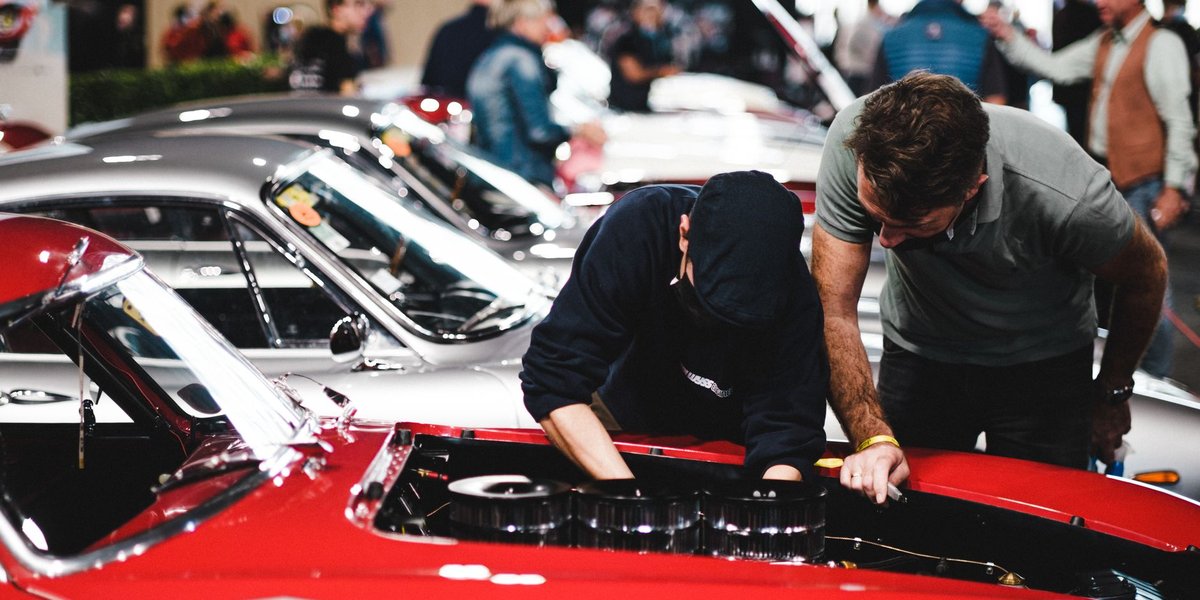
1967 was the year Ferrari could do almost nothing wrong. On the road, the 275 GTB/4 was the finest sports car the company had ever built. On the track, the 330 P4 swept Daytona and made Ferrari’s war with Ford look like a rout. And quietly, in the background, a small-displacement prototype called the Dino was pointing toward the direction Ferrari would take in the decade ahead.
That’s a lot to unpack. This guide covers every Ferrari produced or actively raced in 1967 — road cars, competition variants, and the prototype that changed the formula — with specs, production context, and what each one commands from collectors today.
Table of Contents
- Road Cars
- 275 GTB/4
- 275 GTS/4 NART Spider
- 330 GTC
- 330 GTS
- 365 California
- 500 Superfast
- Ferrari 330 GT 2+2 (Series II)
- Racing Cars
- 330 P4
- 412 P
- Dino 206 S
- 250 LM (continued racing)
- The Prototype
- Dino 206 GT Prototype
- Production Summary
- 1967 Ferrari Models at a Glance
- Collector Values
Road Cars
275 GTB/4
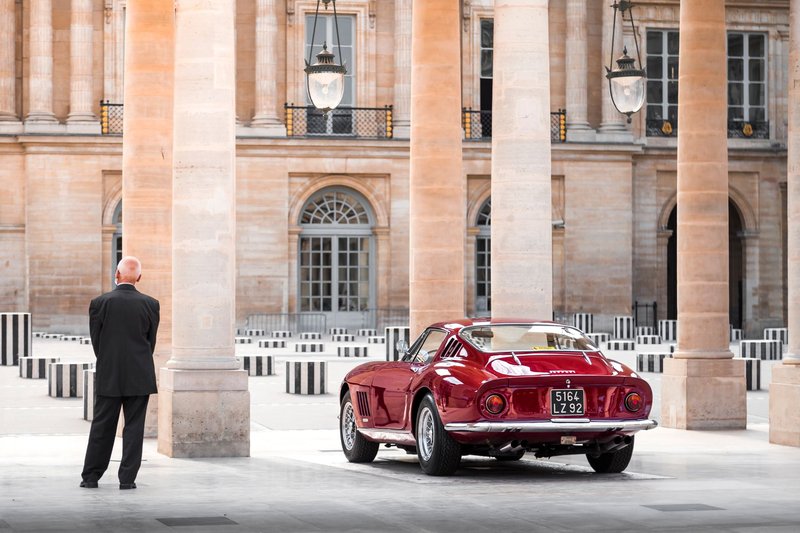
The GTB/4 is the one. If you’re arguing about the greatest road-going Ferrari of the 1960s, this is the car the argument usually ends at.
The “/4” designation stands for four-cam — a new twin-cam per bank head arrangement on the 3.3-liter V12 that pushed output to 300 hp at 8,000 rpm. Pininfarina penned the body; Scaglietti built it. The chassis used a torque tube connecting the engine to the rear-mounted transaxle, which distributed weight well enough that contemporary reviewers ran out of complaints.
Production ran from 1966 to 1968. Roughly 330 GTB/4s were built, making it scarce by any standard.
Collector value today: Auction results for clean examples have ranged from $2.5 million to over $3.5 million, depending on matching numbers and provenance.
Key specs:
- Engine: 3.3L DOHC V12 (4 camshafts)
- Power: 300 hp @ 8,000 rpm
- 0–60 mph: ~6.7 seconds
- Top speed: ~166 mph
- Production (total, 1966–68): ~330 units
275 GTS/4 NART Spider
Ten cars. That’s how many NART Spiders exist. Luigi Chinetti — Ferrari’s U.S. importer and the man who convinced Enzo to start racing in America — commissioned an open-top version of the GTB/4 for the American market. Ferrari reluctantly agreed to a run of ten.
The body was styled by Pininfarina and differs notably from the GTB/4: the rear treatment is softer, more Italian GT than racing thoroughbred. Steve McQueen owned one. That’s the kind of car this is.
Of those ten, nine were built in 1967 and one in 1968.
Current market value: These don’t come up often. When they do, expect $18–$27 million. A single NART Spider sold for $27.5 million at RM Sotheby’s in 2013.
Key specs:
- Engine: 3.3L DOHC V12
- Power: 300 hp
- Production: 10 total
- Coachbuilder: Pininfarina
330 GTC
The 330 GTC was Ferrari’s daily driver — if you were the kind of person for whom a Ferrari was a daily driver. It used the 4.0-liter V12 from the 330 GT 2+2 married to the chassis architecture of the 275 GTB, which meant it sat lower and handled better than the 2+2 it effectively replaced in the grand touring role.
Pininfarina built the body. It wasn’t dramatic, but it was elegant in a way that aged without any awkward stages. About 600 GTCs were produced between 1966 and 1968 — a high number by Ferrari standards, which kept prices relatively accessible for decades. They’ve been moving steadily upward since the early 2010s.
Key specs:
- Engine: 4.0L SOHC V12
- Power: 300 hp @ 7,000 rpm
- Torque: 245 lb-ft
- Production (total run): ~600 units
- Top speed: ~152 mph
330 GTS
The open-top companion to the GTC. Same mechanical package — 4.0-liter V12, 300 hp — but with a Pininfarina spider body instead of the fixed roof. Production was much lower: around 100 units total across the model’s run. That relative scarcity has made it the more expensive sibling, despite being mechanically identical.
Key specs:
- Engine: 4.0L SOHC V12
- Power: 300 hp
- Production (total run): ~100 units
365 California
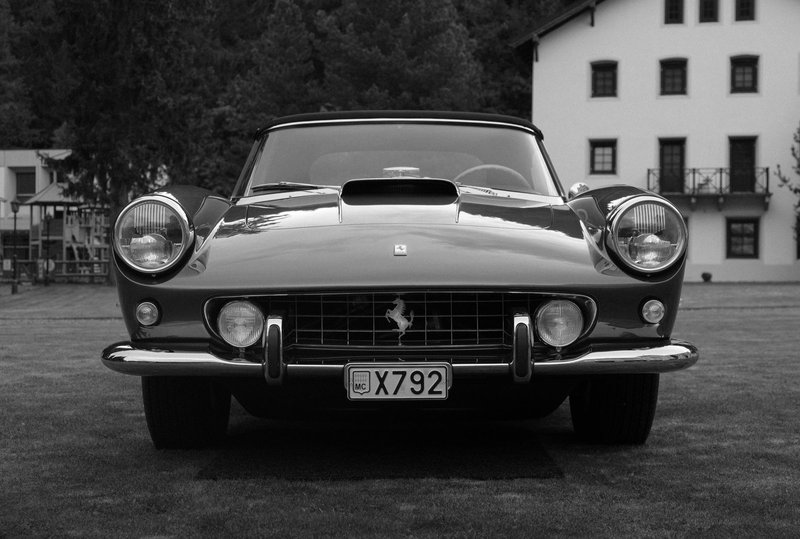
Ferrari made 14 of these. The 365 California was a long-wheelbase spyder built on a stretched version of the 330 platform, fitted with a 4.4-liter V12 producing 320 hp. It was Pininfarina’s idea of a touring convertible for customers who wanted something larger and more commanding than the GTS.
The California name was a nod to Chinetti’s market, but these cars were sold across Europe and the U.S. Production ran from 1966 to 1967. Every one was hand-built and subtly different from the next.
Collector values: $1.5–$2.5 million range, depending on condition and history.
Key specs:
- Engine: 4.4L SOHC V12
- Power: 320 hp @ 6,600 rpm
- Wheelbase: 2,650 mm (stretched)
- Production: 14 units
500 Superfast
The last of the Superfasts left the factory in 1966, but 1967 saw the final deliveries of a handful of cars whose builds carried over. By any measure, the 500 Superfast was Ferrari’s flagship — 5.0-liter V12, 400 hp, Pininfarina coachwork, built entirely to order for heads of state and industrialists who found everything else insufficiently large.
Shah of Iran ordered one. Peter Sellers ordered one. In total, 37 were built over the model’s run.
Key specs:
- Engine: 5.0L SOHC V12
- Power: 400 hp @ 6,500 rpm
- Production (total run): 37 units
330 GT 2+2 (Series II)
The 330 GT 2+2 had been in production since 1964. By 1967, it was in its Series II configuration — single headlights instead of the quad setup of Series I, and a more conventional (some would say improved) front end that made the car look less like a design argument and more like a finished product.
It used the same 4.0-liter V12 as the GTC, but with a longer wheelbase to accommodate rear seats. Approximately 1,000 units were built across both series, making it one of the more common Ferraris of the era and, accordingly, one of the more attainable today.
Key specs:
- Engine: 4.0L SOHC V12
- Power: 300 hp @ 7,000 rpm
- Seating: 2+2
- Production (total run, both series): ~1,000 units
Racing Cars
330 P4
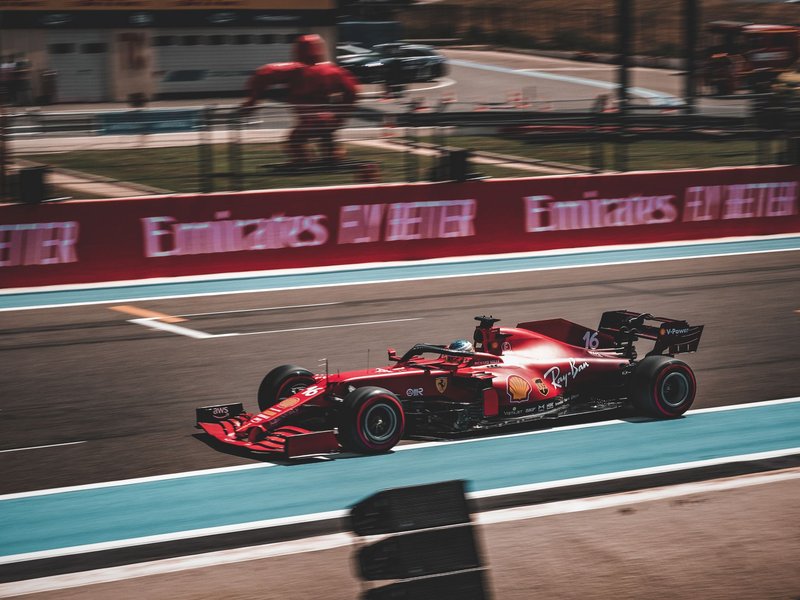
The 330 P4 is one of the most consequential racing cars Ferrari ever built. It was the direct answer to Ford’s GT40 program — and at Daytona in February 1967, it delivered: P4s finished 1-2-3 in a formation finish that Enzo Ferrari reportedly called “the most beautiful sight I’ve ever seen.”
The P4 used a 4.0-liter V12 producing approximately 450 hp in a low-slung prototype body that generated significant downforce even without the aerodynamic appendages that would become standard in later years. Three P4s were built, plus two cars reclassified from 330 P3/4 spec.
At Le Mans that year, the P4 was beaten by Ford — but the season record was compelling enough that Ferrari won the International Championship of Makes.
Key specs:
- Engine: 4.0L DOHC V12
- Power: ~450 hp @ 8,000 rpm
- Weight: ~800 kg
- Units built: 3 (plus 2 P3/4 conversions)
- Key results: 1st, 2nd, 3rd at Daytona 1967
412 P
The 412 P was built for private customers who wanted to compete at the top level without the factory team’s resources. It used a 4.0-liter V12 in a similar configuration to the P4 but with slightly less aggressive tune and different bodywork. Four were produced in 1967.
It represented Ferrari’s approach to customer racing at the prototype level: give serious teams a car that’s almost as fast as the works machines and let them handle the logistics.
Key specs:
- Engine: 4.0L DOHC V12
- Power: ~400 hp
- Production: 4 units
- Class: Group 6 prototype
Dino 206 S
Not named after a family member for marketing purposes — the Dino was named after Enzo’s son Alfredo (“Dino”), who died in 1956 and who had been working on a V6 configuration before his death. The 206 S was the racing version of that concept: a 2.0-liter V6 mid-engine sports prototype that competed in the under-2-liter class.
It was successful enough in its category to justify the road car program that would eventually produce the Dino 206 GT. The racing 206 S was built in small numbers — around 18 cars — and used a 2.0-liter DOHC V6 producing approximately 218 hp. For context on how this mid-engine configuration fit into the broader sports car landscape of the era, the complete list of 1960s sports cars covers the full range of machinery competing during this period.
Key specs:
- Engine: 2.0L DOHC V6
- Power: ~218 hp @ 9,000 rpm
- Weight: ~600 kg
- Production: ~18 units
250 LM (continued racing)
The 250 LM had been built in 1964 and 1965, but private teams continued campaigning it competitively through 1967. It’s worth including because it remained a presence in endurance racing that year — the NART car in particular ran at Daytona and Sebring.
The 250 LM was the last mid-engine Ferrari homologation attempt before FIA regulations tightened, and the last Ferrari to win outright at Le Mans (1965, driven by Masten Gregory and Jochen Rindt). By 1967 it was competitive against GT-class opposition, not factory prototypes.
The Prototype
Dino 206 GT Prototype
Shown at the Turin Motor Show in November 1966 and refined through 1967, the Dino 206 GT prototype was the production study for what would become Ferrari’s first mid-engine road car series. It was significant for a few reasons: the engine was transversely mounted, the displacement was 2.0 liters (small for Ferrari), and it would eventually be sold without a Ferrari badge.
Production of the 206 GT proper began in 1968. The 1967 prototypes confirmed the packaging, and a small number were evaluated before the production tooling was finalized.
The Dino program was Ferrari’s admission that a lighter, cheaper sports car had a market — and it was right. Across the Italian automotive landscape, 1967 was a year of similar ambition: Lamborghini’s 1967 lineup was equally forward-looking, with Ferruccio’s company charting its own mid-engine path just down the road in Sant’Agata.
Production Summary
| Model | Type | Engine | Power | Units (1967 / Total) |
|---|---|---|---|---|
| 275 GTB/4 | Road | 3.3L V12 | 300 hp | Partial / ~330 |
| 275 GTS/4 NART Spider | Road | 3.3L V12 | 300 hp | 9 / 10 |
| 330 GTC | Road | 4.0L V12 | 300 hp | Partial / ~600 |
| 330 GTS | Road | 4.0L V12 | 300 hp | Partial / ~100 |
| 365 California | Road | 4.4L V12 | 320 hp | Partial / 14 |
| 500 Superfast | Road | 5.0L V12 | 400 hp | Final deliveries / 37 |
| 330 GT 2+2 S2 | Road | 4.0L V12 | 300 hp | Partial / ~1,000 |
| 330 P4 | Racing | 4.0L V12 | ~450 hp | 3 |
| 412 P | Racing | 4.0L V12 | ~400 hp | 4 |
| Dino 206 S | Racing | 2.0L V6 | ~218 hp | ~18 |
| Dino 206 GT Proto | Prototype | 2.0L V6 | — | Pre-production |
Collector Values
Road Ferraris from 1967 have appreciated substantially since the early 2010s. Here’s a rough current range for clean, numbers-matching examples:
- 275 GTB/4: $2.5M–$3.8M
- 275 GTS/4 NART Spider: $18M–$27M+
- 330 GTC: $550K–$850K
- 330 GTS: $1.2M–$1.8M
- 365 California: $1.5M–$2.5M
- 500 Superfast: $2M–$3.2M
- 330 GT 2+2: $150K–$350K
Racing variants — particularly the 330 P4 — trade at the very top of the classic car market when they surface at all. The three P4s are all accounted for in major collections; none have traded publicly in recent years. The 412 P has appeared at auction with results in the $10M–$20M range for well-documented examples.
The Sports Car Market annual index and RM Sotheby’s results database are the most reliable sources for tracking where these cars actually clear, as asking prices in private sales often diverge significantly from transaction prices.
For historical race results and chassis documentation, the Automobilismo Storico Ferrari registry maintained by the factory is the authoritative source.
1967 represents Ferrari near its peak as an integrated road-and-racing program. The road cars were the finest the company had produced to that point. The racing cars were winning at the highest levels. And the prototypes being evaluated that year would define the next decade’s product direction. Not many manufacturers can say that about any single calendar year. Ferrari could say it about this one.
Marco Delantero
More from Marco DelanteroHow we reviewed this article
This article was researched against manufacturer records and editorially reviewed before publishing. We accept no payment for coverage.