Table of Contents
- A Piano Company Bets on Two Wheels
- The YA-1 “Red Dragonfly” (1955)
- The DKW Question: Copy or Homage?
- The YC-1: The Deluxe Nobody Remembers (1956)
- The YD-1: Yamaha’s First Real Racer (1957)
- Catalina, 1958: Yamaha Crosses the Pacific
- The YDS-1: The Bike That Justified the Decade (1959)
- 1950s Yamaha Models, Side by Side
- What These Bikes Are Worth Now
- FAQ
A Piano Company Bets on Two Wheels
Yamaha Motor didn’t exist until July 1, 1955. Before that, it was a division inside Nippon Gakki — the piano and instrument maker Torakusu Yamaha founded back in 1887 — running on wartime machine tools that had gone quiet once the war ended. Chairman Genichi Kawakami was staring down idle metalworking equipment and a company that needed a second act. Motorcycles were the answer.
That’s the part every retrospective gets right. What gets flattened is how fast it happened. Kawakami greenlit the project, sent engineers on a research tour of German and American factories, and had a finished, race-winning motorcycle on the road within about a year. No motorcycle heritage, no in-house engine expertise, no dealer network — just a five-year sprint from zero to a machine capable of beating British and Italian bikes on their own tracks. That sprint is the real story of 1950s Yamaha, and it plays out across five specific motorcycles: the YA-1, YC-1, YD-1, an unnamed batch of Catalina racers, and the YDS-1.
The YA-1 “Red Dragonfly” (1955)
The YA-1 was Yamaha’s first motorcycle and, by any fair reading, a gamble that paid off immediately. It ran a 123cc air-cooled two-stroke single making 5.5 hp at 5,000 rpm, weighed about 94 kg dry, topped out near 80 km/h, and sold for 138,000 yen — real money in postwar Japan, roughly what a young engineer earned in several months. It also carried a four-speed transmission at a time when most bikes in its class made do with three.
Yamaha painted it a distinctive chestnut red instead of the funereal black every competitor used, and riders started calling it Akatombo — the Red Dragonfly. The nickname stuck because the bike backed it up: days after launch, the YA-1 took third at the Mount Fuji Ascent Race, then swept the top three spots in the ultralight class at the first Asama Highlands Race later that year. For a company with no motorcycle track record, winning outright on debut wasn’t a good omen. It was a statement.
The DKW Question: Copy or Homage?
Here’s the detail most YA-1 writeups soft-pedal: the bike was a close copy of the German DKW RT125, a 1930s design that Germany had to release patent-free as part of postwar reparations under the Treaty of Versailles. That’s not conjecture or a knock on Yamaha — it’s the same legal loophole BSA used for the Bantam, Harley-Davidson used for the Hummer, and the Soviet Union used for the Moskva M1A. The RT125 is arguably the most-copied engine design in motorcycling history, and Yamaha’s version is one entry in a long list.
What separates the YA-1 from most of that list is what Yamaha’s engineers did with the freedom. They kept the DKW’s basic 125cc two-stroke architecture but rebuilt the details around it: a four-speed gearbox instead of three, tighter tolerances, better materials, and styling nobody would mistake for a German utility bike. Cambridge University’s research on postwar German restitution notes just how routinely wartime patent seizures reshaped entire manufacturing sectors — motorcycles included — and the RT125’s afterlife is one of the cleanest examples. Yamaha didn’t invent the formula. It’s fair to say it out-executed everyone else who was handed the same one.
The YC-1: The Deluxe Nobody Remembers (1956)
The YC-1 debuted at the April 1956 Tokyo Motor Show as the upmarket YA-1, and it’s the model every “history of Yamaha” listicle skips past on the way to the racing bikes. That’s a mistake — it’s the bike that shows Yamaha wasn’t just chasing lap times, it was building a product line.
The YC-1 bumped displacement to roughly 175cc, switched to a grayish-brown finish the marketing copy described as evoking wet Parisian pavement, and introduced Japan’s first domestically made monobloc carburetor. None of that sounds dramatic next to a Mount Fuji race win, but it’s the unglamorous engineering work — carburetion, finish, fit — that turns a single hit product into a company that can survive its second and third model years.
The YD-1: Yamaha’s First Real Racer (1957)
By 1957, Yamaha stopped adapting a German design and started building its own. The YD-1 was purpose-built for the second Asama Highlands Race: a 247cc air-cooled two-stroke parallel twin in a double-cradle steel frame, making around 15 hp at 6,000 rpm, and weighing roughly 100 kg — about 20 kg lighter than rival machines in its class. Two variants ran different bore-stroke ratios (54x54mm and 56x50mm) as the factory tested which combination handled Asama’s rough volcanic terrain better.
It worked. The YD-1 took first through third place at the 1957 Asama Highlands Race, a result that mattered more than the Mount Fuji win two years earlier because this time the competition included established Japanese manufacturers who’d had a full extra generation of racing experience. Yamaha had gone from copying a German commuter bike to out-engineering its domestic rivals in under two years.
Catalina, 1958: Yamaha Crosses the Pacific
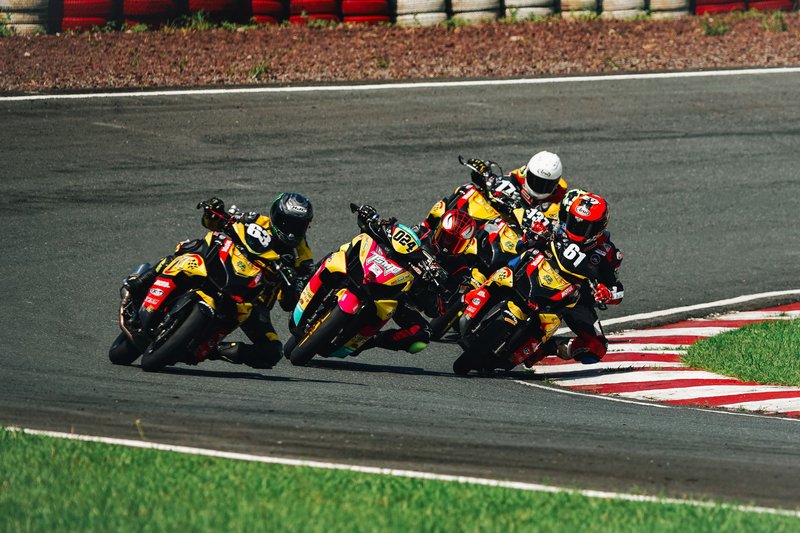
In May 1958, Yamaha shipped five race-prepped YD-1s to Santa Catalina Island off the California coast for the Catalina Grand Prix — the company’s first race outside Japan. The bikes weren’t stock: smaller fuel tanks borrowed from the YA-1 parts bin, high pipes, and raised footpegs for the rough island course.
The race chewed through the field. Of 32 starters, only 11 finished. Fumio Ito, the sole Japanese rider on a team otherwise staffed by local Americans, brought his YD-1 home in sixth — respectable for a manufacturer nobody in California had heard of a year earlier, and proof the bikes that had just dominated a Japanese mountain race could survive an American beach circuit too. The Catalina Grand Prix itself wouldn’t run much longer; a rowdy incident involving spectators led organizers to cancel future events, but by then Yamaha had already gotten what it came for: a foothold in the American market and a name American riders now recognized.
The YDS-1: The Bike That Justified the Decade (1959)
Everything before 1959 was preparation. The YDS-1 — launched that July as the “250S” before a name change after roughly 3,000 units shipped — was Yamaha’s first genuine sport bike, built for street riders who wanted something closer to the race machines than the commuter-grade YA-1. A 249cc twin (53.3mm bore and stroke) made 20 hp and pushed the bike to roughly 140 km/h, nearly double the YA-1’s top speed just four years after that bike’s debut.
That jump matters more than the raw numbers suggest. In four years, Yamaha had gone from a 5.5 hp commuter copying a 1930s German design to a 20 hp original sport bike beating dedicated racers. The YDS-1 is the model that turned “promising newcomer” into “manufacturer to watch,” and it set the template — twin-cylinder two-stroke sport bikes — that Yamaha would refine for the next two decades.
1950s Yamaha Models, Side by Side
| Model | Year | Engine | Power | Weight | Top Speed | Price (new) |
|---|---|---|---|---|---|---|
| YA-1 “Red Dragonfly” | 1955 | 123cc single, 2-stroke | 5.5 hp | ~94 kg | ~80 km/h | 138,000 yen |
| YC-1 | 1956 | ~175cc single, 2-stroke | n/a | n/a | n/a | n/a |
| YD-1 | 1957 | 247cc twin, 2-stroke | ~15 hp | ~100 kg | n/a | n/a |
| Catalina racer | 1958 | 247cc twin (modified YD-1) | ~15 hp | ~100 kg | n/a | not sold |
| YDS-1 | 1959 | 249cc twin, 2-stroke | 20 hp | n/a | ~140 km/h | n/a |
Surviving factory records don’t cover every spec for every model — the YC-1 in particular is thin on documented numbers, which tracks with how overlooked it is even among Yamaha historians. The pattern that does survive clearly: displacement, power, and top speed all roughly doubled in the span of four model years.
What These Bikes Are Worth Now
Original 1950s Yamahas are rare enough that “market value” is more anecdote than data. A 1955 YA-1 listed in Santa Ana went unsold at a $12,000 opening bid; a Japan-based YA-1 drew 36 bids up to roughly $9,000 without hitting reserve. Later YA-series bikes trade for far less — a c.1971 YAS1, a completely different and much more common model, sold at Bonhams for around £1,380. The gap between those numbers is the whole story: it’s specifically the 1955–1959 originals, not anything wearing a similar badge, that carry real premiums — a trait shared across the rarest classic motorcycle brands.
Condition and paperwork matter more than usual here. Most surviving YA-1s have been re-imported, restored, or reassembled from parts bikes over seven decades, so a documented original frame and matching engine numbers move the price far more than they would on a common-year classic. Parts scarcity compounds it — nobody’s stamping new YA-1 fenders, and a bike missing its original monobloc carburetor or correct chestnut-red paint is a different, cheaper animal than one that isn’t. If you’re chasing an original rather than a tribute build, budget for a slow search and a mechanic who’s worked on prewar-derived two-strokes before, not a weekend project.
FAQ
What was Yamaha’s first motorcycle? The YA-1, nicknamed the Red Dragonfly for its chestnut-red paint, released in February 1955 as Yamaha Motor’s first product.
Was the Yamaha YA-1 really a copy of a German bike? Yes, largely. It closely followed the DKW RT125, a German design released patent-free after WWII as part of postwar reparations — the same design BSA, Harley-Davidson, and Soviet manufacturers also copied. Yamaha’s version added a four-speed gearbox and refined materials the original didn’t have.
What races did Yamaha win in the 1950s? The YA-1 won its class at the 1955 Mount Fuji Ascent Race and swept the ultralight class at the first Asama Highlands Race that same year. The YD-1 took first through third at the 1957 Asama Highlands Race and represented Yamaha at the 1958 Catalina Grand Prix in California, its first race outside Japan.
Which 1950s Yamaha is the most collectible? The YA-1 commands the strongest interest as the founding model, with documented originals reaching five figures at auction. YD-1s and YDS-1s are rarer still but change hands infrequently enough that pricing data is sparse.
The Five Years That Built a Motorcycle Company
Line the five models up and the decade reads less like a series of releases and more like one continuous engineering argument Yamaha was having with itself: could a piano company build something that actually won? The YA-1 answered tentatively. The YD-1 and Catalina entry answered more firmly. The YDS-1 closed the argument. By 1960, the question wasn’t whether Yamaha belonged on a racetrack — it was how many of them the company would end up dominating.

Sarah Thornton
More from Sarah ThorntonHow we reviewed this article
This article was researched against manufacturer records and editorially reviewed before publishing. We accept no payment for coverage. Some guides contain affiliate links; see our affiliate disclosure.