Most Bugatti retrospectives sprint through the 1920s in a paragraph or two on their way to the modern Chiron. That’s backwards. The 1920s is the decade Ettore Bugatti actually built his reputation — five distinct models, one of the winningest race cars ever made, and a luxury car so extravagant it helped bankrupt its own maker. Here’s every model that came out of the Molsheim factory between 1920 and 1929, in order, with the numbers that matter.
Table of Contents
- The 1920s Bugatti Lineup at a Glance
- Type 13 “Brescia”: The Car That Started It
- Type 30: The First Straight-Eight You Could Buy
- Type 32 “Tank de Tours”: One Race, One Strange Idea
- Type 35: Why It Won Almost Everything
- Type 41 Royale: Six Cars, One Impossible Ambition
- Type 43: The Grand Prix Car You Could Drive to Dinner
- How Many Survive, and What They’re Worth Now
The 1920s Bugatti Lineup at a Glance
| Model | Years | Engine | Built | Signature Fact |
|---|---|---|---|---|
| Type 13 “Brescia” | through 1926 | 1.5L 4-cyl, 8 or 16 valve | ~435 | Swept the top four places at the 1921 Brescia Grand Prix |
| Type 30 | 1922–1926 | 2.0L straight-8 | ~600 | First road-going Bugatti with an eight-cylinder engine |
| Type 32 “Tank de Tours” | 1923 only | 2.0L straight-8 | 5 | Built for a single Grand Prix, then quietly retired |
| Type 35 (and 35A/B/C/T) | 1924–1930 | 2.0–2.3L straight-8, some supercharged | ~340 | Roughly 2,500 race wins; five straight Targa Florios |
| Type 41 Royale | 1926–1933 | 12.7L straight-8 | 6 | Only three chassis found buyers |
| Type 43 | 1927–1931 | 2.3L supercharged straight-8 | ~160 | First production car to top 100 mph |
Type 13 “Brescia”: The Car That Started It
Ettore Bugatti set up shop in a former dyeworks in Molsheim, Alsace, in 1910, and the Type 13 was the first car to wear his name on the radiator. By the time the 1920s opened, it had already gone through more than a decade of small, incremental refinement — a 1.5-liter four-cylinder engine, eight valves on road cars, sixteen on the racers, which was practically unheard of at the time.
The car got its lasting nickname in 1921, when four Type 13s took the top four spots at the Voiturette Grand Prix in Brescia, Italy. Bugatti didn’t just win — he embarrassed the field. That result is the reason the model is still called the “Brescia” a century later, and it’s the reason racing became the core of Bugatti’s identity rather than a marketing sideline. Around 435 Type 13s and its close variants were built in total, most of them small enough to fit in a modern parking space, and light enough that a determined owner could push one out of a ditch alone.
Type 30: The First Straight-Eight You Could Buy
The Type 30, launched in 1922, is the model that turned Bugatti from a maker of clever small cars into a maker of serious ones. It borrowed its 2.0-liter straight-eight from the Type 29 racer and dropped it into a chassis that shared its bones with the Brescia — proof that Bugatti’s racing program wasn’t a separate department, it was the R&D lab for everything else the company sold.
About 600 Type 30s were built between 1922 and 1926, in touring, sport, and racing trim. It wasn’t a spectacular car on its own — road-going examples were tuned for smoothness over savagery — but it normalized the straight-eight layout that would define every serious Bugatti for the rest of the decade, including the two cars that made the brand immortal.
Type 32 “Tank de Tours”: One Race, One Strange Idea
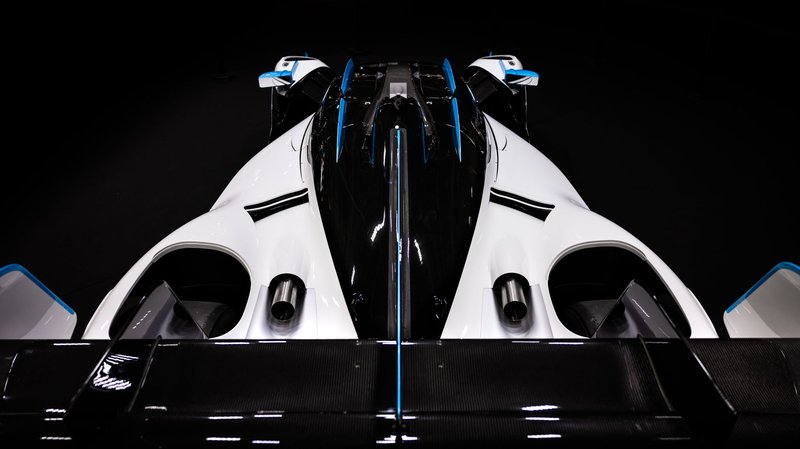
The Type 32, built for the 1923 French Grand Prix at Tours, is the decade’s oddball. Bugatti wrapped the Type 30’s 2.0-liter straight-eight in a short, wedge-shaped, fully enclosed body designed to cut wind resistance — decades before anyone called it aerodynamics. The press nicknamed it the “Tank de Tours” because, from a distance, that’s exactly what it looked like.
Only five were made: one prototype and four race cars. The short wheelbase put most of the car’s weight over the front axle, which made it fast in a straight line and miserable everywhere else — drivers complained it was nearly impossible to place through a corner. Bugatti pulled the design after Tours and never revisited it in this form. But the instinct behind it — that shape could be worth as much as horsepower — resurfaced constantly in the streamlined bodies that later Bugattis wore at Le Mans and beyond.
Type 35: Why It Won Almost Everything
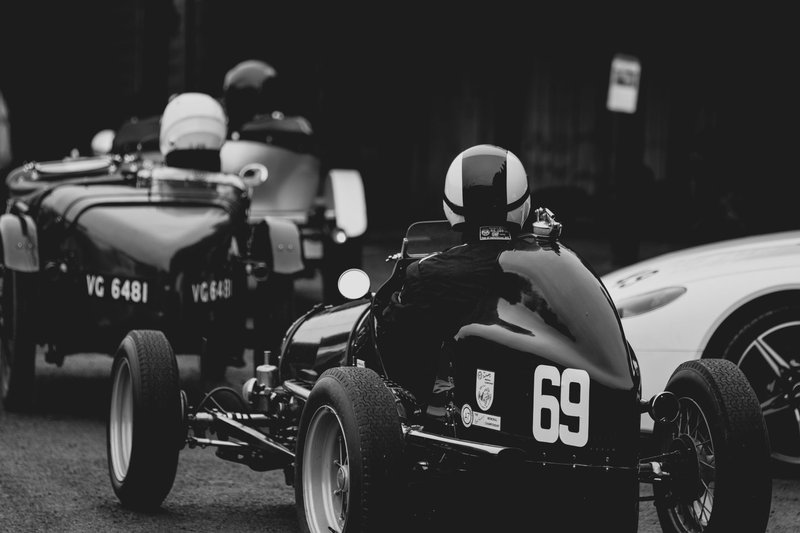
If you can only remember one Bugatti from this decade, it’s this one. The Type 35 debuted at the 1924 Grand Prix de Lyon and, over the next six years, became arguably the most successful racing car ever built — somewhere north of 2,500 victories across circuit racing, hillclimbs, and rallies, including five consecutive Targa Florio wins from 1925 through 1929 and the inaugural 1926 Grand Prix World Championship.
The winning formula wasn’t just the 2.0-liter overhead-cam straight-eight, though the later supercharged 35B and 35C variants pushed output from roughly 90 horsepower up to around 140. It was the details most rivals ignored. Bugatti cast the wheels from aluminum alloy with the brake drums built in as a single unit — lighter unsprung weight, and a full wheel-and-brake change in under a minute during a pit stop, at a time when most teams were still wrestling with bolted-on drums. The horseshoe-shaped radiator grille became the most recognized nose in motorsport. And Bugatti put serious talent behind the wheel, including Louis Chiron, Tazio Nuvolari, and two of the era’s most accomplished female racers, Hellé Nice and Eliška Junková — a driver roster that Top Gear later ranked among the most storied in the history of the sport. Around 340 examples were built across every variant, which by racing-car standards of the 1920s counts as mass production.
Type 41 Royale: Six Cars, One Impossible Ambition
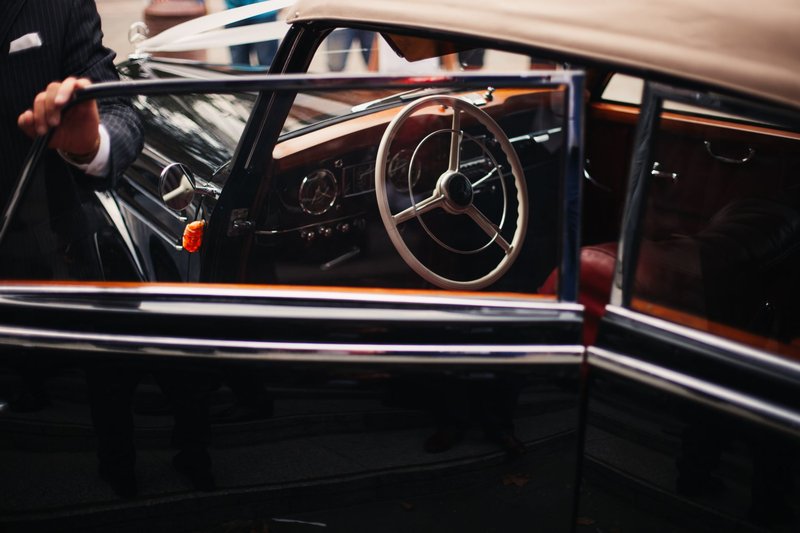
The Royale is the decade’s cautionary tale, and its best story. Ettore Bugatti reportedly conceived it after an aristocratic customer suggested only a Rolls-Royce was fit for royalty — so he set out to build something bigger, heavier, and more expensive than anything Rolls-Royce made. The result: a 12.7-liter straight-eight engine, a 6.4-meter overall length, a curb weight over three tons, and a hood ornament shaped like a dancing elephant, sculpted by Ettore’s late brother Rembrandt, a serious artist in his own right.
Bugatti planned to build 25 and sell them exclusively to royalty—a clientele typical of 1920s luxury cars. He built six. Only three found buyers before the Great Depression made a 12-cylinder-engined car the size of a small yacht an impossible sell, even to the aristocracy it was designed for — a fact The Henry Ford museum, home to one of the surviving cars, documents in detail. Each of the six wore a different coachbuilt body — from Kellner, Weymann, Binder, and Bugatti’s own in-house works — because there was never a production line to standardize, just six extraordinarily expensive one-offs. That rarity caught up with the market eventually: in 1987, the Kellner-bodied coupe sold at a Christie’s auction in London for £5.5 million, then a world record for any car sold at auction.
Type 43: The Grand Prix Car You Could Drive to Dinner
Launched in 1927, the Type 43 solved a problem Bugatti’s wealthiest customers had been complaining about: they wanted Type 35 performance without giving up fenders, headlights, and a passenger seat. Bugatti obliged by taking the Type 35B’s supercharged 2.3-liter straight-eight, detuning it slightly to around 120 horsepower, and wrapping it in a road-legal touring body.
The result was the first production car ever to break 100 mph — a genuine 110 mph in a car you could register and drive to a restaurant, at a time when most manufacturers were still selling cars that struggled past 60. About 160 were built through 1931, and it remains the clearest evidence of how directly Bugatti’s racing program fed its road cars during this stretch: the Type 43 isn’t inspired by the Type 35, it basically is one, with doors.
How Many Survive, and What They’re Worth Now
Ask a Bugatti specialist how many 1920s cars still exist and you’ll get a careful answer, because the honest one is complicated. Roughly 340 Type 35s were built, but decades of hard racing, wartime disruption, and cars rebuilt from mixed parts over the years mean estimates of genuine surviving chassis run as low as 140–150, even though a much larger population of cars built up around period-correct components circulates in the collector world today. It’s less a controversy than a fact of pre-war car ownership: almost nothing from this era survived intact, and most of what’s left has been reassembled at least once.
That scarcity shows up in the auction results. A 1928 Type 35C sold for $5.23 million at a Gooding & Company sale — a record for the model — while ordinary Type 35 variants regularly clear seven figures. The Royale sits in its own category entirely: with only six built and most now in museum or foundation hands, one hasn’t come to public auction in decades, but the 1987 sale of the Kellner coupe remains a benchmark for what a genuinely unique pre-war car can command.
None of this was inevitable in 1920. Bugatti was a small, stubborn operation building cars by instinct as much as engineering — and in one decade, it went from a promising cyclecar maker to the builder of the winningest race car in history and the most extravagant road car anyone had ever attempted. The Chiron and Veyron get the headlines now, but the case for Bugatti was made in Molsheim a century ago, one Grand Prix at a time.

Daniela Voss
More from Daniela VossHow we reviewed this article
This article was researched against manufacturer records and editorially reviewed before publishing. We accept no payment for coverage. Some guides contain affiliate links; see our affiliate disclosure.