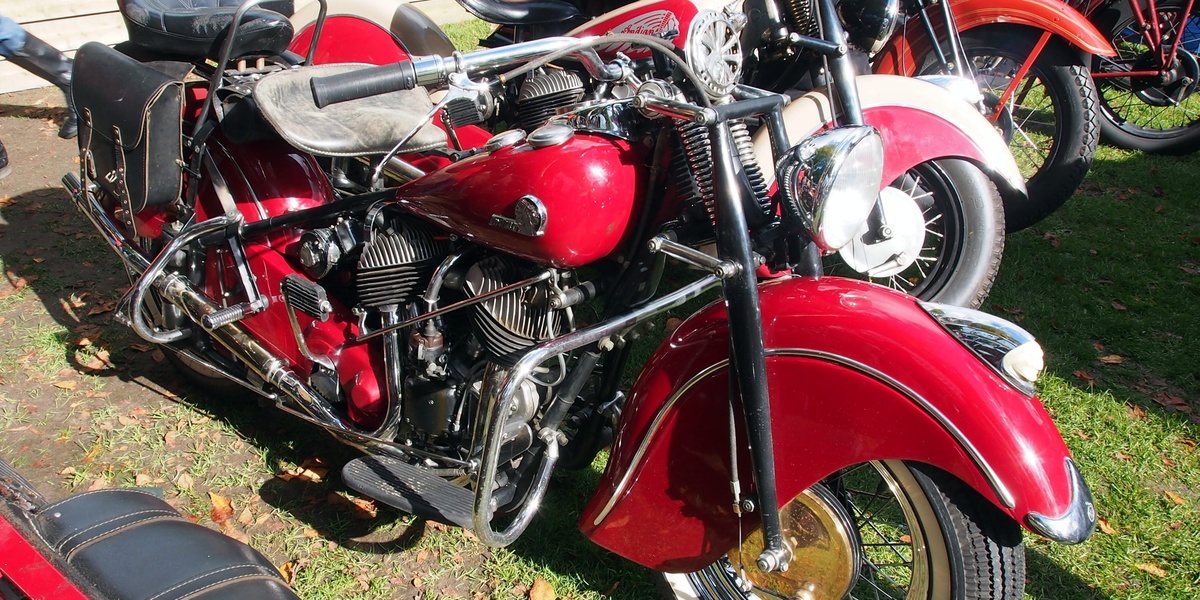
The history of Indian motorcycles spans more than a century of American two‑wheeled design, racing, and cultural influence. These machines range from early single‑cylinder runabouts to heavyweight V‑twins, sportier Scouts, and large touring baggers, reflecting changing technology and rider tastes. Known for distinctive styling and a strong presence in early motorcycle racing, Indian models have shaped motorcycle culture in the United States and abroad. This introduction orients readers to the variety, engineering lineage, and cultural significance that emerge when looking at Indian motorcycles across different decades.
Context
Indian Motorcycle was founded in 1901 in Springfield, Massachusetts, by George M. Hendee and engineer Oscar Hedstrom. Early in the 20th century the company became one of the largest motorcycle manufacturers in the world, competing directly with Harley‑Davidson and earning a reputation through racing success and product innovation. Iconic models such as the Scout and Chief helped define the brand’s image in the 1920s and 1930s. The original company went through financial struggles and ownership changes in the mid‑20th century, and the name passed through several revivals. In 2011, Polaris Industries acquired the Indian brand and invested in renewed production and modern model development. Today Indian motorcycles are marketed as a range of cruisers, baggers, and touring machines, blending historical design cues with contemporary engineering to appeal to classic‑style and performance‑oriented riders alike.
Scope and coverage
This collection of Indian Motorcycles by Decade encompasses an overview of how the brand’s models, technology, and style evolved from the early 1900s through the present. The lineup includes early single‑cylinder machines, classic V‑twin cruisers, military and competition bikes, and modern touring and performance variants. Coverage focuses on changes in drivetrain and chassis design, notable models by era, and shifts in production and ownership that influenced design choices. Rather than exhaustive model biographies, the series presents decade‑level snapshots that highlight major trends, representative models, and cultural touchpoints that shaped each period.
Little-known facts about Indian motorcycles:
- Indian Motorcycle was founded in 1901 in Springfield, Massachusetts, by George M. Hendee and Oscar Hedstrom.
- The Scout, introduced in 1920, and the Chief, introduced in 1922, became two of the brand’s most influential models.
- Indian predates Harley‑Davidson; Harley was founded in 1903, making Indian one of the earliest American motorcycle manufacturers.
- Indian achieved significant early success in competitive racing and hill‑climb events, helping build the brand’s reputation for performance.
- The marque changed hands several times during the 20th century and was acquired by Polaris Industries in 2011, leading to a modern production revival.
- Across decades, Indian designs have mixed historical styling cues with updates in engine, braking, and electronics to meet evolving rider expectations.