Most people who search for “1930s Ducati motorcycles” are about to be surprised. Because in the 1930s, Ducati wasn’t making motorcycles. They were making radios. And cameras. And electric razors. At one point, jukeboxes. The company that would become synonymous with Italian performance bikes spent its first fifteen years as one of Italy’s most important electronics manufacturers — with 11,000 employees and a factory complex that had no parallel in the country.
This isn’t a footnote in Ducati’s history. It’s the foundation of everything that came after.
Table of Contents
- The 1926 Founding
- What Ducati Actually Made in the 1930s
- The Borgo Panigale Factory
- World War II and Operation Pancake
- How the Destruction Led to Motorcycles
The 1926 Founding
Ducati was founded in Bologna in 1926 by three brothers: Adriano, Marcello, and Bruno Cavalieri Ducati. The family’s money came from Adriano Ducati, a physicist and electrical engineer with a genuine talent for translating scientific principles into sellable products.
The company’s official name at founding was Società Scientifica Radio Brevetti Ducati — a name that tells you everything. “Scientific Society for Ducati Radio Patents.” Not a word about motorcycles. The business started in a modest facility in Bologna and focused initially on radio condensers, the small capacitors that were becoming essential components in the exploding consumer radio market.
Italy in the late 1920s was a country going through rapid electrification and modernization under fascist industrial policy. There was enormous government and private appetite for manufactured electronics. Ducati positioned itself exactly where that demand was highest.
The company grew fast.
What Ducati Actually Made in the 1930s
By the early 1930s, Ducati had expanded well beyond condensers. Their product line included:
- Radios: Consumer broadcast receivers for the growing home market
- Cameras: The Ducati Sogno and related models — compact, Italian-made
- Shavers: Electric razors under the Rasoir brand
- Optical equipment: Instruments for scientific and industrial use
- Jukeboxes: Coin-operated phonographs for cafés and bars
- Military communications equipment: A category that would grow substantially as Europe moved toward war
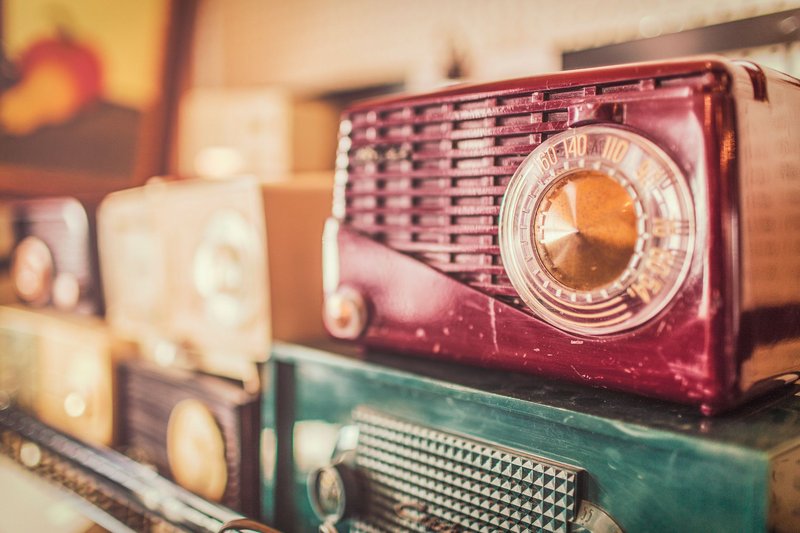
The scale of this operation is worth pausing on. By the mid-1930s, Ducati employed around 11,000 people. For context, that made them Italy’s second-largest electronics company. The workforce was comparable to many of the country’s heavy industrial firms. This wasn’t a workshop making clever gadgets — it was a serious manufacturer operating at national scale.
Adriano Ducati’s approach was consistently to go after the technology at the frontier of what consumers could actually use. Radios in the 1920s. Cameras and sound equipment as those markets matured. The company’s instinct for consumer electronics wasn’t accidental; it was a deliberate business strategy built on real engineering capability.
The Borgo Panigale Factory
The most consequential event of Ducati’s 1930s wasn’t a product launch — it was a construction project.
In 1935, with the company’s workforce and production capacity straining the original Bologna facilities, Ducati broke ground on a massive new factory in Borgo Panigale, a small community on the western outskirts of Bologna. The location was chosen for its available land and proximity to transportation infrastructure. The facility was designed from the start to be a large-scale industrial complex — not an expansion, but a replacement for everything that had come before.
Borgo Panigale would become, and remains today, synonymous with Ducati. The address on every modern Ducati motorcycle — Via Cavalieri Ducati, Borgo Panigale — traces directly back to this 1935 construction decision.
When the factory opened, it consolidated Ducati’s electronics production under one roof in a purpose-built environment. The company’s engineers and workers moved into a facility that, by late-1930s Italian standards, was state of the art. The Borgo Panigale complex represented a genuine long-term bet on Ducati’s future as an industrial manufacturer.
That bet almost didn’t survive the decade that followed.
World War II and Operation Pancake
Italy’s entry into World War II in June 1940 on the side of the Axis immediately changed the character of Ducati’s production. The factory shifted toward military electronics — communications equipment, components for the Italian armed forces, and materiel that kept the company operating under wartime industrial directives.
As Allied forces pushed up through Italy following the 1943 armistice and the subsequent German occupation of northern Italy, the industrial infrastructure of the Po Valley became a strategic target. The Borgo Panigale factory — large, productive, and oriented toward military production — was exactly the kind of facility Allied planners wanted to eliminate.
On October 12, 1944, the Royal Air Force carried out a bombing raid on the Borgo Panigale industrial zone. The mission, sometimes referred to as Operation Pancake, targeted the factories in the area with the specific goal of disrupting German industrial capacity in occupied Italy. The Ducati factory took direct hits.
The damage was severe. Large portions of the facility were destroyed or heavily damaged. The industrial complex that Ducati had spent nearly a decade building was gutted.
How the Destruction Led to Motorcycles
The post-war situation facing Ducati was bleak in the way it was bleak for most of industrial Italy. The factory needed rebuilding. The pre-war product lines needed reassessment. And the economic reality of postwar Italy — a population that needed cheap, practical transportation and had very little money — was not particularly conducive to consumer electronics.
Into this gap came the Cucciolo.
The Cucciolo (“puppy” in Italian) was a small auxiliary engine — a 48cc clip-on motor designed to attach to a bicycle and give it motorized assistance. The design had been developed during the war by a Turin engineer named Aldo Farinelli, and the rights were acquired by a company called SIATA, which began selling it in 1945. Ducati licensed the design shortly after and began manufacturing the engine at the rebuilt Borgo Panigale factory.
The Cucciolo was exactly what postwar Italian consumers needed: minimal fuel consumption, low purchase price, practical daily utility. Ducati sold enormous numbers of them. By 1950, demand had grown enough that Ducati developed a complete motorcycle around the Cucciolo engine — a proper frame, proper suspension, the whole vehicle rather than just the motor. The Ducati 60 and its successors were the company’s entry into motorcycle manufacturing proper.
The path from electronics company to motorcycle manufacturer ran directly through the destruction of 1944 and the economic necessities of reconstruction. Had the war not demolished the Borgo Panigale factory, it’s genuinely unclear whether Ducati would ever have pivoted to vehicles. The Cucciolo solved an immediate problem in a devastated market. The motorcycles followed from that solution.
Ducati’s 1930s story is the story of a company that built something substantial — a national electronics manufacturer with 11,000 employees and a flagship factory — and then had it taken apart by history. The motorcycles came later, out of necessity and adaptation. The brand’s identity today is entirely built on what happened after the decade this article covers.
That’s worth knowing before you pull up to a red light on an 1199 Panigale and think Ducati has always been about bikes.

Marco Delantero
More from Marco DelanteroHow we reviewed this article
This article was researched against manufacturer records and editorially reviewed before publishing. We accept no payment for coverage.