1954 was the year the American car industry stopped coasting on postwar demand and started fighting for it. Buyers had caught up. The seller’s market that let Detroit move anything with four wheels and a warranty was gone, dealers were sitting on inventory, and the result was the first real horsepower-and-styling war of the decade. Roughly $350 million in retooling went into new bodies and engines, and you can see it in almost every car on this list.
This is the full picture: the Chevys and Fords most people actually drove, the luxury barges, the independents fighting for their lives, and the exotic sports cars that made 1954 a landmark year for enthusiasts. Specs, context, and why a few of these are worth real money today.
Table of Contents
- What was happening in 1954
- American mass-market cars
- American luxury cars
- The independents
- Sports cars and exotics
- Which 1954 cars are worth collecting
What was happening in 1954
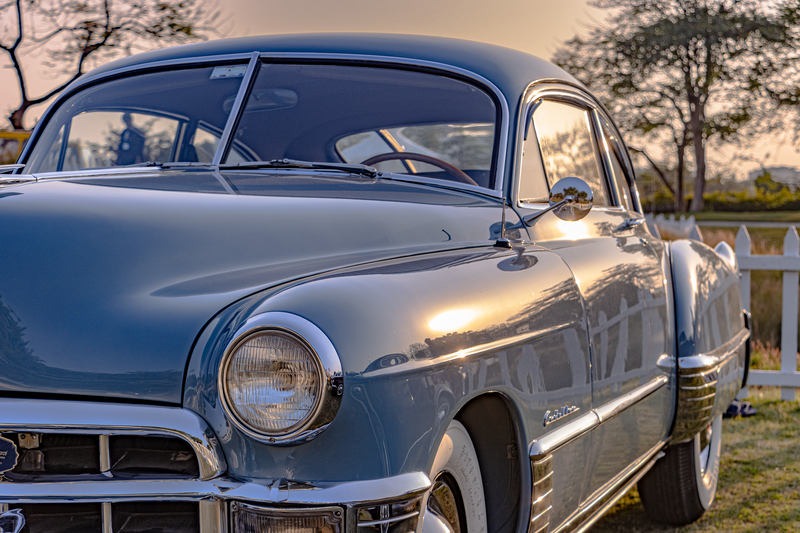
Three things define the 1954 model year, and they all show up in the cars.
First, the V-8 race went mainstream. Chevrolet and Ford had spent years selling inline-sixes and flatheads while buyers stared longingly at Cadillac and Oldsmobile overhead-valve V-8s. By 1954 the pressure was unbearable — both brands were a year away from launching the small-block and the Y-block engines that would end the six’s reign. 1954 was the last stand for the old motors, which makes it a strange hinge year: cars that looked thoroughly modern, powered by engines on borrowed time.
Second, the industry consolidated. Nash and Hudson merged to form American Motors in May 1954, and Studebaker and Packard combined later that year. These weren’t mergers of strength. They were two pairs of drowning companies grabbing each other, and the cars from both groups carry that tension — good engineering wrapped in shrinking budgets.
Third, GM redesigned its bodies and pushed wraparound windshields, more chrome, and lower rooflines across the lineup. The look that people picture when they think “1950s car” — that panoramic glass and the chrome teeth — arrives in force right here.
American mass-market cars
This is what filled actual driveways in 1954. Not the auction-block stuff — the cars your grandfather commuted in.
1954 Chevrolet Bel Air
The Bel Air was Chevrolet’s top trim, and 1954 was its last year before the legendary 1955 redesign that brought the small-block V-8. That timing matters. The ’54 still ran the “Blue Flame” 235-cubic-inch inline-six, making 115 or 125 horsepower depending on whether you got the Powerglide automatic. It’s slow by any modern measure and slow even by 1954 standards next to a Hudson Hornet.
But the styling holds up. The ’54 got a wider grille, restyled taillights, and more chrome trim than the ’53, and the two-tone paint combinations are genuinely handsome. It’s the car that taught a generation what a “nice” Chevy looked like, and it sold in enormous numbers, which is exactly why clean survivors are still findable and affordable today.
1954 Ford Crestline
Ford’s answer to the Bel Air, and the more interesting engineering story. The Crestline was the top Ford trim, and 1954 brought the new Y-block overhead-valve V-8 — Ford’s first OHV V-8, replacing the famous but ancient flathead. It made 130 horsepower, edging out the six-cylinder Chevy on paper.
The Crestline Skyliner deserves a specific mention: it had a tinted Plexiglas roof panel over the front seats, a green-tinted acrylic bubble that let light flood the cabin. It was a gimmick, it leaked heat in summer, and it’s exactly the kind of optimistic 1950s idea that makes the era fun. Roughly 13,000 were built. Ford restructured its entire model lineup partway through the year, so the Crestline name disappeared after 1954, making it a one-year-only flavor of an otherwise common car.
1954 Plymouth Belvedere
Plymouth was Chrysler’s volume brand, and the Belvedere was its showpiece. The 1954 cars were the conservative ones in the segment — Plymouth still leaned on its flathead inline-six and a reputation for engineering solidity over flash. The big news was the mid-year arrival of the Hy-Drive and then the fully automatic PowerFlite transmission, Chrysler’s first true automatic, which finally let Plymouth compete with Chevy’s Powerglide and Ford’s automatic.
The styling was upright and a little stodgy compared to GM’s lower, longer look. Chrysler knew it, and the dramatic 1955 “Forward Look” redesign was the direct response. That makes the ’54 Plymouth the “before” picture — useful for understanding just how far the industry jumped in a single year. Its corporate sibling told the same story a notch upmarket; the parallel 1954 Dodge models wore the same tall, upright look while the lineup quietly grew cleaner and more upscale.
American luxury cars
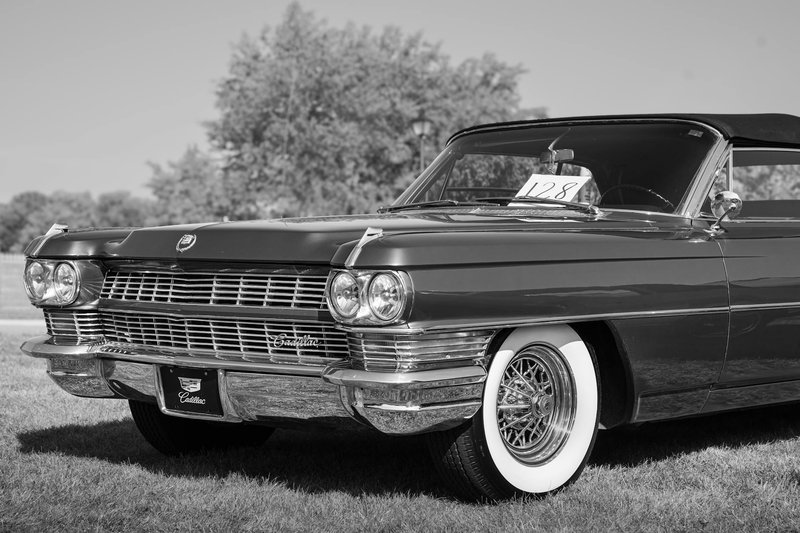
If the mass-market cars were fighting over a few horsepower, the luxury brands were competing on sheer presence.
1954 Cadillac
Cadillac was the benchmark, and 1954 brought a full redesign on a longer wheelbase with a lower, sleeker body. The 331-cubic-inch overhead-valve V-8 made 230 horsepower — a genuinely strong engine that the cheaper brands could only envy. The Series 62 and the Coupe de Ville defined American luxury, and the Eldorado sat at the top as a limited, expensive convertible with distinctive wraparound rear styling.
The detail enthusiasts point to: the 1954 Cadillac introduced the panoramic wraparound windshield across the line, and the new dashboard with its aircraft-inspired controls. This was aspiration made of steel and chrome, and it set the visual tone the rest of Detroit chased.
1954 Lincoln Capri
Lincoln’s flagship, and a better car than its modest reputation suggests. The Capri ran a 317-cubic-inch V-8 making 205 horsepower, and Lincoln had just proven the platform’s toughness by dominating the brutal Carrera Panamericana road race across Mexico in the early 1950s. So while the Capri looked like a quiet luxury coupe, it had real mechanical credibility underneath.
The 1954 cars carried ball-joint front suspension — an advance over the kingpin setups still common elsewhere — which gave the heavy Lincoln surprisingly composed handling. It’s the luxury car for people who care what’s under the skin, not just the chrome on top.
1954 Packard
Packard’s situation in 1954 was tragic. This was once the most prestigious American luxury marque, a name that competed with Rolls-Royce, and here it was in its final independent year before the Studebaker merger swallowed it. The 1954 Packards — the Patrician, the Cavalier, the Caribbean convertible — were beautifully built, with the last of Packard’s superb straight-eight engines. To understand just how far the marque had fallen, it helps to trace the full arc of Packard’s old models — from the glamorous 1930s Twelves and Eights down to these final independent cars.
The Caribbean is the one collectors chase: a low-production luxury convertible with bold two-tone paint and genuine craftsmanship. Buy a ’54 Packard and you’re buying the end of an era, the last gasp of a company that built cars the way they used to be built before it all fell apart.
The independents
The independents are where 1954 gets genuinely interesting, because these companies couldn’t afford to be boring. They survived on engineering or died.
1954 Hudson Hornet
The performance hero of the everyman segment. The Hornet’s “step-down” design — the floor sat below the frame rails, dropping the center of gravity — gave it handling no other family car could touch. Its 308-cubic-inch L-head straight-six, with the optional “Twin H-Power” dual carburetors, made up to 170 horsepower and made the Hornet a NASCAR-dominating machine in the early 1950s.
Here’s the bitter irony: 1954 was the last year for the real Hudson Hornet. After the AMC merger, the Hudson name got slapped onto rebadged Nash bodies, and the magic was gone. The 1954 Hornet is the last authentic one — a six-cylinder car that out-handled and out-raced V-8s, built by a company that ran out of road just as it perfected its formula.
1954 Kaiser Manhattan
Kaiser was the postwar startup that almost made it. The 1954 Manhattan is one of the best-looking American cars of the year, with styling by the legendary Howard “Dutch” Darrin — clean, low, distinctly different from the Detroit Big Three. The problem was under the hood: Kaiser had no V-8, so it strapped a supercharger to its 226-cubic-inch flathead six to chase the power it couldn’t otherwise make, reaching about 140 horsepower.
It wasn’t enough. 1954 was effectively Kaiser’s last serious year in the US passenger market. The Manhattan is a “what could have been” car — gorgeous, clever, and doomed by the one thing it couldn’t buy its way into: a modern V-8.
1954 Nash Ambassador
Nash brought two things to 1954 worth knowing. First, the Ambassador was among the first American cars to offer factory-integrated air conditioning, with the whole system packaged neatly under the hood rather than bolted into the trunk like rivals. Second, Nash had a partnership going that produced the Nash-Healey, an Anglo-American sports car blending a Nash drivetrain with a Healey chassis and Italian Pinin Farina styling.
The aerodynamic, slightly oddball Ambassador body — those enclosed front wheels — was polarizing then and now. But the AC innovation alone earns it a place in any honest 1954 list.
Sports cars and exotics
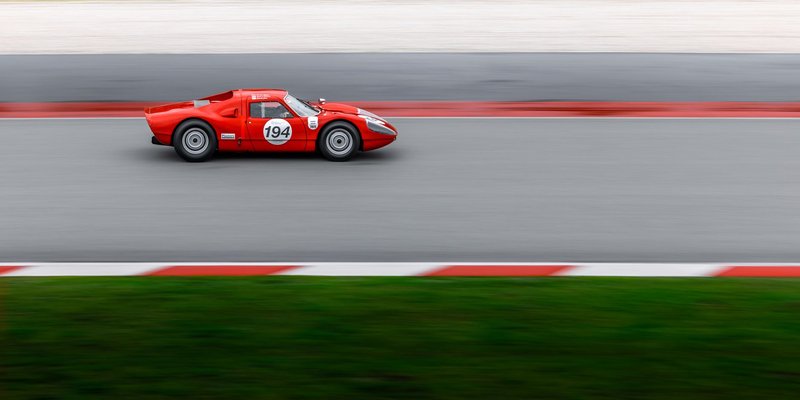
1954 was a spectacular year for sports cars on both sides of the Atlantic. A few of these are among the most valuable cars ever built, and they sit at the top of any list of 1950s sports cars worth knowing.
1954 Mercedes-Benz 300 SL Gullwing
The icon. The 300 SL launched as a production car in 1954, and it changed what a sports car could be. Those upward-opening “gullwing” doors weren’t a styling flourish — the car’s tubular spaceframe chassis was so tall at the sills that conventional doors were impossible. The 3.0-liter inline-six used mechanical direct fuel injection, a first for a production car, making around 215 horsepower and a top speed near 160 mph that made it the fastest production car in the world.
It came straight from Mercedes’ dominant sports-racing program. Drive one and you’re driving racing technology with a license plate. Values now run into the millions for good examples.
1954 Jaguar D-Type
Built to win Le Mans, and it did. The D-Type’s monocoque center section and aircraft-inspired aerodynamics — including the distinctive headrest fin on race cars — came from Jaguar’s aviation-influenced engineering team. Its 3.4-liter XK straight-six and slippery body made it devastatingly fast on the long Le Mans straights.
The D-Type is one of the purest expressions of 1950s racing design, and surviving examples are among the most valuable cars on earth. One sold for over $20 million at auction. It’s not a car you “buy” so much as a car you assemble a museum around.
1954 Ferrari 375 MM
Ferrari’s big-bore sports racer, powered by a Lampredi-designed 4.5-liter V-12 making around 340 horsepower. The 375 MM (Mille Miglia) was built in tiny numbers and bodied by Italy’s great coachbuilders — Pinin Farina and Scaglietti — so nearly every one is visually unique. Some were road-going, some pure competition, and a few have stories attached, like the one bodied for film director Roberto Rossellini.
This is the Ferrari that established the brand’s V-12 sports-racing reputation in the mid-1950s, and like the D-Type, it now trades in the eight-figure range.
1954 AC Aceca
The civilized one. The AC Aceca was a hand-built British grand tourer — a fastback coupe sibling to the Ace roadster, with an aluminum body over a tubular frame and an ash wood structure underneath, old-world coachbuilding right to the end. It used AC’s own long-lived inline-six.
The Aceca matters as much for what it became as what it was: the AC Ace platform underneath it would later receive a Ford V-8 and become the Shelby Cobra. So this elegant, low-volume 1954 GT is a direct ancestor of one of the most famous American performance cars ever built.
Which 1954 cars are worth collecting
If you’re shopping a 1954 car for a birth-year project, the choice splits cleanly by budget and intent.
For an affordable, drivable classic, the Chevrolet Bel Air and Ford Crestline are the obvious picks — common enough that parts and knowledge are everywhere, handsome enough to enjoy, and cheap to buy in running condition. Marketplaces routinely list hundreds of 1954 vehicles for sale at any given time, and these two dominate the listings.
For something with a story and rising value, look to the independents: a real 1954 Hudson Hornet (the last true one), a Howard Darrin-styled Kaiser Manhattan, or a Packard Caribbean. These were built in smaller numbers, they represent companies that vanished, and that scarcity is increasingly reflected in their prices.
And if money is no object, the exotics — the Gullwing, the D-Type, the Ferrari 375 MM — aren’t really collectible cars in the hobbyist sense. They’re appreciating assets that happen to have engines.
The through-line is that 1954 was a hinge. It’s the last year of the old engines, the last year of several great independent marques, and the launch year of sports cars that defined a decade. Whatever you pick from this list, you’re getting a car that sits right on the seam between the postwar world and the modern one.

Daniela Voss
More from Daniela VossHow we reviewed this article
This article was researched against manufacturer records and editorially reviewed before publishing. We accept no payment for coverage.