Table of Contents
- What Changed at Lexus for 2016
- Sedans: ES, IS, GS, LS
- SUVs: NX, RX, GX, LX
- The RC Coupe
- 2016 Lexus Lineup Comparison Table
- Which 2016 Lexus Should You Buy Used?
- FAQ
Every “2016 Lexus lineup” page you’ll find is either a spec table with no context or a used-car search filter dressed up as an article. Neither tells you why 2016 actually mattered for this brand, or which of these cars is worth your money a decade later. This does both.
2016 was a turning point year for Lexus. The brand pushed its turbocharged four-cylinder engine — first tried in the NX crossover — into the IS, GS, and RC, chasing the downsized-power trend the rest of the luxury segment had already committed to. At the same time, the RX got a full redesign, the RC coupe grew from a two-engine lineup to three, and the LX got its first real styling update in years. If you’re shopping a used 2016 Lexus, the model you land on has a very different personality depending on which of these changes it picked up.
What Changed at Lexus for 2016

Four things define the 2016 model year across the lineup:
The turbo four arrived in force. Lexus had used a 2.0-liter turbocharged inline-four in the NX 200t since 2015. For 2016, that same engine — 241 horsepower, 258 lb-ft of torque — landed in the IS 200t, GS 200t, and RC 200t, giving each of those cars a genuine entry-level trim below the V6.
The IS and RC both got a new AWD V6 trim. The IS 300 AWD and RC 300 AWD used a detuned, 255-hp version of the familiar 3.5-liter V6 paired to a six-speed automatic — a deliberate middle option between the turbo four and the full 306-hp IS 350 / RC 350.
The RX went to its fourth generation. The 2016 RX 350 and RX 450h were redesigned from the ground up, with a far more aggressive spindle grille, a longer wheelbase, and the first appearance of Lexus’s now-familiar L-shaped LED running lights.
The LX got its mid-cycle refresh. The 2016 LX 570 picked up updated front and rear styling and added the Panoramic View Monitor, a 360-degree camera system that hadn’t been standard on the big SUV before.
Sedans: ES, IS, GS, LS
The sedan side of the 2016 lineup runs from a comfortable front-wheel-drive commuter car up to a full-size flagship, with two performance-leaning models in between.
ES 350
The ES 350 is Lexus’s volume sedan and the one least changed for 2016 — it carried over with its 3.5-liter V6 (268 hp) and front-wheel-drive-only layout. It’s not trying to be sporty. It’s trying to be the quietest, smoothest way to get to work, and it mostly succeeds. If you want a Lexus sedan and don’t care about all-wheel drive or backroad handling, this is the one.
IS 200t / IS 300 / IS 350
The IS is where 2016’s engine shuffle shows up most clearly. The base IS 200t uses the new turbo four (241 hp), the IS 300 AWD splits the difference with a 255-hp version of the V6, and the IS 350 keeps the full 306-hp V6 for buyers who want the quickest car in the lineup. Rear-wheel-drive IS 350 models are genuinely fun to drive — the chassis was always the IS’s strong point, even when the interior lagged behind German rivals.
GS 200t / GS 350 / GS 450h / GS F
The GS got the same turbo treatment as the IS, adding a GS 200t below the existing GS 350 (311 hp V6) and GS 450h hybrid (338 hp combined). 2016 also marked the debut of the GS F, a 467-horsepower V8 performance sedan built to compete with the M5 and E63 — a genuinely quick car that gets overlooked because Lexus doesn’t market performance the way BMW does.
LS 460 / LS 600h L
The LS is the flagship, and for 2016 it was mostly a known quantity: a 386-hp 4.6-liter V8 in the LS 460, or a hybrid V8 setup in the long-wheelbase LS 600h L. This generation of LS was already aging by 2016 — the redesign didn’t land until 2018 — but that means used prices on a 2016 LS have fallen hard relative to what the car actually delivers in ride quality and reliability.
SUVs: NX, RX, GX, LX
Lexus’s SUV lineup in 2016 covered four genuinely different vehicles, not four sizes of the same one.
NX 200t / NX 300h
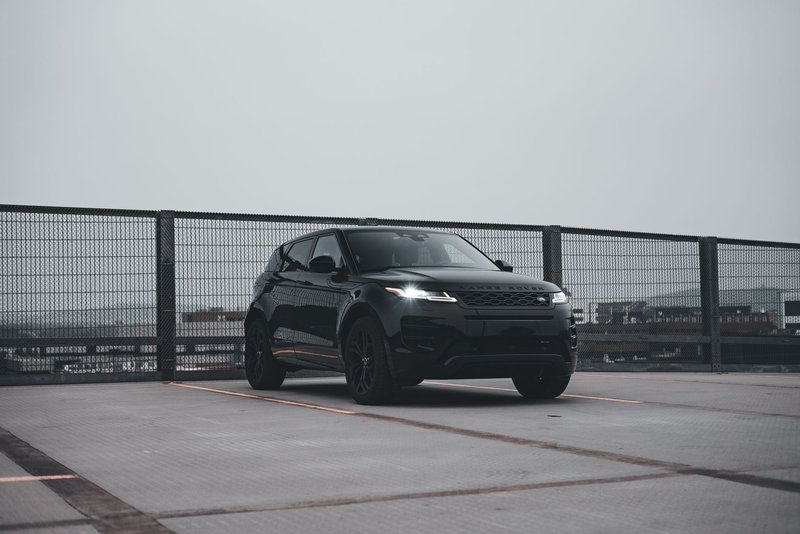
The NX, in its second model year, carried over largely unchanged: a turbo four (235 hp) in the NX 200t or a hybrid four-cylinder setup in the NX 300h. It’s a compact crossover built on Toyota RAV4 bones, which is exactly why it’s held up well mechanically.
RX 350 / RX 450h
The redesigned fourth-generation RX was the biggest news of the SUV lineup. The RX 350 kept its 295-hp 3.5-liter V6, and the RX 450h paired that same engine with a hybrid system for a combined 308 horsepower. Buyers get sharper styling, more rear-seat room, and Lexus’s then-new Safety System+ suite of driver aids as an available option — a meaningful upgrade over the outgoing generation.
GX 460
The GX 460 is the off-road-capable, body-on-frame SUV in the lineup, sharing its bones with the Toyota Land Cruiser Prado sold overseas. Its 4.6-liter V8 (301 hp) isn’t quick, and the ride is stiffer than the car-based RX, but it’s the one Lexus SUV genuinely built to go off-road and tow, and it has a reputation for mechanical toughness that the crossovers don’t quite match.
LX 570
The LX 570 is the flagship SUV — a three-row, body-on-frame luxury truck built on the full-size Land Cruiser platform, with a 5.7-liter V8 making 383 hp. The 2016 refresh’s styling update and added Panoramic View Monitor were modest changes, but the LX’s core appeal — Land Cruiser durability wrapped in a much nicer interior — didn’t need reinventing.
The RC Coupe
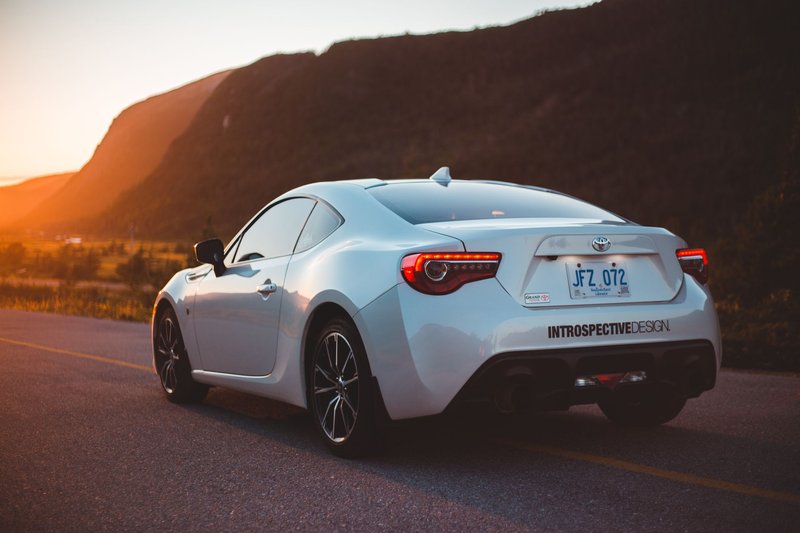
2016 was the year the RC coupe grew up. It launched in 2015 with just two engines; for 2016, Lexus added the RC 200t (turbo four, 241 hp) and RC 300 AWD (255-hp V6), bracketing the existing RC 350 (306 hp) and the 467-hp RC F. That gives the RC four distinct personalities in one body: an efficient entry point, an all-weather V6, a balanced RWD performer, and a genuine V8 competitor to the BMW M4. The RC 300 AWD in particular filled a real gap — a coupe that could handle snow without giving up the six-cylinder sound.
2016 Lexus Lineup Comparison Table
| Model | Engine | Drivetrain | Horsepower | Notable Trim |
|---|---|---|---|---|
| ES 350 | 3.5L V6 | FWD | 268 hp | F Sport-styled package |
| IS 200t | 2.0L turbo I4 | RWD | 241 hp | New for 2016 |
| IS 300 AWD | 3.5L V6 | AWD | 255 hp | New for 2016 |
| IS 350 | 3.5L V6 | RWD/AWD | 306 hp | F Sport |
| GS 200t | 2.0L turbo I4 | RWD | 241 hp | New for 2016 |
| GS 350 | 3.5L V6 | RWD/AWD | 311 hp | F Sport |
| GS 450h | 3.5L V6 hybrid | RWD | 338 hp combined | — |
| GS F | 5.0L V8 | RWD | 467 hp | New model for 2016 |
| LS 460 | 4.6L V8 | RWD/AWD | 386 hp | L (long wheelbase) |
| LS 600h L | 5.0L V8 hybrid | AWD | 438 hp combined | — |
| NX 200t | 2.0L turbo I4 | FWD/AWD | 235 hp | F Sport |
| NX 300h | 2.5L I4 hybrid | FWD/AWD | 194 hp combined | — |
| RX 350 | 3.5L V6 | FWD/AWD | 295 hp | All-new 4th gen |
| RX 450h | 3.5L V6 hybrid | AWD | 308 hp combined | All-new 4th gen |
| GX 460 | 4.6L V8 | 4WD | 301 hp | Luxury / Premium |
| LX 570 | 5.7L V8 | 4WD | 383 hp | Refreshed for 2016 |
| RC 200t | 2.0L turbo I4 | RWD | 241 hp | New for 2016 |
| RC 300 AWD | 3.5L V6 | AWD | 255 hp | New for 2016 |
| RC 350 | 3.5L V6 | RWD/AWD | 306 hp | F Sport |
| RC F | 5.0L V8 | RWD | 467 hp | Performance flagship |
Which 2016 Lexus Should You Buy Used?
Nearly a decade on, the calculus for buying a used 2016 Lexus comes down to three things: which engine you’re getting, how it’s been maintained, and how much depreciation has already happened.
The V6 models have the better track record. The 3.5-liter V6 used across the IS, GS, RX, and RC has a long history in Toyota and Lexus products and a reputation for going past 200,000 miles with basic maintenance. The turbo four-cylinder in the 200t models is newer and less proven long-term, though it hasn’t shown any systemic issues either — it’s more that there’s simply less high-mileage data on it.
GX 460 owners report the fewest complaints of any model in the lineup. It’s slow, it’s thirsty, and the third row is cramped — but the body-on-frame construction and Land Cruiser-derived drivetrain make it the closest thing to bulletproof in this list. It’s a strong pick if you don’t need a smooth ride or quick acceleration.
The redesigned RX is the sweet spot for most shoppers. You get the new-generation styling and features without paying anything close to what a current RX costs, and the V6 is the same well-proven engine Lexus has used for over a decade.
Be more careful with the GS F and RC F. Both are excellent cars, but a 2016 example is now approaching the age where expensive services — clutch packs in the torque-vectoring differential, brakes, tires sized for performance rather than economy — start coming due. Budget for it or buy from a seller with full service records.
Whatever model you’re looking at, a pre-purchase inspection matters more than the badge. Lexus’s own reliability data and independent studies from J.D. Power consistently rank the brand near the top of the industry, but that reputation was built on buyers who kept up with fluid changes and didn’t skip services — not on the cars fixing themselves.
FAQ
What’s the difference between the 2016 Lexus IS 200t and IS 300 AWD? The IS 200t uses a 241-hp turbocharged four-cylinder and is rear-wheel drive only. The IS 300 AWD uses a detuned, 255-hp version of the V6 and comes only with all-wheel drive. The 300 is heavier but puts power down better in poor weather; the 200t is lighter and slightly more efficient.
Is the 2016 Lexus GX 460 reliable? Yes, by most ownership data it’s one of the most dependable vehicles Lexus has ever sold, largely because it shares its platform and V8 with the Toyota Land Cruiser Prado. Its main weaknesses are unrelated to the drivetrain — road noise, fuel economy, and a tight third row.
Was the 2016 Lexus RX redesigned? Yes. The RX 350 and RX 450h moved to an all-new fourth generation for the 2016 model year, with a longer wheelbase, sharper styling, and an available suite of driver-assist features that hadn’t been offered on the previous generation.
What’s new about the 2016 Lexus RC 300 AWD? It was a new trim added partway through the RC’s second model year, slotting a 255-hp all-wheel-drive V6 between the turbocharged RC 200t and the naturally aspirated RC 350 — giving the coupe an all-weather option it didn’t previously have.

Marco Delantero
More from Marco DelanteroHow we reviewed this article
This article was researched against manufacturer records and editorially reviewed before publishing. We accept no payment for coverage. Some guides contain affiliate links; see our affiliate disclosure.