Quick answer: Toyota sold 13 distinct nameplates in the U.S. for the 1997 model year — Tercel, Paseo, Corolla, Camry, Avalon, Celica, Supra, Tacoma, T100, RAV4, 4Runner, Land Cruiser, and Previa. That’s five sedans, two sports cars, two trucks, three SUVs, and one van. The details below cover what each one actually cost, what was under the hood, and which of them are worth chasing today.
Table of Contents
- Why 1997 Was a Hinge Year for Toyota
- Sedans and Coupes
- Sports Cars
- Trucks
- SUVs
- Vans
- 1997 Toyota Lineup at a Glance
- What’s Actually Worth Buying Today
Why 1997 Was a Hinge Year for Toyota
Most model-year overviews land in a lull. This one didn’t. 1997 was the first full year of the all-new XV20 Camry, the generation that would go on to out-sell every other car in America for most of the next decade — Toyota didn’t just refresh the Camry for 1997, it rebuilt the thing from the ground up, softened the styling, and quietly turned it into an appliance nobody could stop buying.
It was also the last model year for the 80-series Land Cruiser before Toyota replaced it with the 100-series in 1998, which is part of why 80-series prices have been climbing steadily among overlanders and collectors. The RAV4 and Avalon were both still in their first generation, feeling out categories — compact crossover, near-luxury sedan — that didn’t really have names yet. And the Supra, in its final full generation before Toyota killed it off in the U.S. two years later, was arguably at the peak of what the Mk4 could do.
Put together, 1997 is a snapshot of Toyota hedging every bet at once: a brand-new mainstream sedan, a dying flagship sports car, a fresh crossover experiment, and a truck lineup that hadn’t changed its bones since the mid-90s.
Sedans and Coupes
Tercel
Toyota’s cheapest car for 1997, and it wasn’t trying to be anything else. The fifth-generation Tercel carried a 1.5-liter four making 93 horsepower, paired with either a 4-speed automatic or a stick, and it returned 28 mpg city and 35 mpg highway — genuinely good numbers today, let alone for a 1997 economy car. No redesign for the year; Toyota just kept building the formula that worked.
Paseo
The Tercel’s sportier-looking sibling, built on the same platform and running the same 93-horsepower 1.5-liter engine, but wrapped in a two-door coupe body that made it look faster than it was. Base price landed around $17,528. It never had the performance to back up the looks, but as a cheap, reliable first car it did the job Toyota built it to do.
Corolla
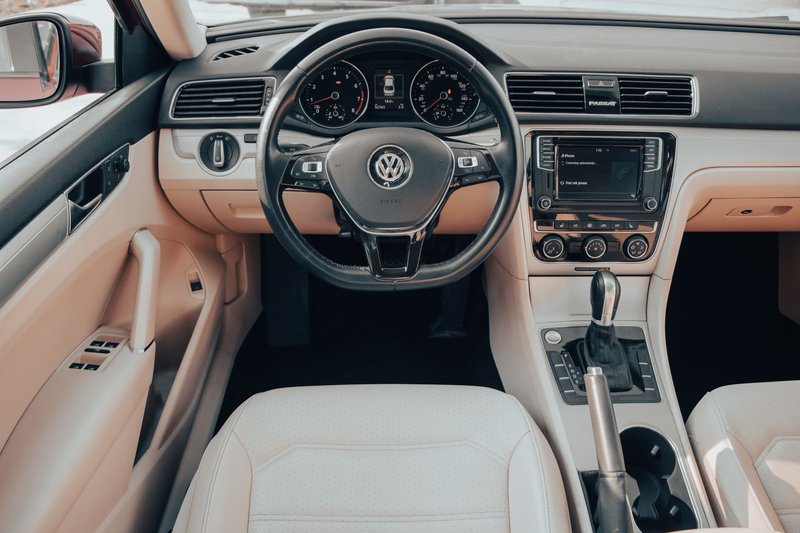
The Corolla soldiered on with its seventh-generation E110 body (introduced in 1993, facelifted for 1996) and started at roughly $13,450 for the base DX trim, climbing to about $14,650 for better-equipped versions. It wasn’t glamorous. It was, by a wide margin, the car Toyota sold the most of worldwide, and the reason so many 1997 Corollas are still daily-driven today rather than sitting in a museum.
Camry
This is the one to know. The 1997 Camry (chassis code XV20) was a ground-up redesign — new platform, new sheet metal, quieter cabin, and a four-cylinder/V6 engine spread that Toyota tuned specifically to feel unremarkable in the best way. That “unremarkable” quality is exactly what made it the best-selling car in America for years afterward. If you’re shopping used 1997 Toyotas for daily-driver reliability rather than nostalgia, this is usually the first one people point you toward.
Avalon
Only in its second model year for 1997, the Avalon was Toyota’s answer to buyers who wanted a Buick-sized sedan without leaving the Toyota badge — longer and more softly sprung than the Camry, with a bench-seat front row option that could technically seat six. It sat just below Lexus territory in Toyota’s own lineup, aimed squarely at retirees trading in a Mercury Grand Marquis.
Sports Cars
Celica
The 1997 Celica (ST200 body) came in ST, GT, and GT convertible trims, riding on a front-wheel-drive platform that prioritized daily usability over outright cornering ability. It’s the car most people forget was even part of the ’97 lineup, overshadowed by its own sibling below — but clean GT convertibles have quietly become a fun, cheap way into a 90s Toyota drop-top.
Supra
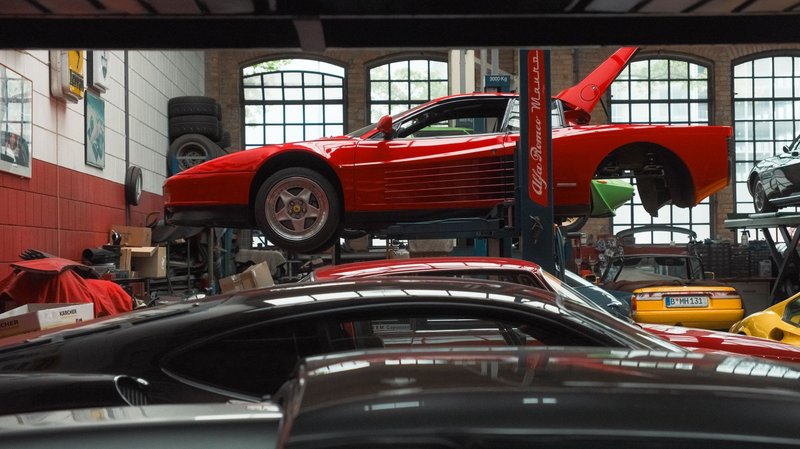
The one everyone actually came here for. The 1997 Supra Turbo ran the legendary 2JZ-GTE twin-turbo inline-six, rated at 326 horsepower, backed by a 6-speed Getrag manual (a 4-speed automatic with manual-shift mode was the alternative). MSRP ranged from around $29,500 for a base manual up to $39,900 for the 15th Anniversary Limited Edition Turbo. Toyota discontinued U.S. Supra sales after 1998, which makes the ’97 one of the last chances to buy the Mk4 new — and it’s a huge reason values have climbed the way they have; clean Turbo examples now regularly clear six figures at auction. The 2JZ’s reputation for shrugging off six-figure mileage, stock or heavily modified, is a big part of why it ranks among the best 1990s sports cars.
Trucks
Tacoma
Toyota’s compact pickup, only two years into replacing the old Hilux-based truck, offered four-cylinder and 3.4-liter V6 engine options across regular, extended (Xtracab), and later 4-door configurations. It’s the truck most directly responsible for Toyota’s reputation for trucks that refuse to die — provided you know what to check before buying (more on that below).
T100
Toyota’s full-size-adjacent pickup, sitting between the Tacoma and the segment Toyota wouldn’t properly enter until the Tundra arrived two years later. The 3.4-liter DOHC V6 (the 5VZ-FE) made 190 horsepower and 220 lb-ft of torque, and pricing spanned a wide range — from around $14,000 for a stripped base model to close to $28,000 loaded. The T100 never sold in big numbers and Toyota killed it off after 1998, which makes clean survivors a genuine rarity now.
SUVs
RAV4
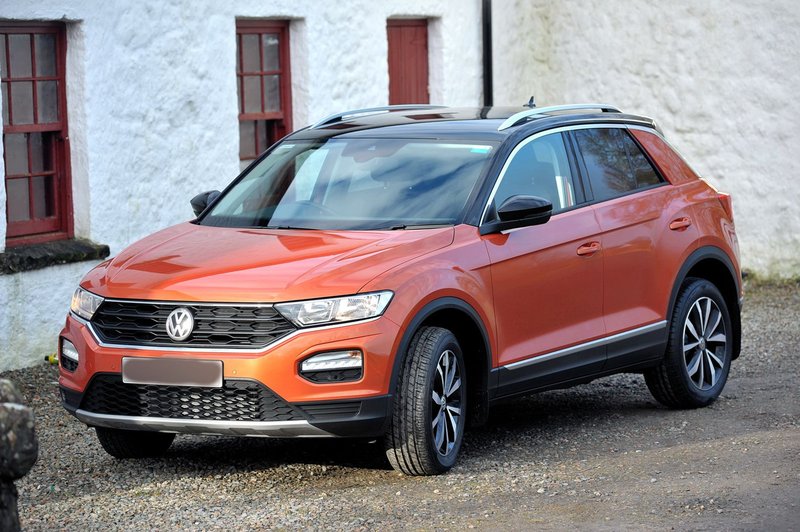
Only in its second year on sale, the RAV4 was Toyota testing an idea that didn’t have a name yet — a car-based, unibody SUV sized for city parking, sold as both a 2-door and 4-door. Pricing ran from about $15,118 for a base 2-door manual to $18,268 for a loaded 4-door automatic 4WD, with EPA figures around 24 mpg city and 29 highway. It looks small and slightly awkward next to a modern RAV4, but this is genuinely the car that proved the compact-crossover format could sell.
4Runner
Fresh off its third-generation redesign for 1996, the ’97 4Runner ranged from a base 2.7-liter four-cylinder model at $20,408 up to a loaded Limited 4WD around $34,328, with the 3.4-liter V6 available as the stronger option across six trim levels. It shared its platform and drivetrain with the Tacoma, for better and for worse.
Land Cruiser
The last model year of the 80-series before Toyota moved to the 100-series in 1998, the Land Cruiser ran a 4.5-liter inline-six making it one of the least fuel-efficient vehicles Toyota sold that year — 13 mpg city, 15 highway — and one of the most capable off-road. MSRP for the sole 4-door 4WD configuration sat around $41,188, expensive for the era. It’s also the model most likely to still be running today: the 80-series has a cult following among overlanders precisely because it was built with zero compromise for fuel economy or cost.
Vans
Previa
Toyota’s oddball minivan, running a mid-engine layout unlike anything else in the segment, priced from roughly $25,298 to $33,358 depending on trim and whether you optioned the supercharger. Toyota replaced it with the front-engine Sienna for 1998, which is exactly why the Previa reads today like a design experiment Toyota decided not to repeat.
1997 Toyota Lineup at a Glance
| Model | Segment | Starting MSRP | Notable Engine |
|---|---|---|---|
| Tercel | Subcompact sedan | ~$11,000 | 1.5L I4, 93 hp |
| Paseo | Compact coupe | ~$17,528 | 1.5L I4, 93 hp |
| Corolla | Compact sedan | ~$13,450 | 1.6L/1.8L I4 |
| Camry | Midsize sedan | ~$18,000 | I4 / 3.0L V6 |
| Avalon | Full-size sedan | ~$22,000 | 3.0L V6 |
| Celica | Sport coupe | ~$16,500 | 1.8L/2.2L I4 |
| Supra | Sports car | $29,500–$39,900 | 3.0L twin-turbo I6, 326 hp |
| Tacoma | Compact pickup | ~$11,000 | I4 / 3.4L V6 |
| T100 | Pickup | $14,000–$28,000 | 3.4L V6, 190 hp |
| RAV4 | Compact SUV | $15,118–$18,268 | 2.0L I4 |
| 4Runner | Midsize SUV | $20,408–$34,328 | 2.7L I4 / 3.4L V6 |
| Land Cruiser | Full-size SUV | ~$41,188 | 4.5L I6 |
| Previa | Minivan | $25,298–$33,358 | 2.4L I4 (supercharged option) |
What’s Actually Worth Buying Today
Not every 1997 Toyota aged the same way, and the badge’s reputation for bulletproof reliability has real exceptions worth knowing before you go shopping.
The 3.4-liter V6 shared across the Tacoma, 4Runner, and T100 (the 5VZ-FE) has a known history of head gasket failures, especially on trucks that spent their lives towing or sat in hot climates — budget for a inspection of coolant condition before buying any of the three. More seriously, Toyota trucks of this era were the subject of a well-documented frame rust problem serious enough that the company ran a buyback and replacement program for affected trucks; if you’re looking at a Tacoma, 4Runner, or T100 from a rust-belt state, check the frame in person and cross-reference the VIN against NHTSA’s recall database before you hand over money.
The Land Cruiser is the opposite story — the 80-series has one of the strongest reliability reputations of any SUV Toyota has built, gas-guzzling straight-six included, and clean examples have been appreciating for years rather than depreciating. The Supra is the extreme version of the same trend: a car that was merely expensive-for-a-Toyota in 1997 is now a legitimate collector car, with well-kept Turbo models trading well into six figures.
For fuel economy figures on any of these, the EPA’s official ratings are worth checking directly — real-world numbers on 90s Toyotas vary more with maintenance history than most modern cars.
If you’re buying for daily use rather than nostalgia, the Camry and Corolla remain the safest bets by a wide margin — the same qualities that made them best-sellers in 1997 are the reasons so many are still on the road. If you’re buying for the story, the Supra and the 80-series Land Cruiser are the two 1997 Toyotas actually worth a premium.

Marco Delantero
More from Marco DelanteroHow we reviewed this article
This article was researched against manufacturer records and editorially reviewed before publishing. We accept no payment for coverage.