Start the decade with a 454 rumbling under a Chevelle hood and end it with a Chevette sipping gas at a rationing-line pump, and you’ve got the whole story of 1970s Chevrolet in one sentence. No other automaker’s decade reads like such a clean before-and-after. Chevy didn’t just react to emissions rules and the 1973 oil embargo — it built an entire new identity around them, and the wreckage and survivors from that transition are exactly what collectors chase now.
This isn’t a “rarest muscle cars” list or a “forgotten economy cars” list. It’s both stories, because they’re actually one story: a company that built its reputation on horsepower and then had to relearn how to build cars people could afford to fuel.
Table of Contents
- Chevelle SS: The Last Big-Block Holdout
- Camaro Z28: Second-Gen Reinvention
- El Camino SS: The Car-Truck That Refused to Die
- Nova SS: The Budget Muscle Play
- Caprice: Chevy’s Land Yacht Flagship
- Impala: The Full-Size Workhorse
- Kingswood Estate: The Wagon Nobody Remembers
- Corvette: Surviving the Squeeze
- Vega: The Car That Almost Sank Chevy’s Reputation
- Monza: Vega’s Better-Looking Cousin
- Chevette: The Decade’s Closing Statement
- What to Know Before You Buy One
Chevelle SS: The Last Big-Block Holdout {#chevelle-ss}
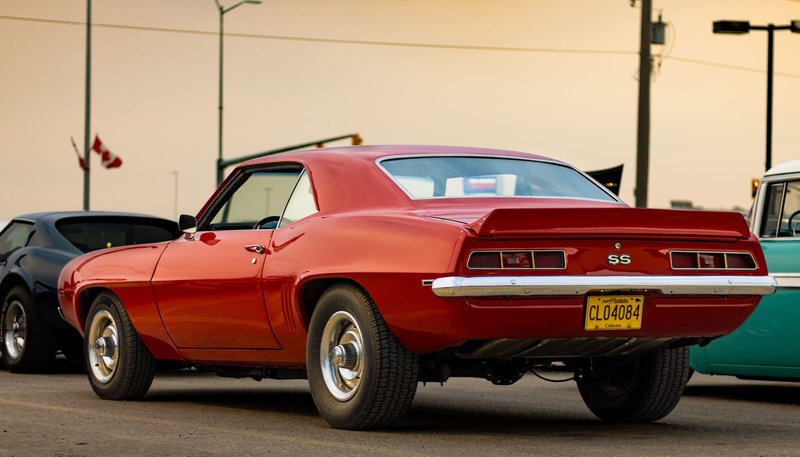
The Chevelle SS opened the decade at its absolute peak and then watched the rules change under it. The 1970 LS6 454 made a factory-rated 450 horsepower, the highest output GM ever put in a mid-size car, and it’s the number every Chevelle conversation eventually circles back to. Fewer than 5,000 LS6 Chevelles were built that year, and survivors with matching numbers now sell for six figures at major auctions.
By 1971, GM had dropped compression ratios across the board to run on lower-octane unleaded fuel, and the SS 454’s output fell to a still-respectable but noticeably tamer 365 horsepower. The 1972 model marked the last year for the SS 454 nameplate before insurance surcharges and emissions tightening made big-block mid-sizers a hard sell. The regulatory squeeze was intensifying across the entire industry, as 1974 Car Models: The Year Detroit Got Choked documents—a watershed moment when the full weight of emissions and fuel standards began to reshape what American cars could be.
Camaro Z28: Second-Gen Reinvention {#camaro-z28}
Chevy actually paused Z28 production entirely for 1975 and 1976 — a detail that surprises people who assume the nameplate ran continuously. The second-generation Camaro, launched for 1970½, was a genuine styling leap: longer hood, wider stance, a cabin that finally felt like a real interior instead of an afterthought. But GM discontinued the Z28 package after 1974 as horsepower kept dropping and buyers stopped paying extra for a performance option that couldn’t deliver much performance.
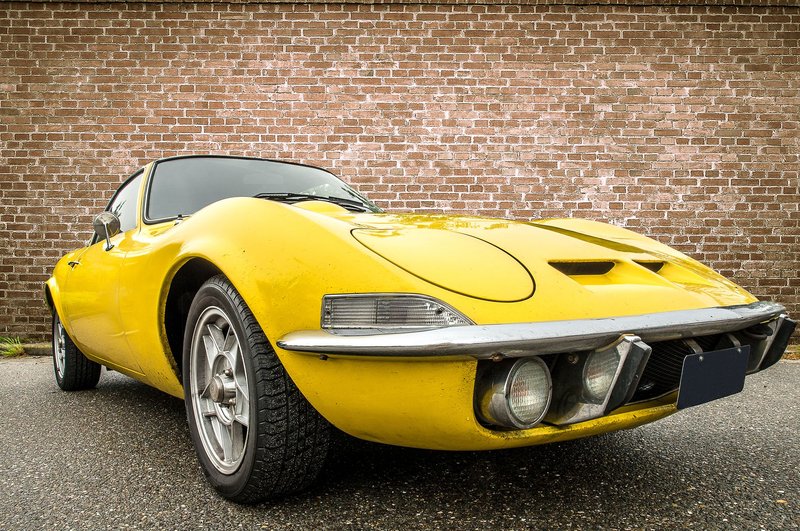
When the Z28 came back for 1977, it wasn’t chasing quarter-mile times anymore. It was chasing handling credibility, with quicker steering and better suspension tuning than the base Camaro, aimed at buyers who wanted to look fast even when the numbers said otherwise. That 1977–1979 version outsold every earlier Z28 by a wide margin, proof that Chevy had figured out how to sell performance styling even after real performance had left the building.
El Camino SS: The Car-Truck That Refused to Die {#el-camino-ss}
The El Camino SS rode the same 454 big-block wave as the Chevelle it was built alongside, and for a couple of years it was arguably the sleeper of the two — a truck bed with muscle-car guts that insurance companies were slower to flag. Production numbers stayed healthy through the mid-70s even as the Chevelle SS faded, because the El Camino occupied a category of one: nothing else on the market split the difference between a coupe and a pickup.
By decade’s end it had followed the same downsizing path as the rest of Chevy’s lineup, landing on the smaller G-body platform for 1978 with a Malibu-based front end. It lost the outright power but kept the format, which is exactly why it’s still one of the more collectible oddballs from the era — there’s genuinely nothing else quite like it.
Nova SS: The Budget Muscle Play {#nova-ss}
The Nova SS never had the Chevelle’s displacement or the Camaro’s shape, and that’s precisely why it mattered. It offered a 350 or, briefly, a 396/402 big-block in a compact body that weighed hundreds of pounds less than its mid-size siblings, which made it quicker in a straight line than its modest reputation suggests. Chevy positioned it as the entry point to performance, and dealers moved a lot of them to buyers who couldn’t stretch to a Chevelle SS payment.
The SS package survived through 1976 in name, though by the mid-70s it had become mostly a trim and stripe package rather than a genuine performance variant. Today, real big-block Nova SS cars from 1970–1972 are the ones worth hunting for; later “SS” badged cars are cosmetic.
Caprice: Chevy’s Land Yacht Flagship {#caprice}
If the SS cars were Chevy’s id, the Caprice was its superego — a genuinely comfortable, well-trimmed full-size car aimed at families who wanted Cadillac cues at a Chevy price. The 1971 redesign made it enormous even by the standards of the era, with a wheelbase over 121 inches and available big-block power for buyers who wanted a highway cruiser rather than a stoplight racer.
The Caprice absorbed the brunt of the era’s contradictions. It kept growing through the mid-70s even as fuel prices climbed, then got downsized dramatically for 1977 — nearly 700 pounds lighter and a foot shorter — in one of GM’s most successful responses to the new economic reality. The 1977 Caprice actually sold better than its bloated predecessor, which told Chevy something important about where the market was actually heading. Popular Cars in 1978 reveals just how complete that shift toward smaller, more efficient vehicles had become.
Impala: The Full-Size Workhorse {#impala}
The Impala spent the decade as Chevy’s best-selling nameplate and its least glamorous. It didn’t chase headlines the way the SS cars did, but it was the car that actually kept the company’s full-size volume afloat through a decade when big cars fell dramatically out of favor. Fleet buyers, taxi companies, and police departments relied on Impala durability long after private buyers had started shopping smaller.
Like the Caprice, it went through GM’s 1977 downsizing program, and the resulting car was better balanced and more efficient without losing the interior room that made it a fleet favorite. It’s an underrated collector entry point now — parts availability is excellent because so many were built, and prices haven’t caught up to the more glamorous nameplates.
Kingswood Estate: The Wagon Nobody Remembers {#kingswood-estate}
Full-size wagons don’t get nostalgia treatment the way muscle cars do, but the Kingswood Estate and its successor, the Caprice Estate, were genuinely important to Chevy’s bottom line through the early 70s. These were the vehicles hauling families and their gear before minivans existed, often equipped with clamshell tailgates and simulated wood paneling that defined an entire aesthetic era.
Chevy folded the Kingswood name into the Caprice Estate lineup by 1972, and the wagon body style continued through the decade’s downsizing just like its sedan counterparts. Nobody’s paying muscle-car money for these today, which is exactly why they’re worth a look if you want an honest, usable piece of 1970s Americana without a six-figure price tag.
Corvette: Surviving the Squeeze {#corvette}
No Chevrolet nameplate had to absorb more contradictory pressure than the Corvette. It entered the decade with the LS6 454 as an option — genuinely brutal power in a two-seater — and by 1975 had lost its convertible body style entirely and was making do with a 165-horsepower base V8, a number that would have been embarrassing five years earlier.
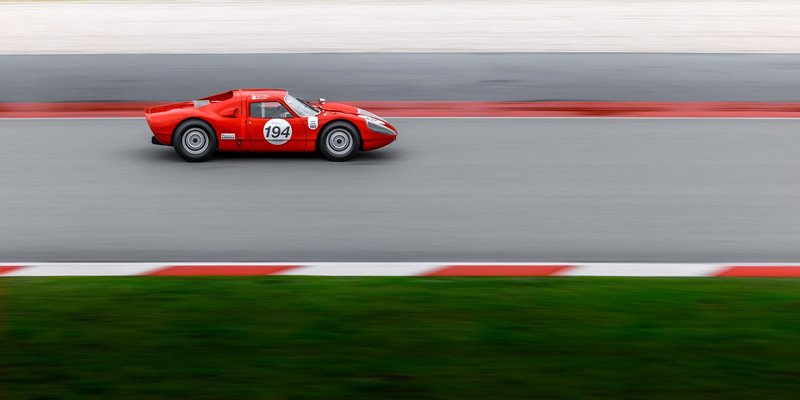
What kept the Corvette relevant through the lean years was that GM never let it become an afterthought the way some other performance nameplates did. Design work continued, the C3’s iconic shark-inspired shape stayed in production the entire decade, and by 1978 the 25th Anniversary Edition and Indy Pace Car replica gave the car back some cultural cachet even while horsepower numbers stayed modest. It’s the one nameplate on this list that never actually stopped selling well, regardless of what was happening under the hood.
Vega: The Car That Almost Sank Chevy’s Reputation {#vega}
The Vega is the cautionary tale every “forgotten 1970s Chevy” list eventually gets to, and it deserves the attention because of how badly it went. Launched for 1971 as GM’s answer to the wave of small imports, it had a genuinely innovative aluminum-block engine and clean, Cameron Design-influenced styling. It also rusted with startling speed, burned oil at a rate owners found alarming, and became the subject of one of the largest recalls of the era.
Chevy sold well over 2 million Vegas across its run, so it wasn’t a sales failure — it was a reputation failure, and one that shaped how buyers viewed American small cars for years afterward. It matters historically because it’s the moment Chevy proved it could build a genuinely modern-looking compact; it also matters because the execution problems it exposed pushed the company toward more conservative engineering on everything that followed.
Monza: Vega’s Better-Looking Cousin {#monza}
Built on the same H-body platform as the Vega and sharing many of its mechanical bones, the Monza arrived for 1975 with sharper, more European-influenced styling and briefly offered a Buick-sourced V8 in the fastback hatchback body. It never fully escaped the Vega’s engineering baggage, but it sold respectably and gave Chevy a small car people actually wanted to be seen in, which the Vega had increasingly failed to deliver by mid-decade.
The Monza’s spiritual successor was the Chevy Cavalier that would launch in 1982, and enthusiasts still point to the Monza hatchback’s proportions as some of the better small-car styling GM produced in the era.
Chevette: The Decade’s Closing Statement {#chevette}
If the Vega opened the decade’s economy-car chapter with a stumble, the Chevette closed it with quiet competence. Launched for 1976 on a global GM platform shared with subcompacts sold overseas, it was smaller, simpler, and far more reliable than the Vega had been, and it arrived at exactly the moment fuel prices and shortages made a basic, cheap-to-run car genuinely appealing rather than a compromise.
It became one of the best-selling cars in America for several years running, unglamorous but exactly what a huge slice of the market needed. There’s no muscle-car nostalgia attached to the Chevette, and there doesn’t need to be — it’s the plainest possible proof that Chevy had figured out how to build for the world the oil embargo actually created, rather than the world Detroit had been building for since the 1950s.
What to Know Before You Buy One {#buying-guide}
If you’re shopping this era rather than just admiring it, a few things matter more than nameplate glamour. Rust is the single biggest threat across the board — quarter panels, wheel wells, and floor pans on Vegas and Monzas especially, since both were notorious rusters even by 1970s standards. Verify matching numbers on any SS-badged muscle car before paying a premium; cosmetic SS packages became common as the decade wore on, and the badge alone tells you very little about what’s under the hood.
Parts availability favors the high-volume cars. Impala, Chevelle, and Camaro parts are plentiful and reasonably priced because so many were built and the aftermarket has supported them for decades. Kingswood/Caprice wagons and early Monzas are tougher to source trim and glass for, which matters if you’re planning a full restoration rather than a driver-quality car. And if a big-block muscle car is priced well below market, ask pointed questions about compression, cylinder heads, and casting numbers — a numbers-matching claim is only as good as the paperwork behind it.
The 1970s Chevrolet story doesn’t have a tidy ending, and that’s what makes it worth knowing in full rather than in the two halves most lists tell it in. The same company that built the LS6 454 also built the Chevette, sometimes within a few years of each other, because it had to. Understanding both halves is what separates someone who actually knows this decade from someone who just likes looking at Chevelle photos.

Marco Delantero
More from Marco DelanteroHow we reviewed this article
This article was researched against manufacturer records and editorially reviewed before publishing. We accept no payment for coverage. Some guides contain affiliate links; see our affiliate disclosure.