Ask which motorcycle brand is the “most dangerous” and you’ll get two completely different answers depending on who you ask. Ride forums point at specific bikes with nicknames like “widowmaker” and “Cyclone.” Personal injury lawyers point at Harley-Davidson and Honda, because those brands show up in the most crash reports.
Both are right, and both are misleading. No brand builds a motorcycle that is inherently more dangerous than the rest. What actually happens is that certain brands produced specific models — usually a handful across decades — that outran the tires, brakes, and rider skill of their era. Those bikes built a reputation the whole badge still carries.
So here’s the honest version: the bikes that earned the reputation, the brands they’re attached to, and the data that explains why a Harley crashes more often than a Kawasaki H2R even though the H2R is objectively the more terrifying machine.
Table of Contents
- The short answer
- What actually makes a motorcycle dangerous
- Kawasaki: the widowmaker lineage
- Suzuki: the two-stroke that bit back
- Yamaha: the V-Max and the horsepower war
- Ducati: fast, beautiful, unforgiving
- MV Agusta: the F4 and old-school aggression
- Harley-Davidson: the accident-statistics leader
- Brand danger at a glance
- The brands with the fewest problems
- The verdict
The short answer {#the-short-answer}
If you want the ranked-by-reputation list without the reading:
- Kawasaki — the original “widowmaker” H2 750 and the modern 300+ hp H2R
- Suzuki — the TM400 Cyclone, a bike that tried to kill its own riders
- Yamaha — the V-Max, a drag bike with a chassis that couldn’t keep up
- Ducati — the Panigale and 916 bloodline, razor-sharp and merciless
- MV Agusta — the F4 series, exotic and twitchy
- Harley-Davidson — not the scariest to ride, but the most frequently crashed
Read that as reputation, not risk math. The brand most likely to put you in a hospital is whichever one built the bike that’s faster than your skill level. That’s the real thesis here, and it holds up.
What actually makes a motorcycle dangerous {#what-actually-makes-a-motorcycle-dangerous}
Before naming brands, it’s worth knowing what you’re actually measuring. A motorcycle gets dangerous through a few specific engineering traits, and they compound.
A violent powerband. The old two-strokes and the first liter-class superbikes made almost no power down low, then delivered everything at once when the revs hit a certain point. You’d roll on the throttle expecting a gentle push and get a light-switch that stood the bike up mid-corner. That abruptness is what killed people, not the peak horsepower number.
No ABS. This is the big one, and it’s measurable. The Insurance Institute for Highway Safety found that motorcycles with anti-lock brakes have about 37% fewer fatal crashes than the same models without them. A panicked rider grabs the front brake, locks the wheel, and loses the front end. ABS stops exactly that. Most of the truly deadly bikes on this list predate it.
A twitchy chassis. Short wheelbase, steep steering geometry, and a light front end make a bike quick to turn — and quick to shake its head. Hit a bump at speed on the wrong bike and the bars start slapping lock to lock. Riders call it a “tank-slapper,” and it’s exactly as bad as it sounds.
Power the tires and brakes can’t cash. A drag-strip engine bolted into a frame and suspension that belong on a slower bike. The V-Max is the poster child.
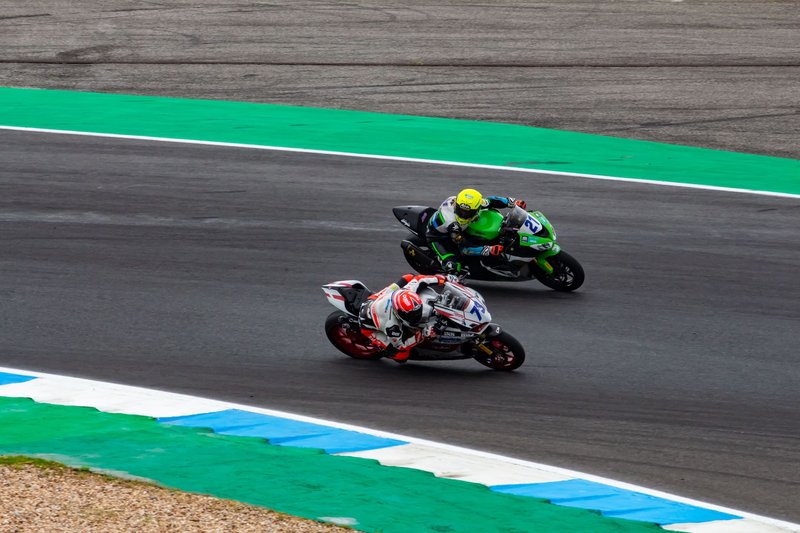
Then there’s the category effect. The IIHS and industry data consistently show that supersport bikes — the race-replica machines like the Panigale or the R6 — have a driver death rate roughly four times higher than cruisers or standards. Part of that is the bike. A bigger part is that they’re bought by young riders who ride them fast. Keep that split in mind for the rest of the list.
Kawasaki: the widowmaker lineage {#kawasaki}
Kawasaki basically invented the modern “this bike will kill you” reputation, and then leaned into it for fifty years.
The 1972 H2 750 (“Mach IV”) is where the widowmaker nickname stuck. It was a two-stroke triple that made about 74 horsepower — huge for the time — wrapped in a flexy frame with drum-adjacent braking and skinny tires. All the power arrived in a narrow band up high, so it wandered along mildly until it suddenly didn’t. The front wheel came up in the first three gears if you weren’t careful. Magazine testers of the era wrote about it the way people write about dangerous animals.
Fast-forward to now and Kawasaki still owns the top of the food chain. The Ninja H2R is a supercharged, track-only missile making over 300 horsepower — more than most sports cars. It’s arguably the most extreme production motorcycle ever built. The difference is that the H2R has modern tires, brakes, traction control, and electronics the H2 never dreamed of. It’s faster and, in a strange way, more controllable. Reputation-wise, though, Kawasaki wears the widowmaker crown fair and square.
Suzuki: the two-stroke that bit back {#suzuki}
If the Kawasaki H2 earned its reputation, the Suzuki TM400 Cyclone flat-out earned an apology.
Built in the early 1970s as a production motocross bike, the TM400 had a power delivery that riders described as almost random — it would hit its powerband unpredictably, sometimes mid-jump, and buck the rider off. The ignition timing and porting were genuinely flawed. This wasn’t “fast bike, respect it” territory; it was a machine that fought people who knew what they were doing. Vintage motocross circles still talk about it as one of the worst-handling competition bikes ever sold.
Suzuki redeemed itself many times over — the GSX-R line is legendary and mostly for good reasons — but the TM400 keeps the brand on any honest danger list. Suzuki also shows up in law-firm crash statistics near the top, though as we’ll see, that’s more about who buys GSX-Rs than how they’re built.
Yamaha: the V-Max and the horsepower war {#yamaha}
The 1985 Yamaha V-Max is the clearest example of “danger by imbalance” ever built. Yamaha took a 1,200cc V4 making around 145 horsepower — an absurd figure for the mid-’80s — and dropped it into a cruiser-ish chassis with soft suspension, a long wheelbase, and brakes that were fine for a slower bike.
The result was a straight-line monster that got genuinely alarming when the road turned. Riders loved the drag-strip launch, the way the “V-Boost” intake system slammed you forward at 6,000 rpm. Then they’d hit a corner at speed and discover the frame was writing checks the tires couldn’t cover. It flexed, it wallowed, it demanded respect. It’s beloved precisely because it was so unhinged.
Yamaha’s sportbikes, like the R6 and R1, sit in that high-fatality supersport category too. But those are simply fast, well-sorted bikes ridden hard by young riders — a demographic problem, not a design flaw.
Ducati: fast, beautiful, unforgiving {#ducati}
Ducati’s danger is a different flavor. Nothing on a modern Ducati is broken — quite the opposite. The Panigale V4 and its ancestors, going back to the iconic 916 of the 1990s, are among the most focused sportbikes on earth. That focus is the risk.
These bikes are built around the track. The riding position folds you forward, the steering is fast, the power is immense, and the whole machine rewards precision while punishing hesitation. A Panigale V4 makes north of 200 horsepower and will reach speeds on a straight that leave zero margin for a bad decision. Ride one smoothly and it’s sublime. Ride one clumsily and it finds your mistakes instantly.
That’s why Ducati lands here despite building some of the best motorcycles in the world. It’s the supersport-fatality problem in its purest form: extraordinary capability, sold to people who then use it on public roads.
MV Agusta: the F4 and old-school aggression {#mv-agusta}
MV Agusta is the boutique entry — expensive, gorgeous, and built with an old-school Italian idea of what a superbike should feel like. The F4 series, in particular, has a reputation for aggressive, twitchy handling that demands an experienced rider.
The F4 was designed under Massimo Tamburini, the same man behind the Ducati 916, and it shares that uncompromising DNA. Narrow, top-heavy on power, and without the layers of rider-assist electronics that Japanese rivals piled on, an F4 asks for full attention. It’s not a beginner’s bike, and MV never pretended otherwise. Low production numbers keep it out of the crash statistics, but among people who’ve ridden one, the “handle with care” label is universal.
Harley-Davidson: the accident-statistics leader {#harley-davidson}
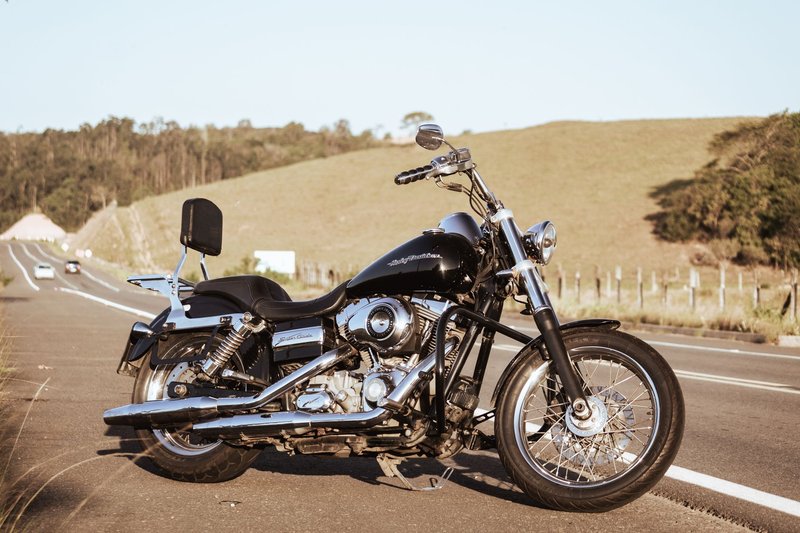
Here’s where the two answers to our question finally collide. When personal injury firms and crash-data researchers name the “most dangerous” brand, they overwhelmingly point at Harley-Davidson — and they’re not wrong about the numbers. Harleys are involved in a large share of motorcycle accidents in the US.
But the reason is almost entirely market share and demographics, not engineering. Harley has sold more motorcycles in America than anyone for decades, so it appears in more of everything, including crashes. The bikes themselves are heavy, comparatively low-powered cruisers — the opposite of a twitchy widowmaker. What raises the risk is the profile: big, heavy machines, often ridden by older riders, frequently without ABS on base models, and cruised on open roads where car-versus-motorcycle collisions happen.
The NHTSA’s motorcycle crash data makes the broader point clear: rider behavior, speed, alcohol, and helmet use drive fatality outcomes far more than the badge on the tank. A Harley isn’t scary to ride. It’s just the most common bike on American roads, so it’s the most common bike in the statistics. Both things are true, which is exactly why the query is so confusing in the first place.
Brand danger at a glance {#brand-danger-at-a-glance}
| Brand | Signature “danger” model | Why it earned it | Real-world risk driver |
|---|---|---|---|
| Kawasaki | H2 750 / Ninja H2R | Violent powerband, extreme horsepower | Speed beyond rider skill |
| Suzuki | TM400 Cyclone | Genuinely flawed power delivery | Design flaw (vintage) |
| Yamaha | V-Max | Drag-bike engine, cruiser chassis | Chassis can’t match power |
| Ducati | Panigale / 916 | Race-focused, unforgiving of errors | Supersport category risk |
| MV Agusta | F4 | Twitchy, minimal rider aids | Demands expert riders |
| Harley-Davidson | (fleet-wide) | Most-sold, heavy, older riders | Market share + demographics |
The brands with the fewest problems {#safest-brands}
Flip the question and the answer gets less dramatic but more useful. The “safest” brands tend to be the ones that put modern safety tech on the widest range of models.
Honda consistently lands here despite also appearing in crash stats (again, sheer volume). It builds some of the most forgiving, well-balanced motorcycles on the market, and its rider-aid packages are excellent. BMW deserves a mention for effectively pioneering ABS on production motorcycles and continuing to push cornering-ABS and radar-assisted safety systems. Triumph and Honda both offer approachable, confidence-inspiring middleweights that are hard to get into trouble on.
The pattern across all of them: standard ABS, smooth power delivery, and a chassis that stays composed when you make a mistake. Those three traits do more for survival than any brand’s marketing ever will.
The verdict {#the-verdict}
The most dangerous motorcycle brand, honestly, is whichever one built the bike that’s faster than you are. Kawasaki wears the historical widowmaker crown, Suzuki built the one genuinely defective monster, Yamaha built the beautiful imbalance, and Ducati and MV Agusta build machines so capable they leave no room for error. Harley leads the crash statistics purely because it sells the most bikes to the widest range of riders.
If you’re actually trying to stay alive rather than win a bar argument, ignore the badge and look at the bike. Choose one with ABS. Respect the powerband. And match the machine to your skill, because the deadliest thing on any of these motorcycles has always been the gap between what the bike can do and what its rider can. Close that gap and even a widowmaker behaves. Ignore it and the safest brand in the world won’t save you.

Marco Delantero
More from Marco DelanteroHow we reviewed this article
This article was researched against manufacturer records and editorially reviewed before publishing. We accept no payment for coverage. Some guides contain affiliate links; see our affiliate disclosure.