By 1998 McLaren built almost nothing, and that’s exactly what makes the year worth your attention. This wasn’t a brand cranking out trim levels. The whole road-car operation existed to finish one project — the F1 — and the year it wound down happens to be the same year the Formula 1 team won both world championships. So “1998 McLaren car models” is a short list of extraordinarily rare machines, not a showroom.
Here’s the full roster: the F1 road car in its last production year, the homologation-special F1 LM, the one-off-purpose F1 GT “Longtail,” the F1 GTR Longtail race car, and the MP4/13 grand prix car that put Mika Häkkinen on top of the world. Five models, fewer than 30 individual cars across the road versions combined.
Table of Contents
- The quick reference
- McLaren F1 road car
- McLaren F1 LM
- McLaren F1 GT “Longtail”
- McLaren F1 GTR Longtail
- McLaren MP4/13 Formula 1 car
- What they’re worth now
The quick reference
If you just want the numbers side by side, start here. These are the road and GT cars built on the F1 platform — the MP4/13 is a single-seat grand prix car and doesn’t share a spec sheet with them.
| Model | Built (total) | Engine | Power | Top speed |
|---|---|---|---|---|
| F1 (road) | 64 road cars | 6.1L BMW S70/2 V12 | 627 hp | 240.1 mph |
| F1 LM | 5 | tuned S70/2 V12 | ~680 hp | ~225 mph |
| F1 GT | 3 | 6.1L S70/2 V12 | 627 hp | ~230 mph |
| F1 GTR Longtail | ~10 race cars | restricted S70/2 V12 | ~600 hp | (geared for circuits) |
Production of the F1 ran from 1992 to 1998, with 106 chassis built in total across every variant. The road car itself topped out at 64 units. That scarcity is the whole story.
McLaren F1 road car
The F1 is the car everything else here orbits, and 1998 was the last year one rolled out of Woking. Gordon Murray’s design philosophy was almost stubborn: no turbos, no electronic driver aids, no power steering. A central driving seat with a passenger tucked slightly back on each side. A roof scoop feeding a naturally aspirated V12, and gold foil lining the engine bay because gold reflects heat better than anything cheaper.
That engine is the headline. BMW Motorsport, under Paul Rosche, built the S70/2 — a 6.1-liter V12 making 627 horsepower with zero forced induction. In 1998 a prototype XP5 ran 240.1 mph at Volkswagen’s Ehra-Lessien test track, a record for a production car that stood for years and one the car set with its rev limiter raised, not in some special trim.
What people forget is how usable it was meant to be. Murray wanted a great road car, not a track weapon — there’s luggage space molded into the flanks, a proper stereo, air conditioning. The racing came later, and somewhat reluctantly. Among the standout sports cars of the 1990s, nothing else paired this much engineering ambition with the idea that you might actually drive it every day. If you only know the F1 from auction headlines, the surprising part is that it was engineered to be driven to dinner.
McLaren F1 LM
Five built. That’s the number to remember. The F1 LM was a road-legal tribute to the F1 GTR cars that finished 1st, 3rd, 4th, 5th and 13th at the 1995 Le Mans 24 Hours — a result so absurd for a debut that McLaren commemorated it with a special edition.
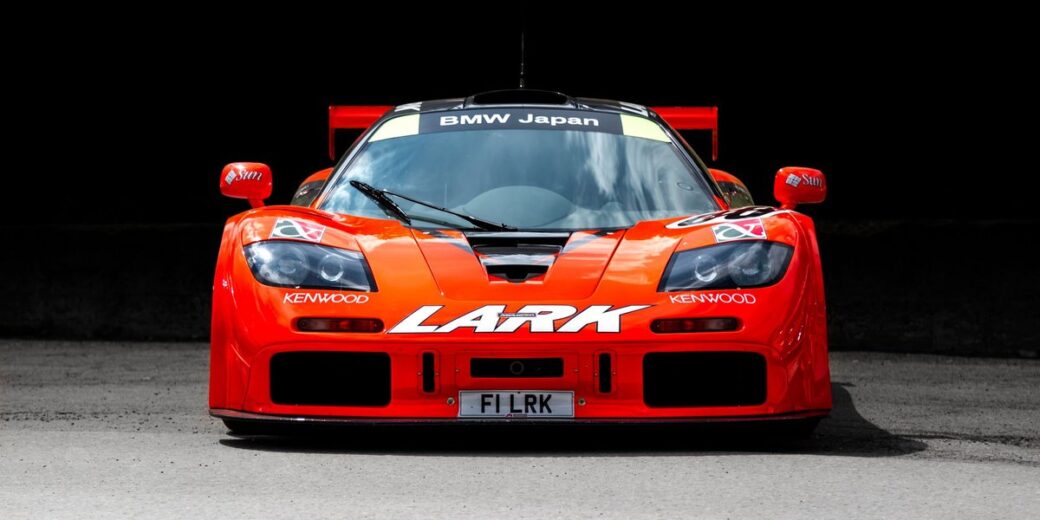
The LM strips the road car’s comfort priorities and chases pace instead. The V12 loses its catalytic restrictions and climbs to roughly 680 horsepower. The body gains the GTR’s aerodynamic addenda, including the rear wing, and the whole car drops weight. Every one wore Papaya Orange, the color of Bruce McLaren’s original racers.
Of the five customer-intended cars, the rarity is genuine rather than marketing — McLaren also kept a prototype, often called XP1 LM. When one of these comes up, it’s not “rare for a supercar.” It’s rare full stop.
McLaren F1 GT “Longtail”
The F1 GT exists because of a rulebook. To keep the F1 GTR competitive in 1997’s GT racing, McLaren needed to homologate the longer-tailed bodywork, and homologation meant building road-going versions. The result was three cars — sometimes called the “Longtail” road car.
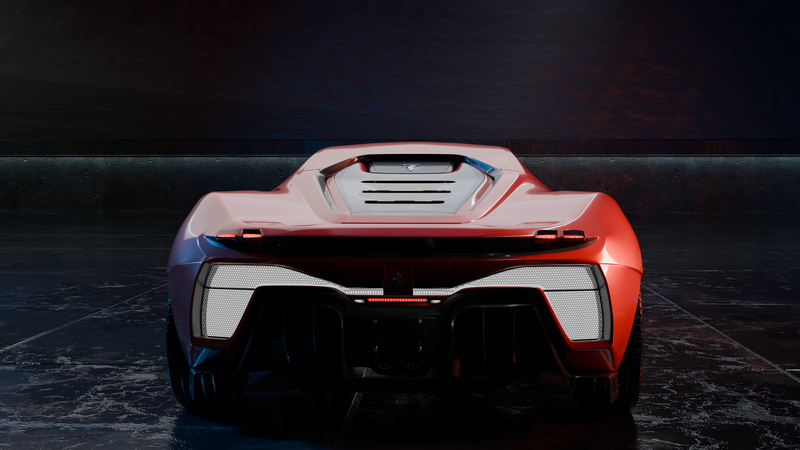
The visual difference is the back. The standard F1’s tail gets extended and reshaped, deleting the rear wing in favor of a long, smoothed deck that manages air more efficiently at speed. It looks like a different, hungrier animal from behind. Underneath, it keeps the 627-hp road-spec V12.
Three cars built — one prototype and two customer cars — makes the GT the rarest road-registered F1 variant of all. If the LM is the angry one, the GT is the elegant one, and good luck ever seeing both in the same room.
McLaren F1 GTR Longtail
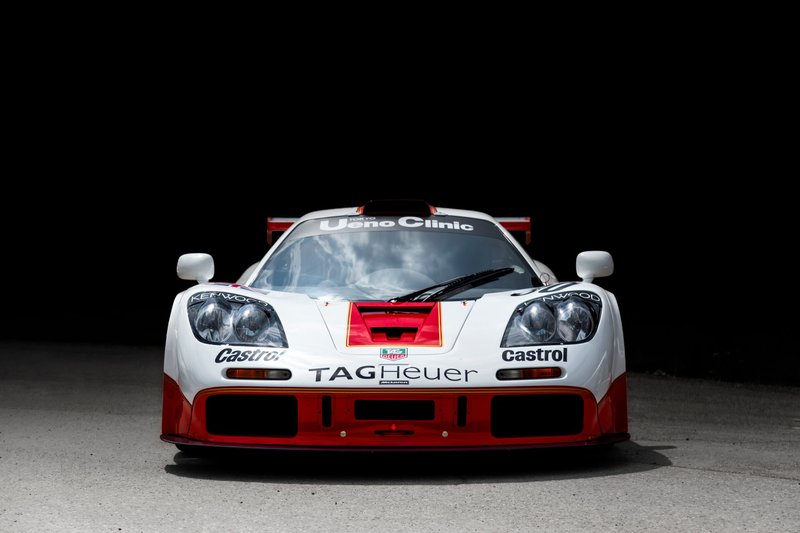
This is the racing side of the family, and 1997’s “Longtail” GTR is what carried McLaren’s sports-car effort into 1998’s events. The name comes from the same stretched rear bodywork the GT road car homologated — a response to rivals like the Porsche 911 GT1 and Mercedes CLK GTR that had arrived as purpose-built race cars rather than evolved road models.
The GTR ran the same S70/2 V12, but air-restricted to meet regulations, so peak power actually dropped relative to the road car — around 600 horsepower — while the chassis, aero and weight all moved hard toward the circuit. Sequential gearbox, full slick tires, stripped interior.
It’s worth being clear about the line here, because buyers and collectors care: the GTR is a race car, never road-legal in standard form. The road cars that share its silhouette are the GT and the LM. Confusing those three is the single most common mistake people make with late-period F1s.
McLaren MP4/13 Formula 1 car
The MP4/13 is the other kind of 1998 McLaren — the grand prix car — and it’s the reason the year matters beyond road-car trivia. Designed under Adrian Newey, it dominated the start of the season so completely that the rules genuinely seemed to bend around it.
Two things made it special. First, 1998 introduced narrower cars and grooved tires, a regulation reset that rewarded whoever read the new rulebook best, and Newey’s team read it best. Second, McLaren ran a controversial “brake steer” system — a second brake pedal that let the driver brake one rear wheel to tighten a corner — which was protested and banned partway through the season.
Mika Häkkinen won the Drivers’ Championship with eight victories; David Coulthard added another, and McLaren took the Constructors’ title. That form didn’t evaporate over the winter either — the 1999 McLaren lineup carried the silver-arrows momentum straight into the following season. The car ran Mercedes-Ilmor V10 power and that season relaunched the silver livery that defined McLaren for the next decade. If you’re researching 1998 McLarens and only picture the F1, the MP4/13 is the half of the story the road-car lists skip.
What they’re worth now
Scarcity plus a 240-mph record plus a Le Mans win is a recipe collectors understand, and the market has responded accordingly.
- F1 road car: the benchmark. Well-documented examples trade in the eight figures at major auctions, and the number has only climbed as the car aged into blue-chip status.
- F1 LM: with five built, public sales are almost nonexistent — when one is rumored to change hands, it’s spoken about in the same breath as the most valuable road cars on earth.
- F1 GT: three cars means you may wait years for one to surface at all. Rarity here outruns even the LM in pure unit terms.
- F1 GTR Longtail: valued on race provenance — which events it ran, who drove it, how original the chassis is — rather than a simple production-number premium.
The MP4/13 sits in a different market entirely. Grand prix cars trade through specialist channels, and a championship-winning Häkkinen chassis is more museum piece than weekend driver.
The takeaway from 1998 isn’t that McLaren made a lot of cars. It’s that the company made almost none, and nearly every one is now a landmark. A road car that held the speed record, two homologation specials you can count on one hand, a race car with a Le Mans pedigree, and a grand prix machine that won everything. That’s a single year’s output — and a fair argument that no other automaker has ever packed so much significance into so few VINs.

Marco Delantero
More from Marco DelanteroHow we reviewed this article
This article was researched against manufacturer records and editorially reviewed before publishing. We accept no payment for coverage.