Try finding a straight answer on what Volkswagen actually sold in the United States for 1989, and you’ll hit a wall of database pages with grey “no image available” boxes and a single MSRP figure. Useful if you already know exactly which trim you want. Useless if you’re trying to picture the whole lineup.
So here’s the whole thing. Eight model lines, the engines under them, what they cost new, and what they’re worth now that the youngest of them is past 35.
1989 sat squarely in VW’s A2 era — the second-generation Golf and Jetta platform that defined the brand through the late ’80s. The Beetle was gone from US showrooms. The Mk2 cars were the volume sellers, the Cabriolet was still soldiering on from the original Rabbit, and the Vanagon was doing its own water-cooled thing in the back. It was a transitional year: solid, boxy, honest cars right before VW’s quality reputation took its ’90s dip.
Table of Contents
- The 1989 lineup at a glance
- Volkswagen Cabriolet
- Volkswagen Fox
- Volkswagen Fox Wagon
- Volkswagen Golf
- Volkswagen Golf GTI 16V
- Volkswagen Jetta
- Volkswagen Vanagon
- The Wolfsburg Edition specials
- What they’re worth now
The 1989 lineup at a glance
Eight distinct model lines reached US dealers for 1989, almost all of them powered by some version of VW’s 1.8-liter inline-four. The Vanagon was the outlier with its 2.1-liter flat-four hung out back. Here’s the quick reference before we get into each one.
| Model | Body style | Engine | ~Original MSRP |
|---|---|---|---|
| Cabriolet | 2-door convertible | 1.8L I4 | ~$15,500 |
| Fox | 2-door sedan | 1.8L I4 | ~$6,800 |
| Fox | 4-door sedan | 1.8L I4 | ~$7,500 |
| Fox Wagon | 4-door wagon | 1.8L I4 | ~$8,300 |
| Golf | 2/4-door hatchback | 1.8L I4 | ~$8,500 |
| Golf GTI 16V | 2-door hatchback | 1.8L 16V I4 | ~$12,300 |
| Jetta | 2/4-door sedan | 1.8L I4 | ~$9,500 |
| Vanagon | van / wagon | 2.1L H4 | ~$14,000–$26,000 |
Prices are approximate base figures and climbed fast with trim and options — a loaded Vanagon Carat or Westfalia camper sat in a completely different bracket from a base Fox.
Volkswagen Cabriolet
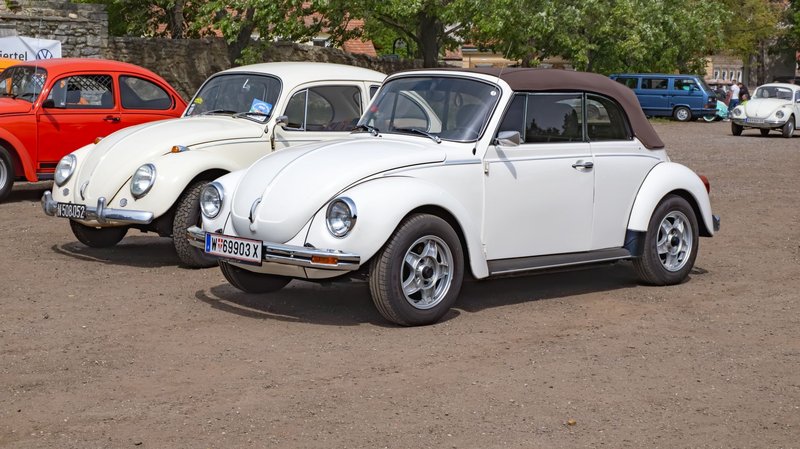
The Cabriolet was the old guard. While the rest of the range had moved to the Mk2 platform, the convertible was still riding on the first-generation Rabbit (A1) floorpan it had used since 1980, complete with that distinctive padded roll bar across the middle. VW kept building it because it sold, and because retooling a low-volume convertible wasn’t worth it.
You got the 1.8-liter four making around 90 horsepower, a manual top that was genuinely well-insulated for the era, and a cabin that felt dated next to a Golf but charming because of it. The 1989 cars are best known for the Wolfsburg Edition trim with its unique alloys and interior cloth.
Original price hovered around $15,500 — not cheap, since a drop-top carried a premium. These are the VW most likely to have survived in clean condition, partly because convertibles get garaged and babied. The Hagerty valuation guides track the A1 Cabriolet as a slowly appreciating entry-level classic.
Volkswagen Fox
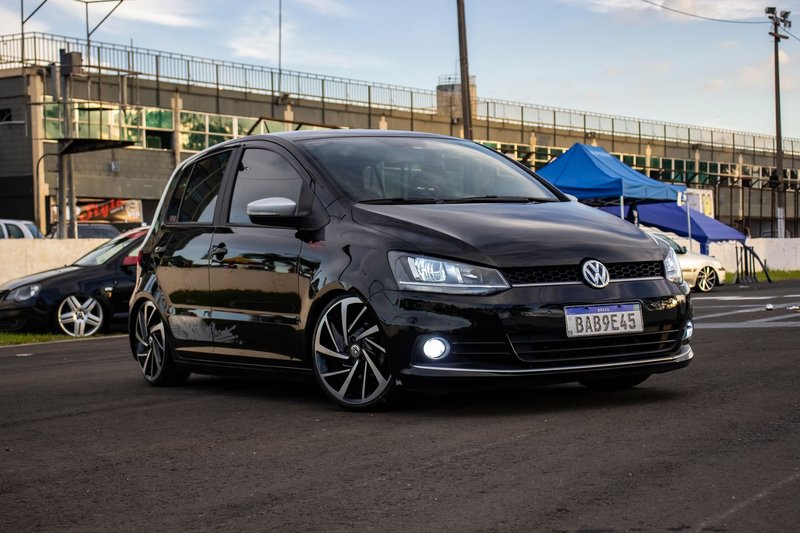
The Fox was VW’s budget play, and it has a great backstory: it was built in Brazil, based on the older Audi 80/VW Gol architecture, and shipped north specifically to give VW a sub-$7,000 entry-level car when the Golf and Jetta had drifted upmarket.
Rear-wheel… no, front-wheel drive, 1.8-liter four, around 81 horsepower, and a five-speed manual on most cars. It was basic. Crank windows, thin carpet, a dashboard that wouldn’t win awards. But it was also light, simple, and weirdly fun to drive hard because there was so little of it. The two-door sedan started near $6,800, which made it one of the cheapest new cars in America that year.
Foxes were used up and thrown away. Finding a clean one now is genuinely hard — they were disposable economy cars and people treated them accordingly.
Volkswagen Fox Wagon
Same Brazilian Fox, stretched into a small wagon. This is the rare-bird body style of the bunch. The Fox Wagon gave you the practicality of a longroof on the cheapest VW platform available, which is a combination almost nobody else offered at the price.
Mechanically identical to the sedan — 1.8-liter four, five-speed — with a flat load floor and fold-down rear seats. It started around $8,300. Production numbers were modest, and survival numbers are tiny, which makes the Fox Wagon a genuine curiosity at VW shows today. If you see one, it’s the kind of car other VW people walk over to look at.
Volkswagen Golf
The Golf was the heart of the lineup — the Mk2 hatchback that defined what a practical small car could be and stands today among the most influential 1980s hatchbacks. Boxy, upright, with that thick C-pillar and a greenhouse that gave you actual visibility. The A2 Golf was roomier than the Rabbit it replaced and built like a small tank.
Base cars used the 1.8-liter four with around 100 horsepower, paired with a five-speed manual or three-speed automatic. You could get it as a two-door or four-door hatchback. The base Golf started near $8,500 and represented the sensible-shoes choice: reliable, easy to fix, cheap to run.
What makes the Mk2 Golf matter is how it drove — tidy, planted, with steering that talked to you. It’s the platform that made the GTI legendary, and even the base car carried some of that DNA.
Volkswagen Golf GTI 16V
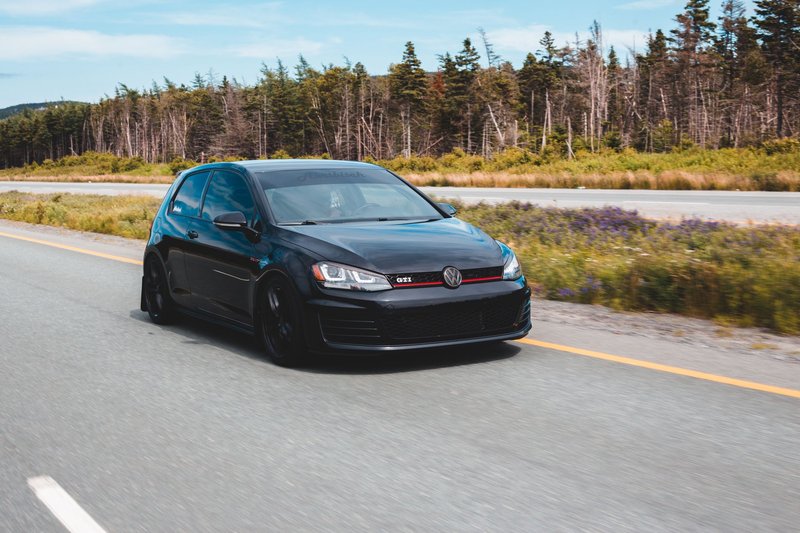
This is the one enthusiasts actually chase. The GTI 16V took the Mk2 Golf and gave it the 16-valve version of the 1.8-liter four, bumping output to around 123 horsepower — a serious number for a sub-2,400-pound hatchback in 1989.
The 16V got you close-ratio gearing, a stiffer suspension, the BBS-style alloys, red trim accents, and a cabin with proper sport seats. It would run to 60 mph in the low eight-second range, which doesn’t sound like much now but felt genuinely quick then, and it carried speed through corners in a way that embarrassed bigger, heavier cars.
It listed around $12,300, a big jump over a base Golf, and it was worth every dollar to the people who got it. The Mk2 GTI 16V is now firmly collectible. Clean, unmodified examples are scarce because most got driven hard, modified, or both. Car and Driver named the GTI to its 10Best list repeatedly across the era, and the reputation has only hardened with time.
Volkswagen Jetta
The Jetta was the Golf with a trunk, and in the US that mattered more than VW probably expected. American buyers liked the notchback shape, the extra cargo security, and the slightly more grown-up image. The Mk2 Jetta outsold the Golf here and became the volume car of the range.
Same 1.8-liter four, same platform, available as a two-door or four-door sedan, with the GLI trim borrowing the GTI’s sportier hardware for buyers who wanted performance with a trunk. Base cars started around $9,500. The Jetta drove like the Golf — composed, tight, honest — with a bit more rear overhang.
The GLI version is the collector pick, but even base Jettas have a following now among people who grew up with them. They’re the quintessential late-’80s VW: practical, German, and built to a standard the brand would struggle to match a decade later, once the cars that filled showrooms by the early 1990s started chasing lower costs and softer edges.
Volkswagen Vanagon
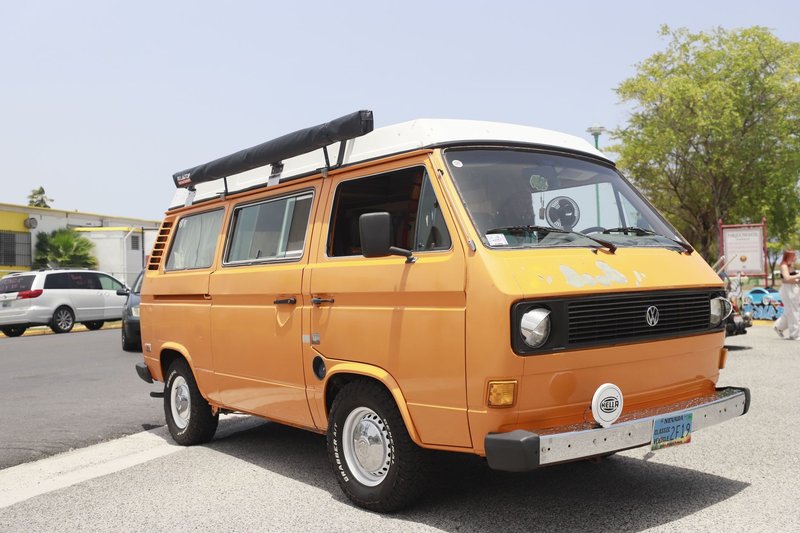
The Vanagon was VW doing its own thing entirely. While the rest of the lineup was front-engine, front-drive, the Vanagon kept the engine in the back — a water-cooled 2.1-liter flat-four making around 90 horsepower, mounted under the rear cargo floor.
It came in a wide spread of configurations: passenger van, the upscale Carat with its full trim and reclining seats, the GL, and the legendary Westfalia camper with the pop-top roof, fold-out bed, sink, and fridge. Pricing ran from roughly $14,000 for a base van to well over $26,000 for a fully kitted Westfalia camper — making the camper the most expensive vehicle VW sold that year.
The Vanagon is the cult object of the 1989 lineup. The Westfalia campers in particular have appreciated hard, riding the same van-life wave that lifted every old camper. A clean Westy now commands money that would’ve stunned its original buyer. The flat-four isn’t fast and the cooling system needs respect, but the National Highway Traffic Safety Administration’s recall records are a worthwhile stop before buying any 35-year-old van.
The Wolfsburg Edition specials
Wolfsburg Edition wasn’t a separate model — it was a value-package trim VW applied across several lines, named for the German city where the company is headquartered. For 1989 you’d find Wolfsburg Editions on the Cabriolet, Golf, and Jetta, and the badge meant a bundle of extras at a price below what the options cost individually.
Typically that meant unique alloy wheels, special cloth or upholstery, body-color trim, and badging that marked the car as something a little more than base. They were a sales tool — a way to move metal with a “limited” feel — but they’ve aged into desirable trims precisely because the equipment combinations were distinctive. A Wolfsburg Cabriolet or Jetta carries a small premium today over the equivalent base car.
What they’re worth now
Here’s the honest collectibility breakdown, from most to least sought-after:
- Golf GTI 16V — the blue-chip pick. Clean, stock examples are genuinely hard to find and command real money. The enthusiast demand is deep and isn’t going anywhere.
- Vanagon Westfalia camper — the van-life darling. Strong appreciation, with prices that reward any owner who kept the cooling system honest and the body rust-free.
- Cabriolet (especially Wolfsburg) — steady, accessible classic. Survival rate is high because convertibles get pampered, so prices stay reasonable.
- Jetta GLI — the sleeper. Cheaper than a GTI for similar mechanical goods, with a quietly growing following.
- Fox Wagon — rare enough to be a conversation piece, though values stay modest because the base car was never glamorous.
- Base Golf, Jetta, and Fox — the daily-driver survivors. Worth keeping if you have one, but these are nostalgia buys, not investments.
The thread running through all of them: the 1989 cars were built before VW’s worst quality years, on simple mechanicals that a competent owner can actually maintain. That’s a big part of why the good ones survived — and why the lineup, boxy and unfashionable as it looked in its day, reads as a high point now.

Tyler Bridges
More from Tyler BridgesHow we reviewed this article
This article was researched against manufacturer records and editorially reviewed before publishing. We accept no payment for coverage.