The 1980s is the decade Land Rover stopped being a farm tool with a chassis and started becoming the thing people now pay six figures to restore. The leaf-sprung Series III was still rolling out of Solihull at the start of it. By the end, the Defender name existed, the Discovery had launched, and the Range Rover had quietly turned into a luxury vehicle. A lot happened in ten years, and most online roundups bury the actual model list inside a wall of company history.
So here’s the clean version: which 1980s Land Rover models existed, when each one launched, what was under the hood, and what they’re worth now if you’re thinking about buying one.
Table of Contents
- Quick Reference Table
- TLDR: The Short Version
- Series III (1971–1985)
- Stage One V8 (1979–1985)
- Land Rover One Ten (1983)
- Land Rover Ninety (1984)
- Land Rover One Two Seven (1985)
- The County Trim
- Range Rover Classic (the 1980s years)
- Land Rover Discovery (1989)
- Why “Defender” Didn’t Arrive Until 1990
- What 1980s Land Rovers Are Worth Now
Quick Reference Table
| Model | Years (1980s) | Wheelbase | Suspension | Typical engines |
|---|---|---|---|---|
| Series III | to 1985 | 88″ / 109″ | Leaf springs | 2.25L petrol/diesel, 2.6L petrol |
| Stage One V8 | 1979–1985 | 109″ | Leaf springs | 3.5L Rover V8 |
| One Ten | 1983 on | 110″ | Coil springs | 2.25L/2.5L diesel, 3.5L V8 |
| Ninety | 1984 on | 92.9″ (badged 90) | Coil springs | 2.25L/2.5L diesel, 3.5L V8 |
| One Two Seven | 1985 on | 127″ | Coil springs | 3.5L V8, 2.5L diesel |
| Range Rover Classic | full decade | 100″ | Coil springs | 3.5L V8, 2.4L VM diesel (1986) |
| Discovery | 1989 on | 100″ | Coil springs | 3.5L V8, 2.5L Tdi |
TLDR: The Short Version
The 1980s Land Rover range had two halves. Up to 1983, you had the old-school Series III (leaf-sprung, agricultural, honest) and its V8 sibling the Stage One V8. From 1983 onward, the coil-sprung utility trio arrived — the One Ten (1983), the Ninety (1984), and the long One Two Seven (1985) — and these are the trucks that got renamed Defender in 1990. Running alongside the whole decade was the Range Rover Classic, which gained four doors, automatics, and a diesel option. The Discovery showed up right at the end, in 1989. If you want the most usable classic of the bunch today, it’s a coil-sprung Ninety or One Ten County.
Series III (1971–1985)
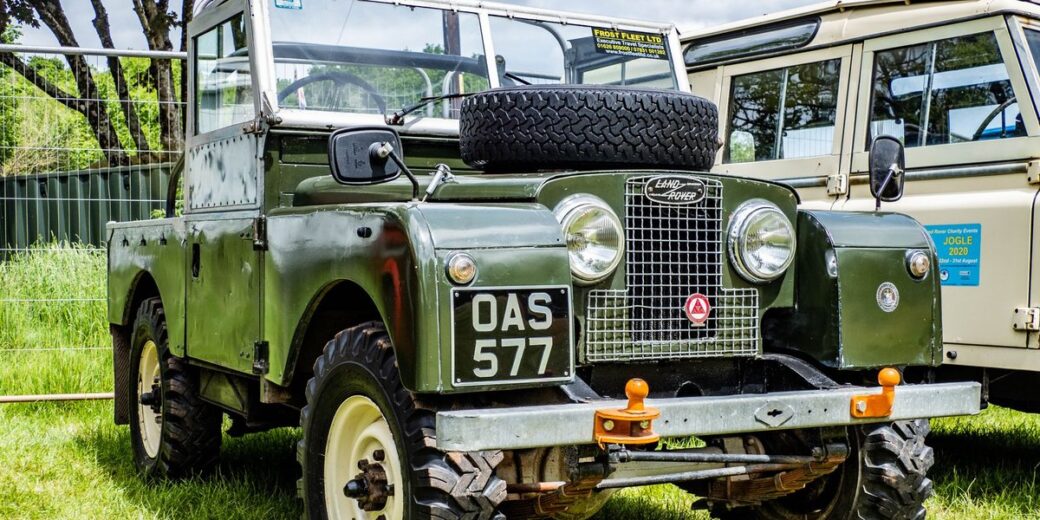
The Series III was the Land Rover most people pictured when they heard the name, and it soldiered on until 1985. You can spot it instantly: the headlights moved to the front wings (Series II had them in the grille), and it got a plastic grille and a full-width dashboard with the instruments in front of the driver instead of dead-center.
Underneath, it was leaf springs front and rear and a part-time four-wheel-drive setup with freewheeling hubs. Engines were modest — the 2.25-litre petrol and diesel four-cylinders did most of the work, with a 2.6-litre straight-six available on the long-wheelbase 109. Two wheelbases defined the lineup: the short 88-inch and the long 109-inch. The big mechanical milestone came in 1980, when Land Rover switched to all-synchromesh gearboxes and individual cylinder liners.
By the early ’80s the Series III felt its age. It was slow, the cabin was loud, and the leaf springs gave a ride that reminded you of every cattle grid. But it’s also the most “classic Land Rover” of the lot — the starting point of Land Rover’s model lineage across the decades — and a tidy 88-inch Series III is one of the cheaper ways into the hobby.
Stage One V8 (1979–1985)
The Stage One V8 is the odd one out, and the one most casual buyers have never heard of. Launched in 1979 and built through 1985, it dropped the 3.5-litre Rover V8 into the long-wheelbase 109 chassis. The name came from government funding — it was “stage one” of a planned modernization of the Land Rover.
Two things give it away. The front of the vehicle has a flush grille panel, set level with the front of the wings, rather than the recessed Series III nose. And it used the Range Rover’s permanent four-wheel-drive system with the LT95 gearbox, which made it the first utility Land Rover with full-time 4WD. It was detuned compared to the Range Rover’s V8, prioritizing low-end torque over outright power.
Production numbers were modest and many went to export markets, so the Stage One V8 is now a genuine curiosity that bridges the gap between the leaf-sprung Series trucks and the coil-sprung models that replaced them.
Land Rover One Ten (1983)
This is the big one. In 1983, Land Rover replaced the long-wheelbase Series III with the One Ten — named for its 110-inch wheelbase — and it changed the formula completely. Out went the leaf springs; in came coil springs all around, borrowed from the Range Rover’s playbook. The result was a utility vehicle that actually rode like something built in the 1980s, with far better wheel articulation off-road.
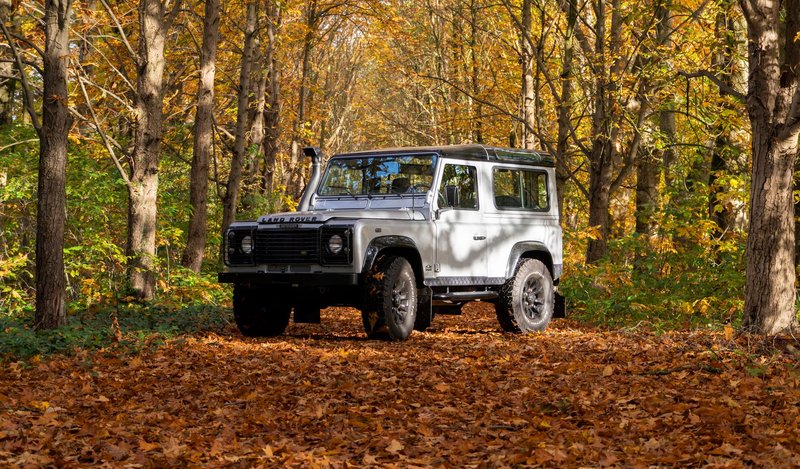
You can identify a One Ten by the one-piece windscreen, the wheel-arch eyebrows, and the headlights in the grille panel rather than the wings. Permanent four-wheel drive became standard. Engine choices spanned the 2.25-litre (soon enlarged to 2.5) four-cylinder petrol and diesel units, and the 3.5-litre V8 for buyers who wanted real pace. A five-speed gearbox arrived to replace the old four-speeder.
The One Ten is the direct ancestor of the 110 Defender, and mechanically the two are nearly identical. That makes a 1980s One Ten one of the most restorable and parts-friendly classic Land Rovers you can buy — almost everything on it is shared with vehicles built well into the 2010s.
Land Rover Ninety (1984)
The short-wheelbase partner to the One Ten arrived a year later, in 1984, and was badged the Ninety. There’s a fun bit of trivia here: the actual wheelbase is 92.9 inches, not 90 — Land Rover rounded down for the name because “Ninety” sat neatly alongside “One Ten.” Early Ninetys shared the same coil-sprung architecture, permanent four-wheel drive, and engine range as the One Ten, just on a shorter, more agile platform.
The Ninety is arguably the sweet spot of the 1980s utility range. It’s compact enough to be genuinely fun on tight trails and narrow lanes, it has the modern coil-sprung ride, and it carries the same later-Defender parts compatibility. For a lot of enthusiasts, a coil-sprung Ninety is the Land Rover to own — old enough to feel classic, new enough to drive every day.
Land Rover One Two Seven (1985)
In 1985, Land Rover stretched the platform again to create the One Two Seven, a 127-inch-wheelbase workhorse aimed at people who needed to haul serious loads or carry a crew. Think utility companies, military buyers, ambulance and fire conversions, and crew-cab pickups with two rows of seats and a long bed behind.
It used the same coil-sprung chassis and drivetrain as its shorter siblings, just with extra length grafted in. The One Two Seven was later folded into the Defender lineup as the Defender 130 (the wheelbase grew slightly), but in its 1980s form it carried the “One Two Seven” name. These are rarer than the Ninety and One Ten, and the surviving crew cabs have a loyal following among people who want a classic Land Rover that can still earn its keep.
The County Trim
The County wasn’t a separate model — it was a trim level — but it matters enough to call out because it’s the badge collectors hunt for. County spec turned the utilitarian Land Rover into something you’d actually want to sit in: cloth seats instead of vinyl, improved sound deadening, tinted glass, and on the station wagon versions, side stripes and proper rear seating for family use.
You’ll see it as Series III County, and then as Ninety County and One Ten County on the coil-sprung trucks. A County station wagon is generally the most desirable and best-equipped version of any given 1980s Land Rover, so the badge usually carries a price premium today.
Range Rover Classic (the 1980s years)
The Range Rover had launched in 1970, but the 1980s is when it transformed from a capable two-door 4×4 into the luxury vehicle that defined the segment. The defining change came in 1981, when the four-door body arrived — the version almost everyone pictures today. Before that, the four-door was a popular aftermarket conversion; Land Rover finally made it official.
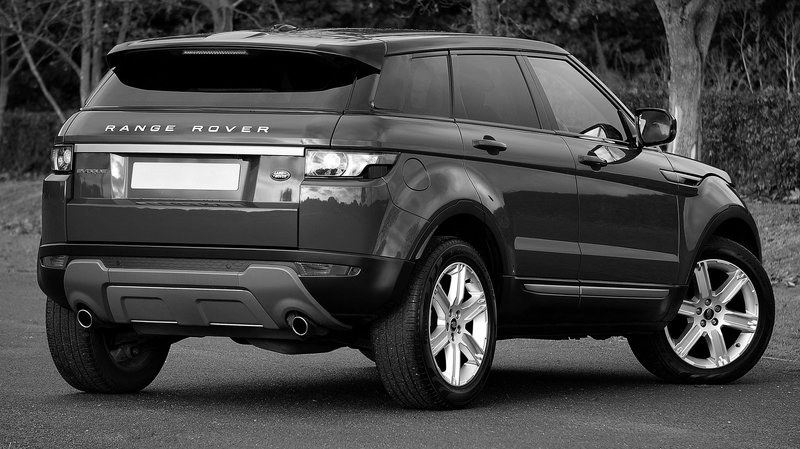
More milestones stacked up across the decade. An automatic transmission joined the range — first a three-speed Chrysler TorqueFlite, later replaced by the smoother ZF four-speed. In 1986, Land Rover added a 2.4-litre VM turbodiesel to broaden the appeal in Europe, the first diesel Range Rover. Fuel injection arrived on the 3.5-litre Rover V8 to replace the twin carburettors, sharpening both performance and refinement. The model now known as the Range Rover Classic earned the “Classic” tag retroactively, once the second-generation P38 arrived in the 1990s.
By the end of the 1980s, the Range Rover had a velvet-lined interior, a diesel option, and automatic gearboxes — a long way from the rubber-mat wash-it-out-with-a-hose original.
Land Rover Discovery (1989)
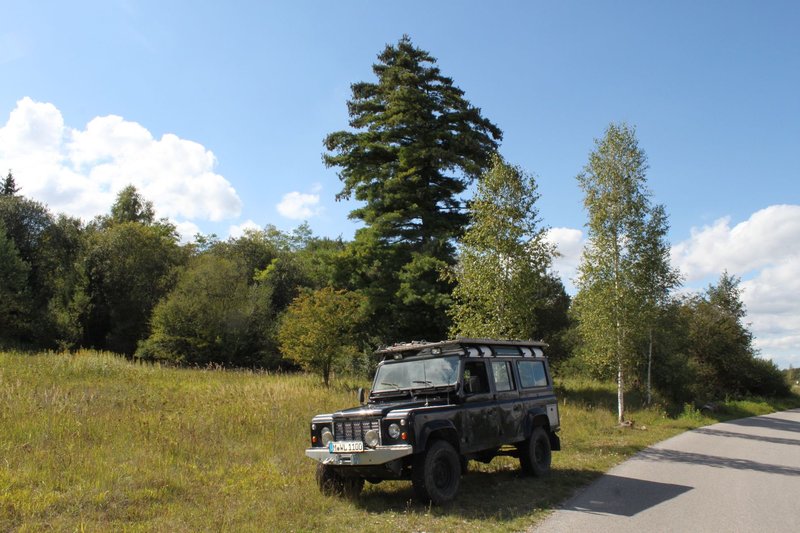
The decade closed with a genuinely new nameplate. The Discovery launched in 1989 to slot between the workmanlike utility models and the increasingly upmarket Range Rover. It was built on the Range Rover’s 100-inch coil-sprung chassis but wrapped in a fresh body with stadium-style stepped roof glass and a cabin designed by Conran Design Group — which is why early Discoveries came with that distinctive Sonar Blue interior.
At launch it came only as a three-door, with the five-door following in 1990. The two headline engines told you exactly where Land Rover was heading: the familiar 3.5-litre V8, and a brand-new 2.5-litre 200 Tdi direct-injection turbodiesel that became legendary for its torque and durability. The Discovery was Land Rover’s bid for the family 4×4 market, and it worked — it’s still in production, generations later.
Why “Defender” Didn’t Arrive Until 1990
Here’s the part that trips people up. Throughout the 1980s, there was no Land Rover Defender. The coil-sprung trucks were simply the One Ten, the Ninety, and the One Two Seven — or just “Land Rover 110,” “Land Rover 90,” and so on.
The Defender name was introduced in 1990, and the reason was the Discovery. Once Land Rover had two distinct model lines sharing showroom space, calling the utility vehicle just “Land Rover” got confusing — the company was now Land Rover the brand, with Range Rover, Discovery, and the original 4×4 all under it. So in 1990 the One Ten became the Defender 110, the Ninety became the Defender 90, and the One Two Seven evolved into the Defender 130. The 200 Tdi engine from the Discovery came along at the same time.
So if someone shows you a “1980s Defender,” it’s technically a misnomer. It’s a One Ten or a Ninety. Mechanically near-identical, name notwithstanding. According to Land Rover’s own series history, the transition from numbered models to the Defender badge marks the cleanest dividing line in the marque’s utility lineup.
What 1980s Land Rovers Are Worth Now
Prices have climbed hard over the past decade, and the 1980s coil-sprung trucks have led the charge. A rough guide for where the market sits today:
- Series III (88″) — the affordable entry point. Project trucks can still be found cheap, but a solid, usable example commands a real premium over what it cost five years ago. Galvanized chassis and a recent restoration push values up fast.
- Ninety / One Ten — the blue-chip pick. A well-sorted coil-sprung Ninety County is the one buyers chase, and clean V8 or Tdi-converted examples sit at the top of the range. Parts availability with later Defenders keeps these realistic to own.
- One Two Seven — rarer, and crew cabs in honest working condition pull strong money from people who want utility plus collectability.
- Stage One V8 — a niche collector item; condition and originality drive everything because so few survive unmolested.
- Range Rover Classic (four-door) — early four-doors and tidy fuel-injected V8s have appreciated sharply, though the running costs of a V8 keep some buyers cautious.
- Discovery (1989 three-door) — the most affordable way into the era, and early three-door 200 Tdi cars are just starting to get collector attention.
Two things move a 1980s Land Rover’s value more than anything else: the chassis (rust is the killer — a galvanized replacement chassis is a huge plus) and originality versus tasteful upgrades. Browse the live listings on a marketplace like Car & Classic and you’ll see the spread fast — the same model can swing wildly on condition alone.
If you’re buying one to actually use rather than display, the coil-sprung Ninety or One Ten is the smart money. It drives well enough for modern roads, shares parts with Defenders built decades later, and sits at the heart of the 1980s Land Rover story — the moment the brand pivoted from farm equipment to the icon people now restore in heated garages.

James Kowalski
More from James KowalskiHow we reviewed this article
This article was researched against manufacturer records and editorially reviewed before publishing. We accept no payment for coverage.