By 1943, Toyota was barely building cars at all. The company that would later flood the world’s roads with Corollas was, that year, a wartime supplier to the Imperial Japanese Army, churning out trucks under raw-material quotas and building passenger sedans in numbers you could count on a few hands. If you’re hunting for the “1943 Toyota lineup,” you won’t find a glossy model-year brochure. You’ll find a handful of vehicles, most of them green, most of them headed for a battlefield.
Here’s what actually rolled out of Toyota’s Koromo and Kariya works in 1943, why so little of it was civilian, and where the rare survivors sit today.
Table of Contents
- The wartime context
- The Toyota AC sedan
- The tail end of the AA, AB, and AE
- The military trucks: KB, KC, KCY
- The Su-Ki amphibious truck
- Specs at a glance
- What survives today
- The short version
The wartime context
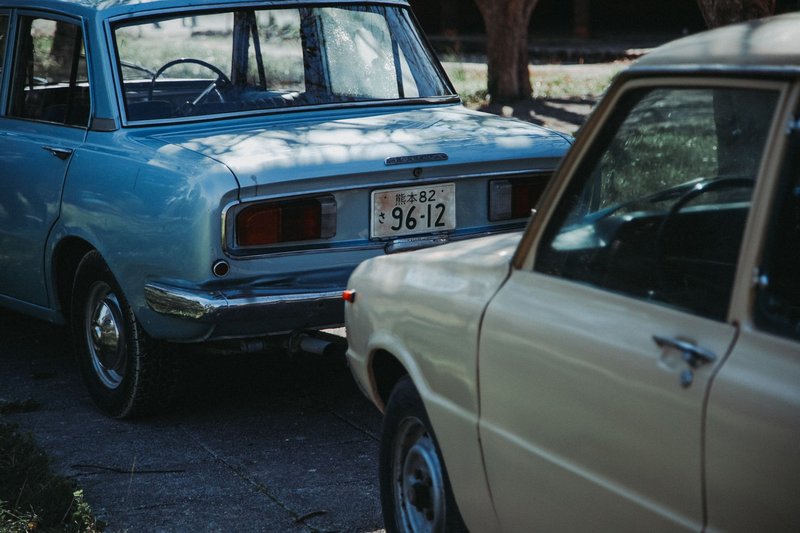
Toyota Motor Co. was only six years old in 1943, spun out of Toyoda Automatic Loom Works in 1937. Its passenger-car ambitions, built around the Chrysler-and-Chevy-inspired AA sedan, ran straight into Japan’s war economy. Steel, rubber, copper, and aluminum were rationed and prioritized for military production. Civilian sedans were a luxury the state didn’t want subsidized.
So by 1943 the passenger side of the business was a trickle. The real volume — and the reason the factory kept its lights on — was trucks for the Army. Toyota’s wartime output was dominated by the KB and KC truck families, with passenger models built almost as an afterthought, often for officials and military staff rather than private buyers.
That split is the whole story of the 1943 lineup: a dying civilian car line on one side, a ramping military-truck operation on the other.
The Toyota AC sedan
The headline civilian model of 1943 is the Toyota AC, launched in March of that year. Think of it as the AA’s leaner, war-rationed replacement.
The AA — Toyota’s first mass-produced passenger car — had a swoopy, aerodynamic body clearly cribbed from the 1934 Chrysler Airflow, with a sloping fastback tail. The AC kept the same mechanical bones but ditched the expensive curves for a more conventional, upright trunk and simpler body panels. Less tooling, less material, less fuss. Exactly what you’d expect from a car designed under a metals quota.
Under the hood sat the same Type A engine the AA used: a 3,389 cc inline-six making around 62 horsepower, itself a reverse-engineered take on a Chevrolet stovebolt six. The AC carried over the AA’s chassis and that proven straight-six, so it drove much like its predecessor — it just looked plainer and cost the factory less to produce.
Production was small. Across the AA/AB/AC family, Toyota built only a few thousand units total over their entire runs, and the AC’s slice of that was modest given the wartime timing. This wasn’t a car you saw on every street. It was a car you saw if you were a government official or someone with the connections to get one.
The tail end of the AA, AB, and AE
The AC didn’t appear in a vacuum. It was the last entry in a small family of related sedans, all winding down by 1943.
- Toyota AA — the original 1936 sedan, the Airflow-inspired fastback. By 1943 it was effectively at the end of its production life, superseded by the AC. Total AA output was tiny by modern standards, with figures generally cited in the low thousands.
- Toyota AB — a phaeton (soft-top convertible) variant of the AA, built in even smaller numbers, often for ceremonial or official use. The open body made it the parade-car version of the lineup.
- Toyota AE — a smaller, lighter sedan introduced to use less material per car. It rode a shorter wheelbase and used a smaller engine than the AA family, an early stab at a more economical passenger vehicle. It, too, was a low-volume model squeezed by wartime rationing.
None of these were high-production cars. The squeeze had been building for years; even the previous season’s catalog was threadbare, as this list of 1942 Toyota car models shows. By 1943 the balance tipped almost entirely toward the military side, and Toyota’s combined passenger-car output in this era was dwarfed by its truck numbers. For deeper production-figure breakdowns on the AA family, the Toyota AA entry on Wikipedia compiles the surviving records.
The military trucks: KB, KC, KCY
If you want to know what Toyota actually built in volume in 1943, look at the trucks.
The backbone was the Toyota KB, a four-wheel-drive military truck, and the Toyota KC, its rear-wheel-drive cousin. These were the workhorses — cargo haulers, troop and supply movers — built to Imperial Japanese Army specifications. The KCY was a related variant within the same wartime truck program. They shared Toyota’s robust straight-six truck engines and simple, repairable ladder-frame construction, the kind of thing you could fix in a field with hand tools.
These trucks matter for two reasons. First, they’re the reason Toyota survived the war as a going concern — the Army contracts kept the company solvent and its factories running. Second, they’re the direct ancestors of Toyota’s postwar truck dynasty. The engineering lessons from building rugged, no-frills four-wheel-drive haulers fed straight into the BJ-series that became the Land Cruiser. The 1943 truck line is, quietly, where the Land Cruiser’s DNA starts.
The Su-Ki amphibious truck
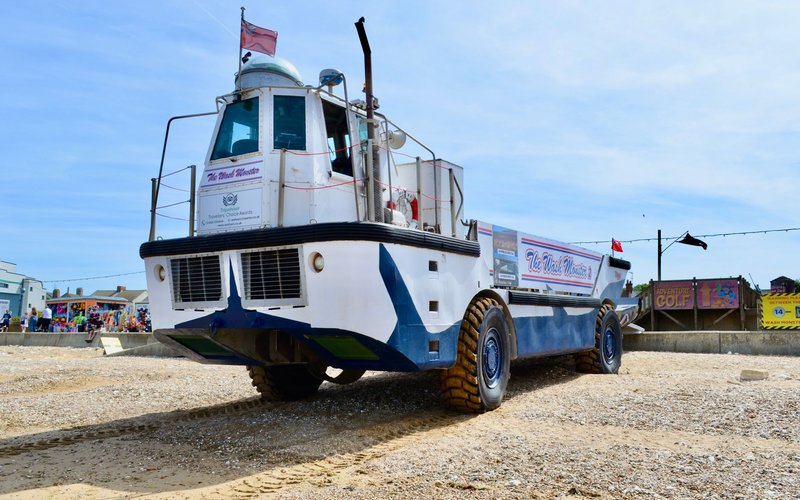
The strangest thing Toyota built around this period is the Su-Ki, an amphibious cargo truck developed for the Imperial Japanese Navy. It’s the vehicle that makes the 1943 Toyota story genuinely odd.
Toyota took the KC/KCY truck chassis and dropped it inside a boat-shaped, watertight steel hull. On land it drove like a truck on its rear wheels. In the water, a propeller driven off the engine pushed it along, and it steered with a rudder. It was built to ferry supplies from ship to shore across the Pacific island campaigns, where there were no docks and no roads — just a beach and a lot of water in between.
Production was minuscule. Sources put total Su-Ki output below 200 units, and some figures land closer to a couple hundred at most. The Wikipedia entry on the Toyota Su-Ki collects what little documentation survives. These were rare when they were new, and the attrition of island warfare made them rarer still.
Specs at a glance
A rough comparison of the main 1943-era Toyota vehicles. Production figures for this period are spotty — wartime records were incomplete and many were lost — so treat the numbers as best-available estimates rather than gospel.
| Model | Type | Engine | Drive | Notes |
|---|---|---|---|---|
| Toyota AC | Sedan | Type A 3.4L I6 (~62 hp) | RWD | AA successor, launched March 1943, simplified body |
| Toyota AA | Sedan | Type A 3.4L I6 (~62 hp) | RWD | Airflow-inspired fastback, ending production |
| Toyota AB | Phaeton | Type A 3.4L I6 | RWD | Open-top AA variant, very low volume |
| Toyota AE | Small sedan | Smaller I-series engine | RWD | Lighter, material-saving design |
| Toyota KB | Cargo truck | Truck I6 | 4WD | Primary Army workhorse |
| Toyota KC / KCY | Cargo truck | Truck I6 | RWD | Rear-drive truck variants |
| Toyota Su-Ki | Amphibious truck | KC-based I6 + propeller | RWD + marine | Navy ship-to-shore transport |
What survives today
This is the part restoration hobbyists and museum-hunters actually care about: almost none of this still exists.
The passenger cars took the worst of it. Toyota produced so few AA-family sedans, and so many were scrapped for materials or lost in the war, that complete original survivors are essentially nonexistent. The most famous “AA” on display — at the Louwman Museum in the Netherlands — has a complicated provenance: it was tracked down in Russia (the Vladivostok area) and there’s long-running debate about how much of it is original 1930s Toyota versus later restoration and fabrication. Toyota itself built faithful replicas for its own museum because finding a genuine one proved impossible.
The Su-Ki is even scarcer. After the war, the handful that weren’t destroyed in the Pacific campaigns mostly vanished. The best-known survivor is a lone, weathered hull that sat for decades on the island of Pohnpei (historically spelled Ponape) in Micronesia — a rusting amphibious truck on a Pacific island, which is about the most on-brand resting place imaginable for a vehicle designed to crawl out of the surf onto a beach.
So if your goal is to own a 1943 Toyota, adjust expectations. You’re far more likely to find a documented truck chassis or a well-supported replica than a numbers-matching original sedan.
The short version
The 1943 Toyota lineup wasn’t a model year in any normal sense. It was a snapshot of a young company bent almost entirely toward war production:
- The AC sedan (March 1943) was the practical, stripped-down successor to the Airflow-inspired AA, and the closest thing to a “new car” Toyota launched that year.
- The AA, AB, and AE were the last gasps of Toyota’s first passenger-car family, built in tiny numbers as rationing tightened.
- The KB, KC, and KCY trucks were the real volume — Army haulers that kept the company alive and seeded the Land Cruiser bloodline.
- The Su-Ki amphibious truck was the wartime curiosity, a KC chassis in a boat hull, now down to a handful of relics.
Toyota’s polished, reliable image came later. In 1943, it was a metals-rationed factory building trucks for an army and a few hand-counted sedans on the side — and the few cars that exist from that year are among the rarest the company ever made.

Marco Delantero
More from Marco DelanteroHow we reviewed this article
This article was researched against manufacturer records and editorially reviewed before publishing. We accept no payment for coverage.