Most Suzuki histories you’ll find online sprint through the 1950s in two paragraphs on their way to the GSX-R. The decade gets a sentence about a clip-on engine, maybe a nod to the Colleda name, and then it’s off to the races. That’s a shame, because the 1950s is the whole origin story — the years where a loom-making company in Hamamatsu had to decide whether to bet on two wheels at all.
So here’s the decade done properly. Model by model, in order, with the specs and the context that the brand recaps skip.
Table of Contents
- From silk looms to motorcycles
- 1952: The Power Free, a 36cc bicycle helper
- 1953: The Diamond Free hits its stride
- 1954: The Colleda CO, the first “real” Suzuki
- 1955: The Colleda COX and the Mount Fuji win
- 1950s Suzuki models at a glance
- Why these bikes matter now
From silk looms to motorcycles {#from-silk-looms-to-motorcycles}
Suzuki didn’t start in motorcycles. It started in textiles. Michio Suzuki founded Suzuki Loom Works in 1909, and for four decades the company made weaving machines for Japan’s silk industry — clever, well-engineered looms that ran the cottage workshops of the Hamamatsu region.
Then the silk market collapsed. Postwar Japan didn’t have money for kimono fabric, and a loom company with no looms to sell needed a new product fast. Michio Suzuki had actually toyed with car prototypes before the war, but the immediate problem in 1950 was simpler and more universal: people needed to get around, gasoline was cheap-ish, and bicycles were everywhere. Strap a small motor to the bicycle you already own, and you’ve sold a product to a whole country.
That’s the bet Suzuki made. Not a motorcycle from scratch — a motor for the bike in your shed. It’s the same loom-to-engine pivot that put dozens of names on the map in the postwar years, and Suzuki sits among the classic motorcycle brands that grew out of that scramble for a new product.
1952: The Power Free, a 36cc bicycle helper {#power-free}
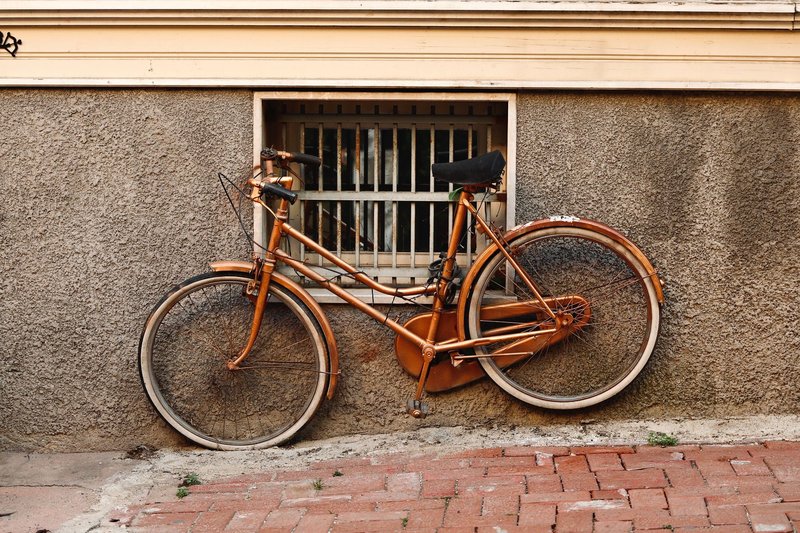
The first motorized Suzuki wasn’t a motorcycle at all. The 1952 Power Free was a 36cc two-stroke engine designed to clip onto an ordinary bicycle. It made about one horsepower, which sounds like nothing until you remember the alternative was your own legs on a hilly Japanese road.
The clever part was the drivetrain. The Power Free used a double-sprocket setup that let the rider choose: pedal with the engine helping, pedal with no engine, or run on engine power alone and stop pedaling entirely. You shifted between those modes with a lever. For 1952, that was genuinely thoughtful design — most clip-on engines of the era forced an awkward either-or, and Suzuki’s let you blend the two.
The Japanese government noticed. The Power Free’s engineering earned Suzuki a financial subsidy to keep developing motorcycle technology, which is not the kind of thing a country hands out for a toy. It told Suzuki the two-wheeler idea had legs.
1953: The Diamond Free hits its stride {#diamond-free}
A year later came the Diamond Free, and this is where the numbers get serious. Suzuki bumped displacement to 60cc, roughly doubled the output to around two horsepower, and kept refining the two-speed double-sprocket idea from the Power Free.
The Diamond Free is the bike that proved Suzuki could actually manufacture at volume. At its peak the company was building over 6,000 units a month — an enormous figure for an early-1950s Japanese workshop transitioning out of textiles. Demand was real, the product worked, and the assembly lines that had once turned out weaving machines were now turning out engines.
It also won a race. A Diamond Free took a class victory at the 1953 Mount Fuji Ascent, an early sign that Suzuki would treat competition as an engineering proving ground rather than a marketing stunt. That instinct never really left the company.
1954: The Colleda CO, the first “real” Suzuki {#colleda-co}
Here’s the turning point. In 1954 the company formally renamed itself the Suzuki Motor Co., and released the Colleda CO — the first machine that was a complete motorcycle rather than an engine bolted to a bicycle frame.
The Colleda CO ran a 90cc four-stroke single producing around four horsepower. Four-stroke matters: it’s quieter, smoother, and more refined than the buzzy two-strokes Suzuki had been building, and choosing it for the flagship signaled that Suzuki wanted to be taken seriously, not just sell cheap commuter helpers. The name “Colleda” reportedly came from the Japanese kore da — roughly “this is it.” Confidence baked right into the badge.
This is the bike that brand histories should anchor the 1950s around, and usually don’t. The Power Free and Diamond Free were experiments. The Colleda CO was Suzuki saying it was a motorcycle company now. Suzuki’s own global company history treats this stretch of the mid-1950s as the foundation of everything that followed.
1955: The Colleda COX and the Mount Fuji win {#colleda-cox}
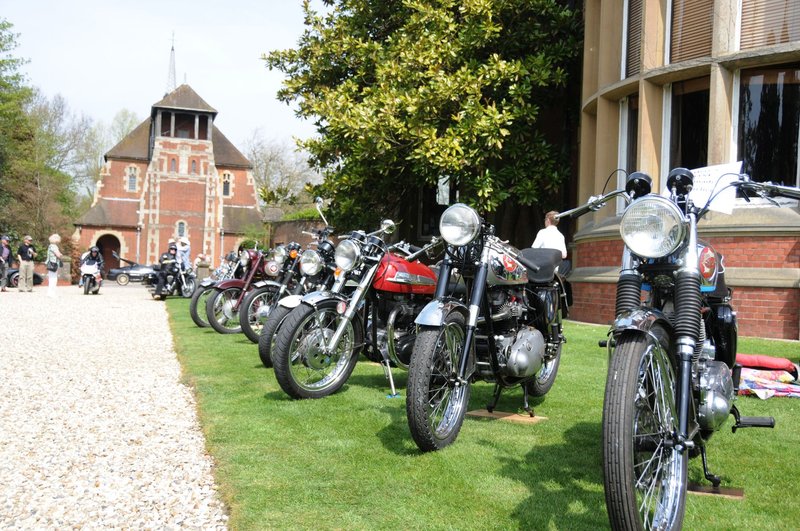
In 1955 the lineup grew up. The Colleda COX arrived as a 125cc machine, and Suzuki offered the family in both four-stroke and two-stroke flavors as it figured out which path the market wanted. The 125cc class was the sweet spot for Japanese riders of the era — big enough to be a real motorcycle, small enough to stay affordable and easy to license.
1955 was also the year the racing heritage paid off publicly. A Colleda won its class at the Mount Fuji Ascent Race, putting Suzuki’s name on a results sheet alongside the established players. For a company that had been making looms five years earlier, beating purpose-built motorcycle firms up the side of Japan’s most famous mountain was a statement.
There’s a common mix-up worth clearing here. People researching 1950s Suzuki sometimes stumble onto the Suzulight — but that was a car, the kei-class Suzulight launched in 1955, not a motorcycle. Suzuki’s Suzulight history is a parallel story on four wheels. If you’re chasing the motorcycle lineage, the Colleda name is the thread to follow, not Suzulight.
1950s Suzuki models at a glance {#spec-table}
| Year | Model | Engine | Displacement | Output | What it was |
|---|---|---|---|---|---|
| 1952 | Power Free | 2-stroke single | 36cc | ~1 hp | Clip-on bicycle motor, double sprocket |
| 1953 | Diamond Free | 2-stroke single | 60cc | ~2 hp | Volume seller, 6,000+ units/month |
| 1954 | Colleda CO | 4-stroke single | 90cc | ~4 hp | First complete Suzuki motorcycle |
| 1955 | Colleda COX | 2- and 4-stroke | 125cc | varies | Grown-up lineup, Mount Fuji class win |
Figures for these earliest machines vary between sources — Suzuki was a young company, records were informal, and surviving examples are rare. Treat the spec table as the shape of the decade rather than a restoration-grade datasheet.
Why these bikes matter now {#why-they-matter}
You will almost never see a running 1952 Power Free at a bike night. These machines exist in museums and a handful of serious private collections, and a genuine survivor is closer to an archaeological find than a usable motorcycle. The clip-on engines especially were consumable goods — used hard, thrown away, not preserved.
That rarity is exactly what makes them interesting. The 1950s Suzuki lineup is the visible record of a company teaching itself, in public, how to build motorcycles: a bicycle motor, then a better bicycle motor, then a real bike, then a real bike that wins races. The momentum carried straight into the 1960s Suzuki motorcycles, where the small two-strokes hinted at here turned into a full racing program. Every GSX-R and Hayabusa traces back to a 36cc loom-company experiment and a sprocket lever that let you choose whether to pedal.
If you’re researching a specific machine — a Colleda CO you found in a barn, a Diamond Free in an auction listing — the move is to verify the engine type and displacement against the year, because the names overlap and the two-stroke/four-stroke split in 1955 trips people up. Get those two numbers right and you’ll know exactly where your bike sits in the story.
Five years from looms to a mountain win. That’s the 1950s Suzuki, told properly.

Sarah Thornton
More from Sarah ThorntonHow we reviewed this article
This article was researched against manufacturer records and editorially reviewed before publishing. We accept no payment for coverage. Some guides contain affiliate links; see our affiliate disclosure.