Table of Contents
- The Datsun Decade
- Sports Cars
- Datsun 240Z / 260Z / 280Z (S30)
- Nissan Silvia S10
- Sedans and Compacts
- Datsun 510 (Bluebird U)
- Datsun 610 (Bluebird U)
- Datsun B210 (Honey Bee / Violet)
- Datsun 710 (Violet)
- Nissan Laurel C130 / C230
- The Skyline Lineage
- Nissan Skyline C110 (Kenmeri)
- Nissan Skyline C210 (Japan)
- Luxury and Executive Models
- Nissan Cedric / Gloria 230 and 330
- Trucks and Vans
- Datsun 620 Pickup
- Datsun 720 Pickup
- Nissan Caravan / Urvan
- The Brand Transition: Why “Datsun” Disappeared
- Which 1970s Nissans Are Worth Collecting Today?
The Datsun Decade
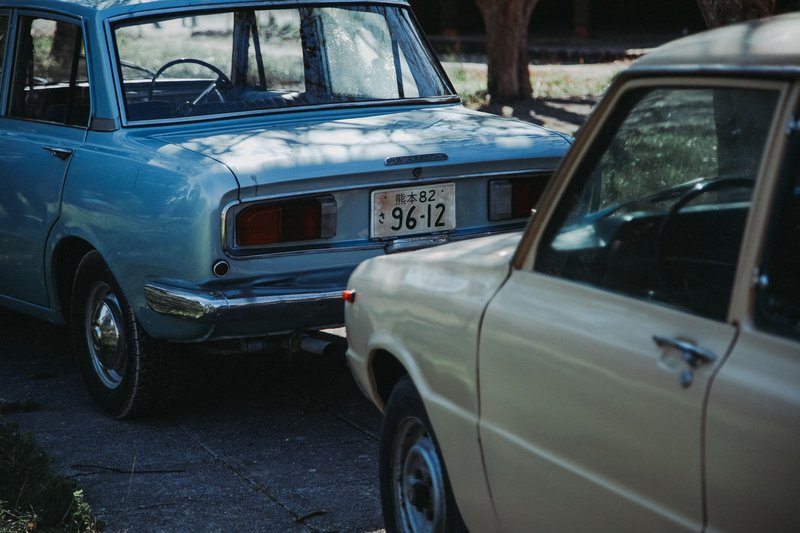
The 1970s were the decade that made Nissan a global automaker. In Japan, the brand was Nissan. In export markets — especially the United States — every car wore a “Datsun” badge. That split identity ran through the entire decade until Nissan began consolidating under a single name in 1981.
The timing was either unlucky or brilliant, depending on how you look at it. The 1973 oil embargo hit right as Datsun’s compact, fuel-efficient lineup was gaining traction in America. Suddenly the Datsun B210 wasn’t just cheap — it was exactly what people needed. Sales in the US climbed sharply through the decade, and by 1979, Nissan was the top-selling imported brand in North America.
Meanwhile, emissions regulations were tightening in every major market. The clean-running engines Nissan developed to comply — particularly the NAPS (Nissan Anti-Pollution System) technology — had a visible effect on power output. The 240Z became the 260Z, then the 280Z, each iteration adding weight and losing some of the original’s sharp edge in the name of emissions compliance. It’s the reason Z-car purists almost universally prefer the first-generation 240Z.
This guide covers the full range: sports cars, sedans, compacts, trucks, and the executive models that rarely get mentioned in Western automotive writing. Some of these cars are established collector classics. Others are criminally undervalued.
Sports Cars
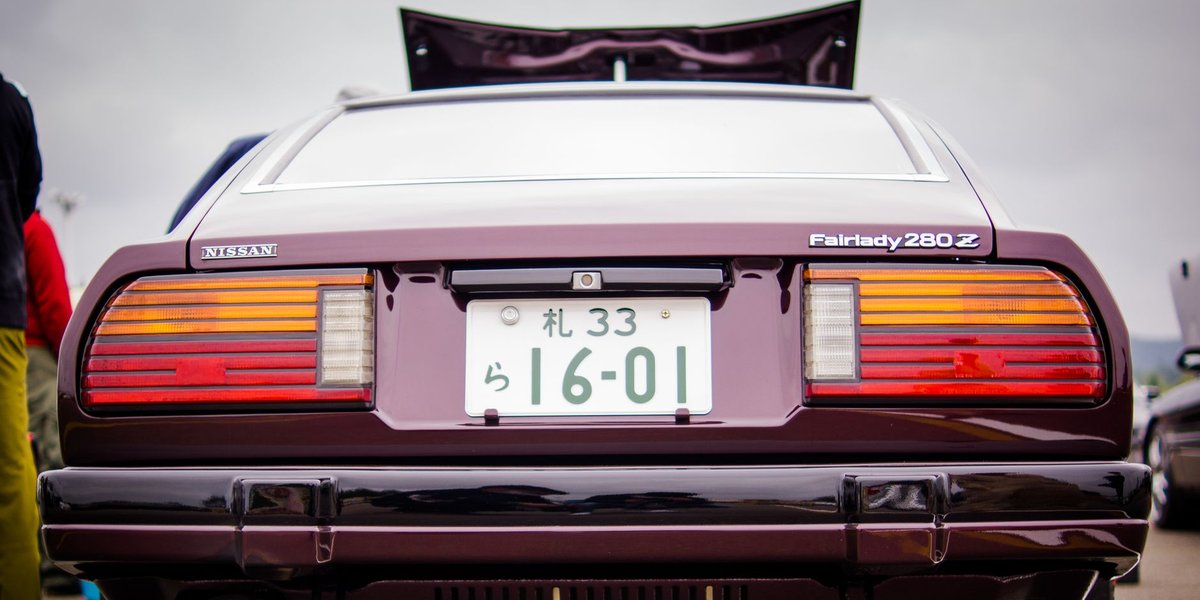
Datsun 240Z / 260Z / 280Z (S30)
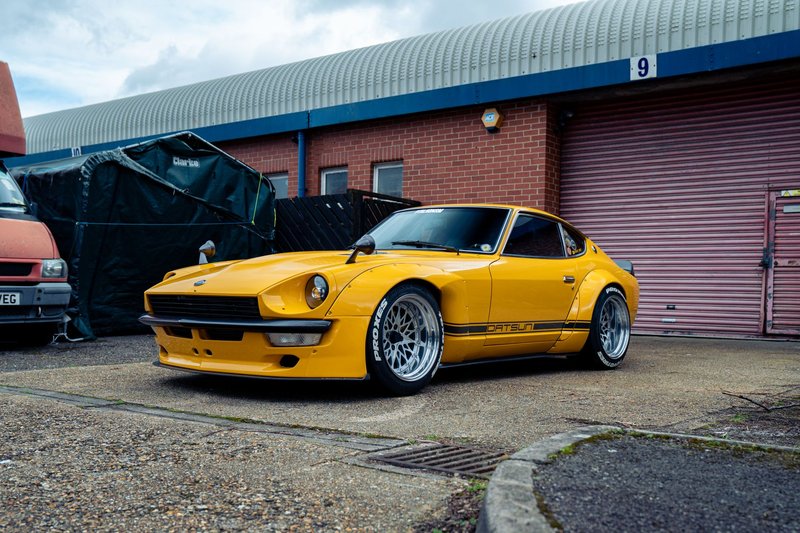
The S30 chassis Z-car is the reason Nissan has a performance reputation in the West. It didn’t just compete with European sports cars — it undercut them on price while matching them on fundamentals, and in some cases beating them outright.
The 240Z launched in 1969 and ran through 1973. Its 2.4-liter inline-six made around 151 horsepower, but that number undersells the car. The engine was smooth, the chassis balanced, and the price was roughly half what a comparable Porsche 911T cost at the time. Road & Track named it one of the best cars of 1971. It sold immediately and in volume.
The 260Z (1974–1977) arrived with a 2.6-liter engine to compensate for US emissions equipment that strangled the 240Z’s output. Then came the 280Z (1975–1978), with fuel injection replacing carburetors — a first for Nissan in the US market. Both are good cars, but the added weight from federal safety bumpers and additional sound insulation means they’re slower than their displacement suggests. A stock 280Z runs the quarter mile a full second slower than a tuned 240Z.
For collectors: the early 240Z cars from 1970–1971, particularly the short-dash models with the round tail lights, command the strongest prices. Good unrestored examples now regularly sell above $40,000. The 260Z and 280Z are more available and more affordable — the 280Z especially, since it got the fuel injection system that makes it more livable as a daily driver.
Nissan Silvia S10
The S10 Silvia ran from 1975 to 1979 and is barely mentioned in Western coverage, mostly because it was never officially exported to the US. That’s the collector opportunity.
Built on the same 610 platform, the S10 used the L18 1.8-liter engine and came in fastback coupe form. It was positioned as an affordable personal luxury car in Japan, competing with Toyota’s Celica — which it resembled enough that Nissan eventually diversified the styling. Fewer than 30,000 were built over the model’s run, making it genuinely scarce.
If you find one in reasonable shape, the parts situation is better than you’d expect because the drivetrain is shared with other 610-era models. The body, though, is a different story — the S10 used thin steel that rusts aggressively if not treated.
Sedans and Compacts
Datsun 510 (Bluebird U)
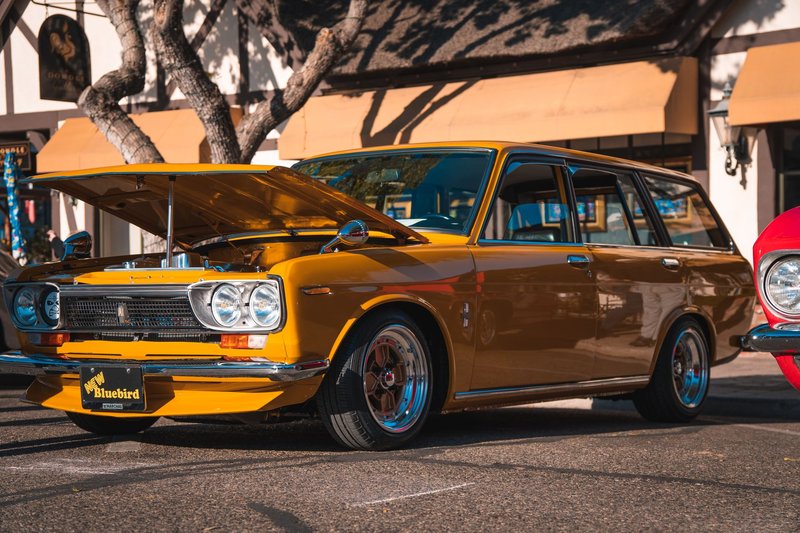
The 510 launched in 1967 and ran into the early 1970s, making it technically a 1960s car that aged into the decade. It’s included here because the 510 rally heritage, the parts ecosystem, and the collector market all really came into their own in the ’70s and afterward.
What the 510 did was give American buyers independent rear suspension and a twin-cam engine option at a price that made Detroit look lazy. The SOHC 1.6-liter base engine wasn’t exotic, but the IRS setup meant the car handled like nothing else in its price range. BRE (Brock Racing Enterprises) took the 510 to two consecutive SCCA Trans-Am championships in 1971 and 1972, which cemented its reputation with enthusiasts.
510s are now in full-on collector territory. Rust-free western US cars — the California and Arizona cars that avoided road salt — are the ones to find. Restoration costs have climbed proportionally with prices.
Datsun 610 (Bluebird U)
The 610 replaced the 510 in 1972 and is the car the 510 crowd loves to dismiss. They’re not entirely wrong. The 610 was more comfort-oriented, heavier, and the styling was less distinctive. But the 610 coupe is genuinely attractive, and the U20 2.0-liter engine option gave it real performance for its class. The full picture of what Nissan was building that year — from the Skyline C110 to the 240Z — is worth exploring in the complete list of 1972 Nissan car models, which puts the 610’s place in the lineup in useful context.
In the US, the 610 sold as the Datsun 610. In Europe it was the Datsun Violet. In Australia and Japan it was positioned between the basic 510 and the upscale Bluebird. It’s a confused identity that never quite clicked, which is why 610s are overlooked today — and why you can still find clean ones for reasonable money.
Datsun B210 (Honey Bee / Violet)
The B210 is the car that fed Nissan’s US sales numbers in the mid-1970s. It launched in 1973 and arrived just in time for the oil crisis to make fuel economy a headline stat rather than a footnote. That same year saw a sharp shift across the entire industry, and the B210 was well-positioned against the popular cars of 1973 that were suddenly competing on efficiency rather than horsepower.
The A14 1.4-liter engine returned over 35 mpg in highway driving, which was the number that moved units. Road & Track tested the B210 hatchback in 1975 and found it uninspiring to drive but impossible to argue with on value. Consumer Reports liked it too, which meant it was showing up in shopping lists for buyers who’d never considered a Japanese car before.
Nissan leaned into this with the “Honey Bee” trim package — a striped decal option that made the B210 look slightly less anonymous and generated a surprising amount of press. It worked. The B210 outsold the Toyota Corolla in the US in 1975.
Collector interest in the B210 is minimal, which makes it interesting in a perverse way. A fully sorted B210 Hatchback is a time capsule of 1970s economy car design, and the ones that survive tend to be well-preserved because owners kept them rather than traded up.
Datsun 710 (Violet)
The 710 ran from 1973 to 1977 and was essentially the 610’s replacement in most markets — the sedans and wagons carrying on Datsun’s mid-range lineup while the 810 took over at the top.
The 710 is unremarkable in most respects, but the wagon variant deserves mention. It was practical, available with a 1.8-liter engine, and sold well in Australia and New Zealand where buyers needed versatility more than style. You’ll find more 710 wagons still running in rural Australia than anywhere else on earth.
Nissan Laurel C130 / C230
The Laurel sits in an interesting position: too large and expensive to be a family compact, not prestigious enough to compete with the Cedric. It occupied its own lane as an affordable executive car in Japan, and it found a loyal following in markets like New Zealand, Australia, and parts of Southeast Asia.
The C130 (1972–1977) used the L20 2.0-liter inline-six — the same basic engine family as the Z-cars, which meant it was smooth, reliable, and had good parts availability. The C230 (1977–1980) brought updated styling and the option of a 2.6-liter engine.
Western collectors largely ignore the Laurel, which creates an opportunity. The C130 coupe in particular has clean lines that hold up well, and the drivetrain is no more complex than a 240Z’s.
The Skyline Lineage
Nissan Skyline C110 (Kenmeri)
The C110 Skyline ran from 1972 to 1977 and is best remembered in Japan through an iconic advertising campaign featuring a young couple, Ken and Mary, driving through the countryside. The tagline — “Ken to Mary no Skyline” — became so associated with the car that the C110 is universally called the “Kenmeri” in Japan.
Mechanically, the C110 is significant because it briefly offered the GT-R variant with the S20 twin-cam engine — the same engine that dominated Japanese touring car racing in the Hakosuka-era GT-Rs. The Kenmeri GT-R was produced for just under six months in 1973 before emissions regulations killed it. Somewhere between 197 and 209 units were made, depending on the source. They sell for extraordinary money today in Japan when they appear at all.
The standard Kenmeri with the L series inline-six is a different proposition entirely — attainable, interesting, and starting to attract collector attention outside Japan.
Nissan Skyline C210 (Japan)
The C210 replaced the Kenmeri in 1977 and carried the Skyline into the 1980s. In the domestic Japanese market it was marketed simply as “Japan” — a bold branding choice Nissan has never really repeated.
No GT-R variant was offered for the C210 during the 1970s. The GT-R name went dormant until 1989, when Nissan brought it back for the R32. The C210 instead focused on the GTS trim levels and the 2.0-liter inline-six variants that served the family and executive markets.
Outside Japan, the C210 is nearly invisible to collectors, which keeps prices accessible. The coupe variant in particular is an appealing entry point into vintage Skyline ownership without the Kenmeri GT-R premiums.
Luxury and Executive Models
Nissan Cedric / Gloria 230 and 330
The Cedric and Gloria were Nissan’s flagship sedans, sold in Japan as near-identical models through competing dealer networks — Nissan dealers sold the Cedric, Nissan Prince dealers sold the Gloria. Yes, they sold the same car through two separate dealership chains with different badges. Japanese market economics of the era were particular about these things.
The 230 series (1971–1975) and 330 series (1975–1979) used engines up to the 2.8-liter L28 inline-six and were available in configurations up to hardtop four-door with rear jump seats. These were chauffeur-driven company cars and ministerial transport — the Japanese equivalent of a Rover SD1 or a late W116 Mercedes in ambition if not in prestige.
Outside Japan, these cars are almost entirely unknown. A clean 330 hardtop is an unusual collector’s piece that draws attention at shows precisely because nobody can immediately identify it.
Trucks and Vans
Datsun 620 Pickup
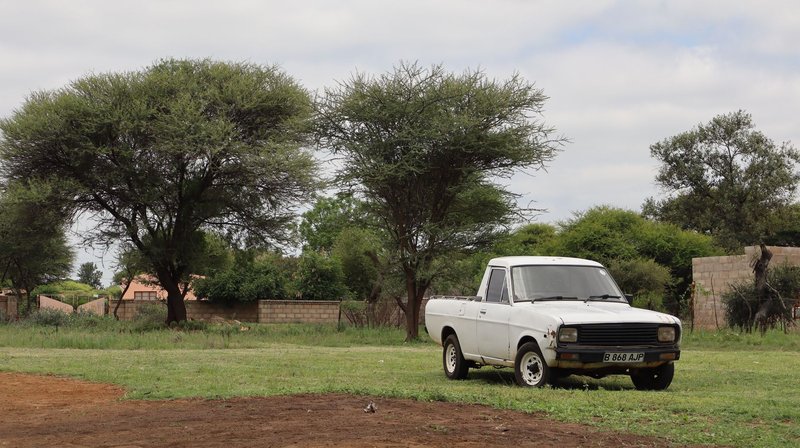
The 620 pickup ran from 1972 to 1979 and is the truck that built Nissan’s commercial presence in the US, Australia, and Southeast Asia. It sold under the “Li’l Hustler” marketing campaign in America — which was either clever or ridiculous depending on your tolerance for 1970s advertising, but it moved trucks.
The 620’s 1.8-liter J18 engine was simple and durable. The trucks were light enough to get reasonable fuel economy and capable enough for actual work, which made them popular both as contractor trucks and as cheap personal transport. They rusted predictably in northern climates but survived well in drier regions.
Clean 620s, particularly the “Li’l Hustler” trims with the two-tone paint and factory graphics, have developed a strong following. They sit at an accessible price point compared to American minitrucks of the same era, and the parts network is solid.
Datsun 720 Pickup
The 720 arrived in 1979 as the 620’s replacement and bridged the 1970s and 1980s with a design that was more aerodynamic and slightly more cab space. It got the Z20 and Z22 engine options, and the King Cab extended-cab variant gave it genuine utility as a small family truck. For context on what the compact truck market looked like at the end of the decade, the popular cars of 1979 illustrates just how competitive the segment had become by the time the 720 launched.
The 720 is the gateway drug to Datsun/Nissan truck collecting — more available than a 620, easier to source parts for, and increasingly appreciated for its own merits rather than as a consolation prize for buyers who couldn’t find a 620.
Nissan Caravan / Urvan
The E20 Caravan launched in 1973 and was Nissan’s answer to the Toyota HiAce in the commercial van market. Available in passenger, panel, and combi configurations, it sold across Asia, Africa, and Oceania in significant numbers.
It’s not a collector’s car. It’s a working vehicle that keeps working, which is exactly why you still see running E20 variants in markets from Kenya to the Philippines. For restoration hobbyists in Japan, the Caravan has a small but dedicated following that appreciates its sheer utility.
The Brand Transition: Why “Datsun” Disappeared
Throughout the 1970s, every Nissan sold outside Japan wore a Datsun badge — the result of a corporate decision from the 1930s to export under a separate name to shield the parent company from import tariff implications. By the late 1970s, this created a genuine marketing problem: Nissan was spending money building two brand identities for the same cars.
The transition began in 1981, when Nissan announced a global rebadging program that would replace “Datsun” with “Nissan” across all markets. It took until 1986 to complete in the US. The cost was reportedly around $500 million — a number that illustrates how thoroughly the Datsun name had been built up, and how decisively Nissan chose to walk away from it.
The practical consequence for collectors is that many 1970s Nissans are cataloged, sold, and discussed under their Datsun names rather than Nissan names. The 240Z is rarely called a Nissan Fairlady Z outside Japan, even though that’s the correct domestic designation. This split in terminology can make research confusing and parts sourcing inconsistent across different markets.
Which 1970s Nissans Are Worth Collecting Today?
The Z-cars get the most attention and the highest prices, but they’re also the least accessible entry point for new collectors. Here’s a more considered breakdown by category:
Established, proven value:
- 240Z (1970–1973): Prices have plateaued somewhat after years of appreciation, but clean cars aren’t getting cheaper. The short-nose early cars are the target.
- 620 pickup: Li’l Hustler variants and low-mileage barn finds continue to appreciate steadily.
Undervalued with upside:
- Silvia S10: Scarce, no US exports, and shares drivetrain with well-supported platforms. The coupe body on this is genuinely good-looking.
- Laurel C130 coupe: L-series engine, clean lines, almost completely off the Western collector radar.
- Kenmeri Skyline (non-GT-R): The standard C110 cars are attainable now and riding the coattails of growing Japanese classic car interest globally.
For the purist with patience:
- Cedric/Gloria 330 hardtop: True oddity. Show-stopper at any event outside Japan. Parts sourcing requires Japan connections, which is the significant barrier.
The broader point is that 1970s Nissan coverage heavily over-indexes on the Z-car story. The decade produced a full range of vehicles, many of which represent real value precisely because they’ve been ignored. The collectors who discovered the 510 when it was a $3,000 car understand the principle.
Japanese automakers of this era built to a standard that holds up. The mechanical simplicity, the SOHC and DOHC inline engines, the straightforward suspension geometry — these are cars you can actually work on, which matters when you’re dealing with fifty-year-old parts. That’s a different conversation than you’d have about restoring a contemporary European executive sedan from the same period.
The 1970s Nissan/Datsun lineup isn’t just collector fodder. It’s a snapshot of a company figuring out how to compete globally — and mostly getting it right.

Tyler Bridges
More from Tyler BridgesHow we reviewed this article
This article was researched against manufacturer records and editorially reviewed before publishing. We accept no payment for coverage.