Search “1954 Toyota car models” and you get directories. Toyota’s own history pages give you a wall of thumbnails spanning 1935 to 1959. Wikipedia hands you a chronological list of every Toyota ever built and dares you to find the right year. Nobody isolates 1954 and tells you what was actually leaving the factory in Koromo that year.
So here it is — every Toyota model from the 1954 model year, sorted by what it was for, with codes, engines, and the context that explains why a company most people associate with Camrys was, in 1954, mostly building trucks and buses.
Because that’s the real story of 1954. Postwar Japan needed haulers, not luxury sedans. Of the 267 exhibits at the very first Tokyo Motor Show that year, only 17 were passenger cars. Toyota’s lineup reflected exactly that math.
Table of Contents
- The quick answer: 1954 Toyota lineup at a glance
- The engine story: Type F arrives
- Passenger cars: the Toyopet RH sedans
- The Land Cruiser 20: where the legend gets serious
- Trucks: the BA, FA, FC and the Stout
- Toyoace SKB: the cabover that paid the bills
- The FB bus
- Why 1954 looked the way it did
- Which 1954 Toyotas survive today
The quick answer: 1954 Toyota lineup at a glance
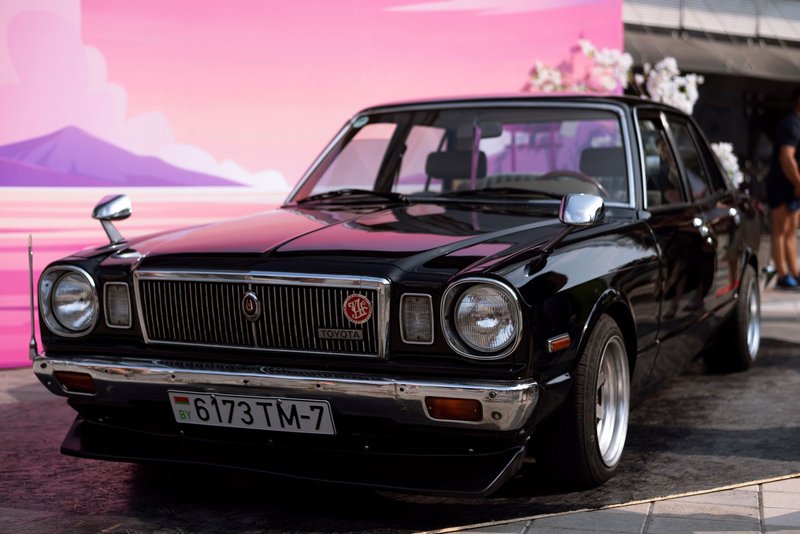
If you just want the consolidated table the other sites won’t give you, start here. These are the Toyota models in production or launched during 1954.
| Model | Code | Body type | Engine | Production span |
|---|---|---|---|---|
| Toyopet Super | RH / RHK / RHN | Passenger sedan | Type R, 1.5L 4-cyl, ~48 hp | 1953–1955 |
| Land Cruiser 20 | BJ → 20 series | 4×4 utility | Type F, 3.4L 6-cyl, 105 hp | 1954–1960 |
| Toyota BA | BA | Light truck | Type B, 3.4L 6-cyl | 1954– |
| Toyota FA | FA | Medium truck | Type F, 3.4L 6-cyl, 105 hp | 1954– |
| Toyota FC | FC | Truck | Type F, 3.4L 6-cyl | 1954– |
| Toyoace | SKB | Cabover light truck | Type S, 1.0L 4-cyl | 1954–1956 |
| Toyota FB | FB | Bus | Type F, 3.4L 6-cyl | 1954– |
A few names jump out. The Land Cruiser 20 is the one most people came looking for. The Toyoace SKB is the unglamorous workhorse that quietly outsold almost everything. And the Toyopet RH sedans were Toyota’s small, stubborn bet on a passenger-car future that hadn’t arrived yet.
The engine story: Type F arrives
Here’s the detail the directories skip entirely, and it’s the most important one for 1954.
This was the year the Type F engine entered wide use. A 3.4-liter inline-six, it replaced the older Type B in the heavier vehicles and bumped output from roughly 95 hp to 105 hp. That ten-horsepower gain doesn’t sound like much until you remember these were trucks and a 4×4 hauling cargo over unpaved postwar Japanese roads, where torque and reliability mattered more than a spec sheet.
The naming change tracks the engine swap. The earlier BX truck became the BA. The FX became the FA. The “F” in those new designations points straight at the Type F engine under the hood. When you see a 1954 Toyota model code starting with F — FA, FC, FB — you’re looking at a Type F vehicle. That’s the upgrade nobody bothers to explain, and it’s the through-line connecting half the lineup.
The Type F itself turned out to be one of Toyota’s longest-lived designs, soldiering on in Land Cruisers into the 1990s in some markets. Not bad for an engine that debuted the same year as the first Tokyo Motor Show.
Passenger cars: the Toyopet RH sedans
In 1954, “Toyota passenger car” meant the Toyopet Super, built on the RH platform with RHK and RHN variants.
The Type R engine powered it — a 1.5-liter four making around 48 hp, which was respectable for a Japanese sedan of the era and would go on to become a Toyota mainstay. The RH was Toyota’s attempt to build a proper car for a country that mostly couldn’t afford one yet. Roads were rough, fuel was rationed in living memory, and private car ownership was a rarity reserved for the well-off and the taxi trade. Toyota was hardly alone in this — it was one of a whole field of Japanese car brands finding its feet in the same postwar decade.
That context matters because the RH wasn’t a failure — it was early. The real breakthrough sedan, the Toyota Crown, arrived the very next year in 1955 and is widely credited as the first all-Japanese-designed mass-production passenger car. The 1954 RH sedans were the rehearsal for that act. If you want to understand where the Crown came from, you start with the RH.
For collectors, this makes the 1954 Toyopet sedans genuinely rare. They were built in small numbers, most were worked hard, and very few survived the scrap drives of the following decades.
The Land Cruiser 20: where the legend gets serious
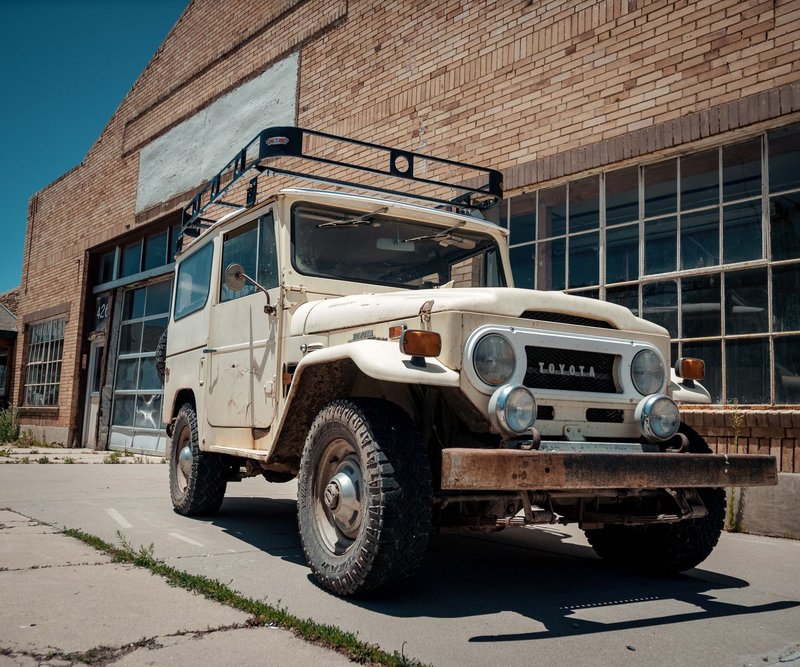
If one 1954 Toyota model matters to the wider world, it’s this one.
The name “Land Cruiser” was officially adopted in 1954. The vehicle had started life as the BJ — a Jeep-inspired 4×4 that famously climbed partway up Mount Fuji to the sixth station in 1951 as a publicity stunt and durability test. By 1954 it had a name, a stronger identity, and the path toward the 20 series that would define it for the rest of the decade, running from 1954 into 1960.
What changed the Land Cruiser’s trajectory was the engine. Dropping the Type F six into it gave the truck the grunt to be a serious off-road and utility machine rather than a light reconnaissance vehicle. This is the moment the Land Cruiser stopped being a Jeep imitation and started becoming the thing that would eventually conquer the Australian outback, African aid routes, and Middle Eastern oil fields.
The 1954 naming decision is why every Land Cruiser ad for the next seventy years could trace an unbroken line back to a single year. That’s worth understanding when you see a J20 at auction described, accurately, as the start of the dynasty.
Trucks: the BA, FA, FC and the Stout
The trucks were the business. In 1954 Toyota was, by volume, a commercial vehicle maker, and the model codes tell you exactly how the range was tiered.
- Toyota BA — the lighter truck, carrying over the older Type B 3.4L six. The BA replaced the earlier BX, a renaming that came alongside chassis and detail refinements.
- Toyota FA — the medium-duty workhorse, now packing the new Type F engine and its 105 hp. The FA superseded the FX. This was the volume truck for businesses that needed to move real weight.
- Toyota FC — a further Type F truck variant in the growing F-series family, broadening the payload and configuration options on offer.
The naming logic is the cleanest thing about 1954 Toyota. B-series ran the Type B engine. F-series ran the Type F. The X-to-A jump (BX→BA, FX→FA) signaled the model-year update. Once you see that pattern, the whole confusing lineup snaps into a grid.
The Stout pickup name also belongs to this era of Toyota’s commercial push, the light-truck lineage that would carry the brand’s pickup reputation forward and eventually feed into the Hilux story decades later. For a company that would one day sell more pickups in some years than entire rival brands sold cars, 1954 was where the commercial muscle was being built.
Toyoace SKB: the cabover that paid the bills
The unglamorous hero of 1954. The Toyoace launched as the SKB, a compact cabover light truck powered by the little 1.0-liter Type S four.
Forget horsepower wars — the SKB mattered because it was cheap, simple, and exactly the right size for a small Japanese business that had previously been hauling goods by three-wheeler or by hand. The cabover layout put the driver over the front axle, maximizing cargo length on a short, city-friendly wheelbase. It was the kind of vehicle that doesn’t make magazine covers but quietly moves a national economy.
The “Toyoace” name itself came from a public naming contest, and the truck went on to become a long-running nameplate. In 1954 it was brand new, and it slotted neatly below the heavier B and F trucks to capture the small-business buyer the big haulers ignored.
The FB bus
Rounding out the F-series, the FB was Toyota’s bus of the period, sharing the Type F 3.4L six with the FA and FC trucks.
Buses were a meaningful slice of postwar Japanese demand. Public and chartered transport were rebuilding alongside everything else, and a durable, parts-shared bus chassis let Toyota serve that market without engineering a wholly separate platform. The FB is the least-remembered name on this list, which is exactly why a consolidated 1954 directory should include it — it completes the picture of a lineup organized almost entirely around two engines and a clear hierarchy of body types.
Why 1954 looked the way it did
Step back and the shape of the 1954 lineup makes total sense.
Japan in 1954 was nine years out from the end of the war and rebuilding fast. The country needed to move freight, ferry workers, and rebuild infrastructure. It did not, broadly, need private luxury sedans — most people couldn’t buy one. So Toyota built what sold: trucks, a bus, a rugged 4×4, a tiny commercial cabover, and just a handful of passenger sedans as a bet on the future. Across the Pacific the story ran the opposite way, where the popular cars of the 1950s leaned hard into chrome and horsepower for buyers Japan simply didn’t have yet.
The first Tokyo Motor Show in 1954 captured this perfectly. Of 267 vehicles on display, only 17 were passenger cars. The show was a commercial-vehicle exhibition with a few sedans sprinkled in, and Toyota’s catalog mirrored that ratio almost exactly.
That’s the framing the directory sites never provide. The 1954 lineup wasn’t a random spread of models — it was a precise read of what postwar Japan would actually pay for. The passenger cars came later, once wallets and roads caught up. The Crown in 1955, the Corona, the eventual export onslaught. All of it sits downstream of the commercial-heavy 1954 range.
Which 1954 Toyotas survive today
Here’s where collectors should focus, because survival rates vary wildly across this lineup.
Land Cruiser 20 series is the blue-chip pick. Early Land Cruisers have a passionate global restoration community, and clean or restored examples command real money at auction — the J20’s status as the start of the named lineage gives it provenance that few other 1954 vehicles can match. Parts support, while not easy, exists because the community keeps it alive.
Toyopet RH sedans are far rarer and far quieter on the market. They were built in small numbers, used hard, and overshadowed historically by the Crown that followed. A genuine 1954 RH is a serious find, but it lacks the auction heat of the Land Cruiser, which can make it a sleeper for a patient collector who wants pre-Crown Toyota history. The contrast with a fully matured catalog like the 1976 Toyota lineup — Celica, Corolla and all — shows just how far the brand traveled from this thin 1954 passenger range.
The trucks and the bus — BA, FA, FC, FB, SKB — are the long shots. Commercial vehicles get worked to death and scrapped, so survivors are scarce and restoration parts are genuinely hard to source. A running 1954 Toyota truck is rarer in absolute terms than the sedans, even if it’s worth less, simply because nobody preserved haulers the way they preserved the Land Cruiser. If you find one, you’re looking at a vehicle most enthusiasts have never seen in person.
The takeaway for buyers: the Land Cruiser 20 is the safe, liquid, appreciating choice. Everything else from 1954 is a rarity play — lower demand, harder restoration, but a piece of Toyota history that almost nobody else owns. For the right collector, that obscurity is the appeal.
That’s the full 1954 Toyota model year, consolidated the way it should have been all along: two core engines, a clear split between commercial and passenger, one future legend in the Land Cruiser, and a company quietly laying the groundwork for everything that came after.

James Kowalski
More from James KowalskiHow we reviewed this article
This article was researched against manufacturer records and editorially reviewed before publishing. We accept no payment for coverage.