TLDR
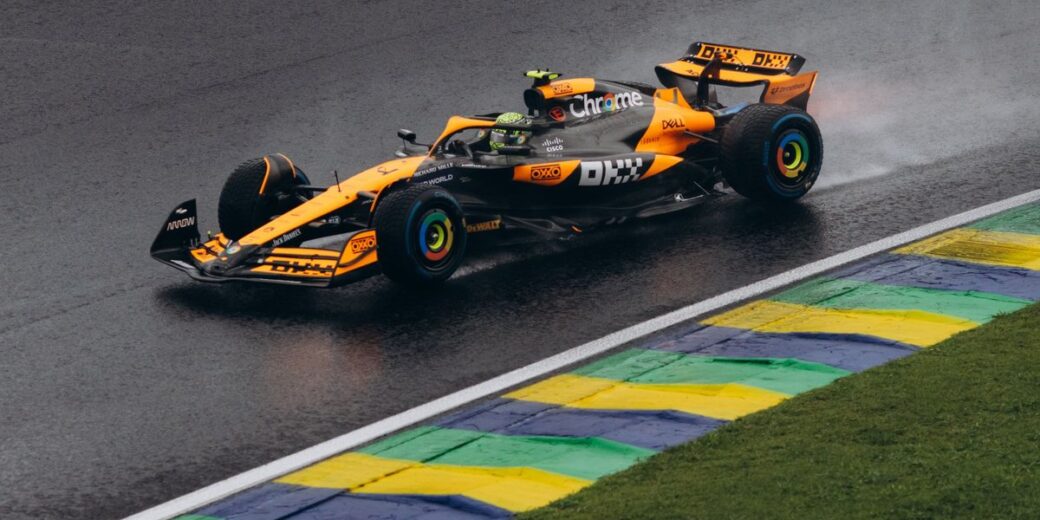
If you searched “1987 McLaren car models” expecting a lineup of road cars, there isn’t one — McLaren didn’t build a single street car until the F1 supercar arrived in 1992. In 1987, “McLaren” meant one thing: the MP4/3, the Formula 1 car Alain Prost drove to three wins that season (Brazil, Belgium, Portugal) with the final and most powerful version of the TAG-Porsche turbo V6. If you landed here looking for the customized Ford Mustang ASC McLaren, that’s a different company entirely — jump to the section below. Otherwise, here’s everything worth knowing about the real 1987 McLaren.
Table of Contents
- Why “1987 McLaren” Only Means One Car
- The McLaren MP4/3: Full Specs
- MP4/2C vs. MP4/3: What Actually Changed
- The 1987 Season: Prost’s Record-Breaking Year
- Why the MP4/3 Was the End of an Era
- Collector Value and Where the Cars Are Now
- The Other “1987 McLaren”: Ford Mustang ASC McLaren
Why “1987 McLaren” Only Means One Car
McLaren Automotive, the road-car division that eventually built the 720S and the P1, didn’t exist yet. In 1987, McLaren was purely a Formula 1 constructor — Bruce McLaren’s team, run at the time by Ron Dennis, fielding exactly one chassis design for the season. There was no “1987 McLaren lineup” the way there’d be a lineup of Porsche 911 trims. There was the MP4/3, two of them built for the works drivers, and that’s the entire model year.
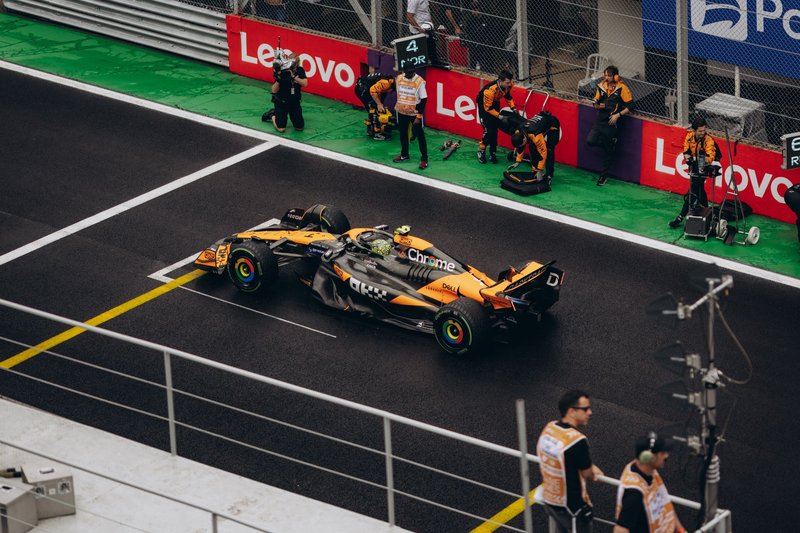
That single-car reality is actually the interesting part. Every ounce of development budget, every wind-tunnel hour, went into one chassis instead of being split across a road-car range. The MP4/3 is what you get when a team stops spreading itself thin.
The McLaren MP4/3: Full Specs
Designed by Steve Nichols, the MP4/3 was the last McLaren chassis to run the TAG-badged Porsche turbo V6 before the switch to Honda power in 1988. Here’s what was under the bodywork:
- Engine: 1.5-liter (1,496cc) TAG-Porsche TTE PO1 V6, twin-turbocharged, 80-degree V angle
- Power: 790 bhp in race trim, up to 850 bhp on qualifying boost — some sources cite peaks over 1,000 bhp on maximum turbo pressure, a figure Formula 1 hasn’t approached since
- Engine management: Bosch Motronic MS3, an update over the MP4/2C’s electronics that improved throttle response and fuel mapping
- Gearbox: McLaren-built 6-speed manual, later seasons of the TAG partnership had experimented with a semi-automatic that never raced
- Chassis: Carbon-fiber composite monocoque, a construction McLaren pioneered in F1 back in 1981
- Drivers: Alain Prost (#1) and Stefan Johansson (#2)
The turbo era of the mid-1980s produced power figures that still sound implausible — a 1.5-liter engine outproducing most modern V8 supercars by a wide margin, built for cars weighing barely 500kg. The FIA’s own historical records note that boost limits were tightened for exactly this reason before turbos were banned outright from F1 in 1989.
MP4/2C vs. MP4/3: What Actually Changed
The MP4/3 replaced the MP4/2C, which had itself been a mild update of the championship-winning MP4/2. Side by side, the differences show how incremental — but meaningful — F1 development was before simulation tools took over the process.
| Spec | MP4/2C (1986) | MP4/3 (1987) |
|---|---|---|
| Engine | TAG-Porsche V6, Motronic 1.7 | TAG-Porsche V6, Motronic MS3 |
| Chassis | Revised MP4/2 monocoque | New Steve Nichols design, lower cockpit |
| Aerodynamics | Late-generation ground-effect-restricted body | Redesigned sidepods, improved airflow to rear wing |
| Power output | Comparable peak, less consistent delivery | More usable power band, improved reliability |
| Season result | 2nd in Constructors’ | 2nd in Constructors’, 3 wins for Prost |
The MP4/3 didn’t win the championship — Williams-Honda’s FW11B, with Nelson Piquet and Nigel Mansell, had the edge on raw power and took the title. But the MP4/3 was consistently the second-fastest package on the grid, and in Prost’s hands it punched above its qualifying position more than once.
The 1987 Season: Prost’s Record-Breaking Year
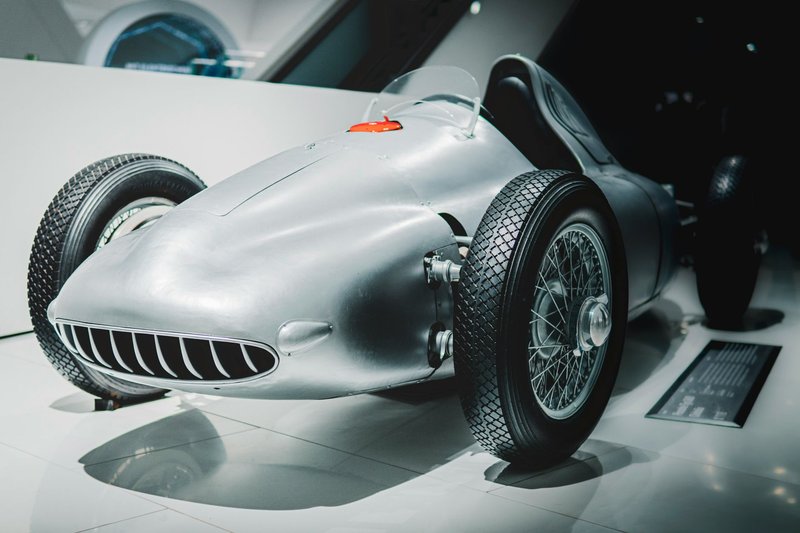
Alain Prost took the MP4/3 to three victories in 1987: Brazil, Belgium, and Portugal. The Portuguese win, at Estoril, is the one that matters historically — it made Prost Formula 1’s winningest driver ever, passing Jackie Stewart’s total of 27 victories, a record that had stood since 1973.
Stefan Johansson, Prost’s teammate, didn’t win a race but scored points consistently, including a podium at the fittingly chaotic Australian Grand Prix at Adelaide. McLaren finished the constructors’ championship in second place behind Williams, a result that undersold how competitive the car actually was on a given Sunday.
Prost went on to win the 1989 title in the MP4/3’s successor lineage, but 1987 was arguably his most technically demanding season — turbo boost was being progressively strangled by new regulations, and getting the fuel strategy right across a race distance took as much skill as outright pace.
Why the MP4/3 Was the End of an Era
The MP4/3 was the last McLaren to carry the TAG name on its engine cover. Technique d’Avant Garde, the Saudi-backed holding company that had funded Porsche’s turbo V6 development since 1983, ended its partnership with McLaren after 1987. For 1988, Ron Dennis brought in Honda, and the resulting MP4/4 — with Prost and new signing Ayrton Senna — won 15 of 16 races, one of the most dominant seasons in the sport’s history.
That makes the MP4/3 a hinge point rather than a footnote: the final word on one of F1’s most powerful engine formulas, right before the sport’s most lopsided season began. It’s also the last McLaren F1 car most fans associate purely with Prost before Senna’s arrival reshaped the team’s identity.
Collector Value and Where the Cars Are Now
Only a handful of MP4/3 chassis were built — most references put the number at five, split between race cars and spares. Surviving examples surface at auction rarely, and when they do, provenance is everything: which chassis number, which races it actually competed in, and whether the powertrain is original or a period-correct rebuild.
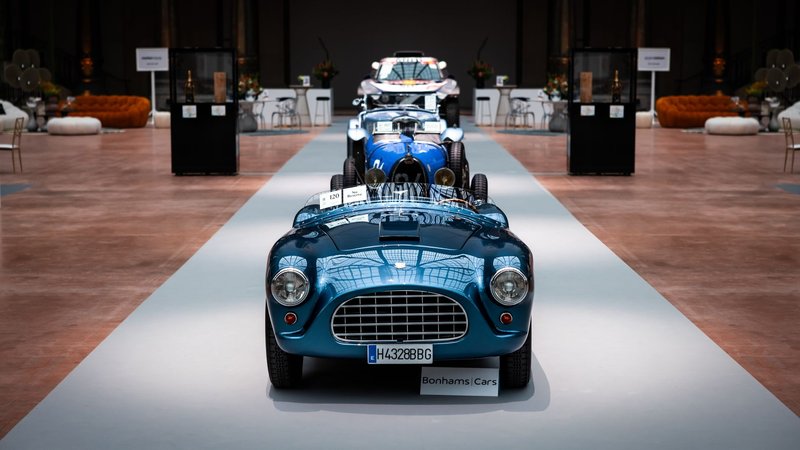
Gooding & Co. has previously offered an MP4/3 with strong Prost-era provenance, and listings emphasize the same details serious buyers care about across any historic F1 car: matching-numbers engine, FIA historic racing eligibility, and documented race history. These aren’t cars bought on nostalgia alone — running a genuine TAG-Porsche turbo at even a fraction of its qualifying boost requires specialist support that few outside the historic racing circuit can provide.
The Other “1987 McLaren”: Ford Mustang ASC McLaren
If a Mustang brought you here, you’re thinking of a completely different product with no connection to the F1 team. The 1987 Ford Mustang ASC McLaren was a limited-run customized Mustang built through a partnership between Ford, American Sunroof Corporation (ASC), and McLaren’s North American road-car arm at the time — a licensing deal, not a shared engineering program.
It started life as an LX notchback, then had its roof cut and reworked into a two-seat convertible, with a 5.0-liter H.O. V8 producing around 225 horsepower, unique 15-inch honeycomb wheels, and a leather interior with the rear seat deleted for storage. Ford and ASC built roughly 1,000 of these Mustangs across 1984–1986, plus a smaller final run — commonly cited as 479 units — badged for 1987.
It’s a genuinely collectible Fox Body today, but mechanically and historically it has nothing to do with the McLaren F1 team, the TAG-Porsche engine, or Alain Prost’s 1987 season. Two products, one badge, decades of search-engine confusion.
Whichever “1987 McLaren” sent you looking, the real story belongs to the MP4/3 — a car built for one job, driven by a man chasing a record, at the tail end of the most powerful engine formula grand prix racing has ever allowed.

Marco Delantero
More from Marco DelanteroHow we reviewed this article
This article was researched against manufacturer records and editorially reviewed before publishing. We accept no payment for coverage.