1979 was the year Ford stopped pretending nothing had changed. Two oil shocks in six years finally caught up to Detroit, and the full-size LTD shed nearly 800 pounds overnight while the Mustang reinvented itself on a brand-new chassis. If you’re shopping a project car or just trying to figure out what that barn-find Granada is actually worth, this is the year where the lineup gets interesting.
Below is every 1979 Ford passenger model — the engines, what it cost new, and what people are paying for them now. Then the part the listings pages skip: what actually breaks, and what to walk away from.
Contents
- The quick version
- Why 1979 mattered: the downsizing story
- The full 1979 Ford lineup
- 1979 Ford Mustang
- 1979 Ford LTD
- 1979 Ford Thunderbird
- 1979 Ford Fairmont
- 1979 Ford Granada
- 1979 Ford Pinto
- 1979 Ford Fiesta
- 1979 Ford F-Series trucks
- What to inspect before you buy
- Which one should you actually buy?
The quick version {#the-quick-version}
If you want the bottom line before scrolling through eight models:
- Best investment / most collectible: 1979 Mustang, especially the Indy 500 Pace Car and the rare Cobra. First year of the Fox body, and values climb every year.
- Most underrated: 1979 LTD. The downsized “Panther” full-size is a smooth, cheap, comfortable classic that almost nobody is buying yet — which is exactly why it’s affordable.
- Best cheap entry point: Fairmont or Granada. Plentiful, simple, and you can find a running one for the price of a used appliance.
- Cult pick: F-150. The trucks hold value better than most of the cars and are the easiest to find parts for.
- Money pit warning: the 255 cubic-inch V8 (a destroked 302) is gutless and best avoided if you actually want to drive the thing.
Across the market, 1979 Fords trade anywhere from roughly $6,500 for a tired sedan to north of $200,000 for a perfect, documented Pace Car Mustang, with the typical clean driver landing in the low-to-mid five figures.
Why 1979 mattered: the downsizing story {#why-1979-mattered}
For most of the 1970s, a full-size Ford was a barge. The 1978 LTD rode on a 121-inch wheelbase and weighed well over two tons. Then the 1979 model arrived on the new Panther platform, riding a 114.4-inch wheelbase and weighing around 3,500 pounds — Ford trimmed roughly 700 to 800 pounds while making the interior bigger. It’s one of the cleaner examples of “less car, more car” in American manufacturing.
That Panther architecture turned out to be one of the most durable design decisions Ford ever made. The same basic platform underpinned Crown Victorias, police cruisers, and taxis all the way until Ford ended Panther production in 2011. Thirty-two years on one bones. The 1979 LTD is where that story starts.
At the other end of the showroom, the Mustang was making the opposite move — off the unloved Mustang II and onto the lighter, sharper Fox platform that would carry the nameplate into the 1990s. Two completely different cars, both betting that lighter was the future. They were right. Ford wasn’t moving alone, either; the same downsizing pressure reshaped the most popular cars of the 1970s as the whole industry scrambled to adapt to a leaner decade.
The full 1979 Ford lineup {#the-full-1979-ford-lineup}
Here’s the passenger-car range at a glance. Values are for clean, running drivers; concours and rare trims (Pace Car, Cobra) run far higher.
| Model | Body styles | Common engines | Approx. MSRP (1979) | Driver value today |
|---|---|---|---|---|
| Mustang | Coupe, hatchback | 2.3 I4, 2.8 V6, 5.0 V8, turbo 2.3 | $4,100–$6,200 | $9,000–$30,000+ |
| LTD | Sedan, wagon, coupe | 302 V8, 351 V8 | $5,900–$6,600 | $8,000–$18,000 |
| Thunderbird | Coupe | 302 V8, 351 V8 | $5,900 | $7,000–$16,000 |
| Fairmont | Sedan, coupe, wagon | 2.3 I4, 200 I6, 302 V8 | $4,000–$4,800 | $5,000–$12,000 |
| Granada | Sedan, coupe | 250 I6, 302 V8 | $4,300–$5,300 | $5,000–$11,000 |
| Pinto | Hatchback, wagon | 2.3 I4, 2.8 V6 | $3,800–$4,300 | $4,000–$9,000 |
| Fiesta | Hatchback | 1.6 I4 | $4,000 | $4,000–$8,000 |
| F-150 | Pickup | 300 I6, 302/351/400 V8 | $5,000–$6,500 | $9,000–$28,000 |
Ford wasn’t the only game in the showroom that year, of course — if you want to see how this lineup stacked up against the rest of the field, the most popular cars of 1979 lay out the sales numbers and the rivals Ford was fighting. Now, model by model.
1979 Ford Mustang {#1979-ford-mustang}
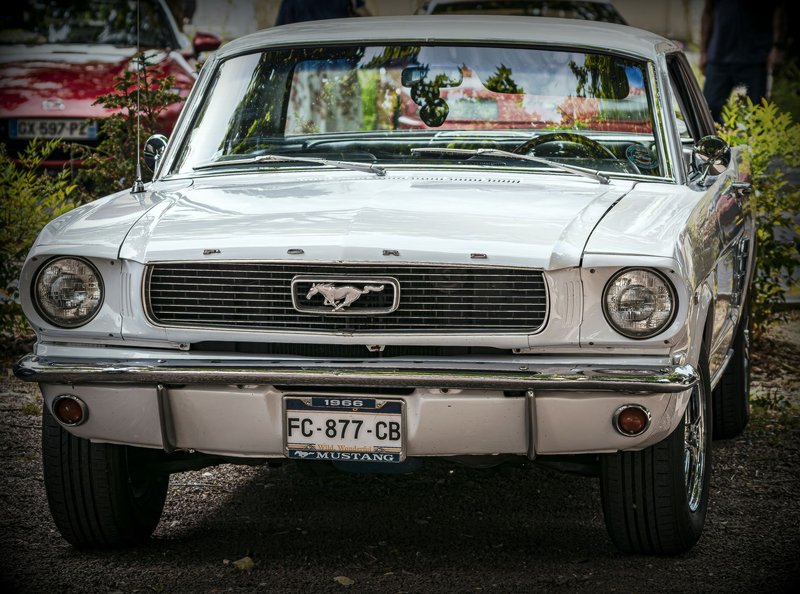
This is the one collectors care about, and for good reason: 1979 was the first year of the Fox body, the platform that defined the Mustang for the next 14 years. The fussy, baroque Mustang II was gone. The new car was crisp, European-influenced, and genuinely lighter — a base four-cylinder hatchback weighed under 2,700 pounds.
Engine choices ran the full menu: the 2.3-liter four, an optional turbocharged version of it (ambitious, fragile, and a maintenance headache), the 2.8-liter Cologne V6, and the 5.0-liter (302) V8 that everyone actually wants. The V8 made a modest 140 horsepower by the gross-strangled standards of 1979, but it’s the engine that makes the car worth restoring.
Two trims send values into the stratosphere. The Indy 500 Pace Car edition — silver and black with the pewter lower body — was built to commemorate the Mustang pacing the 1979 race, and clean documented examples regularly clear five figures, with the best cars pushing into the low six figures. The Cobra package, with its hood graphic and TRX suspension, is the other one to hunt.
Buy the V8. The turbo four is a curiosity for masochists.
1979 Ford LTD {#1979-ford-ltd}
The smart-money classic. The downsized 1979 LTD is a genuinely good car that the market hasn’t woken up to, which means you can still buy a clean one for the price of a decent used commuter. It rides beautifully, the 302 and 351 Windsor V8s are bulletproof, and parts interchange with a decade-plus of Panther production.
Mac’s Motor City Garage called the downsized LTD a “new American road car,” and that’s the right frame — it drove far better than the wallowing 1978 it replaced. The sedan and the wagon are the practical picks; the two-door coupe is the rarer find. If big-body comfort is what you’re after, the LTD also sits comfortably alongside the other classic American sedans worth tracking down from this era.
If you want a comfortable, cheap, reliable classic you can actually use, this is the value play of the entire 1979 lineup.
1979 Ford Thunderbird {#1979-ford-thunderbird}
The 1979 Thunderbird was riding out the last year of its big, square, Torino-based personal-luxury generation before its own downsizing in 1980. It’s all vinyl roof, opera windows, and acres of hood — peak late-’70s American excess, and that’s exactly the appeal for a certain buyer.
Power came from the 302 or the 351, both relaxed cruisers rather than performers. These sold in enormous numbers when new, so survivors aren’t rare, and that keeps prices reasonable. A clean Heritage or Town Landau trim with its options intact is the one to find.
1979 Ford Fairmont {#1979-ford-fairmont}
The Fairmont is the unsung hero of this lineup because it shares the Fox platform with the Mustang. That’s a real advantage: it means a Fairmont is a cheap, light, simple car that takes well to the same engine and suspension upgrades the Mustang crowd has been developing for decades.
Engines ranged from the 2.3 four to the inline-six to the 302 V8. As a plain transportation sedan it’s nothing special. As a sleeper project — a 302 and some Mustang parts in a boxy four-door nobody expects — it’s a quietly clever build. And you can buy one for almost nothing.
1979 Ford Granada {#1979-ford-granada}
The Granada was Ford’s “looks like a Mercedes if you squint” compact luxury car, and it sold on exactly that pitch. The 1979 models came with a 250 inline-six or the 302 V8, wrapped in chrome and pseudo-European styling.
It’s not fast and it’s not collectible in the way the Mustang is, but a clean low-mile Granada is a comfortable, honest survivor and an easy, affordable entry into 1970s Ford ownership. ESS trims with the blackout exterior are the ones enthusiasts seek out.
1979 Ford Pinto {#1979-ford-pinto}
You can’t talk 1979 Ford without the Pinto, and yes — the fuel-tank safety controversy is the first thing most people remember. By 1979, the final model year, Ford had already revised the tank design and the worst of the issue was behind the car.
What’s left is a light, simple subcompact with a small but devoted following. The wagon, especially the Cruising Wagon with its porthole windows and bubble graphics, has become a genuine cult item. Values are climbing precisely because so few survived. The 2.8 V6 makes it almost peppy.
1979 Ford Fiesta {#1979-ford-fiesta}
The first-generation Fiesta was European-built (Germany) and sold in the U.S. for only a few years before vanishing from the market until the 2010s. The 1979 car is a tiny, tossable front-driver with a 1.6-liter four — closer in spirit to a GTI ancestor than anything else Ford sold here at the time.
Genuinely fun to drive, almost impossible to find rust-free in North America, and increasingly sought by collectors who want something nobody else at the show has. Buy on condition, because parts are the hard part.
1979 Ford F-Series trucks {#1979-ford-f-series}
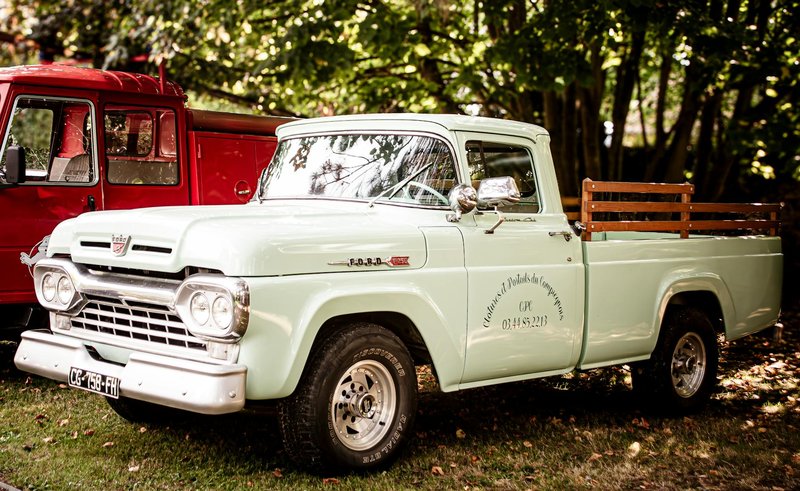
The “dentside” F-Series (1973–1979) ends its run in 1979, and these trucks have aged into serious collectibles. The 300 inline-six is one of the most durable engines Ford ever built — owners routinely report 300,000-plus miles — and the 351 and 400 V8s give you real capability.
The F-150 in particular has appreciated sharply. A clean 4×4 short-bed in original paint can command $20,000 or more, and restored Ranger and Lariat trims go higher. Parts availability is excellent, the aftermarket is huge, and unlike the cars, you can drive one daily without apology. For many buyers, the truck is the smartest 1979 Ford purchase, full stop.
What to inspect before you buy {#what-to-inspect}
Forty-five-year-old cars hide their sins. Before you hand over money on any 1979 Ford, check these:
- Rust, always rust. Floor pans, lower fenders, the front of the rear wheel arches, trunk floors, and around the windshield. Fox-body cars (Mustang, Fairmont) rot at the strut towers and torque boxes. Bring a magnet.
- The Motorcraft carburetor. The variable-venturi (VV) carb fitted to many 302s in this era is notorious for hard starting, hesitation, and being a nightmare to tune. Many owners swap it for a conventional Holley or Autolite. If the car runs ragged, the carb is the usual suspect — budget for a replacement.
- The 255 V8. If a VIN or build sheet shows the 255 cubic-inch (4.2L) V8, know that it’s a destroked 302 making barely more power than the six. It’s not a dealbreaker, but it’s not the engine you want, and a 302 swap is straightforward.
- Smog-era driveability. 1979 engines came choked with early emissions plumbing. A car that idles rough, diesels after shutoff, or hesitates off idle usually needs a tune, a carb rebuild, or a vacuum-line overhaul — not a new engine.
- Documentation on the rare ones. For a Pace Car Mustang, a Cobra, or a Cruising Wagon, paperwork is half the value. Marti Reports and the National Highway Traffic Safety Administration’s VIN tools help confirm what you’re actually looking at.
A car with honest, fixable problems and a solid body beats a shiny one hiding a rotted floor. Buy the metal, fix the mechanicals.
Which one should you actually buy? {#which-one}
It comes down to what you want out of it.
Want it to appreciate and you don’t mind paying up front? Mustang — Fox-body first-year history is only getting more valuable, and the Pace Car and Cobra are blue chips. Want maximum classic for minimum money? LTD or Fairmont — comfortable, simple, and still cheap because the crowd hasn’t arrived. Want something you can drive every day and still sell at a profit later? F-150 — the trucks are the safest money in the whole 1979 catalog.
The throughline is that 1979 was a turning point: lighter cars, a new full-size platform, and a Mustang that finally found its footing for the next decade and a half. That makes it a smarter year to buy into than the heavier, thirstier Fords on either side of it. Find a solid body, sort the carburetor, and you’ve got a classic that’s still genuinely usable on a modern road.

Marco Delantero
More from Marco DelanteroHow we reviewed this article
This article was researched against manufacturer records and editorially reviewed before publishing. We accept no payment for coverage.