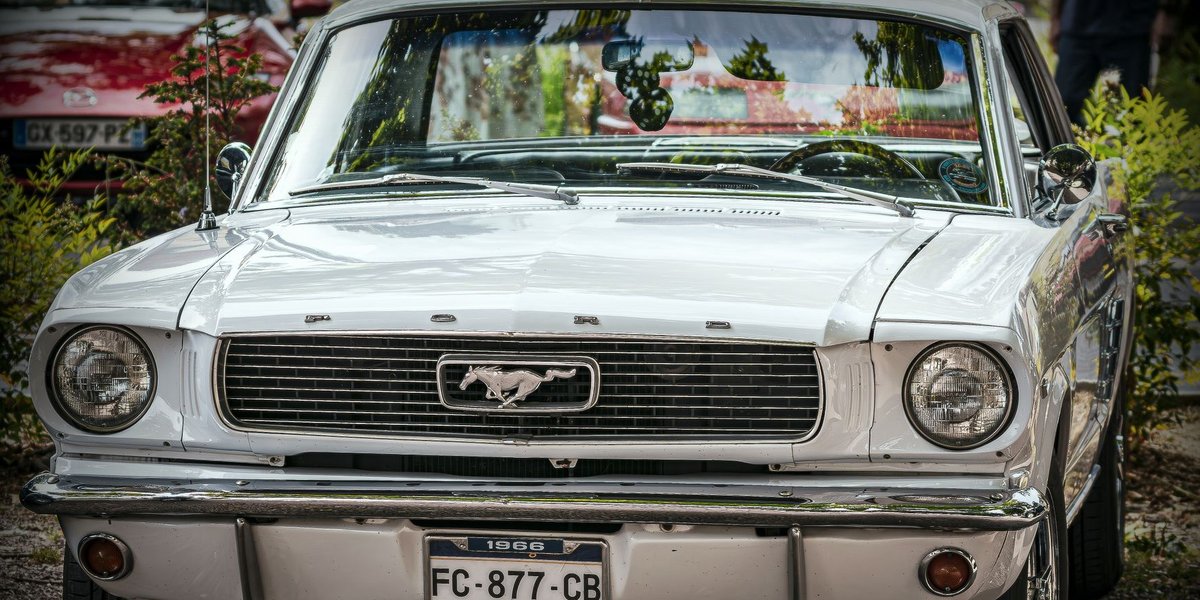
The 1970 Mustang is the one a lot of enthusiasts quietly rank above the more famous ’69. Ford restyled the front to single headlights, trimmed the styling excess, and built fewer of almost everything — which is exactly why these cars matter to collectors now. Production fell from roughly 300,000 in 1969 to about 190,000 in 1970, so the rare variants got rarer.
Here’s every 1970 Mustang model that left the Dearborn, Metuchen, and Milpitas plants, what each one actually was under the sheet metal, and where they sit on the value ladder today.
Quick comparison: all 1970 Mustang models
If you want the bottom line before the detail, this is it. Production figures and prices are for the 1970 model year; values are approximate condition #2 (excellent) auction averages.
| Model | Top engine | Horsepower | Approx. production | Original price | Today (excellent) |
|---|---|---|---|---|---|
| Hardtop | 351 V8 (opt.) | up to 300 hp | ~82,000 | $2,721 | $25,000–$40,000 |
| SportsRoof (Fastback) | 351 V8 (opt.) | up to 300 hp | ~39,000 | $2,771 | $30,000–$50,000 |
| Convertible | 351 V8 (opt.) | up to 300 hp | ~7,700 | $3,025 | $40,000–$65,000 |
| Grande | 351 V8 (opt.) | up to 300 hp | ~13,500 | $2,926 | $25,000–$38,000 |
| Mach 1 | 428 Cobra Jet | 335 hp | ~40,970 | $3,271 | $55,000–$90,000 |
| Boss 302 | 302 V8 | 290 hp | ~7,014 | $3,720 | $90,000–$160,000 |
| Boss 429 | 429 V8 | 375 hp | 499 | $4,798 | $300,000–$500,000+ |
| Shelby GT-350 | 351 V8 | 290 hp | 315 | ~$4,400 | $120,000–$180,000 |
| Shelby GT-500 | 428 Cobra Jet | 335 hp | 286 | ~$5,000 | $150,000–$250,000 |
The pattern is clear: the standard cars are attainable, the Mach 1 is the sweet spot for a usable muscle car, and the Boss 429 sits in a different financial universe entirely.
What changed from 1969
Before the model walk, the context. The 1970 facelift dropped the quad headlights of 1969 for a single pair set into the grille, with the outer scoops becoming simulated air intakes. The rear got new tail-light bezels and the body lost a little of the ’69’s busyness.
Mechanically, the big news was the 351 Cleveland engine joining the existing 351 Windsor mid-year, plus a Hurst shifter standard on the four-speed cars. Federal emissions rules were tightening, and 1970 was effectively the last year before the early-’70s power decline really set in. That timing is part of why the high-output 1970 cars are so prized — they’re near the peak of the muscle era, and they sit right at the hinge point of the 70s muscle car story, where tightening regulations slowly strangled the V8.
Hardtop
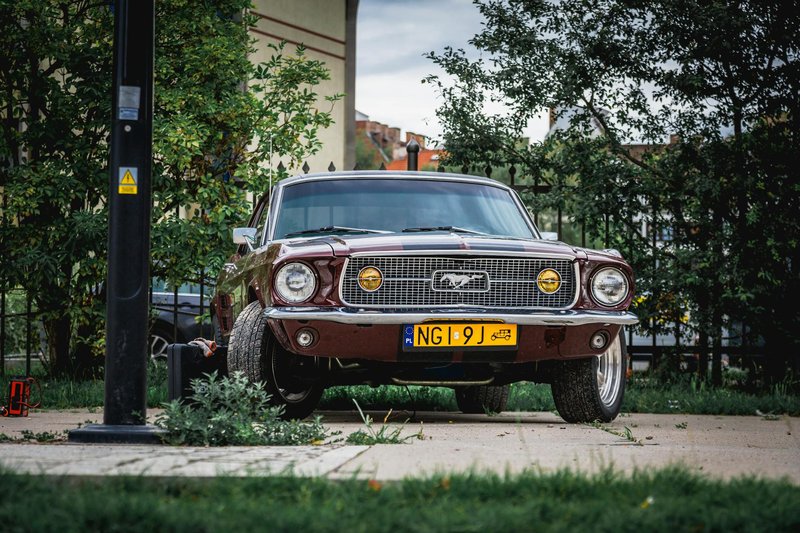
The notchback Hardtop was the volume seller — around 82,000 built — and it’s the one most people picture when they think “regular 1970 Mustang.” Base power was the 250 cubic-inch inline-six, but the realistic enthusiast pick is one optioned with the 351 V8.
It’s the most affordable way into a genuine 1970 Mustang, and there’s nothing wrong with that. A clean, V8 Hardtop gives you the styling and the driving experience without the six-figure entry fee. For a first classic Mustang, it’s the smart buy.
SportsRoof (Fastback)
Ford called it the SportsRoof, everyone else called it the fastback. The near-horizontal rear glass and long roofline make it the best-looking standard body of the year, and it’s the shape that underpins the Mach 1 and the Boss cars. Roughly 39,000 left in standard trim.
The SportsRoof is where the 1970 design language works hardest. It carries the same engine options as the Hardtop, but the silhouette alone puts it a tier above for collectors. If you want the muscle-car look without the muscle-car price, this is the body to find. The fastback line traces straight back to the cars that defined the prior decade — you can see its roots in the shapes that made the best cars of the 1960s so enduring.
Convertible
Only about 7,700 convertibles were built for 1970, the lowest-volume of the standard body styles. Drop-top demand was already sliding as buyers moved toward the sleeker fastback, which makes survivors genuinely scarce.
A V8 convertible in good condition commands a premium over the equivalent Hardtop, and a well-documented one with the 351 is a strong, usable classic. The rarity does real work here — there simply aren’t many around.
Grande
The Grande was the luxury Hardtop: more sound deadening, a vinyl roof, upgraded interior with woodgrain trim and cloth-and-vinyl seats, plus extra bright work. Ford built roughly 13,500. It was aimed at buyers who wanted the Mustang look with a quieter, more upscale ride.
It’s the quiet one in the lineup, and values reflect that — it trades close to a standard Hardtop rather than at a performance premium. But for someone who wants comfort over quarter-mile times, the Grande is an honest, often-overlooked choice.
Mach 1
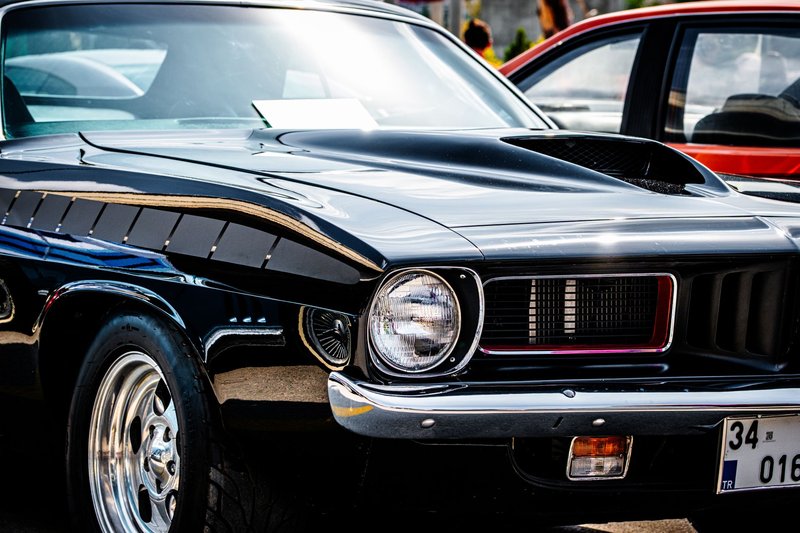
The Mach 1 is the 1970 Mustang most enthusiasts actually want to own. It paired the SportsRoof body with serious performance hardware: a standard 351, optional 428 Cobra Jet making 335 hp (more like 400 in reality), plus the racing mirrors, hood scoop, blackout hood, and the trim that made it look the part. Ford sold about 40,970.
This is the variant that balances everything. It’s properly fast with the Cobra Jet, it’s recognizable, parts support is excellent, and it’s still buyable. A 428 CJ Mach 1 with the Shaker hood is one of the most desirable mainstream muscle cars of the era — fast enough to matter, common enough to fix. If you’re choosing one 1970 Mustang to drive and enjoy, it’s this.
Boss 302
The Boss 302 was Ford’s homologation special for the SCCA Trans-Am series, and it’s a different animal from the Mach 1. Instead of brute torque, it used a high-revving 302 with Cleveland heads, rated at 290 hp but built to scream. Stiffer suspension, front spoiler, optional rear wing, and the unmistakable C-stripe graphics. Around 7,014 were built for 1970.
This is a handling car, not a drag car, and that’s exactly why it’s loved. The Boss 302 rewards a twisty road in a way the big-block cars never did. Values have climbed hard — a documented, numbers-matching example sits well into six figures — because it’s both rare and genuinely special to drive.
Boss 429
Here’s the unicorn. Ford built the Boss 429 to homologate its semi-hemi 429 engine for NASCAR, and stuffing that massive motor into the Mustang engine bay required hand modification of every car at Kar Kraft. The result: just 499 built for 1970, rated at a deliberately conservative 375 hp.
It’s the most valuable regular-production 1970 Mustang by a wide margin, with excellent examples crossing auction blocks well into the mid-six figures and the best cars pushing past half a million. The rarity is the whole story — 499 cars, each one a piece of NASCAR homologation history. Most owners never thrash them; they’re investments with license plates.
Shelby GT-350 and GT-500
1970 was the last year for the Shelby Mustang, and there’s a twist: no new cars were actually manufactured in 1970. The remaining 1969 Shelbys were given updated VINs, a black front chin spoiler, and twin hood stripes, then sold as 1970 models. That accounts for the tiny numbers — 315 GT-350s and 286 GT-500s carried 1970 designation.
The GT-350 ran the 351 (290 hp); the GT-500 carried the 428 Cobra Jet (335 hp). Both are fiberglass-nosed, scoop-covered, and unmistakably Shelby. Because they close out the original Shelby era, they carry both rarity and a name premium, landing them firmly in six-figure territory. The full story of the carryover VINs is well documented by the Shelby American Automobile Club, the recognized authority on production records.
The regional specials: Twister, Sidewinder, and Grabber
Beyond the catalog models, Ford built a handful of dealer-promotion specials worth knowing about — they trip up a lot of buyers and authenticators.
The Twister Special was a Kansas City district promotion: 96 Mach 1s (and a small batch of Boss 302s) finished in Grabber Orange with special decals. The Sidewinder Special was a similar regional Mach 1 promotion. And Grabber wasn’t a model at all — it referred to the high-visibility Grabber paint colors (Grabber Blue, Grabber Orange, Grabber Green) available across the lineup, which is why “1970 Mustang Grabber” searches lead people in circles.
If a seller calls a car a Twister, ask for documentation. The genuine ones are rare and verifiable through Ford’s build records; the fakes are repaints with reproduction decals. It also helps to see where the Mustang sat within the wider showroom — the complete 1970 Ford lineup puts these promotion cars in context alongside the Torinos, Falcons, and the rest of that year’s range.
How to choose between them
For a daily-drivable classic on a sane budget, a V8 SportsRoof or Hardtop gives you the look and the experience. For the muscle-car icon you can still afford and actually use, the Mach 1 with the 351 or 428 Cobra Jet is the answer almost every time. For handling and rarity, the Boss 302. And the Boss 429 and Shelby cars are collector assets first, drivers second.
The thing to remember with 1970 specifically: production was down across the board, so even the “common” cars are rarer than their 1969 equivalents. That restyled single-headlight front end is aging better every year, and the market has noticed. Whatever variant you land on, buy on documentation — with this model year, paperwork is worth as much as the sheet metal.

Marco Delantero
More from Marco DelanteroHow we reviewed this article
This article was researched against manufacturer records and editorially reviewed before publishing. We accept no payment for coverage.