1969 was a hinge year for Volkswagen. The air-cooled empire was still running strong — more than a million Beetles sold annually — but the cracks were starting to show. Ford, GM, and the Japanese were producing faster, roomier, more modern cars. VW’s answer wasn’t to abandon what worked. It was to broaden the lineup.
That year marked the last full model year before the 1.6-liter engine arrived in the Beetle, the maturation of the Type 3 family, and most significantly, the debut of the Type 4 (411) — VW’s first serious attempt at an executive-class air-cooled sedan. If you’re researching, restoring, or just want to understand what VW offered that year, here’s the complete picture.
Table of Contents
- 1969 VW Lineup at a Glance
- Type 1: The Beetle
- Type 2: The Transporter
- Karmann Ghia
- Type 3: Fastback, Squareback, Notchback
- Type 4: The 411 Debut
- Comparison Table
- What to Know Before You Buy
1969 VW Lineup at a Glance {#lineup-at-a-glance}
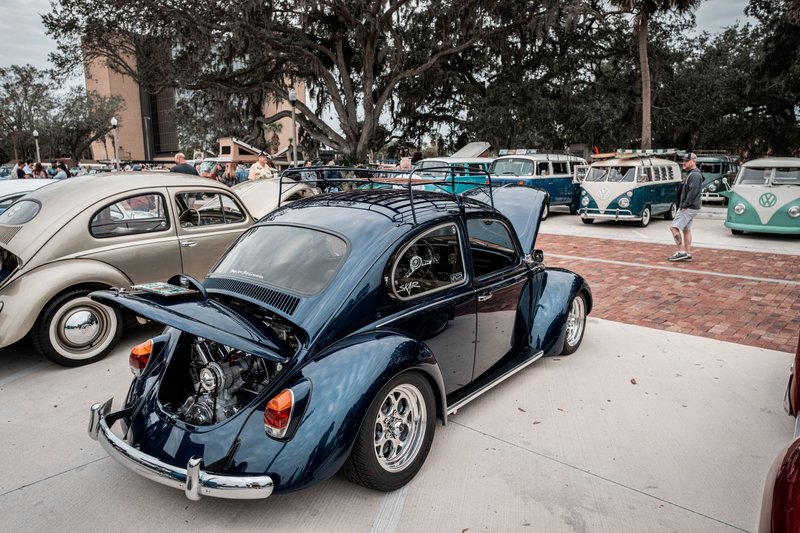
VW sold five distinct model families in 1969:
- Type 1 — the Beetle (sedan and convertible)
- Type 2 — the Transporter (bus, van, pickup, and Westfalia camper)
- Karmann Ghia — the sporty coupe/convertible body on a Beetle platform
- Type 3 — the Fastback, Squareback, and Notchback
- Type 4 — the all-new 411, introduced mid-decade as the brand’s luxury offering
All ran air-cooled, rear-mounted engines. All were built with the same fundamental VW reliability ethos. But they served very different buyers.
Type 1: The Beetle {#type-1-beetle}
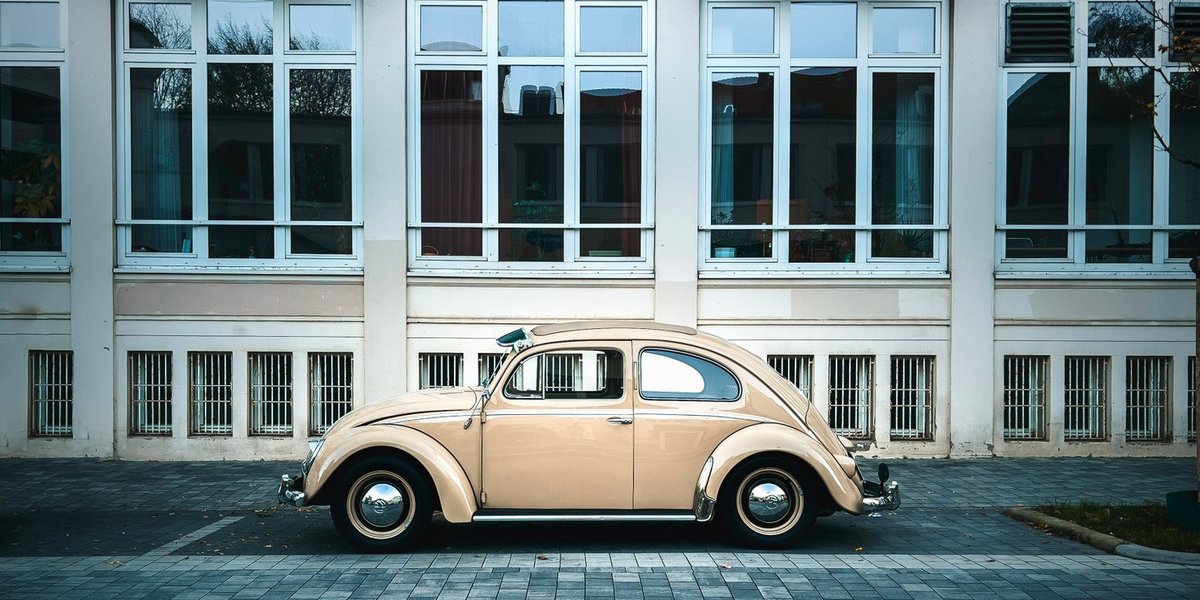
The Beetle in 1969 was still riding the cultural wave that had made it the best-selling imported car in US history. It came in two body styles: the standard sedan (the familiar round coupe) and the cabriolet (convertible), with the convertible version built by Karmann in Osnabrück. The Beetle’s character had been shaped across the entire preceding decade — if you want to trace how VW arrived at 1969, the full lineup of 1960s Volkswagen models shows the incremental evolution that made the ’69 car what it was.
Engine: 1,493cc (1.5L) air-cooled flat-four, producing around 53 horsepower. The 1.6L engine that would become standard didn’t arrive until the 1970 model year — so 1969 represents the end of the original displacement era for the Beetle.
What changed for ’69: The big update was the introduction of a fully synchronized four-speed gearbox — all four gears now synced, ending the old three-synchro setup that required a careful double-clutch into first. VW also added a rear-window defroster and revised the fuel tank filler to move it to the front hood, eliminating the awkward front-compartment fill that earlier models required.
Collector value: A solid driver-quality 1969 Beetle sedan runs $8,000–$14,000. A well-restored example with correct spec and no rust commands $20,000–$30,000. The cabriolet, always more desirable, starts around $18,000 for a driver and can reach $45,000+ in show condition.
What to watch for: Rust. Always rust. The rear quarter panels behind the rear wheels are the first to go. Check the floor pans by pulling back the carpet — VW’s floor pans corrode from underneath and are expensive to repair properly. The heater channels (the sills running along each side) are structural and routinely ignored in cheap restorations.
Type 2: The Transporter {#type-2-transporter}
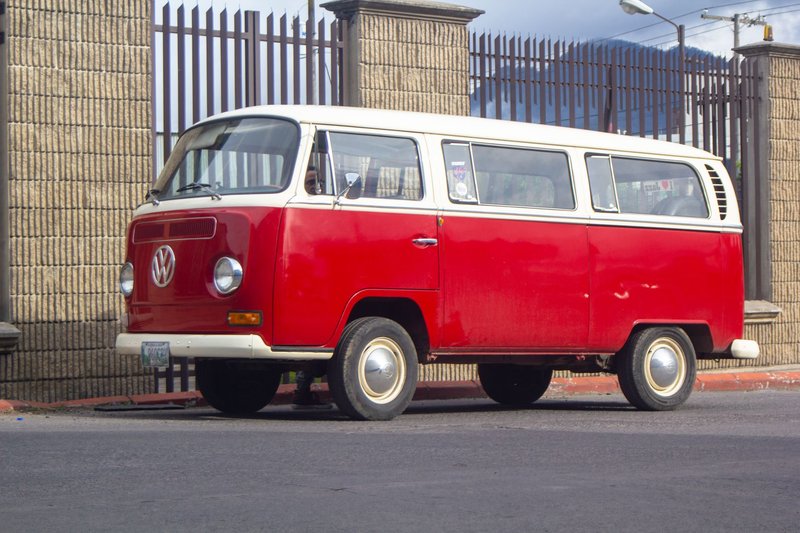
The Type 2 is one of the most collectible vehicles of the entire 20th century — and it earned that status before collectors arrived. It was a genuinely useful machine: available as a standard Microbus (the iconic 23-window “Samba” being the top variant), a panel van, a pickup truck, and the beloved Westfalia camper conversion.
Engine: Same 1.5L flat-four as the Beetle, though the Transporter’s heavier body made it noticeably slower — 0–60 took around 30 seconds in a loaded van. Not a highway bruiser. Nobody was surprised.
What changed for ’69: The second-generation Type 2 (launched in 1967) was now two years into production, having grown wider and gained a bigger windshield. For 1969, VW refined the front axle and made small interior tweaks. The Westfalia camper version added a folding bed extension and more thoughtful cabinet layout.
Body styles offered:
- Microbus (7–8 seats, several trim levels)
- Kombi (basic version, removable rear seats)
- Panel van (fully enclosed cargo)
- Pickup truck (single or double cab)
- Westfalia Camper
Collector value: Clean Microbuses range widely — $20,000 for a solid driver to well over $80,000 for a properly restored Samba or Westfalia camper. The pickup truck variant is underrated and typically cheaper than the bus, despite being rarer.
What to watch for: The Type 2 rusts everywhere the Beetle does, plus the front beam, the step area under the sliding door, and the notorious front corner seams. Budget accordingly. Mechanically they’re straightforward, but the body is what makes or breaks a Type 2 restoration.
Karmann Ghia {#karmann-ghia}
The Karmann Ghia is what happens when you put an Italian-influenced body (actually designed by Ghia of Turin, built by Karmann) on a Beetle floorpan and try to sell it as a sporty car. It succeeded — not because it was fast (it wasn’t) but because it was genuinely attractive in a way that no other affordable car of the era matched.
VW sold it in two versions: the coupe and the convertible. The Type 14 (the classic low-roofed coupe/cabriolet) was joined by the Type 34 — a larger, squarer Ghia body on a Type 3 platform that never quite found its audience and remained a rare, expensive curiosity.
Engine (Type 14): 1,493cc, same as the Beetle. The Karmann Ghia was never sold as performance — it was sold as style. And at that, it delivered.
What changed for ’69: The Type 14 received the same synchronized gearbox as the Beetle. Minor trim updates, revised badging. Not a year of major changes — the Karmann Ghia was in its final years, with production ending in 1974.
Collector value: Type 14 coupes start around $15,000 for a driver and reach $35,000+ for correct, documented restorations. The convertible commands a premium: $25,000–$55,000. The Type 34 is far rarer and less understood by the market — prices vary enormously based on condition and buyer knowledge.
What to watch for: The Karmann Ghia’s body panels are unique to the model — not interchangeable with the Beetle — and good reproductions exist but quality varies. Check all the body seams for filler. The floor pans and heater channels carry the same rust risks as the Beetle.
Type 3: Fastback, Squareback, Notchback {#type-3}
The Type 3 family is the most underappreciated corner of the 1969 VW lineup. It used a flattened, “pancake” version of the air-cooled engine — the fan mounted horizontally to reduce height — which freed up both a front trunk and a rear storage area behind the engine. You got actual luggage space in a VW, which felt like a revelation.
Three body styles:
- Fastback (1600 TL): The sleekest of the three, with a sloping roofline. The sportiest in appearance and the best seller of the Type 3 group.
- Squareback (1600 LE in the US): A squared-off wagon-style rear end. Practical, boxy in the right way, and now highly collectible.
- Notchback: A proper three-box sedan layout. The least popular in period, and that rarity now makes it interesting.
Engine: 1,584cc (1.6L) flat-four. The Type 3 already had the larger engine that the Beetle wouldn’t receive until 1970. Output: approximately 65 horsepower.
What changed for ’69: VW continued refining the fuel injection system offered on the Fastback — one of the earliest fuel-injected production cars widely available. The system, supplied by Bosch, was optional in the US market and ahead of its time for the price point.
Collector value: Squarebacks and Notchbacks are climbing in value as air-cooled enthusiasts look beyond the Beetle. Clean Squarebacks: $10,000–$22,000. Notchbacks, being rarer: $12,000–$28,000. Fuel-injected examples carry a premium among collectors who know what they’re looking at.
What to watch for: The Type 3 body is unique, and rust in the sills and floor pans is common. The Bosch D-Jetronic fuel injection system is period-correct but temperamental — getting it running cleanly requires someone who knows the system. Don’t let it scare you off, but budget for it.
Type 4: The 411 Debut {#type-4-411}
The Type 4 is the model most people forget. That’s partly because it failed commercially — at least relative to VW’s other products — and partly because the company quickly pivoted away from it. But its debut in 1969 was significant: VW was acknowledging, for the first time, that the Beetle platform had limits.
The 411 was a larger, heavier car with a more powerful engine, independent rear suspension, and a proper saloon body. VW offered it as a two-door and four-door sedan, plus an estate (wagon). It positioned above the Type 3 in the lineup.
Engine: 1,679cc (1.7L) air-cooled flat-four, producing around 68 horsepower. Fuel injection was standard in most markets — a meaningful spec advantage over the carburetor-fed competition at the price point.
What changed for ’69: It was new. This was the introduction year. The 411 came to market with independent rear suspension via semi-trailing arms (a step up from the swing axle on earlier VWs), rack-and-pinion steering, and a wheelbase longer than any previous VW passenger car.
Why it matters: The Type 4 is historically significant as the last air-cooled passenger car VW would develop from scratch. By the mid-1970s, the company had shifted to water-cooled platforms. The 411/412 family was a dead end, but an interesting one — it shows what VW believed air-cooled could still be before they gave up on it. To see how the lineup continued to evolve after this pivotal year, the 1972 Volkswagen model lineup offers a useful before-and-after comparison.
Collector value: The 411 remains one of the most affordable air-cooled VWs. Clean examples go for $6,000–$15,000 — you’re buying genuine rarity at bargain prices. Parts availability is the challenge, not the purchase price.
What to watch for: The fuel injection system needs attention on most survivors. Rust, as with all VWs of the era. More critically: parts. The Type 4 doesn’t share body panels or major components with the Beetle or Type 3, and the supply chain for correct parts is thin. Know what you’re getting into before you commit.
Comparison Table {#comparison-table}
| Model | Engine | Displacement | Body Styles | Approx. HP | Collector Range |
|---|---|---|---|---|---|
| Type 1 Beetle | Flat-four, air-cooled | 1.5L | Sedan, Convertible | 53 hp | $8k–$45k+ |
| Type 2 Transporter | Flat-four, air-cooled | 1.5L | Bus, Van, Pickup, Camper | 53 hp | $20k–$80k+ |
| Karmann Ghia (T14) | Flat-four, air-cooled | 1.5L | Coupe, Convertible | 53 hp | $15k–$55k |
| Type 3 | Flat-four, air-cooled | 1.6L | Fastback, Squareback, Notchback | 65 hp | $10k–$28k |
| Type 4 (411) | Flat-four, air-cooled | 1.7L | 2-door, 4-door, Estate | 68 hp | $6k–$15k |
What to Know Before You Buy {#buying-notes}
A few notes that apply across the entire 1969 VW lineup:
Rust is universal. Every model covered here is 55+ years old and rusts in predictable places. Floor pans, heater channels, rear quarter panels, sills. Budget for it before you find it, because you will find it.
Parts availability varies dramatically. Beetle parts are abundant and cheap — a global cottage industry exists to keep them running. Type 2 parts are good. Type 3 parts are manageable. Type 4 parts require patience and a specialist network. Volkswagen enthusiast clubs like the Vintage Volkswagen Club of America are often the best source for obscure parts and knowledgeable mechanics.
The 1969 model year is a sweet spot. It predates federal safety and emissions regulations that added weight and compromised performance in later models, but it post-dates many of the early production quirks VW had ironed out through the 1960s. The synchronized gearbox alone makes 1969 Beetles more liveable than 1967 examples.
Know your sources. The classic VW market has its share of optimistic descriptions. The Hagerty Price Guide is the most reliable public resource for current collector values — use it as a sanity check against what sellers are asking.
If the Beetle is too common for your taste, the Type 3 Squareback and the Type 4 411 represent genuine opportunities: historically significant, well-built, and priced below what their rarity should command. The market for those two is still catching up.
The 1969 VW lineup ran from the humble Beetle to the newly ambitious Type 4 — six distinct models across five platforms, all air-cooled, all made in an era when VW genuinely believed the formula had no expiration date. They were wrong about that. But the cars they built that year are still running.

Marco Delantero
More from Marco DelanteroHow we reviewed this article
This article was researched against manufacturer records and editorially reviewed before publishing. We accept no payment for coverage.