1957 was the year a fire nearly ended Jaguar — and the year the company built one of its most desirable cars anyway. If you’re chasing down the exact lineup Browns Lane offered that year, here it is, sorted by what each car actually was and what it’s worth now.
The short version: 1957 caught Jaguar mid-transition. The XK140 was bowing out, the XK150 was arriving, the Mark VIII saloon held the luxury end, and the XKSS — a road-going version of the D-Type race car — was being hand-built in tiny numbers until the factory burned. That fire on February 12, 1957 is why some of these cars are so rare today.
Table of Contents
- 1957 Jaguar Lineup at a Glance
- Jaguar XK140 (Ending Production)
- Jaguar XK150 (The New Arrival)
- Jaguar XKSS (The Rarest of All)
- Jaguar Mark VIII (The Saloon)
- XK140 vs XK150: What Actually Changed
- The Browns Lane Fire and Why 1957 Matters
- Buying a 1957 Jaguar Today
1957 Jaguar Lineup at a Glance {#at-a-glance}
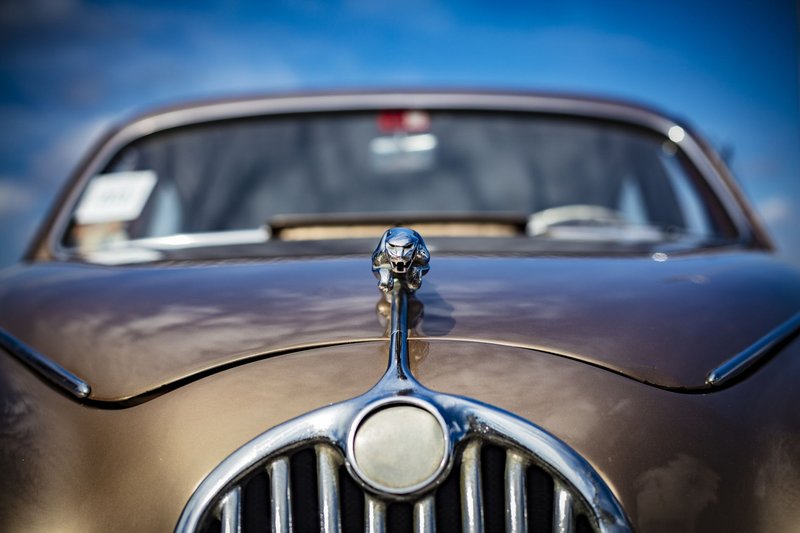
Four model lines wore the leaping cat in 1957, though the sports-car side was in flux as the XK140 handed off to the XK150 partway through the year. Here’s the full roster with the numbers that matter.
| Model | Type | Engine | Body Styles | Approx. Production | Today’s Value (driver–excellent) |
|---|---|---|---|---|---|
| XK140 | Sports car | 3.4L straight-six | FHC, DHC, Roadster | ~9,000 total (1954–57) | $70,000–$160,000 |
| XK150 | Sports car | 3.4L straight-six | FHC, DHC | ~9,400 total (1957–61) | $80,000–$200,000+ |
| XKSS | Road racer | 3.4L D-Type six | Roadster | 16 built | $15M–$30M+ |
| Mark VIII | Luxury saloon | 3.4L straight-six | 4-door saloon | ~6,200 total (1956–59) | $30,000–$55,000 |
Two things jump out. The XKSS isn’t in the same universe as the rest on price — it trades like a piece of motorsport history, not a used car. And the XK140 and XK150 overlap in 1957, which is the single most useful fact for anyone trying to identify a car from that exact year.
Jaguar XK140 (Ending Production) {#xk140}
The XK140 was the established sports car as 1957 opened, and Jaguar was winding it down. Introduced in 1954 as the successor to the XK120, it kept the 3.4-litre twin-cam straight-six but added rack-and-pinion steering and more cabin room — Jaguar moved the engine forward three inches to do it, which is the kind of detail that explains why the 140 feels roomier behind the wheel than its predecessor. If you want the fuller picture of where it sat when it launched, our look at the 1954 Jaguar lineup traces the same hinge point from the other end.
You got three body styles: the Fixed Head Coupe (FHC), the Drophead Coupe (DHC), and the open Roadster. The standard car made around 190 horsepower; the SE (Special Equipment) version with the C-type cylinder head pushed closer to 210.
By 1957 these were the last of the line. A late-1957 XK140 and an early-1957 XK150 could roll off the same site within months of each other, which is why provenance and chassis numbers matter so much when you’re authenticating one of these.
Jaguar XK150 (The New Arrival) {#xk150}
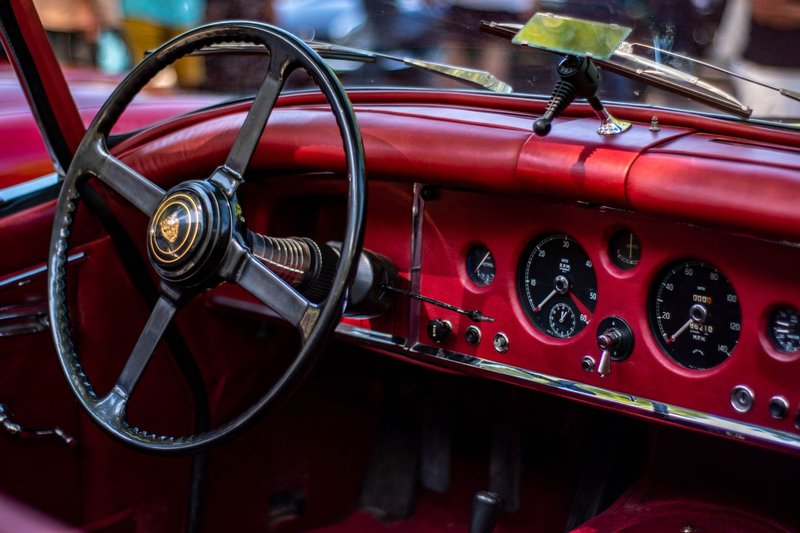
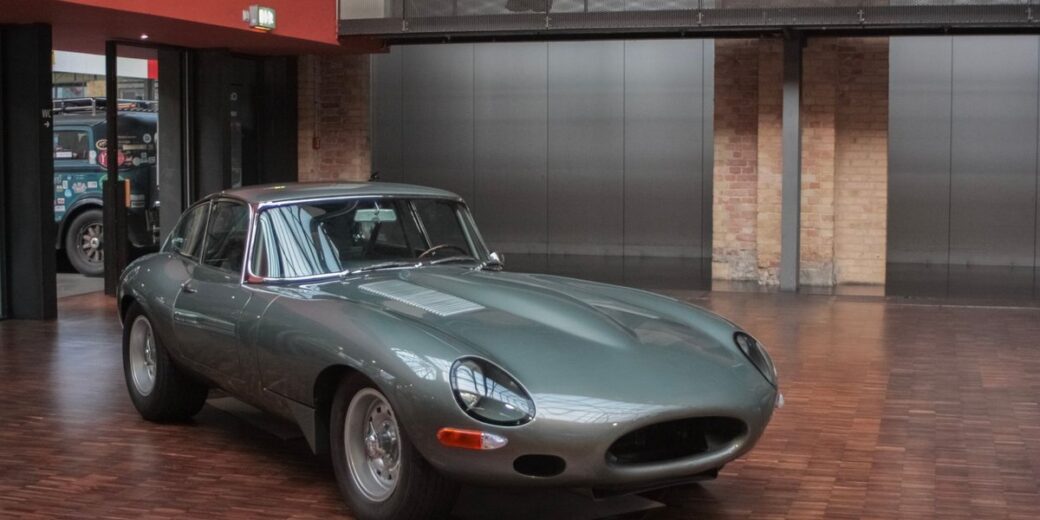
The XK150 launched in 1957 and changed the formula in ways you can see at a glance. Gone was the dipping waistline of the 120 and 140 — the 150 ran a flatter, fuller body line and a wider track, giving it a more substantial, modern look. The split windscreen was replaced by a single curved one-piece screen.
The bigger story was underneath. The XK150 was the first Jaguar sports car offered with four-wheel Dunlop disc brakes, a genuine advance over the drums that came before and a real selling point for a car that could approach 132 mph in tune. The standard 3.4-litre six made around 190 horsepower, with the SE version again bumping that up.
In 1957 the XK150 arrived as a Fixed Head Coupe and Drophead Coupe; the open Roadster joined the following year. So a true 1957 XK150 is a closed or convertible car, not the roadster — another identification checkpoint. It also sat among a remarkable crop of rivals; our roundup of 1950s sports cars shows just how crowded and competitive that field had become by mid-decade.
Jaguar XKSS (The Rarest of All) {#xkss}
This is the one collectors talk about in hushed tones. The XKSS was Jaguar’s road-legal conversion of the Le Mans-winning D-Type race car — same monocoque, same 3.4-litre dry-sump six making around 250 horsepower, with a few concessions to the street: a passenger door, a full-width windscreen, a folding top, and bumpers.
Jaguar planned a production run. They never got there. On February 12, 1957, a fire tore through the Browns Lane factory and destroyed several cars in build. Only 16 XKSS examples were completed before the fire ended the program — making it one of the rarest road cars Jaguar ever built.
The scarcity shows in the money. Authentic XKSS cars trade in the tens of millions when they surface, which is almost never. Steve McQueen famously owned one, which didn’t hurt the legend. In 2016 Jaguar built nine “continuation” cars to complete the originally intended run of 25, hand-assembling them to period spec — but those are a separate conversation from the 16 originals.
Jaguar Mark VIII (The Saloon) {#mark-viii}
Not everyone in 1957 wanted a sports car, and Jaguar’s big saloon was the Mark VIII. It carried the same 3.4-litre twin-cam six as the sports cars, tuned for smooth torque rather than outright revs, and wrapped it in a wood-and-leather cabin that made it a genuine luxury car for the money.
Visually it’s the one with the one-piece curved windscreen and a chrome strip running down the flanks, often finished in two-tone paint. It’s the most attainable 1957 Jaguar to own and run today, which is exactly why it’s a smart entry point if you want the period experience without seven-figure stakes. It also sits comfortably among the marques that define the genre, as our rundown of classic British cars makes clear.
There was also a 3.4-litre saloon in the compact range gaining disc brakes around this era, part of Jaguar’s broader move toward stopping power that mirrored the XK150’s leap.
XK140 vs XK150: What Actually Changed {#xk140-vs-xk150}
Because both cars existed in 1957, this comparison gets asked constantly. Here’s the honest breakdown.
Brakes. The single biggest functional difference. The XK140 used drum brakes; the XK150 introduced four-wheel discs. If you actually drive your classic, the 150’s stopping power is the upgrade you feel first.
Windscreen. The XK140 kept a more upright, framed screen (split on early cars); the XK150 went to a curved one-piece windscreen — the quickest way to tell them apart from the front.
Body. The XK140’s body still echoed the swooping 120 silhouette with its dipped door line. The XK150 widened the body and raised the door line for a flatter, more contemporary profile and a roomier cabin.
Feel. The 140 is the older-school of the two — more vintage in character. The 150 drives like a step toward the modern grand tourer, which is exactly what Jaguar intended.
Neither is “better” in collector terms; they’re different eras of the same car. Early XK140 roadsters in great condition can command strong money for their purity, while XK150 buyers often prize the disc brakes and usability.
The Browns Lane Fire and Why 1957 Matters {#the-fire}
You can’t understand the 1957 lineup without the fire. On February 12, 1957, a blaze broke out at Jaguar’s Browns Lane plant in Coventry and destroyed a chunk of the factory along with around 270 cars in various stages of assembly, including most of the remaining XKSS bodies.
Jaguar’s recovery was famously fast — production restarted within days, and the company shipped cars again within weeks. But the XKSS never resumed. That single event is why one of the 1957 models is among the rarest cars on earth while the others were built in the thousands.
It also explains the transitional feel of the whole year. Jaguar was simultaneously launching a new sports car, retiring an old one, building a hand-made road-racer, and rebuilding a burned factory. Few years in any carmaker’s history pack that much in.
Buying a 1957 Jaguar Today {#buying}
If you’re shopping the 1957 lineup, match the car to the budget honestly:
- Most attainable: The Mark VIII saloon. Real Jaguar period luxury, the same celebrated six, and prices that start where the sports cars top out.
- The driver’s choice: A 1957 XK150 FHC or DHC. Disc brakes make it the most usable of the early XKs, and values reflect that desirability.
- The purist’s pick: A late XK140, the last of an era, prized when original and well-documented.
- The fantasy: An original XKSS. Sixteen exist. If you have to ask, and so on.
Whatever you’re chasing, get the chassis and engine numbers verified against the factory records, because the 140/150 overlap and decades of restoration mean originality claims need checking. The 1957 cars reward documentation more than almost any other Jaguar year — that fire, that transition, and that handful of survivors are exactly why.

Marco Delantero
More from Marco DelanteroHow we reviewed this article
This article was researched against manufacturer records and editorially reviewed before publishing. We accept no payment for coverage. Some guides contain affiliate links; see our affiliate disclosure.