There were no Lamborghini cars in 1951. None. If you came here looking for a 1951 Lamborghini coupe or roadster, the honest answer is that the company that built it didn’t exist yet — Automobili Lamborghini wasn’t founded until 1963.
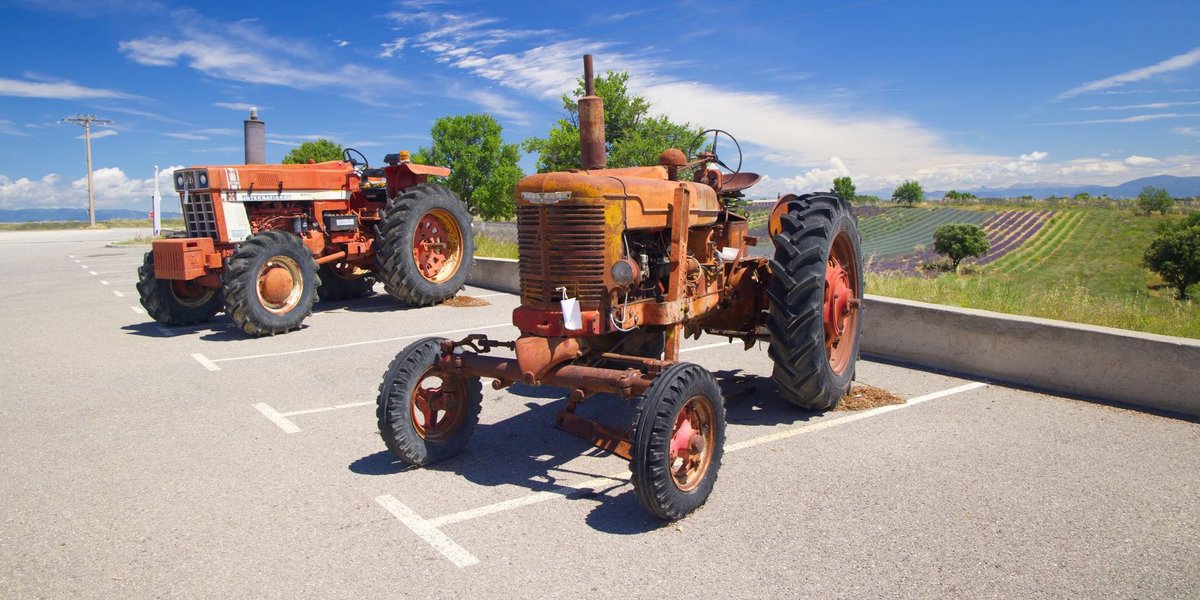
What did exist in 1951 was a tractor. The Lamborghini L 33, to be exact. And it wasn’t a side project or a one-off curiosity. It was the first machine Ferruccio Lamborghini ever built start to finish, and it’s the reason there’s a raging bull on the back of every Aventador and Revuelto sold today.
So let’s set the record straight on what “1951 Lamborghini” actually means, because the real story is more interesting than the supercar you were imagining.
Table of Contents
- The Quick Answer
- Why People Search for 1951 Lamborghini Cars
- Meet the Lamborghini L 33
- The Fuel Atomiser That Made It Work
- How Ferruccio Got Into Tractors at All
- Lamborghini’s Early-1950s Tractor Lineup
- The 1963 Pivot to Cars
- FAQ
The Quick Answer {#the-quick-answer}
In 1951, Lamborghini built one product: the L 33, an agricultural tractor. There were no Lamborghini sports cars, no road cars, no prototypes with wheels meant for asphalt. The car company everyone thinks of came twelve years later.
If a listing or a trivia question mentions a “1951 Lamborghini,” it’s either a mistake, or it’s referring to the L 33 tractor. That’s the whole truth, and the rest of this article is the detail behind it.
Why People Search for 1951 Lamborghini Cars {#why-people-search-for-1951-lamborghini-cars}
The confusion is understandable. Lamborghini is a car name now — one of the most recognizable on earth — so the brain assumes it was always a car name. Type a year next to it and you expect a model to pop out.
But the Lamborghini badge predates the Lamborghini car by more than a decade. Ferruccio Lamborghini started building tractors in 1948, and his company, Lamborghini Trattori, was a serious agricultural manufacturer years before Ferruccio ever decided to humiliate Enzo Ferrari by building a better grand tourer. (Yes, that’s the actual origin story of the car company. We’ll get there.)
So when you search “1951 Lamborghini models,” the algorithm wants to show you a 350 GT or a Miura. The reality is a green tractor with a Morris engine. Here’s that machine.
Meet the Lamborghini L 33 {#meet-the-lamborghini-l-33}
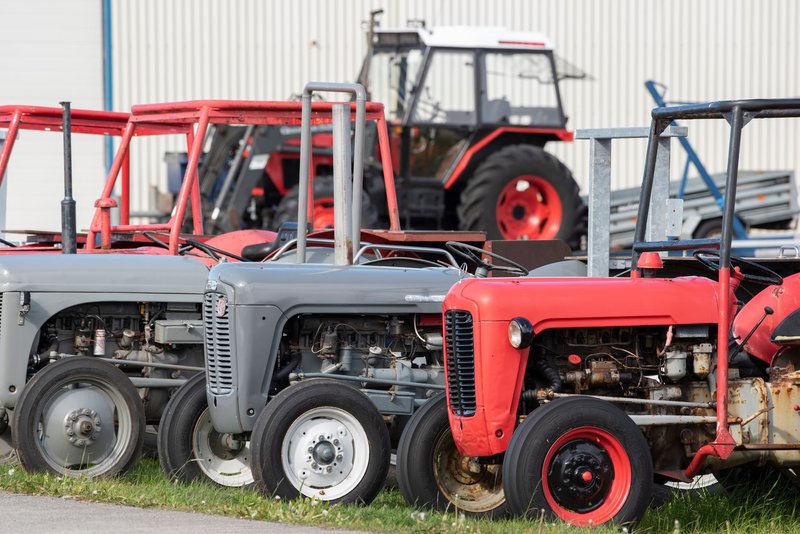
The L 33 holds a specific honor: it was the first tractor built entirely by Lamborghini, rather than assembled from war-surplus parts cobbled together. Ferruccio’s earliest tractors had been built from leftover military hardware after World War II — repurposed engines, axles, and components that flooded the Italian market once the fighting stopped. Cheap parts, clever assembly, working machines.
The L 33 was the step beyond that. Lamborghini designed and manufactured nearly the whole thing in-house. The one major exception was the engine: a 3.5-litre inline-six sourced from Morris, the British carmaker.
Here are the essentials.
| Spec | Lamborghini L 33 |
|---|---|
| Year | 1951 |
| Type | Agricultural tractor |
| Engine | 3.5 L inline-six (Morris) |
| Notable feature | Ferruccio’s patented fuel atomiser |
| Significance | First tractor built (almost) entirely by Lamborghini |
| Origin | Built on the back of post-war surplus expertise |
That Morris six is the detail that gives the whole thing away as an early machine. Lamborghini didn’t yet make its own engines — that capability came later — so Ferruccio bought a proven British powerplant and built the tractor around it. What he did add was his own clever piece of engineering, and that’s the part worth slowing down for.
The Fuel Atomiser That Made It Work {#the-fuel-atomiser}
Ferruccio Lamborghini wasn’t just an assembler. He was a tinkerer with a real mechanical mind, and the L 33 carried his own patented fuel atomiser.
Why it mattered comes down to fuel. Post-war Italy was broke, and petrol was expensive. Diesel and cheaper heavy fuels were what farmers could actually afford to run. Ferruccio’s atomiser system let the engine start on petrol and then switch to a cheaper fuel once it was warm — a hot-bulb-style trick that made the tractor far more economical to operate in the field.
That’s the kind of solution that tells you who Ferruccio was: a guy who understood his customers’ margins as well as his machinery. Farmers didn’t want horsepower bragging rights. They wanted a tractor that didn’t bankrupt them at the fuel pump. The atomiser delivered exactly that, and it’s a direct line to the engineering obsessiveness that later produced the V12 in the Miura.
How Ferruccio Got Into Tractors at All {#how-ferruccio-got-into-tractors}
To understand 1951, back up to 1948.
Ferruccio Lamborghini came home from the war — he’d served as a mechanic in the Italian Royal Air Force, posted to Rhodes — and looked at the wrecked Italian countryside. Farms needed mechanizing. Tractors were scarce and expensive. And the country was littered with abandoned military vehicles full of usable parts.
He saw the gap and filled it. He founded Lamborghini Trattori in 1948 (in Cento, in the Emilia-Romagna region that would become Italy’s “motor valley”), building tractors out of surplus parts. The business worked, and worked well. By the early 1950s he was building proper in-house machines like the L 33 instead of just repurposing scrap.
This is the part most car-focused histories skip in a single sentence. But Lamborghini Trattori made Ferruccio genuinely wealthy — wealthy enough to also build a successful air-conditioning and heating business, and wealthy enough to indulge his real passion: fast cars. The tractor money bought the Ferraris. The Ferraris led to the famous falling-out with Enzo. And that grudge built Automobili Lamborghini. The whole supercar empire stands on a foundation of farm equipment. You can read the brand’s own account on the Lamborghini Trattori heritage pages and a broader timeline on Wikipedia’s Lamborghini Trattori entry.
Lamborghini’s Early-1950s Tractor Lineup {#early-1950s-lineup}
The L 33 didn’t stay alone for long. Once Lamborghini Trattori hit its stride, Ferruccio expanded into a proper range. Here’s the early lineup that defines the actual “1951-era Lamborghini models” — all tractors, all the foundation of the company.
| Model | Era | Role |
|---|---|---|
| L 33 | 1951 | First tractor built almost entirely in-house |
| DL 15 | 1952–53 | Compact tractor in the new DL series |
| DL 20 | 1952–53 | Mid-range DL series tractor |
| DL 25 | 1952–53 | Higher-output DL series tractor |
| DL 30 | 1952–53 | Top of the early DL series |
| DL 40 / DL 50 | mid-1950s | Larger, more powerful follow-ups |
The DL series is where Lamborghini started behaving like a real manufacturer with a product ladder — multiple sizes, different power outputs, a clear progression from small farm work up to heavier jobs. The L 33 was the proof of concept. The DL line was the business.
The 1963 Pivot to Cars {#the-1963-pivot-to-cars}
Here’s the bridge you’ve been waiting for, clearly labeled so nobody confuses it with 1951.
In 1963, Ferruccio Lamborghini founded Automobili Lamborghini as a separate company in Sant’Agata Bolognese. The first car was the 350 GTV prototype, shown in 1963, followed by the production 350 GT in 1964. These are the genuinely first Lamborghini cars — not anything from the 1950s.
The popular version of why he did it: Ferruccio, a Ferrari owner, complained to Enzo Ferrari about a faulty clutch. Enzo allegedly told the tractor maker to mind his tractors and leave the cars to him. Ferruccio, who happened to know a thing or two about clutches and engines, took that as a challenge — and built a competitor.
Whether the conversation went exactly like that is debated, but the result isn’t. The car company exists because the tractor company succeeded first. So the next time someone asks about a 1951 Lamborghini, you can tell them: the engine of the supercar brand started with a Morris six bolted into a tractor.
FAQ {#faq}
Did Lamborghini make cars in 1951? No. In 1951 Lamborghini built only tractors. The automobile company, Automobili Lamborghini, wasn’t founded until 1963, and its first car was the 350 GTV prototype that same year.
What was the first Lamborghini ever made? The first tractor built almost entirely by Lamborghini was the L 33 (1951). Earlier Lamborghini tractors from 1948 onward were assembled from war-surplus parts. The first Lamborghini car was the 350 GTV (1963).
What engine did the Lamborghini L 33 use? A 3.5-litre Morris inline-six, paired with Ferruccio Lamborghini’s own patented fuel atomiser that let the engine run on cheaper fuel after starting on petrol.
Is Lamborghini still making tractors today? Yes — Lamborghini Trattori continues as a tractor brand, though it’s now owned by the SDF Group, separate from the Audi-owned Automobili Lamborghini that builds the supercars.
Why do people search for 1951 Lamborghini models? Because Lamborghini is famous as a car brand today, people assume it always built cars. The badge actually started on tractors in 1948, more than a decade before the first Lamborghini car.

Tyler Bridges
More from Tyler BridgesHow we reviewed this article
This article was researched against manufacturer records and editorially reviewed before publishing. We accept no payment for coverage.