Before there was a road car with a trident on the hood, there was a spark plug company that decided to go racing. The 1920s Maserati car models aren’t a footnote in the brand’s history — they’re the whole reason the brand exists. Six cars, one bloodline, and a decade that took the Maserati brothers from tuning other people’s engines to building a 16-cylinder monster that set a world speed record.
Most brand-history pages skim this era in a paragraph on their way to the road cars of the 1950s and ’60s. That’s a mistake. The 1920s is where Maserati figured out what it was — and where it planted the technical ideas (superchargers, twin-cam straight eights, dry-sump lubrication) that carried the company for the next three decades.
Table of Contents
- Where It Started: From Spark Plugs to Racing Cars
- Quick Reference: Every 1920s Maserati at a Glance
- Maserati Tipo 26 (1926)
- Maserati Tipo 26B (1927–1930)
- Maserati Tipo 26R (1928)
- Maserati Tipo 26C / 8C-1100 (1930–31)
- Maserati Tipo 26M (1930–32)
- Maserati Tipo V4 (1929)
- Why These Cars Actually Mattered
- Which 1920s Maserati Is the Rarest?
Where It Started: From Spark Plugs to Racing Cars {#where-it-started}
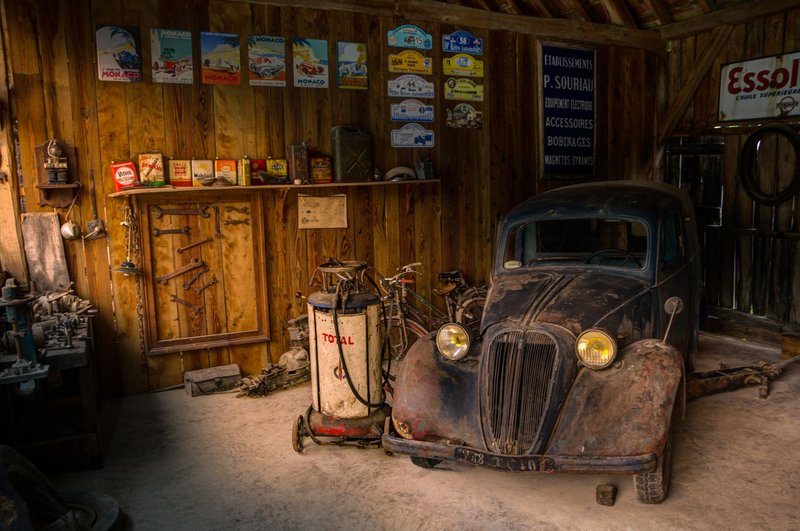
Alfieri Maserati registered Officine Alfieri Maserati in Bologna in December 1914, alongside his brothers Ettore and Ernesto. It wasn’t a car company yet. It made spark plugs — Alfieri held a patent on a mica-insulated design that ran cleaner than the competition — and during World War I the shop turned out aircraft-engine components for Isotta Fraschini.
The racing pedigree came from somewhere else entirely: Diatto, the Turin manufacturer where Alfieri, Bindo, and Ernesto built 2-litre Grand Prix cars through the mid-1920s. When Diatto pulled out of racing in 1926, the brothers didn’t look for another employer. They took what they’d learned building someone else’s race cars and put their own name on the hood instead.
That’s the part competitor pages leave out, and it’s the part that explains everything downstream: the first Maserati wasn’t a startup’s guess at what a car should be. It was four brothers who already knew how to win, cutting out the middleman.
Quick Reference: Every 1920s Maserati at a Glance {#quick-reference}
| Model | Years Built | Engine | Displacement | Power | Units Built |
|---|---|---|---|---|---|
| Tipo 26 | 1926 | Supercharged straight-8, DOHC | 1.5L (1,492.9cc) | 120–128 hp | Small series |
| Tipo 26B | 1927–1930 | Supercharged straight-8, dry sump | 2.0L | Uprated from Tipo 26 | 6 |
| Tipo 26R | 1928 | Supercharged straight-8 | 1.7L | Race-tuned | 2 |
| Tipo 26C (8C-1100) | 1930–31 | Supercharged straight-8 | 1.1L | Voiturette-class | Small series |
| Tipo 26M (8C 2500) | 1930–32 | Supercharged straight-8 | 2.5L | Series flagship | 13 |
| Tipo V4 | 1929 | Supercharged V16 (two straight-8s joined) | 3.96L | 280–305 hp | 1 |
Maserati Tipo 26 (1926) {#tipo-26}
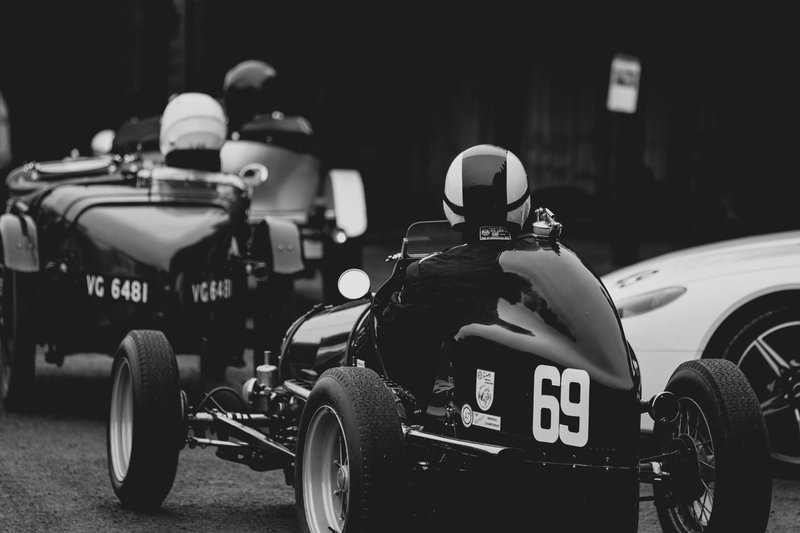
This is the car that started it: chassis number one, first Maserati to carry the trident, and the answer to “what was the first Maserati car ever made.” Alfieri built it around a supercharged 1.5-litre straight-eight with twin overhead camshafts, a crankshaft-driven Roots blower, and a light-alloy block — an ambitious spec for a brand-new manufacturer in 1926. The two-seat body, in aluminum over a steel ladder frame, weighed a lean 720 to 780 kg depending on trim.
It didn’t need a warm-up act. On its competition debut at the 1926 Targa Florio, Alfieri drove the Tipo 26 to a class win in the up-to-1,500cc Voiturette category and 9th place overall against far larger machinery on Sicily’s brutal mountain roads. The engine made somewhere between 120 and 128 hp depending on tune, enough to push the car to 180–200 km/h — a genuinely fast number for a 1.5-litre car in the mid-1920s, and proof that the supercharger wasn’t a gimmick.
Maserati Tipo 26B (1927–1930) {#tipo-26b}
The 26B is what happens when a good formula gets more displacement. Maserati bored the straight-eight out to 2.0 litres, kept the crankshaft-driven Roots supercharger and twin gear-driven overhead cams, and added dry-sump lubrication — a detail that mattered more than it sounds, since it let the engine sit lower in the chassis and kept oil from starving the pump under hard cornering.
Only six were built between 1927 and 1930, which makes the 26B one of the scarcest cars on this list today. It ran in the same voiturette and sports-car classes as its smaller sibling, and its engine architecture — enlarged, dry-sumped, still supercharged — became the template Maserati kept iterating on for the rest of the decade.
Maserati Tipo 26R (1928) {#tipo-26r}
The 26R split the difference between the original 1.5-litre car and the bored-out 26B, landing on a 1.7-litre displacement built specifically for competition. Just two were built. That tiny production number, combined with a short one-year window, makes the 26R less a production model than a factory experiment — Maserati testing a displacement class before committing resources to it. It’s the model even dedicated marque historians sometimes overlook, because it barely existed long enough to leave a paper trail.
Maserati Tipo 26C / 8C-1100 (1930–31) {#tipo-26c}
Also cataloged as the 8C-1100, the 26C went the opposite direction from the 26B: down to 1.1 litres, aimed squarely at the smaller voiturette racing classes where displacement caps decided who could even enter. It’s easy to read a smaller engine as a step backward, but in 1920s and early-1930s Grand Prix racing, the sub-1,100cc and sub-1,500cc classes were some of the most competitive on the calendar — manufacturers across Europe were chasing every available horsepower within a hard displacement ceiling, and a well-sorted small-bore Maserati could win outright in its class against a deep field.
Maserati Tipo 26M (1930–32) {#tipo-26m}
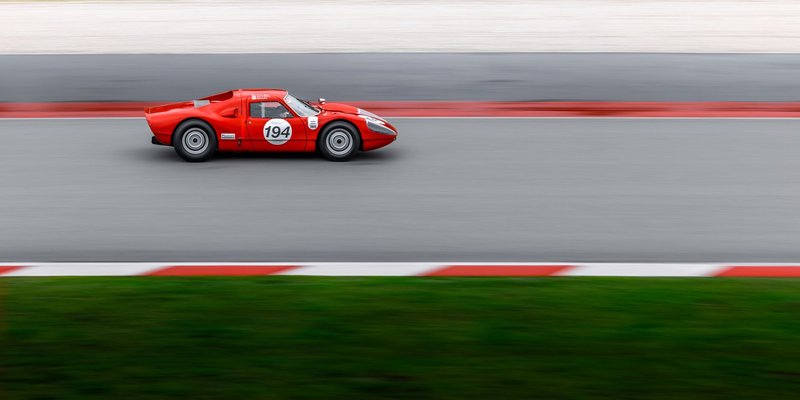
The 26M — also known by its 8C 2500 designation — is where the Tipo 26 lineage matured into something closer to a proper works Grand Prix car. Displacement grew to 2.5 litres, and Maserati built 13 of them between 1930 and 1932, making it the most numerous car in this entire family by a wide margin. If the Tipo 26 proved the concept and the 26B refined it, the 26M is the version Maserati actually committed to building in series, and it carried the brand’s competition program into the 1930s virtually unchanged in philosophy: supercharged straight-eight, twin cams, light alloy construction.
Maserati Tipo V4 (1929) {#tipo-v4}
Nothing else on this list — or in most of automotive history up to that point — looked like the V4. Maserati took two of its own supercharged straight-eight engines and joined them onto a single crankcase and transfer case, at a 25-degree angle, to build a 16-cylinder, 3,961cc monster. Each half kept its own magneto, its own supercharger, and its own crankshaft, which is as close as a 1929 engineering department got to building two engines that happened to share a block.
Output ran between 280 and 305 hp — genuinely enormous for the era — driving through a mechanical four-speed gearbox with reverse. In September 1929, driver Baconin Borzacchini took the V4 to the Cremona autostrada and set a new world record over the flying 10 kilometers, averaging 246 km/h (about 153 mph), a run Hagerty’s motoring historians still cite as one of the era’s defining speed achievements. Only one V4 was built. It wasn’t a production model in any real sense — it was Maserati proving, three years after building its first car, that it could out-engineer manufacturers with a decade’s head start.
Why These Cars Actually Mattered {#why-they-mattered}
It’s tempting to file the 1920s Maseratis under “old race cars” and move on, but the engineering choices here were genuinely ahead of the curve. Roots-type supercharging was still a novel, unreliable technology across most of the industry in the mid-1920s — plenty of manufacturers treated it as a risky experiment. Maserati put a supercharger on its very first car and never looked back, refining the installation across five follow-on models in four years.
The other thing these cars share is a straight line from race circuit to design decision. Every displacement change, every dry-sump conversion, every jump to a bigger blower happened because a specific competition class or a specific rival demanded it — not because a marketing department wanted a new model year. That’s a different way of building cars than most manufacturers of the period, and it’s the habit that made Maserati’s racing department credible enough, by the 1930s, to go up against Alfa Romeo and Bugatti as an equal.
Which 1920s Maserati Is the Rarest? {#rarest}
By production numbers, it’s not close: the Tipo 26R, at two units built, and the Tipo V4, at exactly one, are the rarest cars in this lineup — and the V4 is effectively unique, since it was a record-attempt special rather than anything Maserati intended to sell. The Tipo 26B’s six examples put it in the same conversation. The 26M, with 13 built, is the “common” one in a family where common still means a handful of surviving cars scattered across collections and museums worldwide.
Value follows the same logic auction houses always use for early competition cars: the original 1926 Tipo 26 carries the historical premium as the first car to wear the trident, but a documented, race-history V4 — if one ever changed hands — would be in a category of its own. It’s a one-of-one that set a world record and helped convince the automotive world that four brothers from a spark-plug shop in Bologna weren’t a novelty act.

Marco Delantero
More from Marco DelanteroHow we reviewed this article
This article was researched against manufacturer records and editorially reviewed before publishing. We accept no payment for coverage.