7 Advantages of Trail Bike vs Motocross
Can a trail bike do what a motocross bike can’t — and should most recreational riders even own a dedicated MX machine?
Motocross machines are purpose-built: short, high-rpm power, ultra-lightweight, and trimmed for racetrack hustle and big landings. Trail or dual-sport bikes are built for versatility—broader powerbands, bigger fuel tanks, and comfort for longer rides.
This matters for weekend riders, backcountry explorers, and anyone who wants one bike to cover everything from 2–6 hour singletrack loops to fire road transfers. Below are seven concrete advantages that typically favor trail bikes for non-racers, with numbers and real-model examples so you can compare for yourself.
Performance and Terrain Advantages
Setup and tuning make a huge difference off the track: maps, gearing, geometry and suspension change how a bike feels in technical sections. The three items below explain where trail bikes commonly have the edge when the terrain varies and the ride lasts longer.
1. Better low-speed traction and technical control
Trail bikes normally deliver smoother, broader powerbands and lower gearing, which improves control on technical climbs, rock gardens and tight singletrack. For example, many dual-sport four-strokes tune peak torque well under peak horsepower rpm, giving usable torque from 2,500–6,000 rpm rather than a narrow 7,000–10,000 rpm hit.
In practice that means a Yamaha WR250R or KTM 350 EXC-F will lug up a wet, root-covered climb without constant shifts or clutch slip, while a YZ250F or CRF250R—optimized for high-rpm peak power—asks the rider to stay near the top of the rev range to be effective. The result: fewer stalls, less clutch work, and lower rider fatigue on technical sections.
2. Versatility across varied terrain
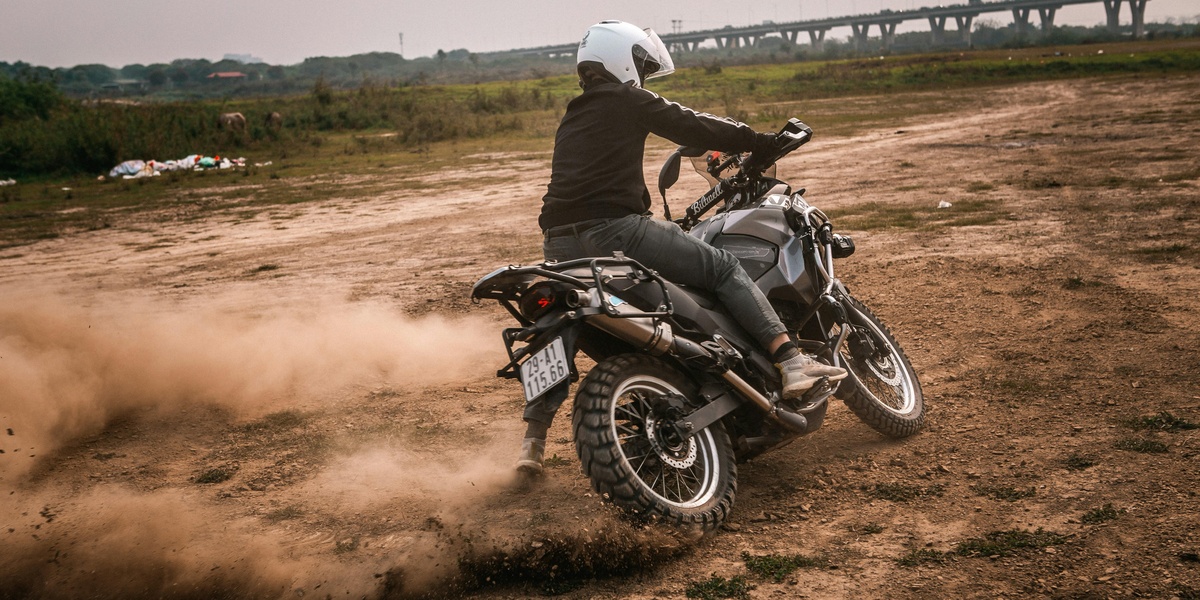
Trail bikes are designed to handle singletrack, gravel roads, creek crossings and short pavement links without constant setup changes. That flexibility comes from choices in gearing, tire options and clearance that let a single machine cover 20–100 mile mixed-surface loops.
Examples include the Honda CRF300L and Suzuki DR‑Z400S, both easily fitted with dual-purpose tires and racks. A typical weekend loop of 60–100 miles with mixed surfaces rarely forces a dual-sport rider to stop and swap setups—whereas an MX bike needs tire, jetting or sprocket swaps to cope with non-track conditions.
3. Suspension tuned for repeated small impacts and comfort
Motocross forks and shocks are often set stiff for big jumps and single large impacts; trail/enduro suspension is generally more compliant for repeated hits and long days. Typical suspension travel might run 12–13 in (305–330 mm) on MX bikes and roughly 10–12 in (250–305 mm) on many trail/enduro models, tuned with more mid-stroke compliance.
The practical effect shows up on a five-hour ride: compliant damping soaks roots and repeated chattery sections, producing less rider fatigue and more predictable feedback. Magazine tests (Cycle World, Motorcyclist) often note that enduro-tuned suspension reduces fatigue on mixed terrain compared with race-stiff MX setups.
Ownership, Cost, and Practicality

For many buyers the long-term costs and day-to-day practicality outweigh peak lap times. Trail bikes usually require less race-level servicing, carry more fuel, and accept accessories that expand their usefulness beyond the weekend track.
4. Lower maintenance intensity and longer service intervals
Trail and dual-sport machines aimed at recreational riders typically avoid the extreme top-end demands of race-tuned MX engines. Two-stroke motocross engines may need top-end attention after tens of hours—commonly 20–50 hours depending on use—while many four-stroke trail bikes run oil/filter intervals in the 3,000–6,000 mile range under normal use.
That difference means lower hourly maintenance costs and less downtime. A trail rider averaging weekend trips faces fewer unscheduled rebuilds than a motocross racer who regularly strains the engine at redline for practice and races.
5. Better everyday value: fuel range, accessories, and resale
Trail bikes often pack larger tanks—2.5–3.5 gallons (9.5–13 L) is common—so a WR250R-style tank can yield 120–200 miles (200–320 km) between fill-ups depending on riding. By contrast, MX bikes typically carry 1.5–2.0 gallons and expect shorter ranges under hard use, often 40–80 miles.
Accessory compatibility—racks, lights, skid plates and heated grips—adds practical value. That, plus registration options, tends to broaden the resale market. MSRP snapshots illustrate range: a lightweight trail/dual-sport like the CRF300L sits around the lower thousands, while factory enduro models (KTM 350 EXC‑F) jump into higher price brackets—buyers should weigh features per dollar for their use case.
Rider Experience, Safety, and Access
Comfort, legal access and community acceptance shape where and how you ride. Trail bikes often win here: they make longer rides more pleasant, meet trail and road regs more easily, and fit better into group outings that mix open roads and singletrack.
6. More comfortable ergonomics for long rides
Trail bikes prioritize seats and ergonomics for endurance: wider seats, less extreme body position and fueling arrangements that suit multi-hour outings. Typical trail loops run 2–6 hours; a more neutral posture and softer suspension materially reduce fatigue over that duration.
For example, the CRF300L and Tenere-style machines position the rider for both seated and standing comfort, helping on long transfers and when climbing or descending technical sections. If your typical outing is a half-day or full-day ride, ergonomics should be a primary deciding factor.
7. Legal access, noise, and community trail acceptance
Trail bikes are often easier to plate or run as street-legal variants, which expands point-to-point options and access to distant trailheads. Models like the Suzuki DR‑Z400S or many KTM EXC variants have registration-friendly versions and street kit support.
Land managers and agencies (for example, US Forest Service and state OHV programs) commonly enforce noise and permit rules; a frequently used limit is about 96 dB measured at a set distance, though limits vary locally. Being quieter and plated helps you legally link trails with public roads, join organized rides, and maintain better community relations—so always check local regulations before planning a route.
Summary
- Trail bikes deliver better low-speed control and broader powerbands for technical terrain, reducing stalls and rider fatigue.
- They offer greater versatility—larger fuel tanks (2.5–3.5 gal), longer ranges (often 120–200 miles), and accessory compatibility—so one bike can cover many roles.
- Maintenance and service needs usually cost less for casual owners (two-stroke MX top-end cycles in tens of hours vs four-stroke trail oil intervals of 3,000–6,000 miles).
- Comfort, suspension tuning and legal/registration options expand where you can ride and make longer outings more enjoyable.
- If you mostly ride weekends, trails or mixed-surface routes, test-ride a dual-sport/trail model on a typical loop and compare it to an MX bike before buying.