The Roots-style blower dates back to the 1860s, and superchargers were widely used on WWII aircraft to preserve power at altitude — technology with roots in the 19th century still shapes how we add horsepower today.
Performance builders face a familiar choice: a mechanically driven blower that supplies continuous pressure to the intake, or a chemical charge you call on for an intense, short burst. Each option trades off immediacy, longevity, and day-to-day practicality.
For many street and performance enthusiasts, a supercharger offers a set of practical advantages over nitrous oxide for everyday power, safety, drivability, and long-term value.
Performance and Driveability Advantages
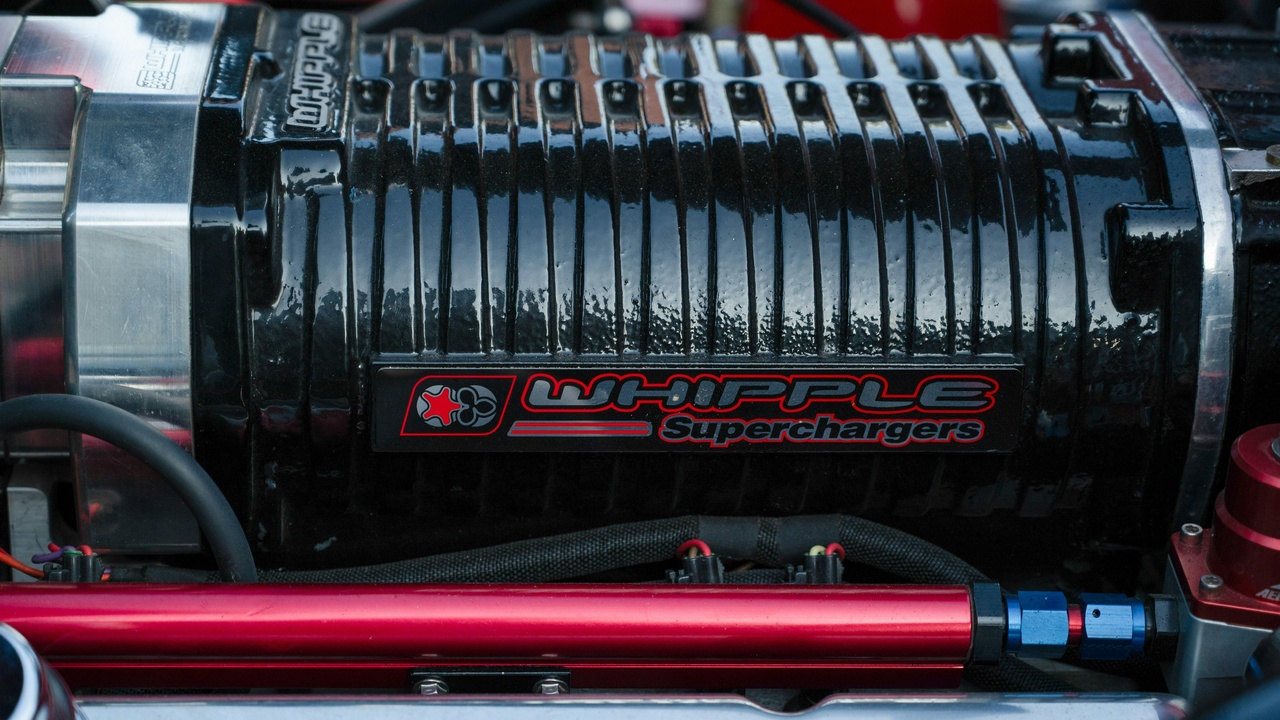
Forced-induction blowers deliver continuous boost that changes how a car behaves every time you lift the throttle, while on-demand power shots alter combustion only when activated. That distinction matters on the street: a blower smooths out passing maneuvers and canyon runs, while nitrous is optimized for short, dramatic gains at the strip. Factory examples show the difference — think of cars built around the blower versus cars set up for one-off runs — and many drivers prefer the predictable, controllable feel of a driven charger for everyday use.
1. Sustained, Predictable Power Delivery
Superchargers supply continuous, predictable boost across the rev band, unlike nitrous which gives intermittent horsepower spikes. Typical blower packages raise torque and horsepower in the 30–60% range depending on design (Roots/twin-screw vs centrifugal), while nitrous shots can add anywhere from 30 hp up to 150+ hp in a single burst depending on the jetting and system (NOS, Zex).
That continuous advantage shows in real-world use: a Chevrolet Camaro ZL1 with the factory LT4 supercharger makes roughly 650 hp and delivers usable power from idle to redline, whereas a race-prepped car might rely on a 100–150 hp nitrous shot off the line at the drag strip. On long mountain passes or highway passing lanes, steady boost is easier to manage and less taxing on driver inputs.
2. Sharper Throttle Response and Low-End Torque
Positive-displacement superchargers (Roots and twin-screw) are belt-driven, so they deliver near-instantaneous boost at low rpm. That translates to sharper throttle response and strong low-end torque right off the line, which is noticeable in stop-and-go traffic, tight road sections, or when towing.
Because these blowers don’t rely on exhaust energy, there’s minimal lag and the driver experiences smooth, linear power delivery. Many muscle-car owners fit twin-screw or Roots kits specifically for improved corner exits and daily usability — a very different feel from an abrupt nitrous hit used primarily for short runs.
Safety, Reliability, and Engine Health
Nitrous systems introduce a separate set of risks: pressurized bottles, plumbing, and a rapid change in combustion conditions when activated. Sanctioning bodies such as the NHRA publish safety guidance for bottle mounting and plumbing for competition use. By contrast, a properly installed supercharger integrates with the driveline and ECU so the load and fueling changes are gradual and easier to tune for longevity.
3. Safer, Street-Legal Operation and Fewer Safety Concerns
Superchargers avoid carrying high-pressure bottles and the associated plumbing that come with nitrous systems. Nitrous bottles typically sit at roughly 900–1,200 psi when full and must be refilled or exchanged, which adds handling and storage hazards. Some local regulations and insurers also restrict or treat nitrous-equipped street cars differently, making a factory-style blower a lower-risk choice for a daily driver.
For families or commuters, the lack of a pressurized consumable means fewer pre-drive checks and less concern about leaks, unsecured bottles, or accidentally armed systems when the car is on the street.
4. Predictable Tuning and Lower Risk of Catastrophic Engine Damage
Nitrous can spike cylinder pressures quickly; without proper fuel enrichment, timing retard, or safety cutoffs, those spikes increase detonation risk and the chance of a catastrophic failure. By contrast, superchargers change intake pressure more gradually and are generally easier to map into an ECU’s fueling and ignition strategies.
Well-installed supercharger systems, paired with correct fueling and ignition calibration, can run reliably for tens of thousands of miles. OEM supercharged engines — for example, GM’s LT4 used in the Camaro ZL1 — were engineered and warrantied to handle the added load in street applications, which illustrates that forced induction can be managed for longevity when done properly.
Cost, Practicality, and Long-Term Ownership
Ownership costs come down to upfront price, recurring expenses, installation complexity, and market perception. Aftermarket blower kits commonly range from about $3,000 up to $8,000 for complete systems with intercoolers and pulleys, whereas basic nitrous kits often start around $400 and go to $1,500 for more advanced packages. However, nitrous carries recurring refill costs and the potential need for supporting upgrades if used heavily.
5. Better Long-Term Value and Resale Appeal
A professionally installed supercharger typically carries better resale perception than a nitrous setup, which many buyers see as a track-only modification. Complete forced-induction installs from reputable brands (Eaton, Vortech, Magnuson) that include documented work and a proper tune often justify higher asking prices when sellers advertise reliable, street-ready power.
Concretely, many buyers are willing to absorb a $3,000–$8,000 blower upgrade if the car shows service records and a conservative tune. By contrast, the lower initial cost of a nitrous kit ($400–$1,500) plus ongoing refill expenses rarely translates into higher resale value unless the buyer specifically wants drag-strip capability.
6. Lower Operational Hassle: No Refills and Fewer Consumables
Nitrous requires consumables and planning: bottles need refilling, can run out at inconvenient times, and must be secured for transport. Refills typically cost roughly $40–$100 depending on bottle size and provider, and frequent track users budget accordingly. Superchargers, being mechanical, don’t need consumable replenishment to deliver power.
For a daily driver or a weekend tour car, that convenience matters. No last-minute trips to a refill station, no swapping bottles between events, and fewer consumable costs make forced induction simpler to live with over years of ownership.
Summary
- Superchargers deliver continuous, low-end power and sharper throttle response for street use, while on-demand nitrous excels at short, high-power bursts.
- Forced induction avoids high-pressure bottles (900–1,200 psi) and repeated refills, reducing safety, legal, and insurance complications for street-driven cars.
- Although blower kits cost more upfront ($3,000–$8,000), they often add resale value when installed and documented; nitrous is cheaper up front but has ongoing refill costs ($40–$100 each).
- If you want reliable, everyday usable power, prioritize a supercharger and professional tuning; if occasional, large power bursts for the strip are your goal, nitrous remains a viable, low-cost option.