South Korea’s car industry has transformed over decades from small domestic firms into global manufacturers known for innovation and export strength. Cities like Seoul and extensive factory networks now produce models that compete across markets worldwide.
There are 12 South Korean Car Brands, ranging from Asia Motors to SsangYong. For each, you’ll find below the columns Founded (year),Status,Parent company, so you can quickly compare origins, current activity and corporate ties.
Which South Korean car brand is most reliable for everyday use?
Mainstream names such as Hyundai and Kia generally offer the best combination of reliability, parts availability and dealer support; Genesis focuses on luxury with strong build quality, while smaller or niche brands vary more, so check the Status and Parent company fields in the list to confirm current support and warranty coverage.
How can I tell if a brand is still active or part of a larger group?
Look at the Status column to see if a brand is active, dormant or defunct, and consult the Parent company column to identify acquisitions or group ownership; combining those with Founded (year) gives quick context on whether a name is producing cars today or exists mainly as a legacy or sub-brand.
South Korean Car Brands
| Name | Founded (year) | Status | Parent company |
|---|---|---|---|
| Hyundai | 1967 | Active | Hyundai Motor Group |
| Kia | 1944 | Active | Hyundai Motor Group |
| Genesis | 2015 | Subsidiary | Hyundai Motor Group |
| Renault Samsung Motors | 1994 | Subsidiary | Renault Group |
| SsangYong | 1954 | Active | KG Group |
| Daewoo | 1982 | Defunct | Formerly Daewoo Group; assets to GM Korea |
| Asia Motors | 1965 | Defunct | Acquired by Kia Corporation |
| Oullim Motors | 2000 | Defunct | Acquired/merged into niche operations |
| Proto Motors | 1997 | Defunct | Acquired/merged |
| Shinjin | 1955 | Defunct | Merged into later Korean automaker lineages |
| Sibal | 1955 | Defunct | Independent (small workshops) |
| Ioniq | 2020 | Subsidiary | Hyundai Motor Group |
Images and Descriptions
Hyundai
Founded in South Korea, Hyundai is the nation’s largest automaker focused on mass-market cars, SUVs and electrified models. Notable for rapid global expansion, advanced EV platforms and the massive Ulsan manufacturing complex that made it a global production leader.
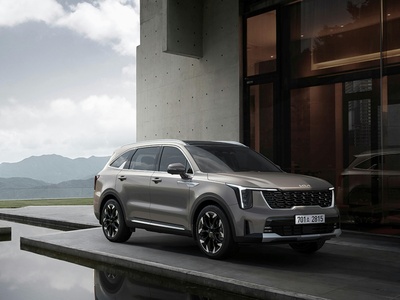
Kia
Originally founded in 1944, Kia evolved into South Korea’s second-largest carmaker producing cars, SUVs and EVs for global markets. Now part of Hyundai Motor Group, Kia is known for bold design turnarounds and strong value-for-money vehicles around the world.

Genesis
Launched in 2015 as Hyundai’s premium marque, Genesis targets the luxury segment with sedans and SUVs that emphasize design, comfort and tech. It separated from Hyundai to compete with European rivals and has won awards for styling and ride quality.
Renault Samsung Motors
Established in 1994 as Samsung’s auto division and later majority-owned by Renault, Renault Samsung builds passenger cars tailored to Korea and rebrands Renault models locally. Notable for the SM line and serving as Renault’s Korean production foothold.
SsangYong
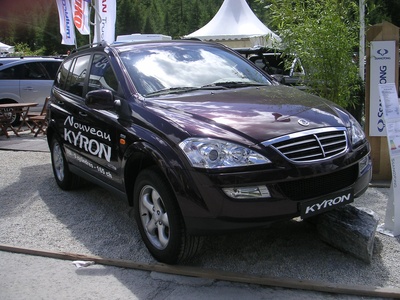
Founded in 1954, SsangYong is best known for rugged SUVs and off-road vehicles like the Rexton and Korando. After several ownership changes it became part of KG Group; the brand emphasizes value-oriented, utilitarian SUVs and recent electrification efforts.
Daewoo
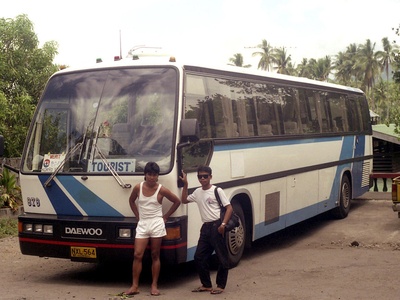
Daewoo Motors rose in the 1980s–90s as a major Korean carmaker producing compacts and exports. The brand faltered after the Asian financial crisis and was absorbed into GM Korea; many Daewoo models were later rebadged as Chevrolets.
Asia Motors
Asia Motors began in 1965 making jeeps, military vehicles and light trucks for domestic and export markets. Acquired by Kia in 1999, the Asia brand was phased out while its models and technologies were integrated into Kia’s lineup.
Oullim Motors
Oullim Motors was a small South Korean sports-car maker known for the Spirra supercar and low-volume performance engineering. The brand showcased local capability in exotic cars but never achieved large-scale production and later ceased independent operations.
Proto Motors
Proto Motors was a boutique coachbuilder and developer of performance models, most famously contributing to the Spirra supercar and custom conversions. It played a niche role in Korea’s sports-car scene before being absorbed or wound down in the 2010s.
Shinjin
Shinjin Motor was an early South Korean automaker active in the 1950s–70s that partnered with foreign firms for cars and trucks. Through restructurings and acquisitions its operations ultimately fed into companies that later became part of the Daewoo/GM Korea lineage.
Sibal
Sibal refers to Korea’s first homebuilt cars from 1955, produced by small local workshops rather than a large corporation. These vehicles are historic icons of Korea’s automotive beginnings and are notable today for rarity and cultural significance.
Ioniq
Ioniq began as a Hyundai model name and was elevated into a dedicated EV sub-brand around 2020, focusing on battery-electric cars and crossovers. Notable for the Ioniq 5 and 6 built on Hyundai’s E-GMP platform and for spearheading Hyundai’s EV identity.