More than 60% of pickup buyers add at least one accessory — and bed covers rank among the most popular upgrades for utility and style.
Pickups haul everything from kid’s soccer gear and weekend lumber to contractor tools and appliances. That everyday mix is why the choice between a rolling cover and a multi-panel folding system matters more than it looks.
When comparing roll-up tonneau cover vs folding tonneau cover, many owners find roll-up designs deliver clearer everyday advantages — faster access, simpler maintenance, and fewer cargo conflicts with rails or camper shells. This piece lays out seven concrete benefits of roll-up covers versus folding models, balancing real-world use, security, weather resistance, cost, and upkeep. Expect brand references like Truxedo and Retrax to illustrate real products and practical trade-offs you can test in person.
Practical & Daily-Use Advantages
For owners who use their bed multiple times a day, convenience trumps style. Roll-up-style tonneau covers operate differently than folding panels: the material or hard slat rolls into a compact canister near the cab, instead of stacking over the bed in sections. That mechanical difference shows up in everyday moments — grabbing one tool, sliding in a bag of mulch, or clearing space for a tall item.
Rolling covers tend to open and close quickly (many soft or low-profile hard roll models take roughly 10–30 seconds to secure), while multi-panel folding covers can take 30–60 seconds to fold and latch properly. They also let you roll the cover to any point for partial access, which saves repetitive handling and reduces the chance panels hit cargo when you open them.
Because the rolled assembly sits close to the cab, it usually interferes less with bed extenders, toolboxes, or camper shells. Brands such as Truxedo or Retrax make models that allow controlled partial roll, letting a contractor or parent get what they need fast without a full retract.
1. Faster, more flexible bed access
Roll-up covers let you access part or all of the bed faster than many folding covers. Instead of unfolding several hinged panels, you simply unlatch and roll to the desired point — a single motion in many cases.
Typical open times reflect that: 10–30 seconds for many roll-ups versus 30–60 seconds for multi-panel folding models. That matters when a contractor reaches for a single tool mid-shift or a parent loads groceries while kids wait in the driveway.
Many roll-ups work with clamp-on or bolt-on installs; Truxedo Pro X15, for example, allows partial roll and re-secures quickly, reducing downtime on jobsites.
2. Compact storage that doesn’t intrude into the bed
Because roll-up covers store in a low-profile canister near the cab, they take up less useful bed space than folding covers that stack several inches high when stowed. That difference shows up when hauling tall or odd-shaped loads.
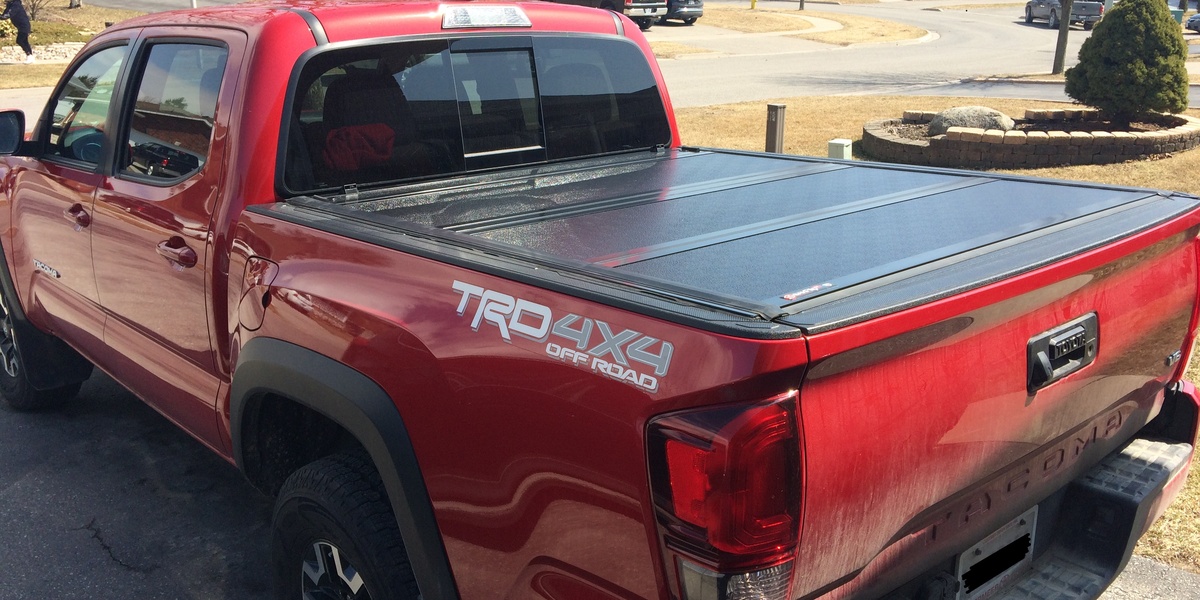
Weight and profile comparisons are instructive: many soft roll-up assemblies weigh 10–30 lbs, while folding hard covers can add 40–80 lbs and a noticeable vertical stack. The RetraxONE XR illustrates a low-profile rolling hard design, while the BAKFlip G2 shows how folding panels stack above the bed.
Smaller stow footprint means easier use with bed extenders, toolboxes, and camper shells — you lose fewer inches of cargo height and have fewer clearance headaches when loading tall items.
3. Simpler day-to-day operation for occasional users
People who only open their bed a few times a week often find roll-ups more intuitive. The sequence is short: unlock the latch, roll or pull back, and go. Fewer panels equals fewer alignment or hinge issues.
Most DIY installs for clamp-on roll systems take about 20–60 minutes, and manufacturers commonly offer 3–5 year warranties on many models. Folding covers sometimes require more precise panel alignment and periodic hinge adjustments, which can feel fiddly to occasional users.
For someone who wants quick, predictable operation without frequent tweaking, a roll-up-style cover often feels like the lower-effort choice.
Security, Weather Resistance & Durability

Protecting tools and cargo from theft and the elements is a primary concern for many truck owners. Roll-up systems differ from folding designs in where seams, hinges, and locks are placed — and those differences affect sealing, longevity, and ease of locking.
Rolling covers often feature continuous rail seals and fewer transverse seams, which reduces water intrusion points and limits areas where dirt and grit collect. Certain hard rolling models also have integrated locking canisters that add a solid deterrent compared with soft, multi-panel folding covers.
When evaluating claims, check manufacturer specs and independent tests (Consumer Reports and MotorTrend have run accessory comparisons in the past). Look for material gauges, rail tolerances, and warranty lengths when comparing models.
4. Improved weather sealing and water runoff
Continuous seals along the rails and a single rolling surface mean fewer seams for water to find. Folding covers have multiple transverse joints and hinge areas where heavy spray or pooling can breach the cabin.
In third-party water tests and many owner reports, rolling covers show less seepage at the tailgate and fewer pooling problems on top of the cover. Properly installed tailgate seals still matter, but the simpler path for runoff on a roll design reduces common failure modes.
For jobs where tools sit in the bed overnight, that difference can be the reason some crews opt for a rolling hard cover like the Retrax series over a folded-panel soft setup.
5. Comparable or better theft deterrence
No cover is burglar-proof, but hard rolling covers often beat soft folding options in practical deterrence. Hard rolling models can retract into a lockable canister and pair with the vehicle’s tailgate lock, making quick prying or cutting more difficult.
Soft folding covers are easier to slice in seconds with a utility knife, and hinge gaps on panel systems can offer leverage points for prying. Lock mechanism quality varies widely, though — so look for metal-reinforced locks and integration with the tailgate latch on higher-end rolling systems.
Real-world trade-offs: a heavy-duty Retrax hard roll will cost more up front than a basic soft fold, but it can provide a stronger visible deterrent for contractors who leave tools in the bed overnight.
Cost, Maintenance & Longevity
Total cost of ownership includes purchase price, install, routine upkeep, and likely repairs. Roll-up covers generally have fewer moving joints and simpler mechanisms, which tends to reduce maintenance frequency and complexity over time.
Price ranges are useful as a starting point: soft roll-up covers can start around $150, while hard-roll and folding hard systems often range roughly $400–$1,200 depending on materials and features (check current MSRP for accuracy). Warranties of 3–5 years are common among major brands.
When you factor in labor and parts for future fixes, replacing a damaged folding panel can be more expensive than re-skinning a worn vinyl roll or servicing a single canister assembly. That’s why some owners see lower long-term costs with roll-up solutions.
6. Lower long-term maintenance and repair complexity
Roll-up systems typically have fewer hinges and panel seals to inspect, which reduces the number of potential failure points. Routine tasks are straightforward: clean the rails, inspect seals, and re-tension the roll if needed.
Common maintenance every 6–12 months—rail cleaning, seal inspection, and checking latch function—usually takes little time and often keeps the cover sealed and operating smoothly. If something fails, repairs are more likely to be simple: replace a seal or service the roll mechanism rather than swapping out a multi-panel assembly.
Inspecting the cover twice a year and following the manufacturer checklist helps avoid costly surprises and keeps warranty claims straightforward.
7. Better resale value and buyer appeal for some buyers
A well-maintained roll-up cover keeps a neat, low profile and avoids visible panel dents or misaligned seams that can turn off used-truck buyers. Dealers often show clean beds with roll-ups because the stow profile looks tidy and the bed remains usable.
While exact resale premiums vary, a clean, functioning cover can be highlighted in listings and may help recoup a few hundred dollars versus a truck with a torn or poorly maintained folding cover. Appraisal sites and dealers sometimes cite covered beds as an attractive option; check local listings to see what buyers in your market value.
If you plan to sell within a few years, a discreet rolling cover that’s easy to demonstrate often adds clearer buyer confidence than a scratched, sagging panel system.
Summary
- Roll-up designs give faster, one-handed or one-motion access and let you roll to any point for partial bed use.
- They store compactly near the cab, usually weighing less and taking up fewer inches of vertical cargo space than stacked folding panels.
- Continuous rails and fewer transverse seams typically improve water runoff and reduce seepage, and hard-rolling models can offer strong lockable canisters.
- Fewer hinges means lower routine maintenance and simpler repairs; inspect seals and rails every 6–12 months to keep things working well.
- Choose a roll-up if quick access, low upkeep, and a tidy stow profile matter most; test opening speed, check seals, and compare warranties and MSRP when deciding between options.