
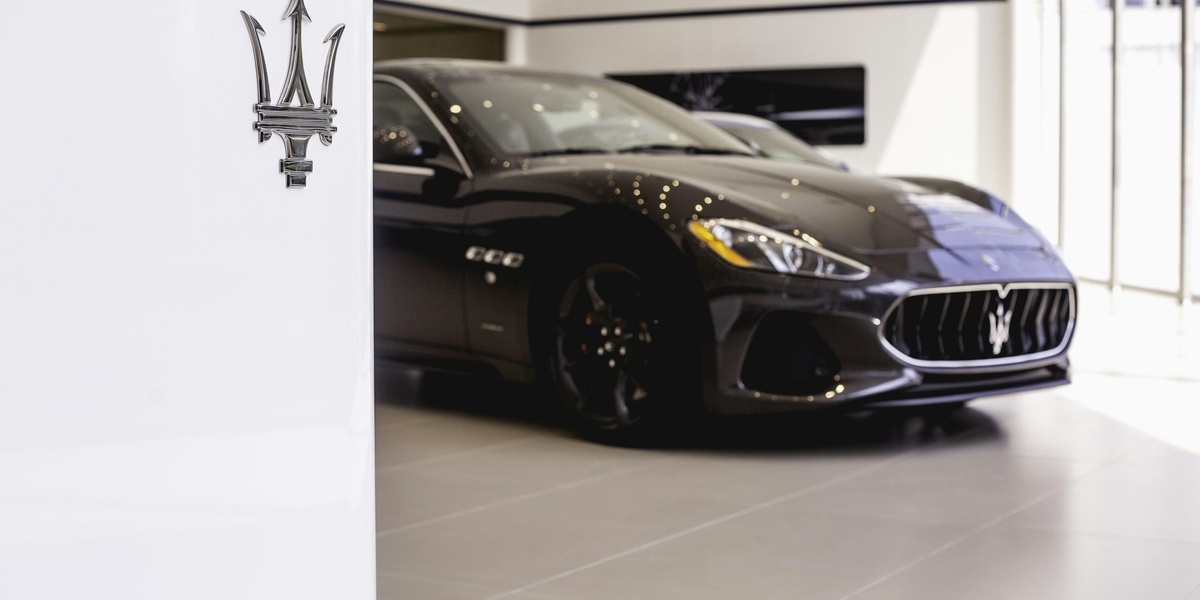
Maserati was founded in Bologna in 1914; a century later the trident badge still stands for Italian design and performance. That heritage has always come with a caveat: some Maseratis live like thoroughbreds and some require near-constant attention.
Buyers face a practical problem — desirability versus ownership reality. To pick the models below I weighted owner-reported longevity, known mechanical strengths and weak points, the simplicity of the powertrain and chassis, and how easy it is to source parts and specialist service.
This article picks the top 7 most reliable Maserati cars based on production-era simplicity, known mechanical strengths, owner-reported longevity, and service-cost reality — helping prospective buyers and fans separate sustainable models from those that demand constant attention. The list is grouped into three categories: Executive Sedans; GT Coupes & Convertibles; and SUVs & Retro Classics.
Executive Sedans
Maserati sedans can be among the most practical models because they often use relatively conventional suspension layouts and, in recent generations, widely used 3.0L V6 engines shared across the Stellantis family. That parts commonality usually translates into better availability and lower repair times than older, rarer Maseratis.
Among the most reliable maserati cars, the modern V6 sedans often stand out for balancing performance with simpler service needs. Trade-offs remain: scheduled maintenance and specialist labor still cost more than mainstream sedans, and you should pay attention to whether a model uses a timing belt or a chain.
Selector tips for executive sedans: prefer models with full service history, confirm timing-component work (or that the engine has a timing chain), and verify regular oil-change and electronic-module update records. Common, serviceable examples include the 2013–present Ghibli (3.0L twin‑turbo V6) and the 2013–2019 Quattroporte when spec’d with the V6 (for example, Ghibli S Q4 and Quattroporte S Q4).
1. Maserati Ghibli (2013–present)
The Ghibli reintroduced Maserati to the midsize-sedan market in 2013 and is one of the brand’s most practical, relatively reliable modern models. It commonly uses a 3.0L twin-turbo V6 that’s shared with other FCA/Stellantis cars, which helps parts and service availability.
Real-world: many owners use the Ghibli as a daily driver rather than a weekend toy. Compared with V8 GranTurismo-style cars it generally has lower annual service complexity and fewer electrical complaints reported on forums and owner groups.
Buyer tips: confirm whether the particular car has timing-chain or timing-belt documentation, check turbocharger service history, and verify regular oil changes and infotainment/ECU updates. Common trims include the Ghibli S Q4 (AWD) for those wanting grip and pace without excessive V8 maintenance.
2. Maserati Quattroporte (2013–2019)
The 2013–2019 Quattroporte generation is Maserati’s flagship sedan and offers relative mechanical robustness when ordered with the V6. These V6 Quattroportes share platforms and engines with other Stellantis models, which helps with parts commonality and repair costs.
Owners often report V6 variants cost less to maintain than the V8 versions while still delivering the rear-seat comfort and badge prestige buyers expect. Diesel Quattroportes were sold in some European markets and can be economical, though service networks for diesels vary by region.
Pre-buy checklist: verify transmission service intervals, inspect suspension bushings and mounts (rear subframe inspection is a good idea), and ensure infotainment and module updates are complete. Look for Quattroporte S Q4 examples if you want performance with all‑weather usability.
GT Coupes & Convertibles
Grand tourers often rank well for longevity because several generations used naturally aspirated V8s with relatively straightforward mechanical layouts. These cars are built for sustained high-speed cruising rather than rapid-fire electronic features added later to many luxury cars.
That doesn’t mean cheap ownership. Parts and labor for V8 components, exhausts and brakes are costly when needed, but many GTs avoid the most complex electronics of later models. Examples to consider are the GranTurismo (2007–2019), GranCabrio (2010–2019), and the earlier Coupé/Spyder (2001–2007).
For buyers focused on longevity, look for cars with documented valve-cover, cam-sensor and brake-pack work; many well-maintained GTs have reached high mileages because owners cared for cooling systems and oil leaks that, if ignored, accelerate wear.
3. Maserati GranTurismo (2007–2019)
The GranTurismo is known for durable V8 performance and grand‑tour reliability. Produced from 2007 to 2019, early cars used naturally aspirated 4.2L or 4.7L V8s derived from Ferrari; although higher-maintenance than a mainstream four‑cylinder, those engines are mechanically straightforward and can last well beyond 150,000 miles with routine servicing.
Many owners report examples exceeding 150,000 miles when valve-cover gaskets, fluid services and braking components were consistently maintained. The driving experience and long‑distance comfort make the GranTurismo ideal for weekend tourers rather than daily commuters.
Maintenance focus: inspect exhaust condition, camshaft sensors, valve-cover gaskets and the condition of brake packs and tires. Common variants include GranTurismo S and the racier GranTurismo MC for collectors who don’t mind the additional upkeep.
4. Maserati GranCabrio (2010–2019)
The GranCabrio is the convertible sibling of the GranTurismo and inherits most major mechanical components, which helps parts interchangeability and reliability. Produced from 2010 to 2019, it shares engine blocks and driveline parts with the coupe.
Convertible-specific care matters: soft-top hydraulics, seals and trunk drainage require inspection because leaks or failed actuators can be expensive to repair. Otherwise, the drivetrain typically performs like the GranTurismo’s when serviced regularly.
Inspection tips: verify service history for the roof hydraulics, check for water ingress around the cabin, and confirm that soft-top seals have been replaced as needed. The GranCabrio Sport is a common, well-equipped trim to consider.
5. Maserati Coupé / Spyder (2001–2007)
Early-2000s Coupé and Spyder models (the 4200/4200GT era, 2001–2007) often surprise buyers with dependable longevity because they use simpler electronics compared with modern cars. Their rev‑happy V8s and traditional mechanical layouts are easier for independent specialists to service.
Collectors and drivers who value classic Maserati V8 character find these cars rewarding—provided they accept older-car maintenance needs. Owners praise the driving feel and the relative ease of replacing coils, cam sensors and other mechanical components.
Pre-purchase: check ignition coils, camshaft sensors and the timing‑belt or chain service history, and confirm suspension and cooling-system work has been performed. Look for Cambiocorsa models if you want the paddle-shift experience, but be mindful of gearbox service records.
SUVs & Retro Classics
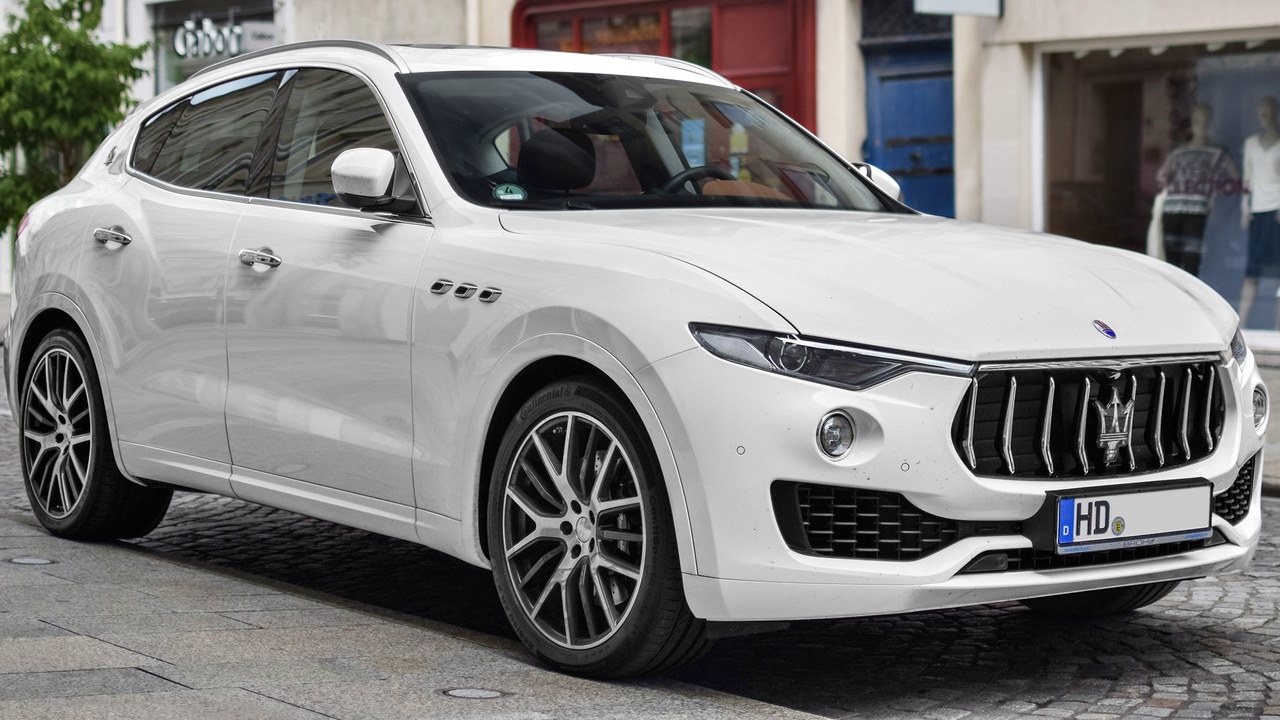
The Levante arrived in 2016 and shifted Maserati toward mainstream luxury-SUV ownership, broadening parts supply and dealer familiarity. SUVs generally improve parts and service support thanks to higher sales volumes, though early-models sometimes carry more recalls that are later fixed.
Retro classics like the 3200 GT (1998–2002) can also be reliable because their electronics are simple by modern standards and the mechanicals are straightforward. These older models reward buyers who verify documented cooling, turbo (if applicable) and timing‑component maintenance.
Across SUVs and retro classics, prioritize documented recall work, up-to-date software, and proof of routine maintenance. For Levante buyers check air-suspension condition and recall repairs; for retro GT buyers focus on turbo seals, coolant hoses and timing-belt history.
6. Maserati Levante (2016–present)
Introduced in 2016, the Levante is Maserati’s most practical modern model and one of the most broadly supported. It frequently uses the 3.0L twin‑turbo V6 shared across the Stellantis group, which improves parts availability and independent-specialist knowledge.
Owners appreciate the Levante for family-friendly space combined with a Maserati driving feel. Dealer networks and independent shops are more likely to stock common parts than for rare two-seaters, which reduces downtime and often lowers repair quotes.
Inspection checklist: verify documented recall repairs and software updates, inspect any air-suspension components for leaks or failures, and confirm regular service intervals. Common trims include the Levante S and the high-performance Levante Trofeo.
7. Maserati 3200 GT (1998–2002)
The 3200 GT (1998–2002) is a late‑1990s GT that can be mechanically dependable when well maintained. Its 3.2L twin‑turbo V8 and comparatively simple electronics mean surviving examples often remain roadworthy without the software headaches of modern cars.
Collectors who want a classic Maserati grand tourer with turbo character find the 3200 GT rewarding, provided the turbochargers, coolant system and timing-belt history have been attended to. Many owners report trouble-free cruising when those items are kept current.
Pre-purchase points: inspect turbocharger seals and boost behavior, check coolant hoses and radiators for age, and confirm timing-belt or major‑service documentation. Coupe and GTA variants offer slightly different tuning and equipment levels to suit tastes.
Summary
Key takeaways: V6-era sedans (Ghibli and V6 Quattroporte) offer the best balance of Maserati character and manageable ownership costs, while naturally aspirated GTs like the GranTurismo prove durable when serviced. The Levante expanded parts and service support after 2016, and retro models such as the 3200 GT reward careful buyers who prioritize documented maintenance.
Before you buy, insist on full service records, confirm timing-component work, and have a pre-purchase inspection by a Maserati‑experienced technician. For prospective buyers searching for the most reliable maserati cars, those steps separate a joyful ownership experience from an expensive surprise.
- Prefer V6 sedans (Ghibli / Quattroporte) for parts availability and lower running complexity
- Check timing-belt/chain history, ECU/infotainment updates and recall completion
- For GTs, verify valve-cover, exhaust and brake service; for convertibles inspect roof hydraulics
- Have a pre-purchase inspection by a Maserati‑experienced independent or dealer technician
