In 2024, SUVs accounted for more than 50% of U.S. new-vehicle sales, and premium SUVs made up a growing slice of that market.
SUVs moved from basic, utility-focused wagons in the 1990s to today’s refined family movers, and many buyers now expect daily comfort and advanced safety as standard. When comparing luxury suv vs standard suv, the differences go beyond badge and price: luxury models typically deliver measurable advantages in performance, safety, comfort, technology, and ownership perks. This article lays out eight specific ways premium SUVs can outperform mainstream alternatives, grouped into three categories — Performance & Safety; Comfort, Technology & Convenience; and Ownership Value & Aftercare — so you can decide which matters most for your needs.
Performance & Safety Advantages
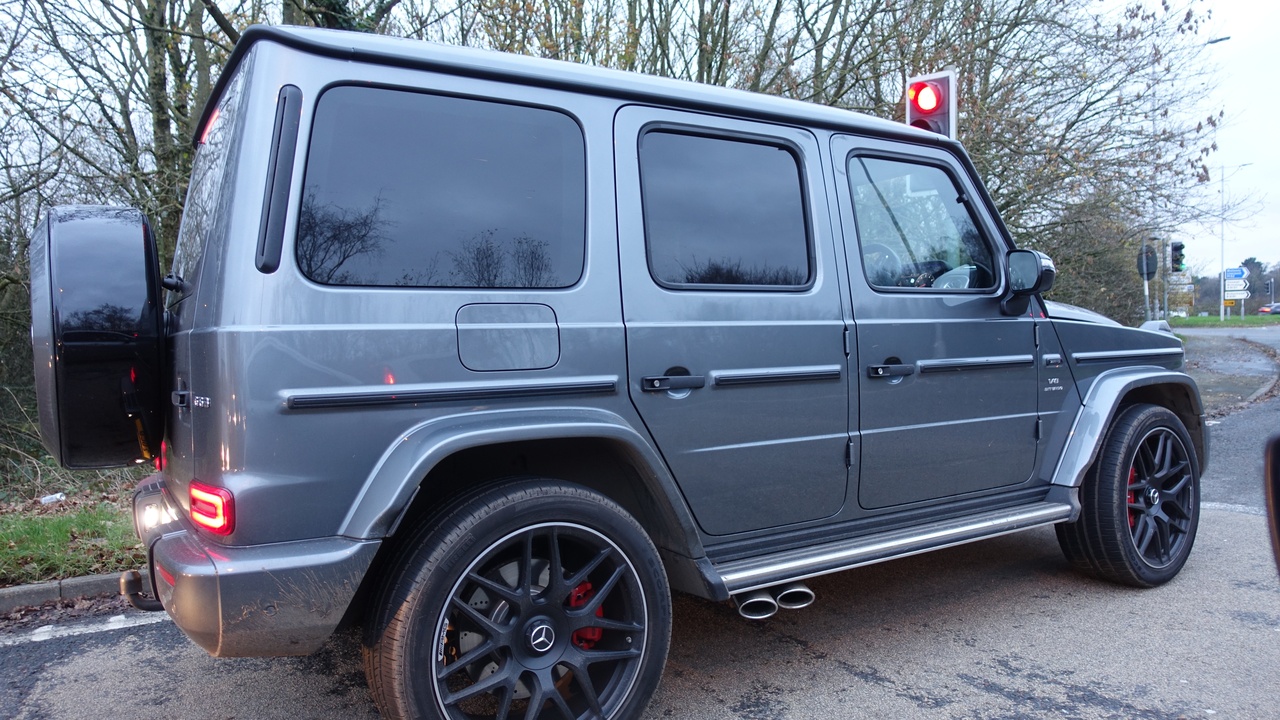
Premium manufacturers invest more in engines, chassis tuning, and active safety systems, and those investments show up in everyday driving. Expect stronger acceleration, higher towing capacity, more advanced driver-assist tech as standard, and ride systems tuned for both comfort and control.
1. Stronger Engines and Faster Acceleration
Luxury SUVs usually offer higher horsepower and torque than mainstream rivals, which means quicker 0–60 mph times and safer passing on highways. For example, a base BMW X5 commonly produces around 330–360 hp depending on the powertrain, while a compact mainstream SUV such as a Toyota RAV4 is typically around 200–210 hp.
The gulf widens when towing is required: many midsize premium SUVs are rated to tow 5,000+ lbs, whereas smaller mainstream crossovers often top out between 1,500 and 3,500 lbs. Practically, that extra grunt makes merging easier, keeps acceleration strong when the cabin is full, and reduces strain when towing a trailer or camper.
Examples include the BMW X5 and Audi Q7 on the luxury side versus mainstream midsize models like the Ford Explorer or Toyota Highlander for a sense of where performance figures diverge.
2. Advanced Safety Systems and Higher Ratings
Premium SUVs more often include advanced driver-assist technologies as standard equipment: adaptive cruise control with traffic-jam assist, active lane-keeping, intersection automatic emergency braking, surround-view cameras, and even night-vision on some models.
Those systems reduce crash risk in common scenarios like busy intersections, lane changes on highways, and low-light driving. Brands focused on safety—Volvo’s XC90 is a frequent example—have long prioritized these features and consistently score well in IIHS and NHTSA testing (refer to recent IIHS Top Safety Pick+ listings for model-specific results).
Because top-tier active safety is more commonly standard on premium models, owners get a higher baseline of crash-avoidance tech without upgrading optional packages.
3. Superior Ride Quality and Handling
Luxury makers spend on noise insulation, adaptive suspensions, and more precise steering calibration. Technologies like multi-chamber air springs, adaptive dampers, and active anti-roll systems let a vehicle switch between cushioned cruising and tighter, more controlled cornering.
For instance, the Mercedes GLE offers an air suspension that adjusts ride height and damping, while the Porsche Cayenne provides adaptive dynamics for performance-oriented handling. Air suspension systems can change ride height by several centimeters, helping with clearance or aerodynamic efficiency.
The result is a noticeably quieter, more comfortable cabin on long drives, reduced driver fatigue, and confidence when the road gets twisty or rough.
Comfort, Technology & Convenience
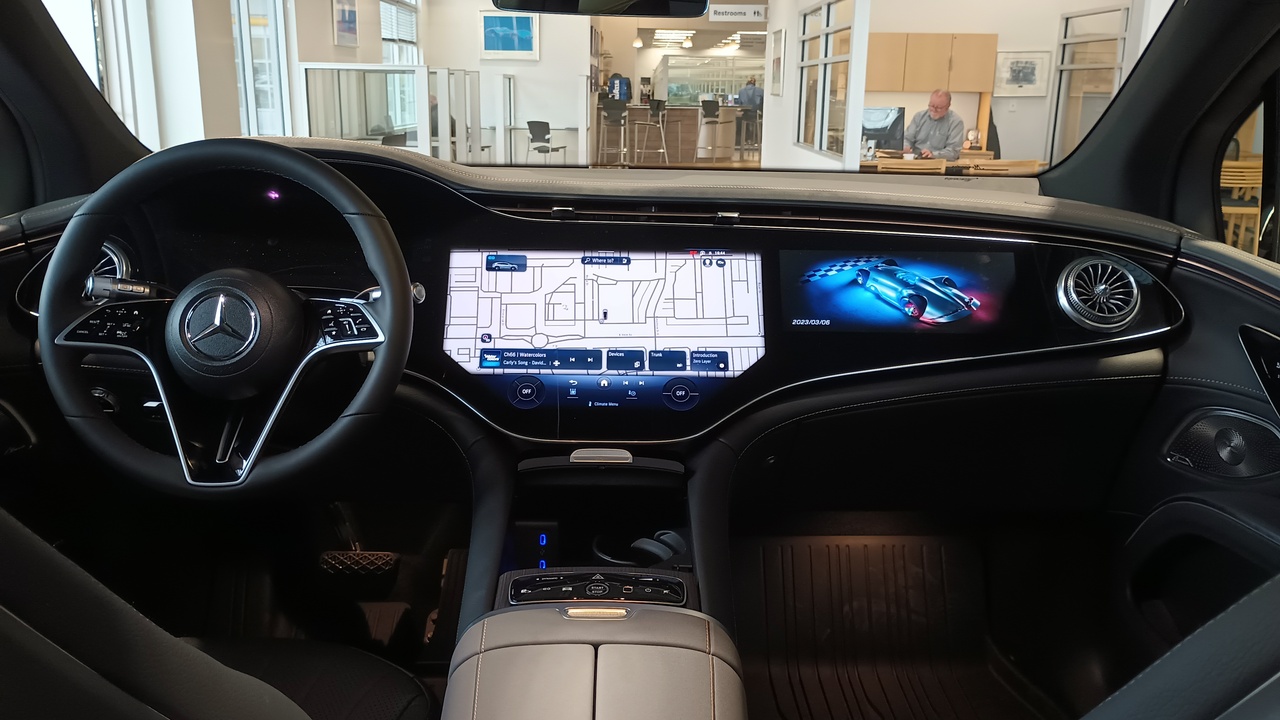
Luxury SUVs prioritize occupant comfort and sophisticated in-cabin tech. That shows up as higher-grade materials, bigger and faster infotainment systems, and convenience features designed to remove small daily hassles — which matters on commutes, school runs, and long road trips.
4. Premium Materials and Enhanced Cabin Comfort
Inside a premium SUV you’ll find softer leathers, real wood or metal trim, and thicker acoustic insulation. Features such as ventilated, heated, and massaging seats, plus multi-zone climate control (some models offer four or five zones), are common on luxury models.
Lexus RX models emphasize quiet cabins and comfort options like massaging front seats, while Range Rover interiors use high-quality materials and sound deadening that make conversation easier at highway speeds. Those details add up to less fatigue and a more relaxed ride for passengers.
5. Advanced Infotainment, Connectivity, and Software Updates
Premium SUVs typically ship with larger, faster screens — often 12–14-inch displays or dual-screen layouts — premium audio systems (Bowers & Wilkins, Bang & Olufsen), and native navigation with live traffic. Over-the-air updates are increasingly standard, letting maps and vehicle software improve without a dealer visit.
Mercedes-Benz’s MBUX and Audi’s Virtual Cockpit show how luxury brands blend usability with high-resolution graphics. Tesla’s Model X demonstrates a different approach with its large center display and frequent OTA enhancements. These systems reduce trips to service centers and keep features current over time.
6. Convenience Features That Save Time and Stress
Luxury SUVs bundle time-saving features: hands-free power liftgates, automatic parking systems, remote start and cabin pre-conditioning, powered third-row folding, and even concierge or dealer pickup services on some brands.
That means easier grocery loading with a hands-free liftgate (common on Lexus and BMW models), simpler tight-spot parking via automated parking assist, and a pre-cooled or pre-heated cabin on extreme-weather days through remote climate controls. For families, those small conveniences add up to less friction in daily routines.
Ownership Value & Aftercare
The sticker price for a luxury SUV is higher, but many buyers find ownership perks, included services, and brand support offset some costs. Certified pre-owned programs, extended warranties, concierge services, and included maintenance can change the long-term ownership calculation.
7. Stronger Brand Perception, Certified Programs, and Perks
Luxury brands commonly offer certified pre-owned (CPO) programs, owner concierge, and complimentary maintenance for a period. Those benefits boost resale desirability and reduce early out-of-pocket maintenance expenses for owners.
Examples include BMW, Mercedes, and Lexus CPO programs that bundle extended warranties and multipoint inspections, and many premium marques advertise complimentary maintenance for the first few years. Typical warranty lengths for premium new vehicles often hover around four years/50,000 miles, though buyers should confirm current terms for each brand.
For shoppers who value time and white-glove service, those perks can be a decisive part of the value proposition.
8. Total Cost of Ownership: Higher Upfront Cost, Different Long-Term Value
It’s obvious that luxury SUVs cost more up front, but the long-term math is more nuanced. Some premium models depreciate faster in absolute dollars; others retain value well because of brand cachet and strong CPO demand. Included services, OTA updates, captive-lender incentives, and CPO warranty benefits can offset ongoing costs.
As an illustration, mainstream compact SUVs often start in the high $20,000s to mid $30,000s (a Toyota RAV4 is typically in that range), while comparable luxury midsize SUVs commonly begin around $60,000 and up (examples include the BMW X5 or Mercedes GLE). To compare fairly, calculate total cost of ownership: insurance, fuel, maintenance, depreciation, and any included service credits.
Run the numbers for the two or three models you’re considering and factor in how much you value convenience and time savings; that will clarify whether the premium makes financial or practical sense for you.
Summary
- Luxury SUVs deliver measurable advantages in performance, safety systems, and ride comfort that change day-to-day driving and long trips.
- Premium cabins, larger infotainment systems, and convenience features reduce stress and can keep an SUV feeling modern through OTA updates.
- Higher upfront cost can be balanced by CPO programs, included maintenance, and stronger resale for some brands — calculate total cost of ownership for an apples-to-apples comparison.
- Schedule back-to-back test drives of a premium and a mainstream model, list your top priorities (safety, towing, comfort, tech), and compare MSRPs plus owner benefits to decide if the premium is worth it for you.