Every January, a new batch of Japanese-market cars crosses the 25-year threshold and becomes legal to import to the United States. Most years, the list is decent but unremarkable. 2026 is not one of those years.
The 2001 model year was a golden era for Japanese performance cars. Mitsubishi was still building Evos. Honda was putting 8,000-rpm engines in everything. Nissan hadn’t yet killed the Silvia. And Subaru’s rally program was feeding directly into showroom cars. All of those machines are now crossing the NHTSA’s 25-year exemption line, which means they’re finally legal to register and drive on American roads without any federal safety or emissions modifications.
If you’ve been watching auction prices from Japan and waiting for your moment, this is the guide you need. We’ll cover the six most exciting cars hitting eligibility in 2026, what they’ll actually cost you to get stateside, and the pitfalls that catch first-time importers off guard.
How the 25-Year Rule Actually Works
Quick primer for anyone who hasn’t memorized Title 49 of the U.S. Code: the Imported Vehicle Safety Compliance Act of 1988 says that any vehicle not originally sold in the United States must be at least 25 years old before it can be legally imported. Once a car hits that birthday, it’s exempt from Federal Motor Vehicle Safety Standards (FMVSS) and EPA emissions requirements. No crash testing. No catalytic converter retrofitting. Just pay your duties, clear customs, and start driving.
Here’s the detail that trips people up: eligibility is based on the exact month of manufacture, not the model year. A car built in March 2001 becomes legal in March 2026. One built in November 2001 makes you wait until November. Check the build plate before you bid at auction — the difference between an early and late production car could mean months of waiting with a vehicle stuck in a bonded warehouse.
The Six Cars Worth Importing in 2026
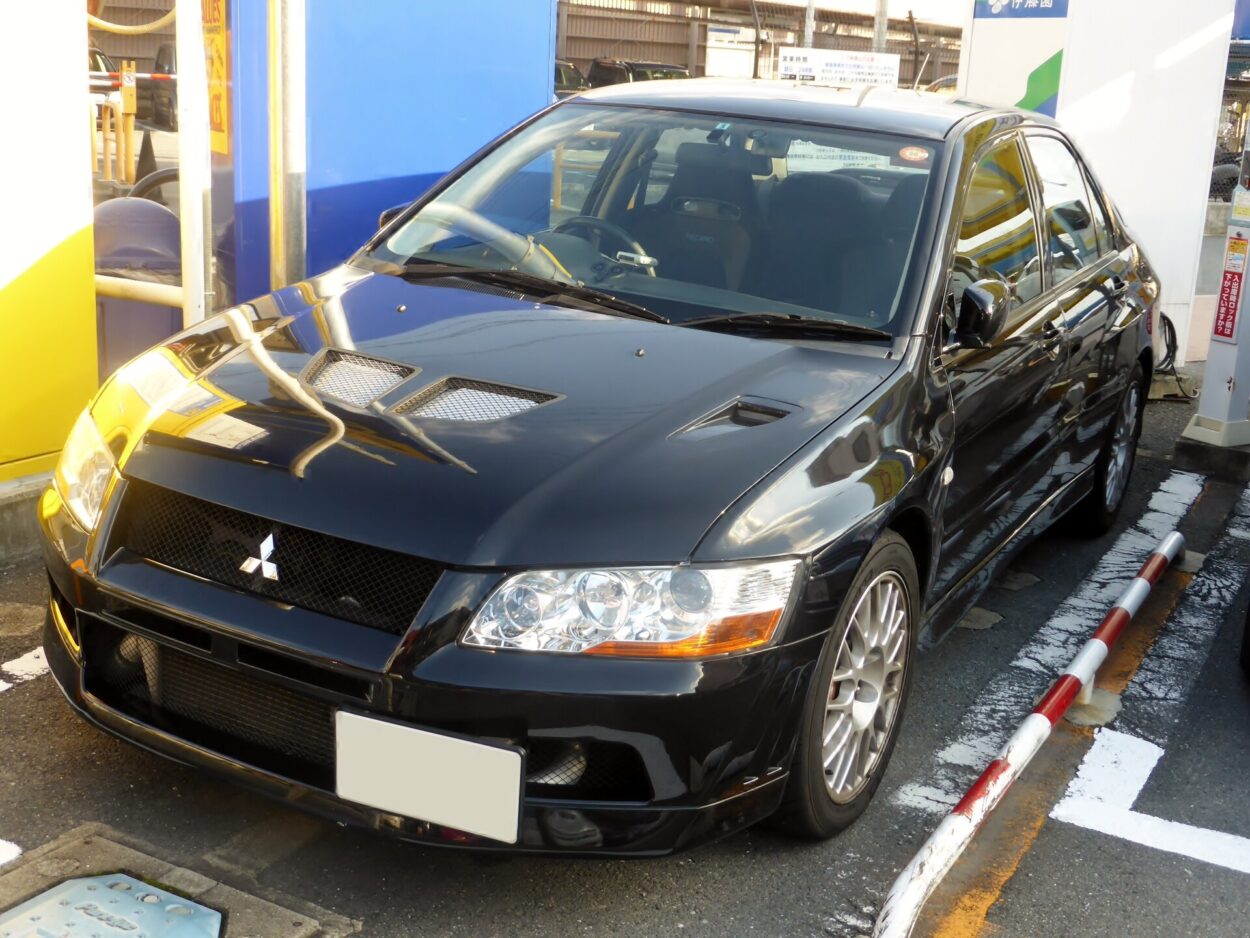
1. Mitsubishi Lancer Evolution VII
The Evo VII is where Mitsubishi’s rally-bred sedan got genuinely serious about being a road car. Previous Evos were brilliant but raw — the kind of thing you tolerated because the performance was so absurd. The VII smoothed out the rough edges without softening the character.
Under the hood sits the 2.0-liter 4G63T turbocharged inline-four, producing 280 PS (276 hp) and 282 lb-ft of torque through a five-speed manual and Mitsubishi’s Super All-Wheel Control system. The official power figure was capped by Japan’s gentleman’s agreement — dyno tests consistently showed these making more than the factory claimed. The Tommi Mäkinen Edition, named after Mitsubishi’s four-time WRC champion, added Bilstein dampers, a titanium turbocharger, and close-ratio gearing.
Auction prices in Japan currently sit between ¥1.5-4 million ($10,000-$27,000) depending on condition and variant. The TME commands a significant premium. If you’re coming from the JDM enthusiast world, you already know this car’s reputation — the VII is the sweet spot of the Evo lineage before the cars got heavier and more electronic.
2. Honda Integra Type R (DC5)
Americans got the Acura RSX Type-S. Japan got this. They are not the same car.
The JDM Integra Type R DC5 runs Honda’s K20A engine — the real one, with the red valve cover, individual throttle bodies mapped differently than the export K20A2, and 220 PS (217 hp) at a screaming 8,000 rpm. Paired with a six-speed manual that might be the best-shifting gearbox Honda ever built, it’s a masterclass in high-revving naturally aspirated performance. The close-ratio box, combined with a factory limited-slip differential and 30 kg less weight than the RSX, makes it feel like an entirely different machine.
The DC5 Type R doesn’t have the cult status of the DC2 that came before it, which actually works in your favor — prices are more reasonable. Expect to pay ¥2-4 million ($13,000-$27,000) at Japanese auction for a clean example. Just be warned: these cars lived hard lives. Many were tracked, many were modified, and finding a genuinely stock one takes patience.
3. Nissan Silvia S15 Spec-R
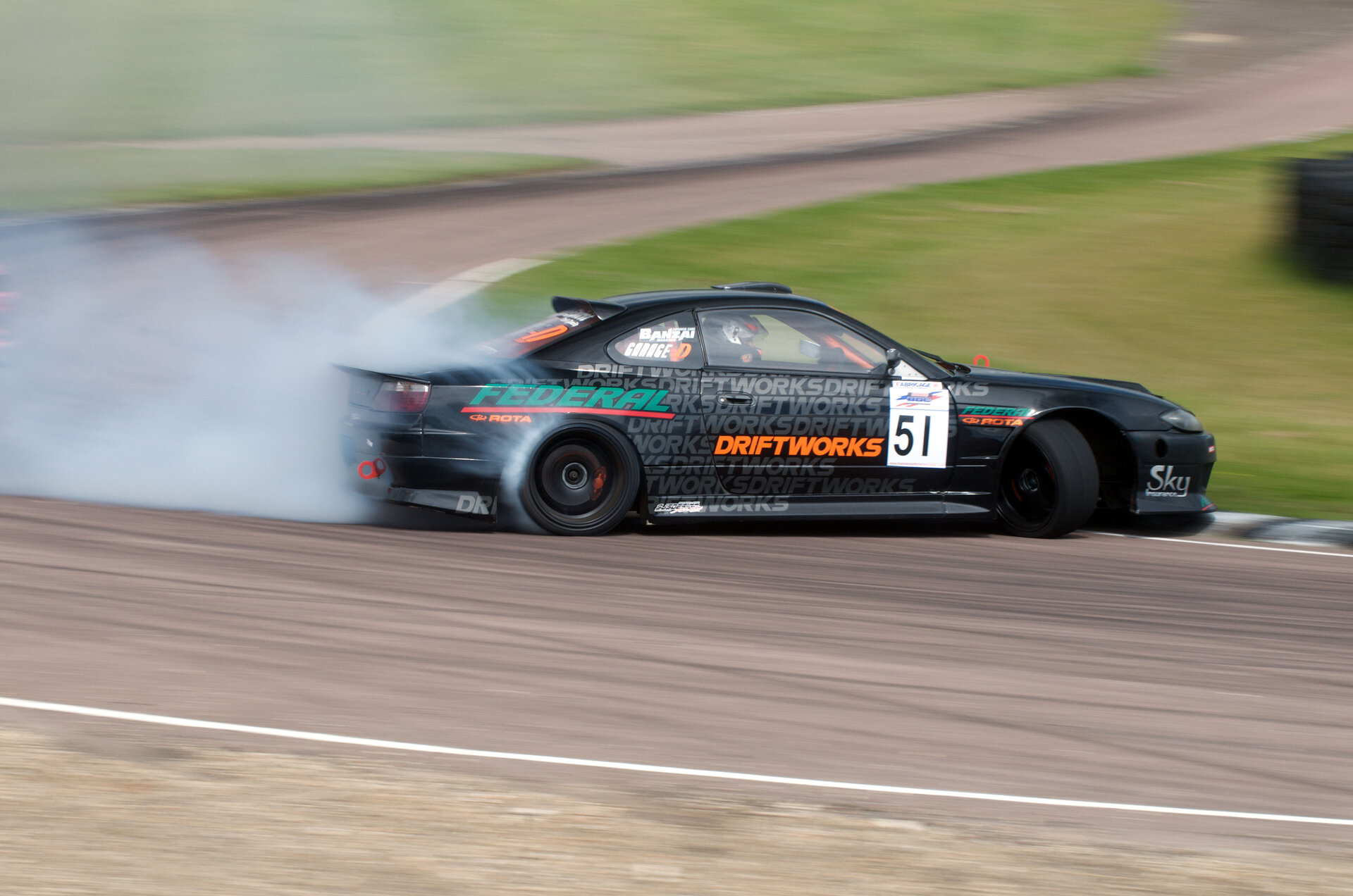
The last real Silvia. Nissan killed the nameplate after the S15, and nothing they’ve built since has captured the same magic. The Spec-R is the performance model, running a turbocharged SR20DET making 250 PS (247 hp) through either a six-speed Aisin manual or a four-speed automatic that nobody actually wants.
The S15 is more refined than the S14 it replaced — better interior, stiffer chassis, more sophisticated suspension geometry — but it’s still a lightweight, rear-wheel-drive, turbocharged coupe with hydraulic steering. That combination doesn’t exist in new cars anymore. The drift community has been frothing over these for years, and early S15s (1999-2000 production) became legal in 2024-2025. Late 2001 production models hit eligibility throughout 2026.
Here’s the problem: everyone wants one. S15 prices have been climbing for years in anticipation of US legality. Clean Spec-R models are fetching ¥3-6 million ($20,000-$40,000) at auction. Drift-damaged shells are cheaper, but you’ll spend the savings on repair. The import brokers have been warning about this price inflation for a while.
4. Subaru Impreza WRX STI (GDB)
The second-generation STI — the “bug-eye” and “blob-eye” cars that dominated rally stages and video games simultaneously. The JDM-spec GDB runs the EJ207 2.0-liter boxer turbo producing 280 PS (276 hp) and 311 lb-ft of torque, mated to a six-speed manual and Subaru’s symmetrical all-wheel-drive system with driver-controlled center differential.
Why import a JDM STI when the US got its own version starting in 2004? Because the Japanese car is lighter, makes more torque lower in the rev range thanks to its twin-scroll turbo setup, and came in variants America never saw — the Spec C stripped-out track weapon, the S202 limited to 400 units, the RA for homologation purposes. These special editions are where the real collector value sits.
Standard GDB STIs run ¥2-4 million ($13,000-$27,000) at auction. The Spec C and limited editions? Double that, minimum, and rising. The Mitsubishi versus Subaru rivalry of this era produced some of the greatest performance cars Japan ever built, and the GDB is Subaru’s best answer to the Evo.
5. Toyota Verossa
This is the dark horse pick, and probably the one most readers haven’t heard of. The Verossa was Toyota’s attempt at a sporty luxury sedan — think of it as a JZX110 Mark II wearing a different suit. The range-topper packed the 1JZ-GTE 2.5-liter twin-cam turbo inline-six, producing 280 PS and 278 lb-ft of torque.
The 1JZ-GTE is a tuner’s engine with a bulletproof reputation. It shares DNA with the larger 2JZ that made the Supra famous — if you’ve read our Supra vs GT-R comparison, you know what that means for aftermarket support. But the Verossa’s real appeal is the sleeper factor: it looks like your uncle’s commuter sedan, it has a comfortable interior with actual rear legroom, and it’ll embarrass sports cars at stoplights.
Best of all, nobody’s racing to buy them. Auction prices sit around ¥500,000-1.5 million ($3,300-$10,000). For the price of a down payment on an S15, you can own a turbocharged, rear-wheel-drive Toyota with one of the most respected engines in JDM history.
6. Honda Civic Type R (EP3)
The EP3 Civic Type R is the oddball of the Honda Type R family. It’s a tall, boxy hatchback that looks like it should be hauling groceries, but Honda shoved the same K20A engine from the Integra Type R into it — 215 PS at 8,000 rpm, six-speed manual, limited-slip diff, and Recaro seats. The UK and Australia got a detuned version; Japan got the full-fat one.
The driving experience is unlike any modern hot hatch. There’s no turbo lag because there’s no turbo. Just a naturally aspirated four-cylinder that rewards you for keeping it above 6,000 rpm with one of the best engine notes in Honda’s history. It’s practical, it’s affordable (¥1-2.5 million / $6,600-$16,500 at auction), and it’s the cheapest way to get a genuine K20A Type R powertrain.
What It Actually Costs to Import
The vehicle price is just the beginning. Here’s a realistic breakdown of every cost you’ll hit between winning an auction in Japan and parking the car in your driveway:
| Cost Item | Typical Range | Notes |
|---|---|---|
| Vehicle purchase (auction) | $3,300–$40,000+ | Varies wildly by model and condition |
| Auction fees + Japan broker | $500–$1,500 | Most brokers charge flat fee + auction commission |
| Japan inland transport to port | $200–$500 | Depends on distance from auction house to port |
| Ocean shipping (RoRo) | $1,000–$2,000 | Roll-on/roll-off; container shipping costs more |
| US customs duty | 2.5% of declared value | 25-year exempt vehicles typically qualify for base rate only |
| Customs brokerage | $400–$800 | Paperwork handling at US port |
| EPA/DOT filing fees | $100–$300 | Exemption forms still need to be filed |
| US port fees + delivery | $500–$1,200 | Port handling, unloading, transport to your location |
| Total import overhead | $3,000–$7,000 | On top of the vehicle purchase price |
One critical advantage of the 25-year rule: vehicles classified under tariff code 9903.94.04 are typically exempt from the Section 232 tariffs that currently add 25% to newer vehicle imports. You’ll usually pay just the standard 2.5% duty on your declared value. That’s a massive saving on a $30,000 car — $750 versus $8,250.
What to Watch Out For
Importing a JDM car isn’t difficult, but it punishes laziness. Here’s what catches people:
Auction grade inflation. Japanese auctions grade cars from 1 to 5 (S being mint). A grade 4 car sounds great until you realize the grader didn’t check under the carpets for rust or verify the odometer hasn’t been rolled back. Always pay for a pre-purchase inspection — $300-$600 well spent.
Rust. Japan’s coastal climate and heavy road salting in northern prefectures means many 25-year-old cars have structural rust. Frame rails, strut towers, and rear wheel wells are the usual suspects. A car from Hokkaido will be in worse shape than one from Okinawa, and the auction photos won’t always show it.
Odometer fraud. It happens. Japanese domestic vehicles weren’t required to have tamper-proof odometers until relatively recently. Check the service history stamps in the maintenance book (整備手帳) — the mileage should progress logically across stamps. If a car has a suspiciously low odometer reading and no maintenance book, walk away.
State registration requirements. Federal import is only half the battle. Your state may have its own emissions or safety inspection requirements. California is the strictest — vehicles registered there need to pass BAR referee inspection even with the federal 25-year exemption. Check your state’s rules before you commit.
Parts availability. You’re buying a car that was never sold here. Brake pads and oil filters are universal enough, but body panels, interior trim, and electrical components often need to come from Japan. Budget for shipping times measured in weeks, not days. Building a relationship with a JDM parts supplier before you buy the car will save you headaches later.
Which One Should You Import First?
If money is no object: the Evo VII Tommi Mäkinen Edition. It’s the most complete performance package on this list, it’s an appreciating asset, and Mitsubishi is never making another one.
If you want the best value: the Toyota Verossa. A turbocharged 1JZ Toyota for under $15,000 all-in is absurd. The tuning community hasn’t caught on yet, and prices will climb once the first wave of imports hits Instagram.
If you want the purest driving experience: the Integra Type R DC5. Nothing on this list — or in most modern showrooms — matches the feel of a K20A at 8,000 rpm through a perfect manual gearbox.
If you’re going to modify it: the Silvia S15 Spec-R. The SR20DET platform has 25 years of aftermarket development behind it. But be honest about whether you’re buying a car or buying a project — the S15 market is hot enough that you shouldn’t be cutting up a clean one.
Whichever you choose, the window is open. 2001 was a remarkable year for Japanese cars, and we’re unlikely to see another import class this stacked for a while. The 2002 models? Good, but the real golden era of JDM performance was already fading by then. This is the year to move.
Featured image: Tokumeigakarinoaoshima via Wikimedia Commons (CC0 1.0). Inline image: “Nissan Silvia S15 Driftworks” by Motoring Weapon R, CC BY-SA 4.0.