Which motorcycles shaped Australia’s roads, racetracks, and motorcycle culture over the last century?
From the post‑war boom of the 1950s to the café‑racer and touring scenes of the 1970s, a handful of machines defined how Australians rode, raced, and fixed bikes in backyard sheds. This roundup profiles twelve standout machines — classic australian motorcycles and their close cousins — celebrated for design, performance, racing pedigree and social impact.
These twelve picks are grouped into three themes: British twins that dominated the postwar years, the Japanese multi‑cylinder wave that changed expectations, and local or racing icons that earned an Australian reputation. Along the way you’ll find debut years, key specs, why each model mattered here, and where to see restored examples (try the National Motor Museum, Birdwood, or local vintage rallies).
British Twins That Ruled Australian Roads

After World War II, affordable British parallel twins were everywhere in Australian towns and on long country runs. They were simple to service, dealers were widely distributed through major cities, and their torque and range suited long distances between towns in the Outback. From the 1950s through the 1970s, owners formed clubs, swapped parts at rallies, and converted many machines into café racers or tourers.
1. Triumph Bonneville T120 (1959–1970s) — The quintessential café classic
The Triumph Bonneville T120 debuted in 1959 and became shorthand for accessible sportiness. The standard T120 used a 650cc parallel twin that balanced usable touring power with nimble handling for town rides.
In Australia the Bonneville was popular for café‑style conversions and for touring across places like the Nullarbor. Strong dealer networks in Sydney and Melbourne helped spare‑parts availability and a healthy owners’ scene (for example, local Sydney Bonneville groups still run regular rides).
Restored T120s show at classic shows and attract decent sums at auction — well‑kept examples often trade in the low tens of thousands of Australian dollars depending on originality and restoration quality.
2. Norton Commando (1967–1977) — Comfort and performance for Aussie roads
Norton introduced the Commando in 1967 with the isolastic frame system designed to reduce vibration from its 750cc (and later 850cc) V‑twin engines. The result was a more comfortable long‑distance machine without sacrificing spirited performance.
Australian riders appreciated the Commando for club racing and endurance outings; they turned up on historic grids in NSW and Victoria and at island and circuit historic meetings. Several specialized NSW and VIC workshops still tune Commandos for concours and vintage racing.
3. BSA Gold Star (pre-1963) — Lightweight racer loved by enthusiasts
The BSA Gold Star earned a reputation as a high‑performance single, especially in 500cc form. Built for speed and reliability, it was a favourite among privateer racers and hillclimb competitors in the 1950s and early 1960s.
In Australia Gold Stars turned up at club sprints and hillclimbs and remain prized in private collections for their racing pedigree. Surviving examples are often restored to period race spec and appear at vintage meetings and private displays.
4. Matchless G80 / AJS 7R family — Durable workhorses and racers
Matchless G80 singles and sibling AJS machines (including the 7R race line) served dual roles as everyday transport and competitive mounts. Typical displacements were around 500cc, and the engines were straightforward to maintain.
In towns and on farms they were reliable runabouts; in clubs they were modified for short‑track or road racing. Today restorers who specialise in Matchless/AJS can often be found at vintage rallies and in workshops that supply parts for Australian owners.
Japanese Four-Cylinder Revolution

When Honda launched the CB750 in 1969 it signalled a new era: consistent multi‑cylinder refinement, better brakes, and competitive pricing. Through the early 1970s, Japanese fours and twins reshaped expectations for reliability and performance in Australia and spawned a thriving aftermarket of parts and customisers.
5. Honda CB750 (1969 onward) — The super-bike that changed expectations
The CB750 arrived in 1969 with a transverse SOHC four‑cylinder engine, disc front brake, and a level of refinement few rivals matched. Its ~750cc powerplant offered smoothness and enough torque for touring or daily use.
Australian CB750 owner clubs remain active, and restored CBs are common at classic shows. The model’s long‑distance reliability made it a favourite for coast‑to‑coast touring and for grassroots racing in club categories.
6. Kawasaki Z1 (1972) — Muscle and style for open roads
Kawasaki’s Z1 premiered in 1972 as a near‑900cc flagship with strong midrange torque. It quickly gained a reputation for thrilling straight‑line performance and a muscular factory look that encouraged customization.
In Australia Z1s turned up at drag strips, custom shows and in chopper workshops. Several local restorers specialise in returning Z1s to museum spec or building period‑styled customs for show circuits.
7. Yamaha XS650 (1968 onward) — The adaptable twin
The XS650, launched around 1968, used a simple, tunable 650cc parallel twin that proved ideal as a donor for café and scrambler projects. Its straightforward engine and aftermarket support made it a favourite for amateur builders.
Across Australia custom shops frequently turn XS650s into retro café racers or off‑road inspired scramblers, and these builds are common at local classic bike shows and custom weekends.
8. Suzuki GT750 (1971) — The two-stroke three-cylinder novelty
Introduced in 1971, the GT750 stood out with its water‑cooled two‑stroke, three‑cylinder layout and touring intent. The design had character but required more specialist maintenance than four‑stroke rivals.
Australian collectors and a handful of mechanics still restore GT750s for vintage meets. Expect to find them in private collections or displayed at classic bike gatherings where their unusual engineering draws attention.
Local Legends and Racing Icons

Some machines built their reputations on Australian soil by way of local assembly, enduring rural use, or racing success at venues such as Phillip Island. These bikes shaped local traditions — from desert raids to island sprints — and many survive in museums, private collections and on historic grids.
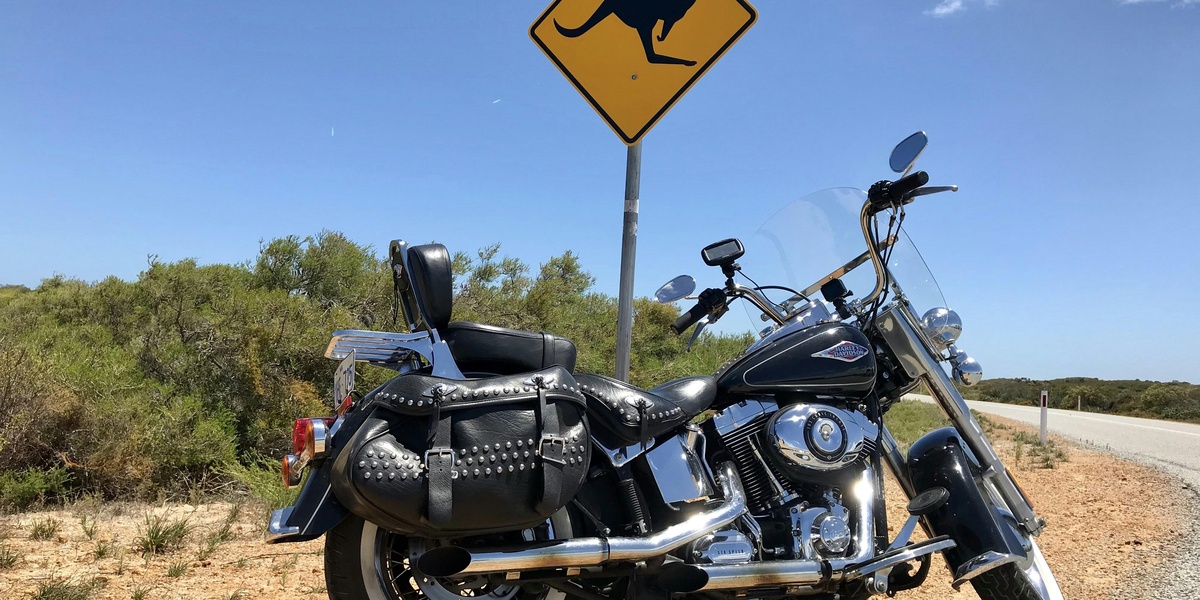
9. Harley‑Davidson Panhead / Early Big Twins — American presence Down Under
Panhead big twins (roughly 1948–1965) found enthusiastic owners across Australia after WWII. The torque and presence of American V‑twin machinery fitted long coastal cruises and cross‑country touring.
Local custom builders embraced Panheads for choppers and long‑distance cruisers, and club rides often feature carefully restored examples. Several Australian builders specialise in period‑correct restorations and long‑haul rebuilds.
10. Royal Enfield Bullet — Simple, rugged and ubiquitous in rural Australia
The Bullet’s long production life and uncomplicated mechanics made it a workhorse on farms and in remote towns from the 1950s onward. Its single‑cylinder layout was easy to fix with basic tools and limited parts supplies.
Bullets show up in regional museums and in private collections where they’re prized for their reliability on mail runs, farm duties and bush tracks. Owners in remote areas still value the model for its straightforward maintenance.
11. Ducati 750SS / Early Ducati sports models — European sportiness on Australian tracks
Ducati’s 1970s sport models, notably the 750SS around 1973, offered handling and race‑bred character that appealed to Australian enthusiasts seeking something lighter and sharper than heavyweight twins.
Classic Ducatis have appeared on club racing grids and at road‑race historic meetings. Restored 750SS examples are increasingly collectible and turn up in private garages and at national classic shows.
12. Triumph TR6 Trophy / Desert and off-road icons — Australian trials and cross‑country use
The Triumph TR6 Trophy (notably from around 1956 into the late 1960s) and related off‑road Triumphs proved capable in Australian desert and endurance contexts. Riders used them for trials, cross‑country runs and light adventure work.
Examples of TR6s have been prepared for modern classic rallies and desert runs, and several restoration shops outfit these machines for period‑correct off‑road competition and endurance events in Australia.
Summary
- The postwar rise of British twins (1950s–1970s) set riding habits in motion — simple engines, broad dealer networks and a thriving restoration culture.
- Japanese fours from the late 1960s (CB750, Z1) redefined expectations for reliability and power and created a strong aftermarket and custom scene in Australia.
- Local and racing icons (Panheads, Bullets, TR6s, 750SS) shaped regional uses from long tours to desert endurance and remain visible at Phillip Island, Birdwood and vintage rallies.
- If you’re interested in collecting or seeing these machines, contact local owner clubs, visit the National Motor Museum, Birdwood, or attend classic motorcycle rallies and historic race meetings.
- Want to learn more or see examples in person? Start by joining a local owners’ club or booking a visit to a classic show — hands‑on experience teaches what photos can’t.