At the turn of the millennium, carmakers from Tokyo to Maranello raced to redefine what a modern sports car could be — blending high-revving engines, new materials, and sharper styling. The 2000s (2000–2009) proved a pivotal decade: manufacturers mixed everyday usability with serious performance, producing cars that still reward drivers on twisty roads and track days alike.
This article walks through the 10 best sports cars of the 2000s — models that set performance benchmarks, influenced design trends, and remain sought-after today. You’ll see three groups: Japanese icons, European benchmarks, and American/exotic powerhouses. Expect concrete specs (0–60 times, horsepower, production years) and quick notes on why collectors and weekend drivers still care — for example, the Honda S2000 carried a 9,000 rpm redline into the mid-2000s and the Nissan 350Z debuted as a 2003 model with strong early sales.
Japanese Icons: Precision and High-Revving Fun
Japanese manufacturers in the 2000s focused on driver engagement: lightweight packaging, high-revving naturally aspirated engines, and layouts that put the driver first. These cars tended to be more affordable to buy and run, yet still thrilling on a back road or track day.
Trends included rotary power (Mazda), twin-rotor and high-rev inline engines (Honda), and robust V6s (Nissan). Strong aftermarket support turned many of these models into highly moddable platforms, which helps explain their collectibility and active club scenes today. Expect numbers like 1999–2009 production ranges and 0–60s in the mid-5s for many models.
1. Nissan 350Z (2003–2008)
The 350Z reintroduced the Z-car to a new generation, reviving a nameplate with accessible performance and clear sporting intent. Built on the Z33 chassis (debuting for the 2003 model year after a 2002 reveal), it paired a VQ35DE 3.5L V6 with roughly 287–300 hp depending on year and trim.
That power delivered common 0–60 mph runs of about 5.3–6.0 seconds, which combined with good reliability made the 350Z a sensible daily and a capable weekend track car. Nissan offered Track and Performance editions and the aftermarket answered with intakes, exhausts, suspension upgrades, and forced-induction kits that pushed power well beyond stock figures.
Sales momentum in North America helped this model reach a wide owner base, and it remains a popular choice for club racing and drift events thanks to its balanced chassis and straightforward tuning path.
2. Mazda RX-8 (2003–2012)
The RX-8’s calling card was its RENESIS rotary engine and quirky four-door coupe layout with rear-hinged freestyle doors. Launched in 2003, the 1.3L twin-rotor RENESIS produced between about 197 and 238 hp across various trims and markets.
Driving an RX-8 feels different: the power delivery is very smooth at high revs, and the engine rewards revving rather than lugging. That character gave the RX-8 excellent on-track manners and a lively personality on the road, though fuel economy and maintenance (apex-seal wear being the most cited issue) are tradeoffs buyers should consider.
For owners who embraced the rotary’s quirks and adhered to recommended service intervals, the RX-8 offered a unique mix of practicality and eccentric performance that few other cars could match in the 2000s.
3. Honda S2000 (1999–2009)
The S2000 earned a reputation for an exhilarating high-revving engine and razor-sharp handling. Under the hood were the F20C and later F22C1 engines, with the early F20C outputting around 240 hp and revving to 9,000 rpm in some markets.
That punch paired with a superbly balanced chassis produced 0–60 mph times in the mid-5s, and daily usability as a convertible only added to its appeal. Enthusiasts still debate AP1 versus AP2 nuances (AP1 = early, AP2 = later updates), and limited editions such as the CR in Japan are especially sought after.
Strong owner communities, reliable performance, and rising collectibility make the S2000 one of the era’s most pure driver’s cars.
European Benchmarks: Precision, Balance, and Engineering

Among the best sports cars of the 2000s, European makers pushed chassis engineering and engine specific output to new levels. The decade saw technologies trickle down from racing, mid-cycle facelifts that meaningfully improved performance (for example, the 911 997 arriving in 2004), and a focus on precision handling.
Porsche, BMW, Ferrari, and Audi each produced models that became benchmarks — expect Carrera six-cylinder outputs in the mid-300s hp, M3 inline-six power around 333 hp, and Ferrari V8s approaching 480+ hp. These cars often carried higher price tags but offered driving dynamics that still set standards for their classes.
4. Porsche 911 (997) (2004–2009)
The 997 returned the 911 to cleaner, more purely Porsche styling and quickly became a performance staple after its 2004 debut. Carrera variants ranged roughly 325–355 hp, while Turbo and special models pushed into much higher output bands.
Everyday usability remained a hallmark — comfortable interiors, predictable handling, and the ability to be driven hard on track. The 997.1 and later 997.2 update brought changes to engines and the transmission lineup, including the introduction of PDK in later iterations; manual purists still prize the GT3 and other track-focused variants.
Typical 0–60 times put Carrera models near 4.5 seconds, with Turbos dipping well under 4 seconds. That blend of road manners and race heritage explains the 997’s ongoing desirability.
5. BMW M3 (E46) (2000–2006)
The E46 M3 is widely regarded for its balance between everyday usability and track capability. Its S54 3.2L inline-six produced about 333 hp in standard form and offered a wonderfully linear, high-revving powerband.
BMW also produced the CSL limited edition, which bumped power and shed weight for a sharper track focus (around 360 hp in tuned form and significant weight savings). Typical 0–60 mph figures sit in the 4.8–5.1 second range for the standard M3, and the car’s steering feel and chassis balance keep it popular among drivers and tuners.
Whether coupe or sedan, the E46 remains a touchstone for what a well-rounded performance car can be.
6. Ferrari F430 (2004–2009)
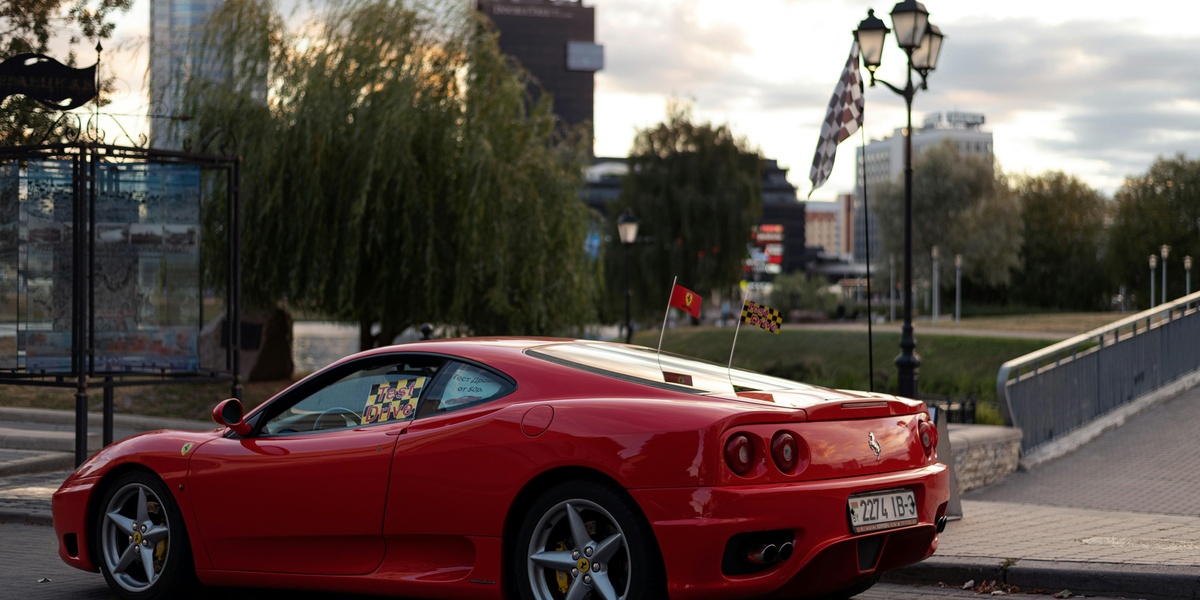
The F430 served as Ferrari’s modern mid-engine V8 offering during the 2000s. Introduced in 2004, its F136 4.3L V8 produced about 483 hp and borrowed several technologies from Ferrari’s F1 program, creating a very direct driving experience.
Owners typically used F430s for spirited weekend drives and occasional track days. The Scuderia variant dialed things further toward the track with weight savings and sharper responses, and stock 0–60 times sit in the high 3s to around 4.0 seconds depending on spec.
Striking Pininfarina design and a high-revving soundtrack helped the F430 stand out among peers and reinforced Ferrari’s mid-engine lineage for buyers in that decade.
7. Audi R8 (2006–2009)
Debuting in 2006, the Audi R8 became the brand’s halo car and an accessible mid-engine exotic relative to much more expensive rivals. The initial 4.2L V8 produced around 420 hp, with later V10 options offering significantly more power.
Its mid-engine layout, high build quality, and quattro-derived engineering made the R8 unusually usable for a supercar, while shared components with the Lamborghini Gallardo helped control development costs. Early V8 models returned 0–60 times near 4.2 seconds, with V10 variants quicker still.
The R8 doubled as a capable GT racer and a daily-drivable exotic, which broadened its appeal beyond collectors to serious driving enthusiasts.
American Icons & Exotic Powerhouses
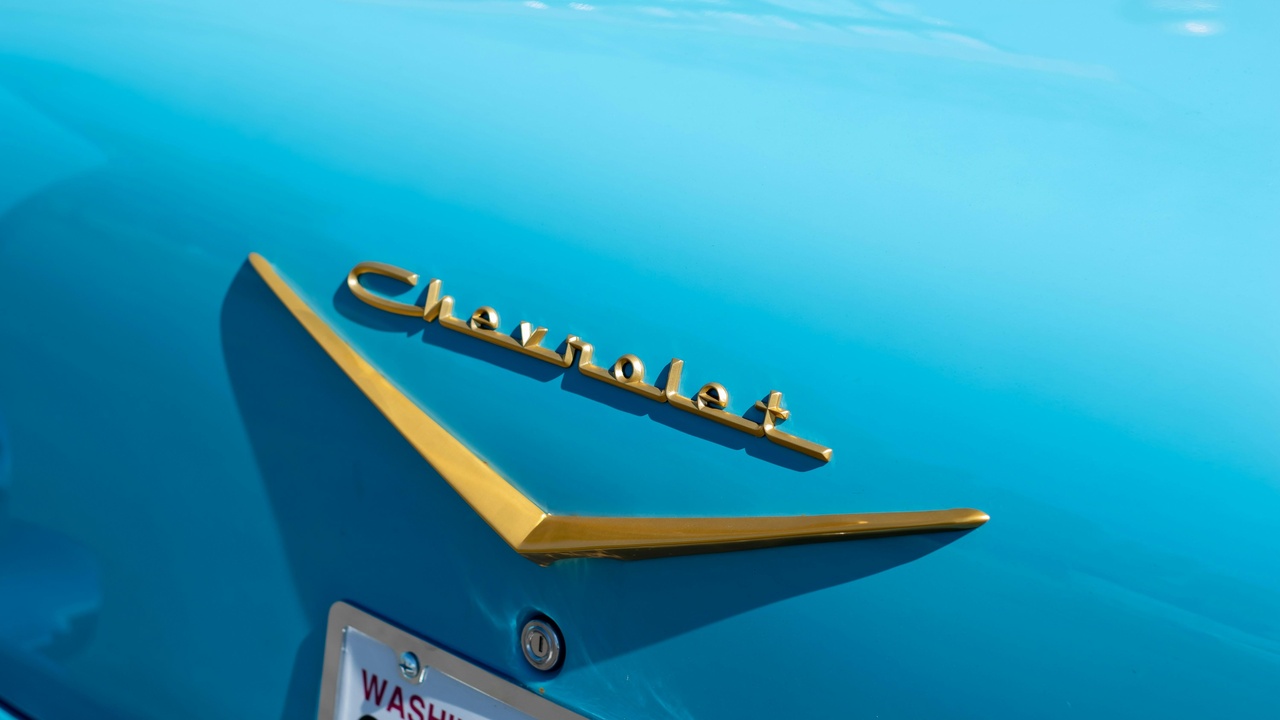
The 2000s also saw American manufacturers refine raw power with better chassis dynamics, while exotics pushed displacement and drama. The decade produced halo cars that shaped brand image — the Corvette C6’s 2005 redesign gave it sharper handling, and Ford’s GT (2005–2006) revived GT40 inspiration in limited numbers.
These cars offered different appeals: value-driven performance in the Corvette, historic homage and collectibility in the Ford GT, and full-on exotic presence in models like the Lamborghini Murciélago. Horsepower figures ranged from the high 300s to well over 500 in flagship trims.
8. Chevrolet Corvette (C6) (2005–2013)
The C6 refreshed the Corvette formula in 2005 with improved chassis stiffness, modernized styling, and a stronger value proposition versus European rivals. Early C6s used the LS2 V8 and later moved to LS3 and higher-output variants.
Power ranged into the low 400s in many trims, and high-performance derivatives like the Z06 delivered track-ready performance and significantly higher output in subsequent generations. Typical 0–60 mph times across the lineup fell in the mid-4 to low-4 second range for quicker trims, making the C6 a frequent track-day favorite for its price.
Owners praise the car’s tuning potential, widespread aftermarket, and the straightforward ratio of performance to cost compared with European exotics.
9. Lamborghini Murciélago (2001–2010)
The Murciélago was Lamborghini’s V12 flagship in the early 2000s, first appearing in 2001 and later evolving into higher-output LP640 and SV variants. Displacements ran around 6.2–6.5L and top SV outputs came in near the 570–572 hp range.
Performance felt dramatic rather than discreet, with 0–60 times roughly in the 3.3–3.8 second window for the most powerful variants. For many owners, the car’s emotional appeal — styling, drama, and exhaust note — mattered more than everyday practicality.
Limited runs and flagship status helped the Murciélago anchor Lamborghini’s lineup and cement the brand’s exotic image through the decade.
10. Ford GT (2005–2006)
The Ford GT was a limited-run modern homage to the 1960s GT40, produced primarily in 2005–2006 and designed to echo its racing ancestor’s aesthetic and spirit. Under the skin, a 5.4L supercharged V8 in the original GT produced around 550 hp, delivering mid-3-second 0–60 times in many tests.
With roughly a few thousand examples across its initial run, the GT drew strong collector interest and created a powerful brand halo for Ford. It proved that emotional design plus modern engineering could capture public imagination and hold value at auctions.
Today the GT remains a standout example of how retro inspiration and contemporary performance can combine into a highly desirable package.
Summary
- The 2000s produced a wide range of sports cars, from the approachable Nissan 350Z to the exotic Lamborghini Murciélago, showing how different philosophies delivered performance.
- Many models keep strong enthusiast communities and rising collectibility — examples include the Honda S2000 in Japan, the Porsche 911 (997) in Europe, and the Ford GT in the U.S.
- These cars balanced real-world usability with authentic driving engagement: the Corvette C6 offered value for track use, the BMW M3 E46 mixed daily manners with sharp handling, and the F430 brought Ferrari’s race-derived tech to owners.
- If you’ve been curious about the best sports cars of the 2000s, consider test-driving a model, checking local club meets or track days, and researching values before buying.