A 1962 Ferrari 250 GTO once sold privately for a sum reported in the tens of millions, signaling how 1960s sports cars have become cultural and financial icons.
These ten sports cars from the 1960s combined performance, styling, and innovation in ways that still shape performance cars and collector markets today. The decade followed a period of rapid post-war engineering maturity, with motorsport—think Le Mans, FIA GT and SCCA—pushing manufacturers toward lightweight construction, larger engines, and sleeker aerodynamics. This roundup of the best sports cars of the 1960s highlights three themes: racing and performance icons, design and styling breakthroughs, and everyday sports cars that changed buyer expectations. Each entry includes key specs, a bit of history, and why the model matters to collectors and modern engineers.
Racing and Performance Icons
Among the best sports cars of the 1960s, those proven on track directly shaped road-car engineering and later collector demand. Success at endurance races like the 24 Hours of Le Mans or national series such as SCCA and FIA GT proved concepts: monocoque shells, independent suspension, and aerodynamic bodywork offered real gains.
Racing pedigree translated to buyer desirability and auction premiums. Lightweight construction, big-displacement engines, and race-developed aerodynamics filtered into road cars, and examples with documented competition history routinely command higher prices at sale.
1. Ferrari 250 GTO (1962–1964)
The Ferrari 250 GTO is the archetypal 1960s racing GT and remains the benchmark for collectibility. Built as a homologation model for GT racing, roughly 36 original examples were produced between 1962 and 1964 to meet the FIA’s rules.
Under the long hood sat a 3.0L V12 producing about 300 bhp in period tune, and the car scored strong results in European GT events. Its combination of limited numbers, race provenance, and period success is why museums and private collectors prize original cars.
Landmark sales have cemented that status: a 2018 private sale was widely reported to be in the tens of millions (roughly $48 million by some accounts). That price reflects both competition history and extreme rarity.
2. Ford GT40 (1964–1969)
The GT40 was built explicitly to beat Ferrari at Le Mans and proved it on the world stage. Ford-backed teams took overall victories at Le Mans four straight years, from 1966 through 1969, including the famous 1–2–3 result in 1966.
Technically the GT40 used a mid-engine layout and race-developed aerodynamics with a range of V8 engines, including a 427 cu in (7.0L) option in many race-winning chassis. Its success validated a U.S. approach to endurance racing and boosted confidence in American high-performance engineering.
Beyond the headlines, the GT40 influenced later Ford performance programs and remains a touchstone for engineering aimed at sustained high-speed endurance rather than short bursts of acceleration.
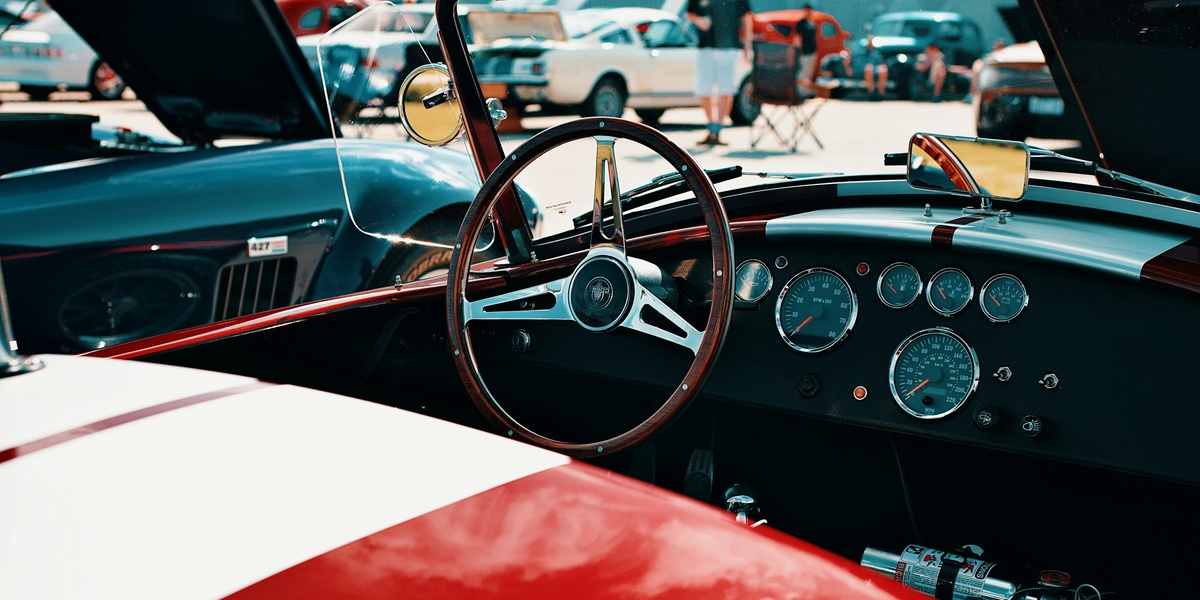
3. Shelby Cobra 427 (1965–1967)
Carroll Shelby’s concept was simple and effective: mate a lightweight British chassis to a massive American V8. The result was the Cobra 427, built on the AC Ace chassis with Ford’s 427 V8.
Depending on tune, the 427 produced roughly 425–485 bhp, while curb weight hovered around 2,350 lb (≈1,066 kg) in many configurations. That exceptional power-to-weight ratio made the Cobra brutally quick in both straight-line and club-circuit competition.
The Cobra became an icon for the muscle/sports-car hybrid approach, winning SCCA events and influencing how builders combined chassis sophistication with large-displacement powerplants.
Design and Styling Breakthroughs
The 1960s gave the world lines that still read as pure automotive beauty: long hoods, low-slung profiles, and in some cases the exotic cue of a mid-engine layout. Coachbuilders and new fabrication techniques let designers translate racing ideas into show-worthy road cars.
These styling breakthroughs didn’t just look good. They helped define proportions for future supercars, proved new packaging concepts, and pushed manufacturers to blend function with elegance at motor shows and in the press.
4. Jaguar E-Type (1961)
The Jaguar E-Type arrived at the 1961 Geneva Motor Show and instantly turned heads—Enzo Ferrari allegedly called it the most beautiful car ever made. It combined striking aesthetics with serious performance.
Early cars used a 3.8L inline-six (later 4.2L), and open-top models could approach 150 mph in period testing. The E-Type featured monocoque construction and independent rear suspension, bringing advanced chassis tech to a relatively attainable market.
With production exceeding 70,000 units across all series, the E-Type made high-style performance available to many buyers and influenced 1960s design language worldwide.
5. Lamborghini Miura (1966–1973)
The Miura is often credited as the first road-going mid-engine V12 supercar, debuting at Geneva in 1966 and changing perceptions of what an exotic could be. Its transverse mid-mounted V12 and dramatic shape were radical in the mid-1960s.
Early P400 variants pushed top speeds near 170 mph, and Lamborghini produced roughly 764 Miuras across P400 and P400S types. The Miura established the mid-engine template that defined later supercars.
Its combination of low-slung proportions and a powerful V12 made the Miura a design touchstone for exotic-car proportions for decades to come.
6. Aston Martin DB5 (1963)
The DB5 became a cultural icon after appearing in the 1964 James Bond film Goldfinger, and that exposure amplified appreciation for its restrained elegance. It married luxury appointments with genuine performance.
Introduced in 1963, the DB5 used a 4.0L inline-six producing about 282 bhp in standard trim. Production ran into the low thousands (roughly 1,000+ cars depending on how variants are counted), positioning it as a rare but usable grand tourer.
The DB5 helped define the luxury GT: comfortable cabins, handsome coachwork, and enough speed to satisfy enthusiastic drivers while carrying salon-worthy presence.
Everyday Sports Cars That Shaped the Market
Not every influential 1960s sports car was an ultra-rare halo model. Some made spirited driving attainable and shaped mass-market expectations for handling, reliability, and value. Those cars taught mainstream buyers what a sports car could be.
These everyday models influenced long-running nameplates and provided platforms that later spawned higher-performance variants. Their sales volume and practicality are a big part of why they matter to collectors and manufacturers alike.
7. Porsche 911 (1964 debut)
The Porsche 911 debuted in 1964 with a 2.0L air-cooled flat-six and a distinctive rear-engine layout that would define the brand. That original package set the template for decades of development.
Early 911s found success in endurance and tarmac events including Targa-style races, proving the concept in competition. The basic architecture allowed Porsche to evolve the car continuously, creating a direct lineage into 21st-century 911s.
As an identity-defining model, the 911 showed how a compact sports car could be both daily-usable and an effective competition platform.
8. Chevrolet Corvette Sting Ray (C2, 1963–1967)
The C2 Sting Ray marked a major leap for the Corvette when it arrived in 1963, introducing independent rear suspension and dramatically sharper styling. It tightened handling and modernized the nameplate.
Engine choices spanned small-block V8s to big-block 427 cu in (7.0L) units, with some high-output variants exceeding 400 bhp. Produced from 1963 to 1967, the C2 solidified Corvette as America’s premier sports car and offered value compared with European exotics.
9. Lotus Elan (1962–1973)
The Lotus Elan set a benchmark for handling in a lightweight package. Its fiberglass body over a backbone chassis kept kerb weight around 700–800 kg, which made the most of a modest powerplant.
With a roughly 1.6L twin-cam engine producing about 100 bhp in standard tune, the Elan emphasized chassis balance and steering feedback over outright power. That philosophy influenced later small sports cars and roadsters.
Built from 1962 to 1973, the Elan proved that light weight and smart engineering could deliver thrilling dynamics without huge displacement.
10. Alfa Romeo Spider (Duetto) (1966–1993 origin)
The Duetto Spider debuted at the 1966 Turin Motor Show as an attractive and relatively affordable Italian roadster. Pininfarina’s styling helped make it desirable in export markets, especially the United States.
Early Spiders used a 1.6L twin-cam engine, with some trims producing around 118 bhp. Its light weight and lively handling made it a favorite for buyers seeking Italian character without exotic prices.
Its long production life and popularity abroad helped cement the image of the classic Italian roadster for a generation of drivers.
Summary
- Racing success, dramatic styling, and accessible performance combined to make the 1960s a pivotal decade for sports cars.
- Models with documented competition histories—like the 250 GTO or GT40—often command the highest collector premiums at auction.
- Design innovations such as mid-engine layouts and independent suspension still inform modern sports cars.
- When collecting or restoring, prioritize cars with original numbers, verified race records, and reputable restoration histories.