1970 sits near the high-water mark of the classic car era: factory muscle cars were routinely advertised with over 400 horsepower, European makers sharpened handling and refinement, and affordable Japanese sports cars began reshaping export markets. On any given weekend you could find a quarter-mile meet, a Trans‑Am event, or an Italian grand tour—each underlining how diverse automaking had become by 1970. Collectors and casual fans alike care because these cars represent different answers to performance: raw displacement and straight-line dominance, coachbuilt finesse for long-distance speed, and accessible, dependable sportiness that broadened ownership. These ten cars capture 1970’s mix of raw power, refined engineering, and lasting influence—vehicles that defined their segments then and still command attention today.
American Muscle and Performance
The U.S. scene in 1970 was dominated by big-displacement V8s, factory performance packages, and a horsepower arms race that pushed many engines into the 400–450+ hp band on paper. That year represents a high point before tightening emissions rules and insurance costs began to shrink output and options. Collectors prize these machines for their visceral power and cultural cachet; auction results show strong premiums for rare, high-output variants. Below are four unmistakable American icons whose 1970 forms still drive headlines and bidding wars.
1. 1970 Dodge Charger R/T (426 Hemi / 440 options)
The 1970 Dodge Charger R/T is a muscle-car icon, notable for offering the 426 Hemi (factory-rated at 425 hp) as well as stout 440-cubic-inch options. Hemi-equipped Chargers carried the “426 HEMI” engine code and the R/T trim bundled heavy-duty suspension, dual exhaust and distinctive badging. In performance terms, contemporary tests showed Hemi cars crack the quarter-mile in the low 13‑second range and hit 0–60 mph in roughly 5.5–6.0 seconds depending on gearing and transmission. Production of Hemi Chargers in 1970 was limited compared with mass-market V8s, making them high-value today; collectors chase original VIN/engine-matched cars and period-correct R/T trim. The Charger’s slab-sided styling and its post‑1968 pop-culture presence (movie and TV appearances) cemented its status among drag racers and collectors alike.
2. 1970 Plymouth Hemi ‘Cuda
The 1970 Plymouth Hemi ‘Cuda was Plymouth’s ultimate street weapon—offered with the 426 Hemi rated at 425 hp and optional 440 Six‑Barrel packages for buyers wanting big torque. Hemi ‘Cudas were produced in very low numbers in 1970 (only a few hundred by most counts), which drives their rarity and auction records today. These cars were drag-strip quick in period testing, often recording low‑13s or better in the quarter when equipped with the right gearing and tires. Collectors prize original Hemi VIN/engine combinations and factory options like the shaker hood and AAR-styled graphics. High-profile auction sales over the last decade have pushed pristine Hemi ‘Cudas into seven-figure territory, underlining how scarcity and pedigree translate into value.
3. 1970 Chevrolet Chevelle SS 454
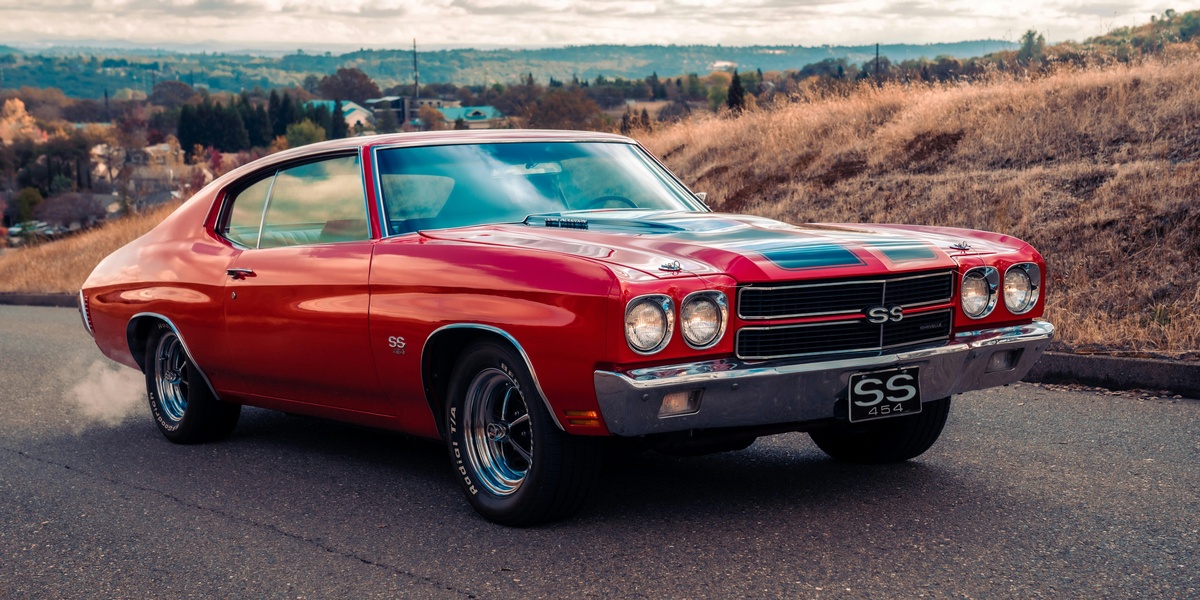
The 1970 Chevelle SS 454 is Chevrolet’s big-block answer, offered with LS5 and the higher-output LS6 454 engines (the LS6 is commonly quoted near 450 hp on early GM paperwork). The SS package added a heavy-duty suspension, distinctive hood with cowl induction, bold stripes and performance-oriented drivetrain choices. In period testing, LS6 Chevelles could run the quarter-mile in the low-13s and reach 0–60 mph in about 5.5–6.0 seconds, making them poster cars for straight-line performance. Production figures for full SS 454 specification were limited relative to base Chevelles, and trim/options (transmission, heavy-duty cooling, axle ratio) significantly affect value today. It’s no surprise that many lists of the best cars of 1970 include the LS6 Chevelle for its blend of showroom polish and brute force.
4. 1970 Ford Mustang Boss 302
The Boss 302 was built for road racing and Trans‑Am homologation, featuring a high‑revving 302 ci V8 tuned for sustained power rather than raw cubic inches. Ford fitted the Boss with unique cylinder heads, a solid mid‑range, and chassis upgrades—stiffer springs, handling-oriented suspension, and special bodywork—that made it competitive on circuit in the 1970 Trans‑Am season. Production for the 1970 Boss 302 ran into the low thousands (Ford built several thousand examples across 1969–1970), enough to meet homologation but still limited compared with mass-market Mustangs. Enthusiasts value the Boss for its focused handling, race heritage, and the way it prioritized cornering balance over straight-line displacement.
European Sports and Grand Tourers
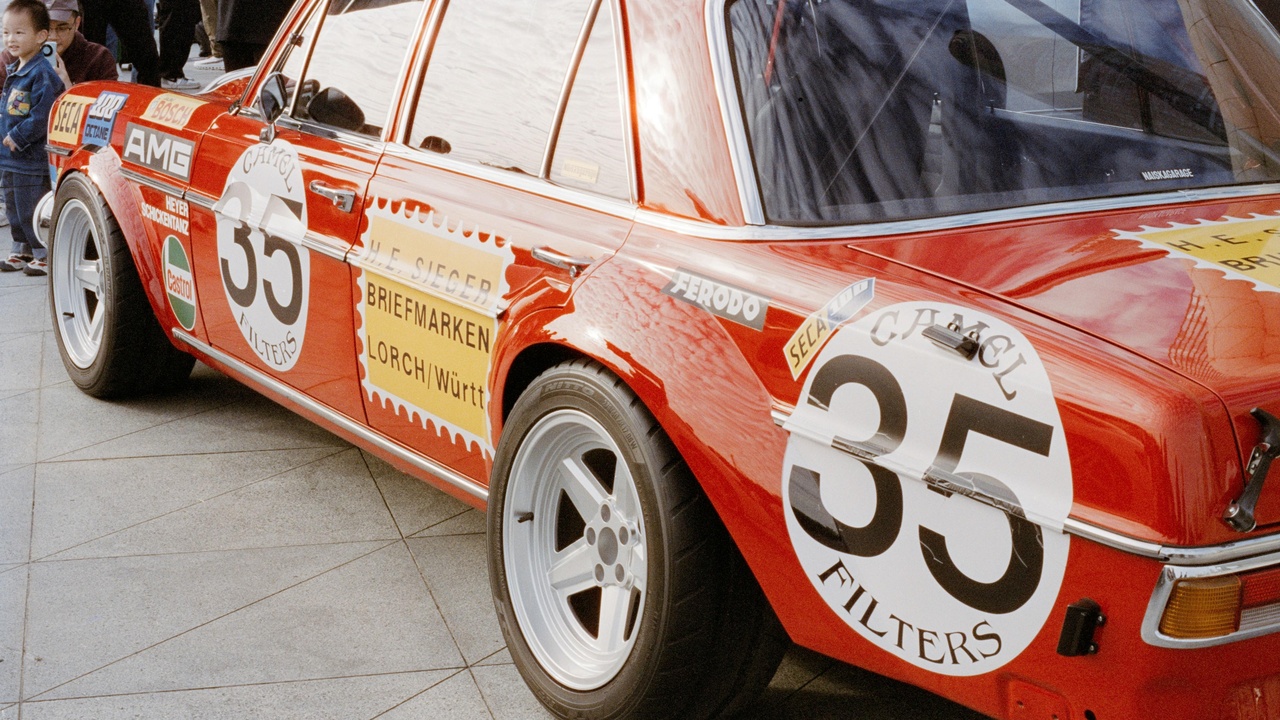
European makers in 1970 emphasized lightweight chassis, independent suspension, and high‑revving engines that favored balance and driver feedback over sheer displacement. Coachbuilt touches, aerodynamic refinement, and interior quality defined the grand tourer segment. These cars rewarded skilled drivers on twisty roads and long-distance runs, and their craftsmanship keeps them highly desirable to collectors and driving enthusiasts today.
5. 1970 Porsche 911S
The 1970 Porsche 911S stood as the sporting benchmark with an air‑cooled flat‑six (the era spanned roughly 2.2–2.4 liters depending on year and market) and chassis tuning that prized balance. The S variant delivered increased cam timing and higher output—factory-rated figures put many S models in the neighborhood of 160–190 hp depending on displacement and market tune. That resulted in lively 0–60 mph times in the mid‑6 to low‑7 second range and a razor‑sharp driving feel that translated well to club racing and rallying. Porsche’s torsion-bar suspension and lightweight construction made the 911S both a capable daily driver and a track tool; production in the early 1970s kept volumes modest, helping preserve values for well-sorted examples today.
6. 1970 Ferrari Dino 246 GT
The Dino 246 GT is Ferrari’s elegant mid‑engined sports car, powered by a 2.4L V6 that produced roughly 195–200 hp depending on market spec. Pininfarina penned the flowing coachwork, and production totals for the Dino 246 series ran into the low thousands (across the late‑1960s and early‑1970s), making well-preserved examples highly sought after. The mid‑engine layout delivered superb balance and communicative handling, ideal for spirited back‑road drives or long grand tours. Collectors prize original details and matching‑numbers cars; auction results regularly show the Dino commanding strong prices because it combines Ferrari heritage with timeless styling and engaging dynamics.
7. 1970 Jaguar E-Type Series II
The E‑Type Series II carried forward Jaguar’s famous styling while updating the car for usability—open headlights replaced the glass covers and bumpers were revised. Buyers could choose the proven 4.2L inline‑six or opt for the V12 (5.3L) in higher‑end variants, blending grand‑tour comfort with sports‑car charisma. Production numbers for Series II models in the late‑1960s and early‑1970s were substantial compared with low‑volume coachbuilders, but original, well‑finished examples remain collectible. The E‑Type’s long‑distance comfort, taut steering and classic coachbuilt aesthetics keep it popular with restorers and touring drivers who appreciate both looks and usability.
8. 1970 Citroën SM
The Citroën SM was a technological outlier: French styling married to a Maserati‑sourced 2.7L V6 (producing around 170 hp) and Citroën’s famous hydropneumatic suspension and DIRAVI variable‑assist steering. Those systems delivered exceptional high‑speed stability and ride comfort, while the low production—just over 12,000 SMs built across its run—keeps the model rare. The SM excelled as a high‑speed touring machine, but its complexity and specialized service needs affected resale for decades. Today, enthusiasts prize SMs for their innovation and unique driving character, though restoration can be involved due to the hydraulic systems.
Breakthrough Imports and Accessible Sports Cars
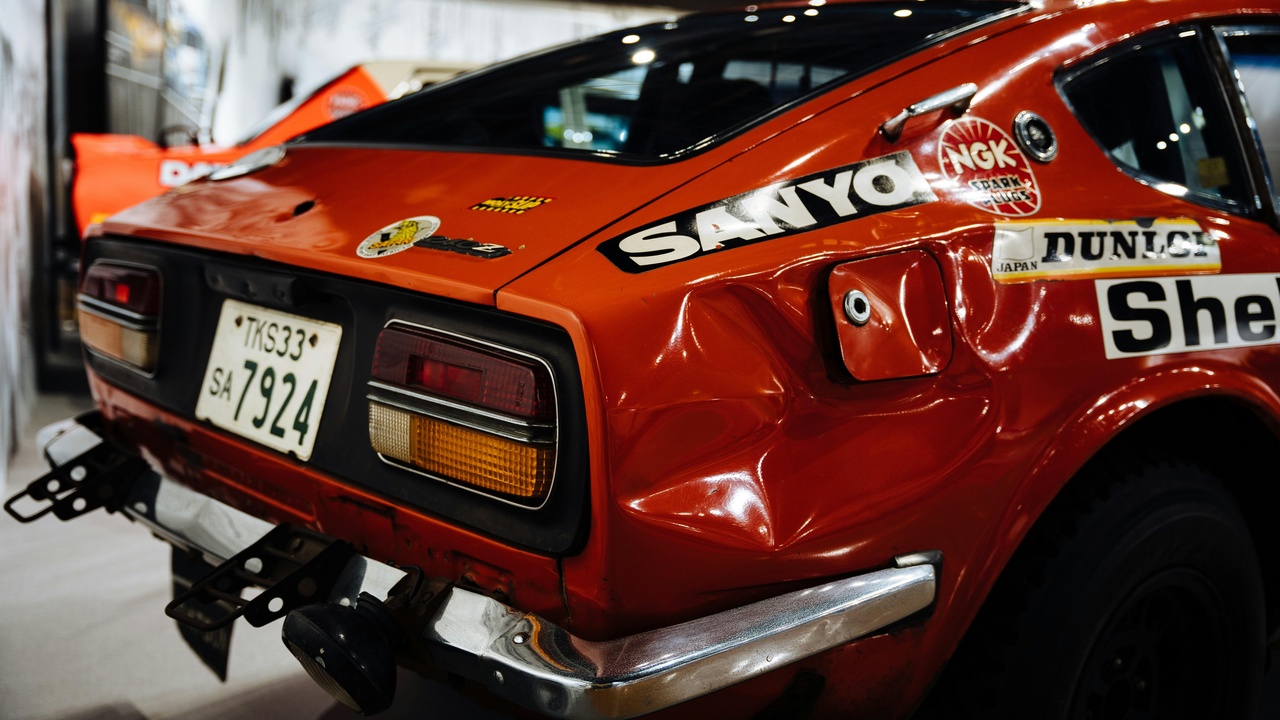
Alongside headline-grabbing muscle and coachbuilt GTs, 1970 marked the arrival of imports that combined sportiness with affordability and reliability. These cars—especially the early Japanese sports cars—shifted buyer expectations by offering attainable performance, lower running costs, and strong factory support in export markets. The two models below illustrate how accessible sports cars broadened enthusiasm and laid groundwork for modern segments.
9. 1970 Datsun 240Z
The 240Z introduced many buyers to genuine two‑seat performance: a 2.4L inline‑six (around 150–151 hp in early U.S. trim), sporty handling, and an approachable price compared with European rivals. Light curb weight and a well‑tuned chassis gave the 240Z strong on‑road manners, while easy maintenance helped Datsun grow U.S. sales quickly in the early 1970s. The car also found success in SCCA and club racing, proving it could be both a daily driver and a competition platform. Early U.S. buyers appreciated the 240Z’s value proposition; today the model is a cornerstone of import‑collector culture and commands rising prices for well‑kept examples.
10. 1970 Chevrolet Corvette (C3)
The C3 Corvette embodied American sports‑car ambition with bold styling and a wide range of V8s in 1970—everything from small‑block 350 ci units up through 427 and 454 big blocks. Those big blocks delivered the era’s headline numbers; depending on engine and tune, published horsepower figures varied widely across the range. The C3 offered features like T‑tops and chassis updates that improved handling, and it became a favorite for modifications and long‑distance cruising. Enthusiasts value the model’s variety: choices in displacement, transmissions, and options create many collector niches, and aftermarket support makes restoration and performance upgrades straightforward.
Summary
- 1970 marks a high point for factory performance—many cars advertised 400–450+ hp—before emissions and insurance reshaped the industry.
- American models deliver raw displacement and straight‑line thrills; European GTs offer balance and craftsmanship; imports like the Datsun 240Z brought accessible, reliable sportiness.
- Rarity, engine choice (426 Hemi, LS6 454, 2.4L Dino), and documented originality drive collector values—expect sharply different prices between common and matching‑numbers cars.
- Seeing and driving these cars at shows, local clubs, or museums is the best way to appreciate their differences—restoration and auction markets reflect both nostalgia and genuine engineering milestones.