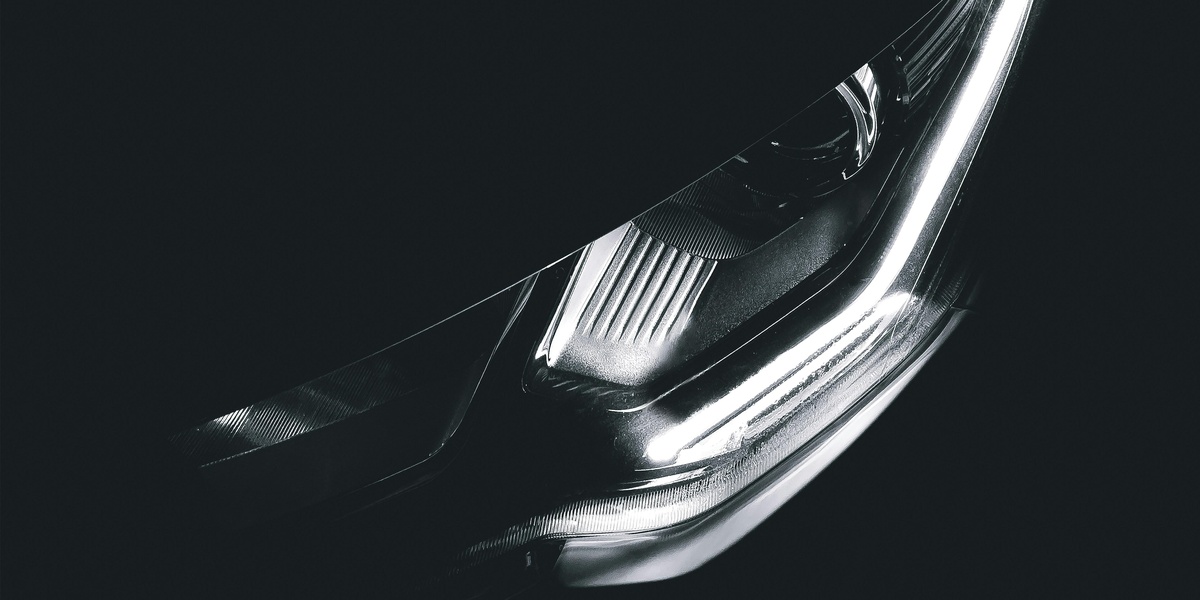
In the 1960s, halogen bulbs became the default headlight. Over decades the industry moved through xenon to the current wave of LED systems.
Drivers want brighter, longer-lasting lights without higher energy use or constant replacements. The benefits of led headlights are straightforward: they deliver measurable gains in visibility, efficiency, longevity, and design. Typical OEM LED modules are rated for tens of thousands of hours (many claim 20,000–50,000 hours), and they use substantially less power than comparable halogen lamps — that combination changes ownership math and on-road safety.
Performance & Safety Benefits
1. Brighter, clearer illumination improves night vision
LEDs produce a higher-intensity, whiter beam that improves object recognition and contrast at night. Typical automotive LED headlight bulbs put out roughly 2,000–4,000 lumens per bulb and run in the 4,000–6,000 K color-temperature range, which is closer to daylight and improves sign and pedestrian visibility. Color-rendering (CRI) numbers for quality LED modules are often higher than halogen, so colors and contrasts stand out more under beam light.
Independent automotive reviewers and safety testers (IIHS, SAE publications) note measurable visibility gains with well‑designed LED systems versus stock halogen units. Audi’s matrix LED headlights are a practical example: they combine high lumen output with adaptive beam shaping to keep the road ahead well lit without blinding other drivers.
2. Faster response time reduces reaction delays
LEDs light up almost instantaneously, typically in microseconds to low milliseconds, while filament-based halogen bulbs can take tens to a few hundred milliseconds to reach full output. That tiny delay matters: a 100 ms faster illumination corresponds to roughly 9 feet of travel at 60 mph (about 88 ft/s), and faster signaling from brake lights or turn indicators can reduce collision risk in close-call situations.
Automotive safety analyses and standards groups (NHTSA, SAE) highlight that quicker electrical response helps active safety systems and modern signaling. Emergency braking lights, daytime running lights, and adaptive systems all benefit when the light source responds without perceptible lag.
3. Superior beam control reduces glare and hotspots
Small LED emitters and modern optics allow precise beam shaping that filament bulbs can’t match. Multiple diodes arranged with reflectors or projector lenses create uniform patterns with defined cutoffs, minimizing hot spots and stray glare for oncoming drivers.
Matrix and adaptive LED systems (Audi, Mercedes) take that further by selectively masking or dimming portions of the beam to avoid dazzling other road users while keeping high-beam illumination elsewhere. Beam patterns must still meet DOT or ECE regulations, but when engineered correctly LEDs enable safer two-lane passes and better urban lighting behavior.
Efficiency & Cost Benefits
4. Lower power consumption boosts fuel economy and EV range
LEDs use substantially less electrical power than halogen or some xenon systems. A typical halogen low-beam bulb draws around 55 W, while LED headlight modules commonly draw 15–30 W per channel for comparable or greater effective output.
That lower draw reduces alternator load on internal-combustion vehicles, producing small but measurable fuel savings during night driving. For EVs the effect is clearer: cutting auxiliary load from headlights can add a fraction of range — often in the order of 0.5–2 miles, depending on conditions and whether lights are combined with HVAC and infotainment loads.
5. Longer lifespan cuts maintenance and replacement costs
One of the strongest LED headlight advantages is lifespan. Many OEM and quality aftermarket LED modules are rated for 20,000–50,000 hours versus roughly 500–1,000 hours for halogen bulbs. Even conservative estimates show LEDs lasting an order of magnitude longer.
Translated to real use, that means far fewer bulb changes across a vehicle’s life. Halogen bulbs might need replacement multiple times over a decade, while LED modules often outlive the vehicle or come with multi-year OEM warranties. Upfront cost for LED modules can be higher (OEM modules or branded kits from Philips, Osram, Sylvania), but lower lifetime parts and labor usually offset that premium.
6. Lower operating temperatures and improved vehicle efficiency
LEDs convert a greater share of electrical energy into light rather than heat, exhibiting much higher luminous efficacy (measured in lumens per watt) than halogens. Halogens waste a large portion of input energy as heat; LEDs operate cooler overall when properly cooled.
Lower heat output reduces thermal stress on headlamp housings, seals, and nearby plastics, which in turn decreases fogging, warped optics, and heat-related failures. OEMs design thermal-management for LEDs, and aftermarket kits often include heat sinks or fans to protect both the LED and the surrounding housing.
Durability, Design & Practical Benefits
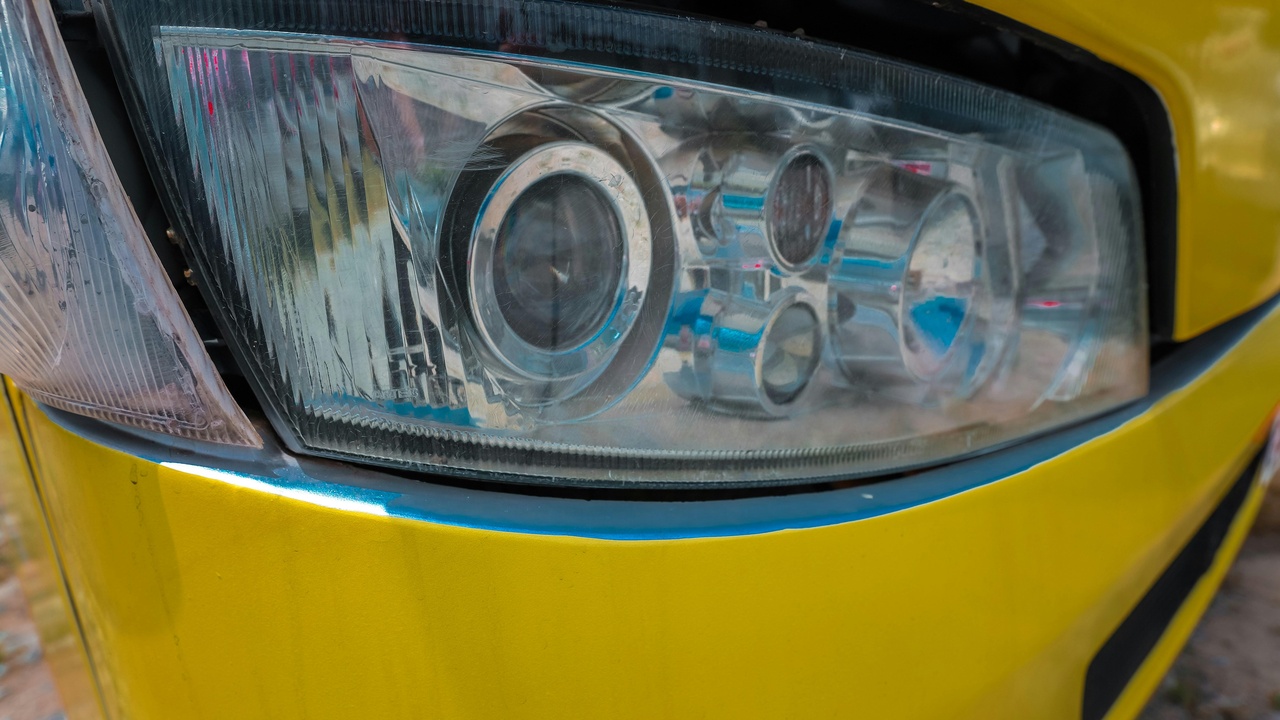
7. Compact design enables modern styling and features
LED emitters are tiny compared with filament bulbs, which frees designers to create slim, multi-element light signatures and integrated daytime running lights (DRLs). That compactness also allows space for additional functions like sequential turn signals, cornering lights, and matrix elements within the same housing.
That aesthetic flexibility produces recognizable brand signatures (BMW “coronas,” Tesla light bars) that also improve daytime conspicuity. Aftermarket LED modules and strips let owners modernize older vehicles’ looks while adding DRL and signal functions without large housings.
8. Greater durability and resistance to vibration and moisture
Solid-state LEDs have no fragile filaments, so they tolerate shock and vibration far better than filament bulbs. Many OEM modules and reputable aftermarket kits are built to automotive environmental standards and are advertised with IP65–IP67 ingress protection for water and dust resistance.
That durability translates to fewer failures on rough roads and lower warranty or repair events. OEM lighting systems undergo thermal, vibration, and moisture testing to automotive specifications, and quality aftermarket options follow similar practices to reduce field faults.
Summary
- LEDs provide clearer, whiter illumination with precise beam control, improving night-time detection and enabling adaptive safety features (matrix systems by Audi and Mercedes are good examples).
- They use less power (often 15–30 W vs ~55 W for halogen), which helps fuel economy and EV range, and they typically last tens of thousands of hours—cutting lifetime replacement and labor costs.
- Compact, durable LED modules support modern styling, DRLs, and robust environmental resistance (many kits claim IP65/IP67), adding practical value and potential resale appeal.
- Next steps: check OEM compatibility and owner’s manual before upgrades, prefer reputable brands (Philips, Osram, Sylvania), and confirm DOT or ECE compliance and professional installation when required.