1960 marked a crossroads: muscle was stirring in Detroit, European coachbuilders were refining aerodynamic shapes, and compact cars were reshaping city transport. The postwar boom meant more garages and longer drives, and manufacturers responded with distinct philosophies — larger-displacement V8s and personal-luxury appointments in the United States, nimble, lightweight chassis and coachbuilt bodies in Europe, and economical, space-efficient designs for growing urban markets. Each approach answered different demands but together they defined a decade of rapid change in automotive design and engineering. This list selects ten standout cars from 1960 that best represent that mix of style, engineering, performance, and cultural impact; every entry includes concrete specs (engine size, approximate horsepower, production context) and a short note on legacy rather than empty nostalgia.
American Performance & Style
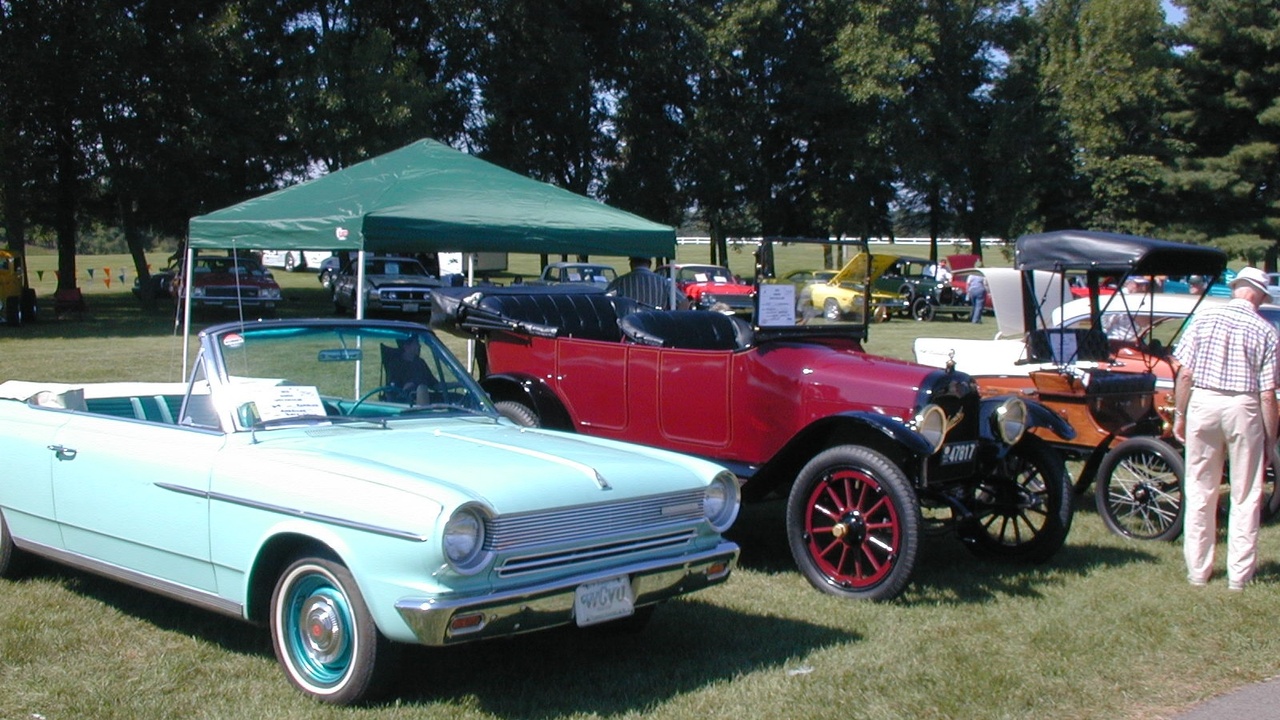
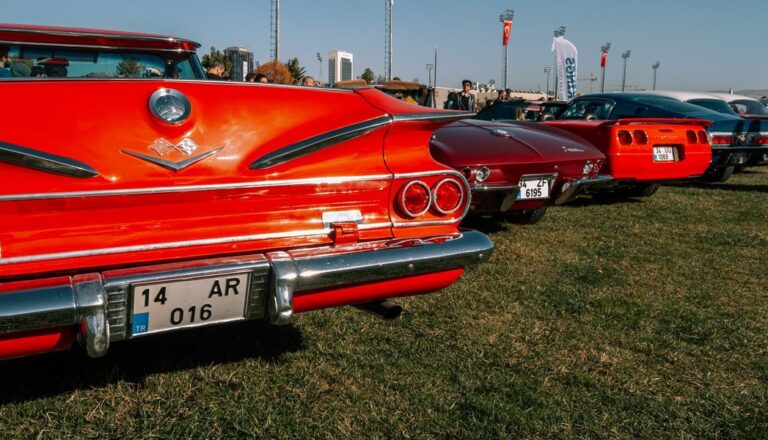
By 1960 U.S. automakers leaned into big-displacement V8s and flamboyant styling to match expanding suburban lifestyles and rising car ownership. Typical V8 displacements around this time commonly ranged from roughly 292 cu in (4.8 L) to 409 cu in (6.7 L), and manufacturers packaged comfort features—power windows, automatic transmissions, and plush interiors—alongside performance. Those styling cues—ample chrome, sweeping rooflines, and pronounced rear treatment—helped create the personal-luxury and muscle segments that would dominate the 1960s and beyond. Contemporary press, including Motor Trend archives and manufacturer releases, show how design and displacement sold cars as much as engineering did.
1. Chevrolet Corvette (1960)
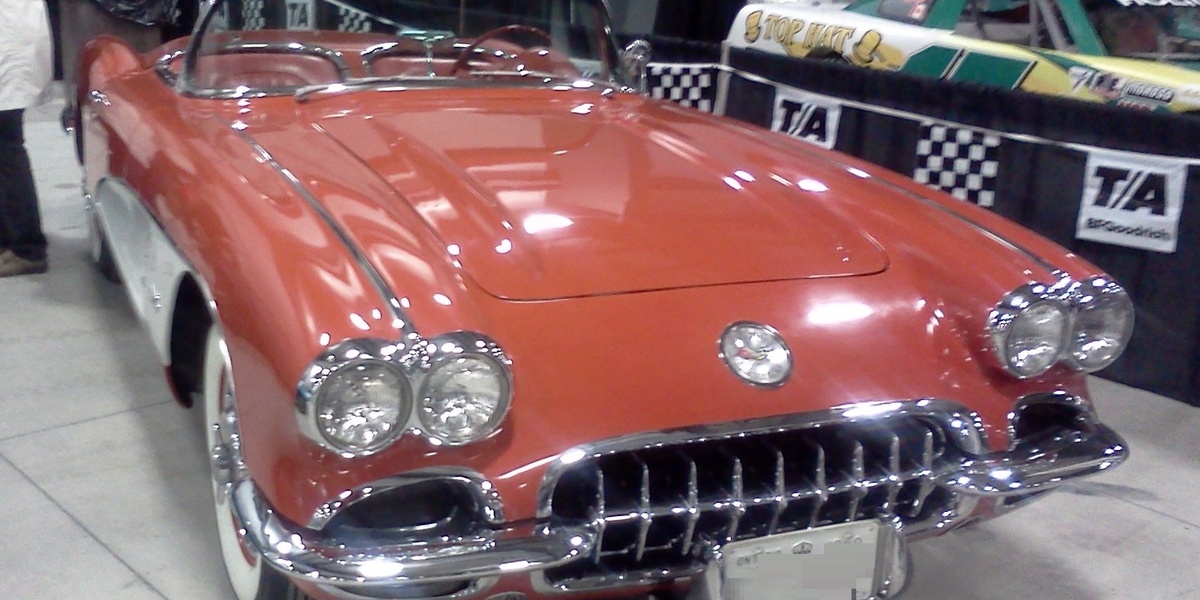
The 1960 Corvette retained the sporting image that had made it America’s answer to European roadsters: a lightweight fiberglass body, taut proportions, and V8 power under the long hood. Corvette buyers in 1960 could select small-block V8s that typically produced in the ballpark of 200–300 hp depending on carburation and options.
Production for the 1960 model year was about 10,000 units, showing the Corvette’s steady place in American car culture three years after its late-1950s renaissance. Its fiberglass construction reduced rust issues common in steel-bodied rivals and helped racers and clubs adapt Corvettes for competition.
Beyond numbers, the Corvette’s association with magazines, amateur road racing, and a growing owner community helped cement its legacy as the U.S. sports car; remember that the Corvette’s lineage began in 1953 and by 1960 it had already become a symbol of attainable performance.
2. Ford Thunderbird (1960)
By 1960 the Thunderbird was firmly a personal-luxury car: more about relaxed, chauffeur-like comfort than bare-bones sport. The two-door hardtop featured distinctive styling touches such as a wraparound windshield and a well-trimmed interior that emphasized passenger comfort over track-focused dynamics.
Under the hood, large-displacement V8s delivered strong torque for effortless cruising, and buyers could specify convenience items like power windows, automatic transmission, and upgraded trim that put the Thunderbird in a premium price band versus sportier two-seaters like the Corvette.
The Thunderbird demonstrated that performance needn’t sacrifice refinement: it showed the market there was room for cars that blended comfort and presence, a formula that fed the later personal-luxury boom of the mid-to-late 1960s.
3. Chevrolet Impala (1960)
The 1960 Impala bridged family practicality and available V8 muscle, making it one of Chevrolet’s highest-volume nameplates. Impala buyers could choose from a range of V8s, with options that emphasized torque for everyday driving as well as higher-output units for performance-minded customers.
Chevrolet positioned the Impala as a full-family car with upscale trim choices and room for luggage and passengers, yet the Super Sport (SS) and other performance-oriented trims hinted at the muscle-car era to come. Annual sales for the Impala routinely ran into the hundreds of thousands during this period, reflecting broad appeal across buyer segments.
Its mix of space, price, and optional performance made the Impala a template for future cars that had to do everything well—commuting, road trips, and the occasional spirited run.
European Engineering & Sports Cars
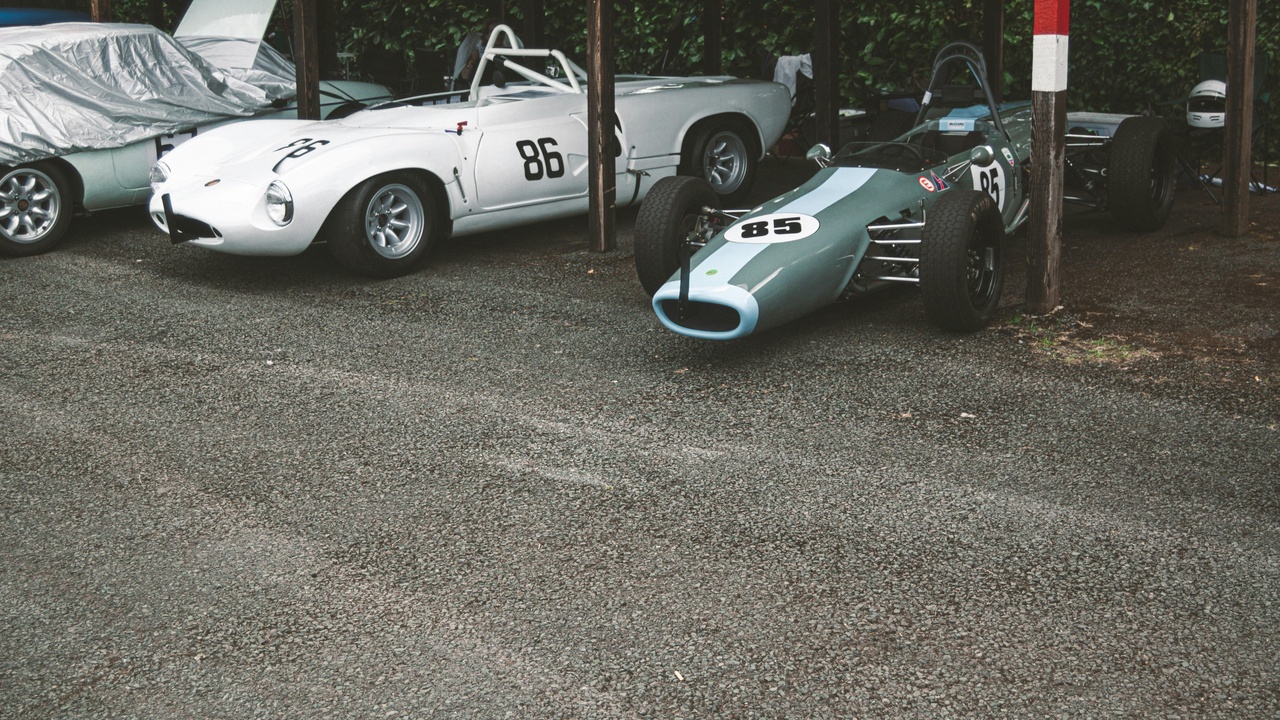
European makers in 1960 prized chassis balance, lightweight construction, and coachbuilt aesthetics. Engines tended to be smaller in displacement but higher-revving, and curb weights often sat between about 900–1,300 kg (2,000–2,900 lb), which delivered nimble handling. Coachbuilders such as Touring and Zagato still influenced styling in limited-production models, while marques like Porsche, Aston Martin, Mercedes-Benz, and Jaguar leveraged racing pedigrees to boost prestige and sales. For specific technical detail and histories, manufacturer archives and classic publications offer deep dives; see, for example, Aston Martin and Porsche historical materials for original specs.
4. Aston Martin DB4
The DB4 stood out in 1960 for its blend of hand-built craftsmanship and genuine performance. Early DB4s used a 3.7‑litre (≈3,670 cc) straight-six that produced roughly 240–270 hp depending on tune, giving high-spec cars cruising and sprinting capability north of 130–140 mph in road-test trim.
Aston Martin relied on coachbuilt panels and careful finishing, so production volumes were modest—on the order of about a thousand cars for the series—making the DB4 an exclusive grand tourer and a clear ancestor to the later DB5.
Racing and lightweight GT variants underscored the DB4’s dual role as both a luxury tourer and a platform for performance development, a combination that shaped Aston Martin’s identity for decades.
5. Porsche 356 (late series, 1960)
The Porsche 356’s reputation came from balance and light weight: an air-cooled, rear-mounted flat-four that in late-1950s and 1960 models typically displaced around 1.5–1.6 L and produced in the range of roughly 60–90 hp depending on model and carburation. Curb weights often fell below 900 kg, which made the most of modest power with sharp handling.
Submodels such as the 356B and 356C refined brakes, suspension, and trim, and the car scored regular class wins in endurance events—proof that Porsche’s engineering priorities favored agility over outright displacement. The 356’s lessons were clear: lightness and handling could out-perform brute force, a philosophy that led directly to the 911.
6. Mercedes-Benz 300SL Roadster
The 300SL Roadster represented postwar German engineering at its most refined and exclusive. Its 3.0‑litre (≈2,996 cc) inline-six heritage included early fuel-injection work that Mercedes-Benz had pioneered, and the roadster combined that advanced engine with fine interior appointments and tight engineering tolerances.
Roadster production was limited compared with mainstream models—total 300SL numbers across coupe and roadster remained small by mass-market standards—so the car was rare, fast, and influential in shaping the market for high-performance luxury sports cars.
Whether in gullwing-coupe form or as the open-top roadster, the 300SL brought engineering credibility and a prestige halo that benefitted Mercedes for years after.
7. Jaguar Mark 2
The Jaguar Mark 2 combined everyday saloon practicality with brisk performance, making it a versatile choice in 1960. Buyers chose from XK-based engines—2.4L, 3.4L, and 3.8L—which offered anything from relaxed touring pace to genuinely sporty acceleration in the larger-displacement versions.
Its handling was admired for a four-door of the era, and the Mark 2 found roles with private owners, police forces, and in motorsport, plus frequent appearances in British films and television that boosted its cultural profile.
That mix of usability and performance made the Mark 2 a template for sporty executive saloons for the next decade.
Compact, Economy & Cultural Icons
Small, affordable cars took on growing importance in 1960 as urbanization and export markets expanded global car ownership. Compact models offered real advantages: lower purchase price, better fuel economy, and easier parking in crowded cities. Automakers from Germany, Britain, and France answered with pragmatic engineering—transverse-engine front-wheel-drive packaging, air-cooled simplicity, and novel suspension systems—that made motoring accessible to millions and gave several models outsized cultural reach. Look to lifetime production totals and export figures to see the scale: compact platforms were not niche products but the backbone of expanding global mobility.
8. Volkswagen Beetle
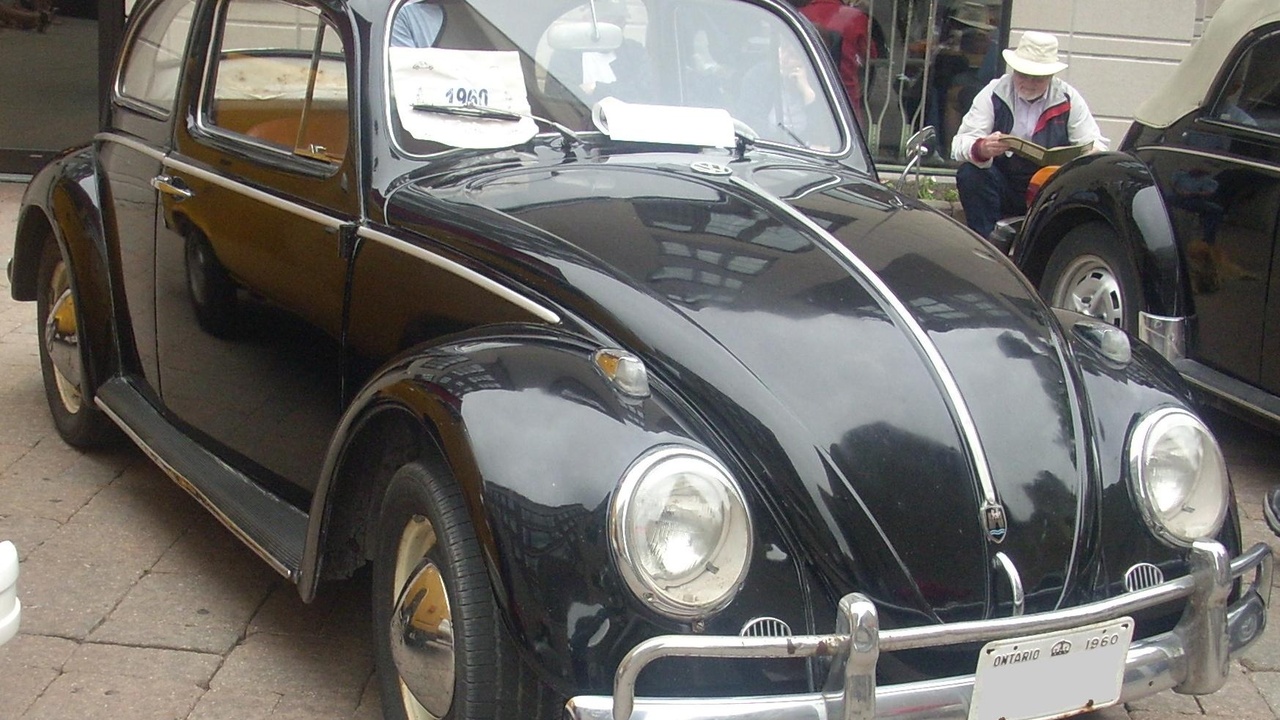
The Beetle’s ubiquity and simplicity made it a global 1960 standout. Its rear-mounted, air-cooled flat-four in late-1950s/1960 form typically displaced around 1.1–1.2 L, delivering modest power but excellent reliability and easy maintenance.
Volkswagen exported the Beetle widely—key markets included the United States and Latin America—and its straightforward mechanics spawned a large aftermarket culture that kept cars running for decades. Culturally, the Beetle turned up in films and the growing counterculture, cementing an identity beyond simply affordable transport.
9. Austin Mini (Austin/Cooper variants)
The Mini rewrote small-car packaging with a transverse-engine, front-wheel-drive layout that maximized interior space within a tiny footprint. Seating for four, remarkably short overall length, and efficient space use made it ideal for city drivers and small families.
Cooper and Cooper S variants added tuned engines and suspension tweaks that turned the Mini into a rally-winning machine—its Monte Carlo successes in the mid-1960s trace back to the performance focus already present around 1960. The Mini’s influence on small-car architecture is still visible in modern compact designs.
10. Citroën DS
The Citroën DS offered a different route to prestige through comfort and technology rather than engine size. Launched in 1955 but very much modern in 1960, the DS featured hydropneumatic self-leveling suspension that delivered an exceptionally smooth ride and variable ground clearance—advantages for both comfort and practicality.
Its aerodynamic body and innovative controls made the DS a favorite of diplomats and heads of state, and its focus on ride and handling rather than outright power influenced how some manufacturers thought about luxury.
Summary
- 1960 was a year of divergent philosophies: American cars emphasized displacement and presence, European models favored lightness and handling, and compact cars expanded practical access to motoring.
- Small engines plus low curb weight (Porsche 356, Mini) proved as influential to performance development as large-displacement V8s did for straight-line speed.
- Coachbuilt and hand-finished models such as the DB4 and 300SL established a luxury-performance template still echoed in high-end GTs today.
- Economy models—the Beetle, Mini, and DS—showed that innovation could live in affordability and comfort as well as exotic engineering; their global reach reshaped urban mobility.
Which of these best cars of 1960 would you take for a weekend drive? Visit a local classic-car show or museum, or consult marque registries and manufacturer archives for original specs and restoration guidance.

Marco Delantero
More from Marco DelanteroHow we reviewed this article
This article was researched against manufacturer records and editorially reviewed before publishing. We accept no payment for coverage.