Table of Contents
- Why 1984 Matters for Ford
- 1984 Ford Mustang: GT, SVO, and the 20th Anniversary
- 1984 Ford Thunderbird Turbo Coupe
- 1984 Ford F-150: The Redesign Year
- 1984 Ford Bronco
- 1984 Ford Ranger
- 1984 Ford LTD
- 1984 Ford Escort and EXP
- 1984 Ford Econoline
- What to Inspect Before Buying
- What They’re Actually Selling For
- Which 1984 Ford Is Worth Chasing
1984 was the year Ford stopped playing defense. The company had spent the early ’80s clawing back from the malaise era, and this model year is where you can see the plan actually working — a genuinely quick Mustang, a turbocharged Thunderbird, and a full-size pickup that got reengineered from the ground up. Most “classic Ford” content treats 1984 as a footnote between bigger years. It isn’t. It’s the year the pieces came together.
This is a rundown of every nameplate Ford sold that year, what made each one worth remembering, and — since a lot of people searching this are actually shopping — what a 40-year-old Ford is going to demand from you before you hand over cash.
Why 1984 Matters for Ford
Three things happened at once. The Fox-body Mustang, four years into its life, finally got a factory hot-rod variant with the SVO. The Thunderbird’s aero redesign from 1983 carried into a genuinely quick Turbo Coupe. And the F-Series — Ford’s actual bread and butter — was completely reengineered for 1984, not just facelifted.
None of that reads as dramatic today. In 1984, coming off two fuel crises and a decade of engines strangled by early emissions gear, a turbocharged four-cylinder that could hang with a V8 was news. So was a truck that finally rode like something you’d want to drive every day instead of just haul with. It was a watershed moment across the entire automotive industry — not just in Detroit, but from every major manufacturer.
1984 Ford Mustang: GT, SVO, and the 20th Anniversary
The ’84 Mustang lineup ran L, LX, GT, and the specialty SVO, all on the Fox-body platform. The GT carried the 5.0-liter H.O. V8, rated at 175 hp with the 5-speed — modest by today’s numbers, quick for the moment.
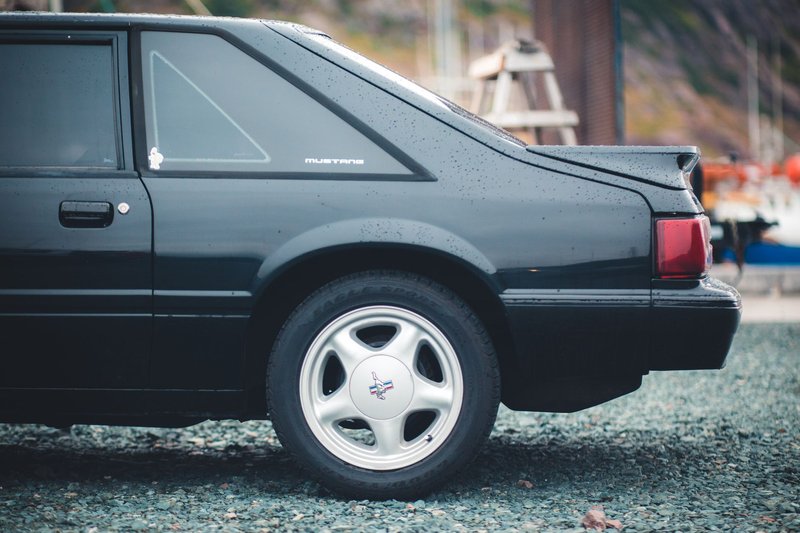
The real story is the SVO: a 2.3-liter turbocharged four making 175 hp (205 hp on later high-output units), paired with Koni shocks, a rear disc brake setup borrowed from the Continental, and a functional hood scoop instead of a decorative one. It was Ford’s answer to what a European-style sport coupe could look like wearing a Mustang badge, and it never sold in big numbers — which is exactly why they’re scarce and pricier now than the GT.
1984 also marked the Mustang’s 20th anniversary, and Ford built a run of GT350 20th Anniversary editions — Oxford White with red interior accents, a nod to the original Shelby GT350 nearly two decades earlier. Fewer than 5,000 were built, and collectors treat them as a distinct sub-model from the standard GT.
1984 Ford Thunderbird Turbo Coupe
The Thunderbird had already gone aerodynamic for ’83, and for ’84 the Turbo Coupe variant paired that shape with a 2.3-liter turbo four making 145 hp, a 5-speed manual, and firmer suspension tuning than the standard Bird. It wasn’t as raw as the SVO — it was meant to be a personal luxury coupe that happened to be quick, not a canyon-carver — but it’s the same turbo-four logic Ford was betting on across the lineup that year.
1984 Ford F-150: The Redesign Year
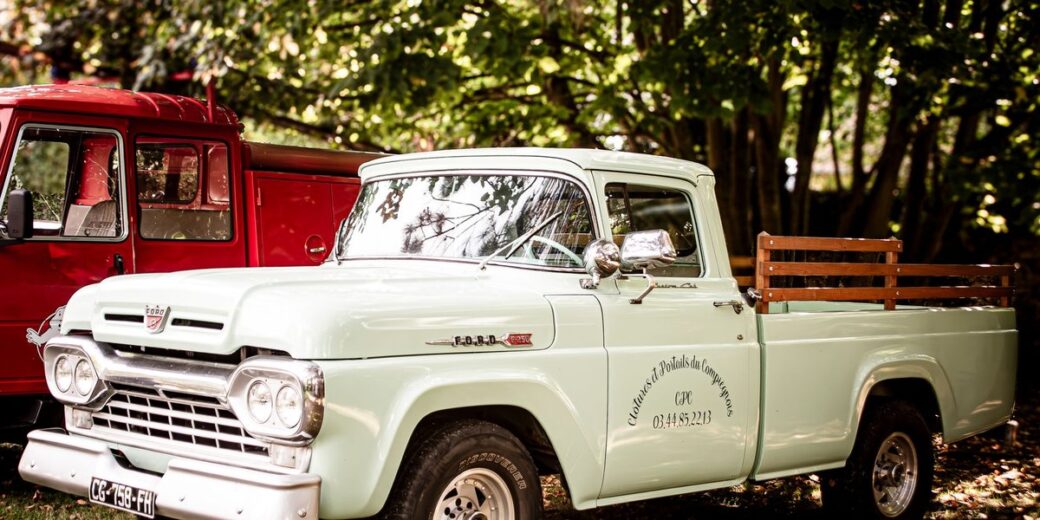
This is the one buyers searching “1984 Ford F-150 specs” actually care about, because 1984 wasn’t a trim shuffle — it was a genuine redesign. Ford reengineered the F-Series chassis and cab for improved ride quality, added a wider track, and offered the 4.9-liter inline-six, 5.0-liter V8, 5.8-liter V8, and the 6.9-liter International Harvester diesel V8 as engine options across the F-150 and F-250/F-350.
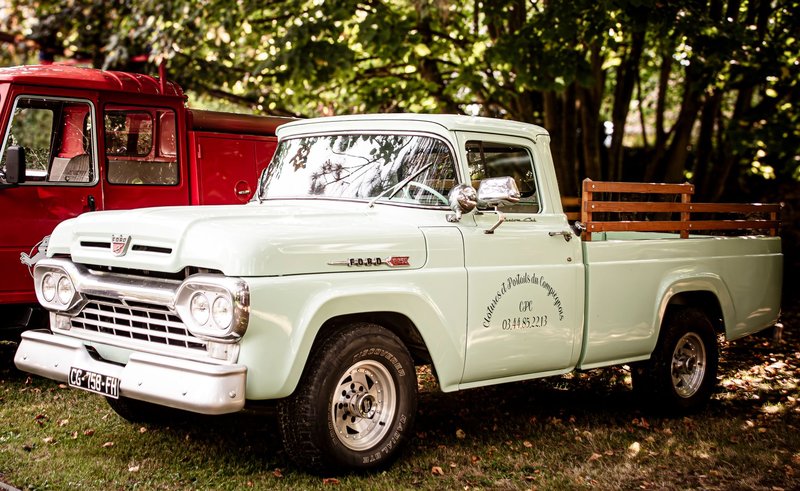
Trim levels ran from the base Custom up through XL, XLT Lariat, and the top Lariat trim with cloth captain’s chairs and more sound insulation than any F-150 before it. The 4×4 option got a genuine functional upgrade too, with better approach angles and a more usable transfer case. If you’re cross-shopping model years for a driver, not a garage queen, 1984 is a meaningfully better starting point than a ’79–’83 F-150.
1984 Ford Bronco
The Bronco carried into 1984 largely unchanged from its 1980 second-generation redesign — full-size, built on the F-150 platform, offered with the same 4.9-liter six, 5.0-liter, and 5.8-liter V8 options. What buyers are actually searching for under “1984 Ford Bronco for sale” tends to split into two camps: the XLT trim with the removable fiberglass hardtop, and stripped-down base Broncos bought as trail rigs rather than collector pieces.
Because the second-gen Bronco shares so much hardware with the F-150 of the same years, parts availability is better than you’d expect for a 40-year-old SUV — a real advantage over something like a Bronco II, which shares far less with mainstream Ford trucks.
1984 Ford Ranger
Ford’s compact pickup was only three years into production in 1984, competing directly against the Toyota pickup and Chevy S-10. The base engine was a 2.0-liter four, with a 2.3-liter four and 2.8-liter V6 available further up the range, plus a 4×4 option that made the Ranger a legitimate small trail truck rather than just a commuter hauler. It’s the least collected of the ’84 Fords covered here, which also makes it the cheapest entry point if you want something period-correct and actually drivable daily.
1984 Ford LTD
The mid-size LTD (badged LTD, not to be confused with the larger LTD Crown Victoria) rode on the Fox platform shared with the Mustang, offered as a sedan or wagon with a 3.8-liter V6 or 5.0-liter V8. It’s not a car anyone’s chasing for performance — it’s a comfortable, conventional family sedan from the era Ford was transitioning its full lineup toward more aerodynamic styling, a shape language that would define the Taurus a year later.
1984 Ford Escort and EXP
The Escort was Ford’s front-wheel-drive compact, sold as a hatchback and wagon with a 1.6-liter four, and by 1984 it had become one of the best-selling cars in America — practical, cheap to run, and unremarkable in the best way for a commuter car. The EXP was its sportier two-seat coupe sibling, sharing the Escort’s platform and drivetrain but wrapped in a distinct body aimed at buyers who wanted something that looked quicker than it was.
1984 Ford Econoline
The full-size Econoline van carried Ford’s commercial and conversion-van business, offered in E-150, E-250, and E-350 configurations with the same six-cylinder and V8 engine options as the F-Series trucks of the same year. These show up far less in enthusiast circles, but well-kept conversion vans from this era have a small, dedicated collector base of their own.
What to Inspect Before Buying
Every 1984 Ford on the market today is at minimum 40 years old, and the mechanical bones tend to hold up better than the parts nobody thinks about first.
- Rust in the usual spots. Rocker panels, rear wheel arches, and — on the trucks and Broncos — the cab corners and bed supports. Fox-body Mustangs are notorious for rust starting at the torque boxes near the rear frame rails; have someone check underneath, not just the visible body panels.
- The SVO’s turbo. A tired or previously-neglected turbo on the 2.3T is expensive to rebuild correctly, and a lot of these cars sat for years between owners. Ask for service records specific to the turbo and oil lines.
- F-Series and Bronco frame condition. The 1984 redesign is a genuine upgrade over prior years, but frame rust on trucks that lived through Rust Belt winters can undo that advantage fast.
- Interior parts availability. Mustang and F-150 trim parts are reasonably available through the classic Ford aftermarket; LTD, EXP, and Econoline interior trim is much harder to source, so cosmetic damage on those models is a bigger deal than it looks.
- Carburetor vs. early EFI issues. Depending on trim and engine, you may be dealing with a carbureted engine or Ford’s early fuel injection. Both are serviceable, but a shop unfamiliar with ’80s Ford EFI can turn a small issue into a expensive diagnostic chase.
What They’re Actually Selling For
Based on current listings, prices for 1984 Fords span a wide range depending on model and condition: driver-quality Rangers and Escorts can be found under $10,000, clean F-150s and Broncos typically land in the $15,000–$30,000 range depending on trim and originality, and well-documented Mustang GTs run higher still. SVOs and Thunderbird Turbo Coupes carry a real scarcity premium over their more common GT and standard Bird siblings — expect to pay accordingly for a good one. At the top end, exceptional low-mile survivors of any of these models can clear $40,000.
Those are asking prices, not guaranteed sale prices — classic car listings routinely sit for months before a seller adjusts. If you’re serious about buying, track a specific model on a site like Hagerty’s valuation tool to see where actual insured values land, not just what sellers hope to get.
Which 1984 Ford Is Worth Chasing
If you want a project that rewards the search, the Mustang SVO is the one worth being patient for — it’s the rarest, the most mechanically distinct, and the one that actually represents Ford trying something new that year, not just iterating. If you want something you can drive weekly without babying it, a well-kept F-150 or Bronco from this redesign year gives you the most usable classic for the money. Everything else on this list — the LTD, Escort, EXP, Econoline — is a fine daily-driver classic, but none of them carry the same “why 1984 specifically” story that the Mustang and the trucks do.

Tyler Bridges
More from Tyler BridgesHow we reviewed this article
This article was researched against manufacturer records and editorially reviewed before publishing. We accept no payment for coverage. Some guides contain affiliate links; see our affiliate disclosure.