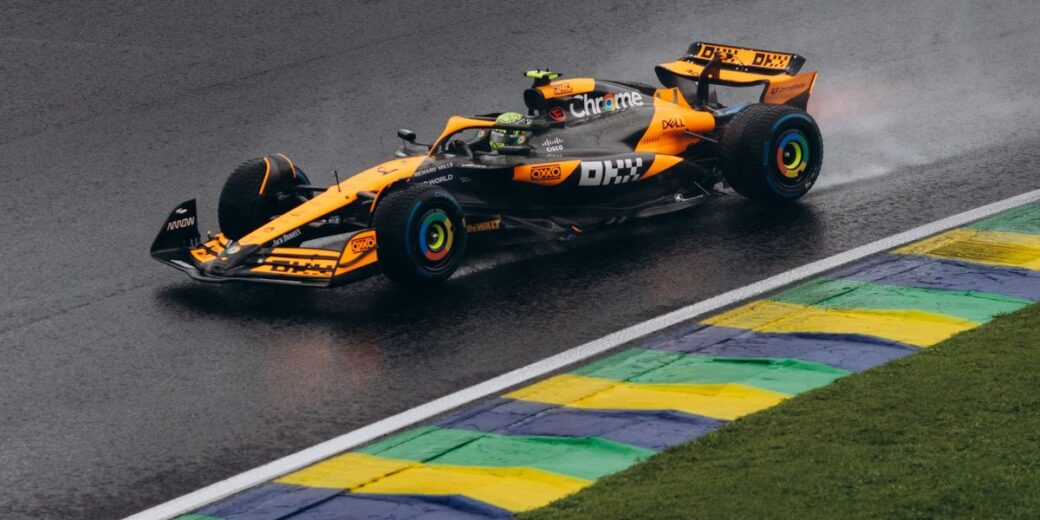
Search for “1988 McLaren car models” and you’re probably picturing a road car — a coupe, a roadster, something with a license plate. There wasn’t one. In 1988 McLaren didn’t sell cars to the public at all. The company that would later build the F1 hypercar was, back then, purely a Formula 1 constructor, and its entire 1988 catalog came down to a single machine: the McLaren-Honda MP4/4.
That’s not a letdown. The MP4/4 is arguably the most dominant car ever built in any form of motorsport. It won 15 of the 16 races it entered, led 97.3% of all racing laps that season, and put Ayrton Senna and Alain Prost in the same garage for the most famous teammate war in the sport’s history. So if you came here looking for a McLaren model from 1988, you came looking for this — whether you knew the name or not.
Table of Contents
- Did McLaren make a road car in 1988?
- The MP4/4 at a glance
- Why the MP4/4 dominated
- Senna vs. Prost: the season inside the season
- Collector’s corner: the best MP4/4 scale models
- The bottom line
Did McLaren make a road car in 1988?
No. This is the misconception worth clearing up first, because half the people searching this query are quietly wondering if they missed something.
McLaren Automotive — the division that builds road cars in Woking — didn’t exist in 1988. The first McLaren road car was the McLaren F1, and that didn’t arrive until 1992, with Gordon Murray’s central-driving-seat masterpiece reaching customers in 1993. In 1988, “McLaren” meant McLaren International, a Grand Prix team run out of a factory whose only product was a race car you couldn’t buy.
So when a parts catalog, a diecast listing, or a trivia question references a “1988 McLaren,” it’s pointing at the MP4/4. There is no 1988 McLaren convertible, no 1988 McLaren sports car, no production model of any kind. If you want production metal from the tail end of the decade, you have to look past McLaren entirely — a run through the cars that were actually made in 1989 shows what showrooms were turning out while Woking built nothing but race cars. One car, one purpose: winning the Formula 1 World Championship. It did that, twice over — drivers’ and constructors’ titles both.
The MP4/4 at a glance
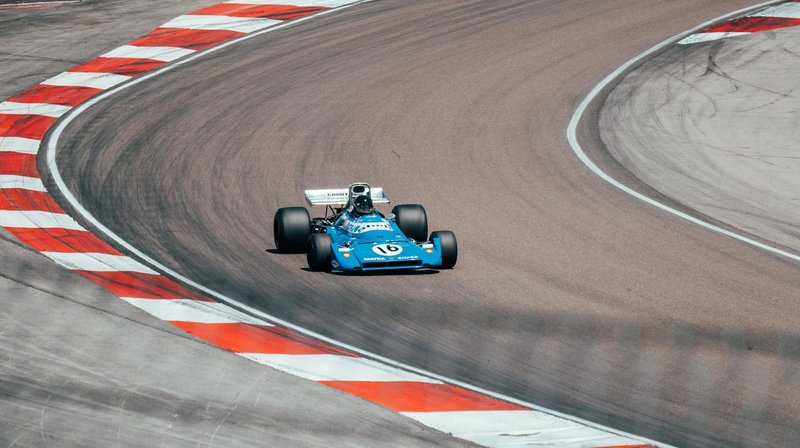
The MP4/4 was the last of the turbocharged McLarens, built for the final season before naturally aspirated engines took over. It’s one of the defining performance cars of the 1980s — though on the road, that decade belonged to the resurgent American muscle car. Here’s the hard data.
| Spec | Detail |
|---|---|
| Designation | McLaren MP4/4 |
| Engine | Honda RA168E, 1.5L V6 twin-turbo |
| Power | ~675 hp (race trim, 2.5-bar boost limit) |
| Top speed | ~207 mph (recorded at Hockenheim) |
| Chassis | Carbon-fiber composite monocoque |
| Drivers | Ayrton Senna (#12), Alain Prost (#11) |
| Designers | Steve Nichols, Gordon Murray |
| Races entered | 16 |
| Wins | 15 |
| Poles | 15 |
| Titles | Drivers’ (Senna) + Constructors’ |
The numbers that jump out aren’t the power figures — turbo F1 cars of the mid-80s made far more than 675 hp in qualifying trim before the rules clamped down. What’s staggering is the consistency. Fifteen poles from sixteen races. A single loss all year, and that one came down to a backmarker collision at Monza, not a failure of the car.
Why the MP4/4 dominated
Two things came together in 1988, and neither alone would have been enough.
The aero package. Gordon Murray, fresh from Brabham, brought a philosophy of sitting the driver almost flat on their back to lower the car’s frontal area. The MP4/4 sat dramatically lower than its rivals — the driver reclined at an angle that looked uncomfortable and was, but it shrank the car’s profile and cleaned up the airflow. Steve Nichols led the design; the result was a car that was both slippery and planted.
The Honda engine, under new rules. For 1988 the FIA cut turbo boost to 2.5 bar and capped fuel at 150 liters, a deliberate squeeze meant to push teams toward the new 3.5L atmospheric formula. Most turbo engines hated the restriction. Honda’s RA168E was engineered specifically around it — efficient enough to run the full race distance on the fuel allowance while still making competitive power. Where rivals had to lift and coast to make the finish, the McLarens could push.
Put a class-leading chassis under the only engine that thrived under the new fuel rules, then hand it to the two best drivers on the grid. That’s the formula. The McLaren-Honda partnership turned a regulation designed to slow turbos down into a season-long demolition.
It nearly was perfect. The team chased a clean sweep right up to Monza, round 12, where Senna — leading and lapping traffic — collided with Jean-Louis Schlesser’s Williams two laps from the end. Ferrari took a 1-2 in front of the home crowd, weeks after Enzo Ferrari’s death. It was the only race all year a McLaren didn’t win, and it’s part of why the 15-from-16 record still gets quoted three decades later.
Senna vs. Prost: the season inside the season
The MP4/4’s win count gets the headlines, but the story people actually remember is the one between the two cockpits.
Senna and Prost won every race except Monza between them. The championship was decided not against the rest of the grid — there barely was a contest there — but against each other. The points system at the time counted only a driver’s best 11 results, which is how Senna took the title despite Prost scoring more total points across the season. Senna won eight races to Prost’s seven; under the dropped-scores rule, Senna’s eight wins outweighed Prost’s superior consistency.
That asymmetry lit the fuse. The respect curdled into one of sport’s great rivalries over the next two seasons, ending in the infamous collisions at Suzuka in 1989 and 1990. But 1988 was the season they were teammates in the same all-conquering car, and the only thing that could beat a McLaren-Honda that year was the other McLaren-Honda.
For the F1 history obsessive, that’s the real draw of the MP4/4: it’s the car where the sport’s fiercest rivalry was born inside a single garage, with identical machinery removing every excuse.
Collector’s corner: the best MP4/4 scale models
A lot of people searching “1988 McLaren models” aren’t historians — they’re collectors hunting a diecast or scale replica. The MP4/4 is one of the most reproduced F1 cars ever, so here’s how to think about the options.
1:18 diecast (the display centerpiece). This is the scale to buy if you want one statement piece on a shelf. Minichamps has produced both the Senna #12 and Prost #11 cars in 1:18, and these are the benchmark for accuracy and detail at a sane price. Look for the Senna car if you want the title-winning machine specifically. Used examples turn up regularly on eBay; sealed originals command a premium because Senna memorabilia holds value.
1:43 diecast (the shelf-friendly option). If you’re building a collection rather than buying a single hero car, 1:43 is the practical scale — smaller footprint, lower cost, and the same livery options. Minichamps again dominates here, and you’ll find both driver liveries.
Premium / built-to-order. At the top end, Amalgam Collection produces large-scale, hand-built replicas with a level of fidelity that matches their four-figure price. This is the tier for serious collectors who want every sensor and rivet reproduced.
Free and digital. If you just want to study the shape, Sketchfab hosts 3D models of the MP4/4 you can rotate in a browser — useful before committing to a physical replica, or for anyone who wants the car without the shelf space.
Buying tip: the Senna #12 car is more sought-after than the Prost #11, so it costs more and sells faster on the secondary market. If you only buy one, that’s the one that holds its value — and it’s the title winner, which makes it the historically correct choice too.
The bottom line
There were no 1988 McLaren road cars. There was one 1988 McLaren, and it happens to be a serious candidate for the greatest race car ever built. The MP4/4 won everything but a single race, gave Ayrton Senna his first championship, and launched the rivalry that defined Formula 1 for the next three years.
If you came here for a model to put on a shelf, start with the Minichamps Senna #12 in 1:18. If you came here for the history, you now have the real answer to a question that sends most people down the wrong road entirely: McLaren’s 1988 lineup wasn’t a lineup. It was a knockout.

Marco Delantero
More from Marco DelanteroHow we reviewed this article
This article was researched against manufacturer records and editorially reviewed before publishing. We accept no payment for coverage.