Table of Contents
- Why 1986 Was a Pivotal Year for Ford
- 1986 Ford Mustang
- 1986 Ford Taurus
- 1986 Ford Thunderbird
- 1986 Ford F-150
- 1986 Ford Bronco
- 1986 Ford Ranger
- 1986 Ford Aerostar
- 1986 Ford Escort
- 1986 Ford LTD Crown Victoria
- Lineup-Wide Changes for 1986
- Collector Summary
Why 1986 Was a Pivotal Year for Ford {#why-1986}
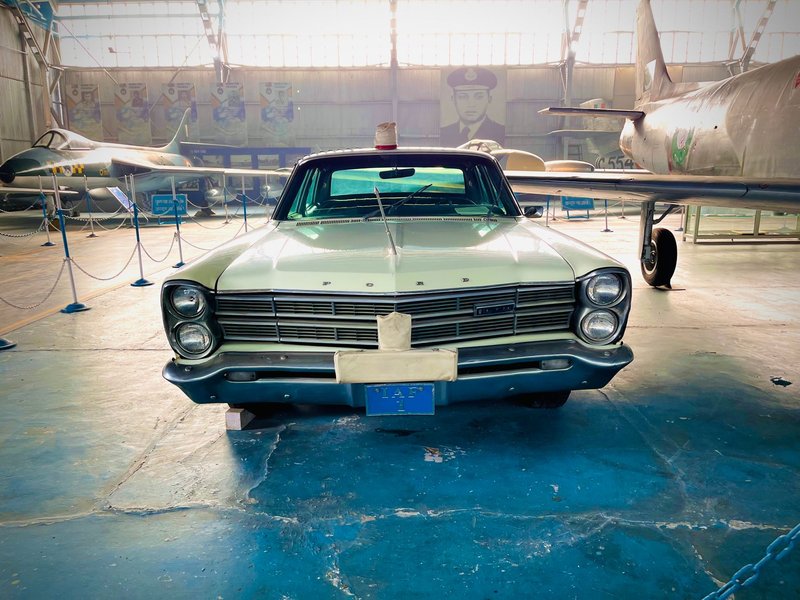
Ford entered 1986 on a high. The company had just posted its first profitable year after a brutal early-decade slump, and the 1986 lineup showed a company betting big on aerodynamic design and mainstream appeal. Two cars — the Taurus and the Aerostar — were in their debut or early production years, and together they redefined what American buyers expected from a family sedan and a family hauler respectively.
The whole lineup also absorbed two federally mandated changes that year: a center high-mounted stop lamp (CHMSL) became required on all new passenger cars, and Ford unified its ignition and door lock keys across most models, a quality-of-life improvement that sounds minor until you’ve fumbled through four keys at a dark parking lot. These weren’t headline features, but they signal the kind of refinement Ford was pushing at every level of the range.
Here’s every significant model from the 1986 Ford cars lineup — what it was, what it had under the hood, and whether it’s worth hunting down today.
1986 Ford Mustang {#ford-mustang}
The 1986 Mustang sits in an interesting spot historically. It’s the last year before Ford introduced the sequential multiport fuel injection on the 5.0 HO V8 — that update came for 1987 — so the ’86 runs the older speed-density EFI system. That’s not a knock. The 5.0 HO still produced 200 horsepower and 285 lb-ft of torque in GT trim, which was genuinely quick for mid-1980s America. It’s one of the standout performers among the best 80s muscle cars from that era.
Available configurations:
- LX (four-cylinder 2.3L or 5.0L V8)
- GT (5.0L V8 only, with the full aero body kit)
- SVO (turbocharged 2.3L, 200 hp — final model year)
The SVO is the sleeper of the 1986 Mustang range. It shares the GT’s horsepower number but gets there differently: a turbocharged four-cylinder with a Garrett T3 turbo, four-wheel disc brakes, and a Koni suspension that makes the GT’s live rear axle feel agricultural by comparison. Ford killed the SVO after 1986, making the last-year cars instantly notable to collectors. Production was just 3,382 units.
Collector value today: Clean 1986 Mustang GTs move in the $10,000–$20,000 range depending on mileage and condition. SVOs command a premium — expect $20,000–$35,000 for a well-maintained example. The convertible GT is the most visually desirable body style and prices accordingly.
1986 Ford Taurus {#ford-taurus}
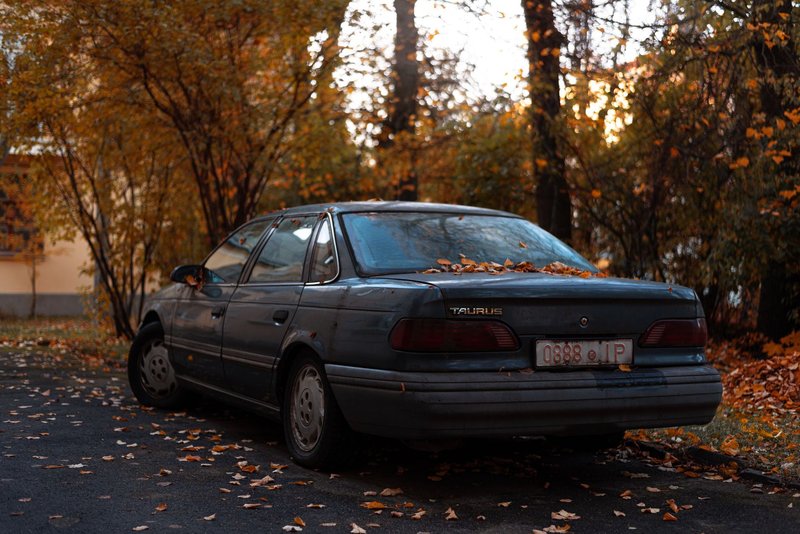
The Taurus was the car Ford needed it to be. Launched in December 1985 as a 1986 model, it replaced the boxy, rear-wheel-drive LTD as Ford’s mainstream family sedan — and it looked like nothing else Detroit was selling. The jellybean shape, flush glass, and integrated bumpers were a clean break from the rectilinear American norm. If you’re tracing the lineage of classic American sedans, the first-generation Taurus marks one of the sharpest turning points in the segment.
Underneath, the Taurus ran front-wheel drive — another departure from Ford tradition — on a platform it shared with the Mercury Sable. Engineers developed it in parallel with the Sable under a project budget that Ford later described as the largest single investment in its history at the time.
Specs:
- Base engine: 2.5L four-cylinder, 88 hp
- Optional: 3.0L Vulcan V6, 140 hp
- Transmissions: three-speed automatic (four-cyl), four-speed automatic (V6)
- Trims: L, MT5 (manual V6 — rare), GL, LX
The MT5 manual-transmission Taurus is a genuine oddity. Ford offered a five-speed manual with the 3.0L V6 in 1986, making a front-wheel-drive family sedan with a stick shift. Almost nobody bought one. Finding an MT5 today is a legitimate collector coup.
Collector value today: Most base and GL Tauruses are too common and too practical to have collector value. The MT5 trim is the exception — documented examples are extremely rare, and the novelty factor drives genuine enthusiasm among Ford historians.
1986 Ford Thunderbird {#ford-thunderbird}
The Thunderbird had gone through a dramatic downsizing two model years earlier — the 1983 T-Bird abandoned the big, boat-like platform for a tighter, aerodynamic coupe that shared architecture with the Cougar. By 1986, the formula was settled. The lineup offered three distinct versions that covered a wide spread of priorities.
Available versions:
- Base: 3.8L V6, 120 hp
- Elan: premium interior, same powertrain as base
- Turbo Coupe: turbocharged 2.3L four-cylinder, 145 hp, five-speed manual, four-wheel disc brakes
The Turbo Coupe is the one that matters to enthusiasts. Ford equipped it with Traction-Lok limited-slip, an adjustable Hurst shifter, and a suspension tuned for actual driving rather than boulevard comfort. Motor Trend named the Thunderbird its Car of the Year for 1987, though the generation was already well-established by then.
Collector value today: Turbo Coupes in good shape fetch $8,000–$18,000. Base and Elan models are significantly less desirable and are typically worth $3,000–$7,000. Rust is the primary enemy — the unibody platform is particularly vulnerable at the rear quarters.
1986 Ford F-150 {#ford-f-150}
The Seventh Generation F-Series was into its fourth year by 1986, and Ford wasn’t changing what was already the best-selling truck in America. Updates were incremental: revised trim levels, some interior refinements, and continued refinement of the Twin Traction Beam independent front suspension that Ford had introduced two years earlier.
Engine options:
- 4.9L inline-six (carbureted), 150 hp — the workhorse choice
- 5.0L V8, 185 hp
- 5.8L V8, 210 hp
- 6.9L diesel V8 (IDI diesel, 170 hp — less common)
- 7.5L V8, 245 hp (available in heavy-duty configurations)
The 4.9L I-6 deserves its reputation. It’s nearly indestructible with basic maintenance, redlines at a modest 4,400 RPM, and runs at a fuel economy that the V8s couldn’t match. Many examples have crossed 300,000 miles with original engines. For a classic daily driver or light work truck, it remains the sensible choice.
Collector value today: Clean 1986 F-150s with original engines are in steady demand. Regular cab short-bed configurations — especially with the 5.0 or 5.8 V8 — go for $10,000–$22,000 in solid, original condition. The market for clean OBS (Old Body Style) Fords continues to climb.
1986 Ford Bronco {#ford-bronco}
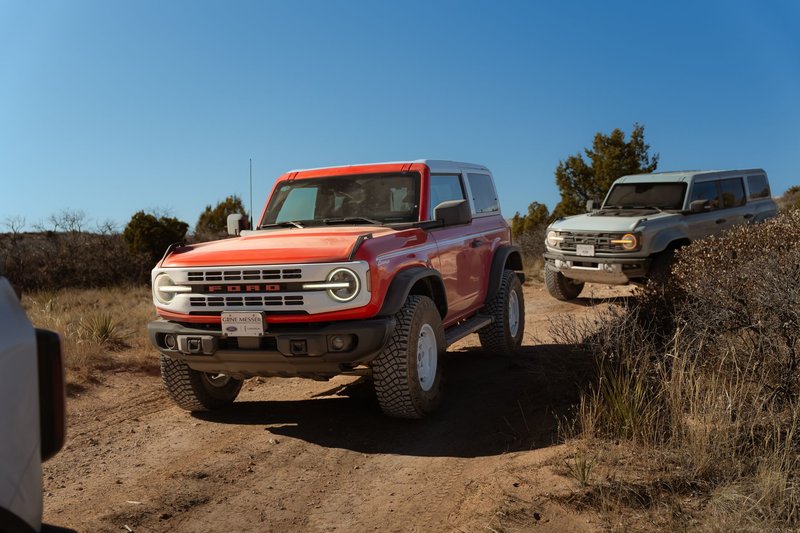
The full-size Bronco shared its platform with the F-150 and used the same engine lineup, which kept it mechanically straightforward and easy to source parts for. The 1986 model was in the middle of its fourth generation (1980–1986), with the fifth generation arriving for 1987 as a significantly updated truck.
That makes the 1986 Bronco the last of a generation — specifically, the last year before Ford restyled the front end and added the 4.9L fuel-injected EFI engine. The ’86 still ran carbureted or throttle-body-injected V8s depending on spec.
Standard equipment included the Command-Trac part-time four-wheel drive system, which is reliable but not designed for extended 4WD use on dry pavement. Models with the optional Dana 44 front axle are more durable in serious off-road use.
Collector value today: Clean 1986 Broncos run $15,000–$35,000 for well-maintained examples. Highly restored or custom builds go higher. The Bronco market has been hot since Ford revived the nameplate in 2021, driving prices up across all generations including the first-gen (1966–1977) and these later full-size trucks.
1986 Ford Ranger {#ford-ranger}
The compact Ranger was three years into production in 1986, still establishing itself in a segment it would eventually dominate. Power came from a choice of three engines — a 2.0L four-cylinder base engine, a 2.3L four-cylinder, or the Cologne 2.8L V6 — with either rear-wheel drive or four-wheel drive available.
The XLT trim was the volume seller, but the STX package (Sport Truck Xtra) gave the Ranger a more aggressive appearance with two-tone paint and sport wheels. Four-wheel-drive Rangers with the optional locking hubs and skid plates are the ones collectors want.
Collector value today: Clean ’86 Rangers command modest but growing prices — $7,000–$14,000 for solid 4WD examples. The compact pickup market has followed the full-size trend upward, particularly for first-generation Rangers from 1983–1992.
1986 Ford Aerostar {#ford-aerostar}
Ford’s entry into the minivan market arrived for 1986, two years after Chrysler invented the modern minivan with the Caravan and Voyager. The Aerostar was Ford’s answer, and it took a different approach: body-on-frame construction (versus Chrysler’s unibody), rear-wheel drive, and an available all-wheel drive system.
Engine choices were a 2.3L four-cylinder or a 2.8L Cologne V6, with Ford adding the stronger 3.0L Vulcan V6 in later years. The AWD system, shared with the Explorer, was a genuine differentiator — Chrysler’s front-wheel-drive Caravan had no AWD option until much later.
The Aerostar was never quite as polished as the Caravan, and its sales showed it. But the AWD variants have developed a cult following among people who need all-season utility from a vehicle that costs almost nothing to buy.
Collector value today: Low. Rust, mechanical wear, and the general unlovability of minivans keep prices at the basement level — most examples sell for $2,000–$6,000. AWD models are slightly more sought-after.
1986 Ford Escort {#ford-escort}
The Escort was Ford’s high-volume economy car, a front-wheel-drive subcompact offered in two-door hatchback, four-door hatchback, and station wagon body styles. The 1986 version ran a 1.9L four-cylinder producing 86 horsepower — modest even by 1980s standards — but the Escort’s appeal was straightforward: reliable, affordable, and fuel-efficient.
The GT trim added a more aggressive body kit and sport suspension, making it marginally more entertaining than the standard hatch without actually being fast. Ford also offered the EXP — a sporty two-seat coupe based on the Escort platform — though it was a separate model by 1986.
Collector value today: Near zero for most examples. Original-condition Escort GTs have a small following, but “collector value” overstates it. Survivorship is the bigger issue — most have been scrapped.
1986 Ford LTD Crown Victoria {#ford-ltd-crown-victoria}
The LTD Crown Victoria was Ford’s last rear-wheel-drive full-size sedan, a direct descendant of the Panther platform that underpinned thirty years of Ford sedans. By 1986, it was sharing the civilian market with its more aero-forward competition, but it had a loyal following: fleet operators, law enforcement, and buyers who wanted a large, comfortable car that they understood.
Power came from a 5.0L V8 producing 150 horsepower — not performance numbers, but the Panther platform’s strength was ride quality and durability, not stopwatch times. The four-door sedan and four-door station wagon were the available body styles; Ford had discontinued the two-door by this point.
Collector value today: Clean LTD Crown Victorias from 1986 are genuinely undervalued. They’re not flashy, but original examples with low miles sell for $8,000–$15,000 and the prices have been rising as Panther-platform fans age into collector buying territory.
Lineup-Wide Changes for 1986 {#lineup-wide-changes}
Two federal regulations shaped every 1986 passenger car Ford built:
Center high-mounted stop lamp (CHMSL): Required on all new cars starting with the 1986 model year. Ford integrated it differently across the lineup — flush-mounted on the aerodynamic Taurus, bracket-mounted on older platforms like the Crown Victoria. The first year of a regulatory requirement is often the least elegant implementation, and you can spot the 1986 stop lamps as afterthoughts on some models.
Unified key systems: Ford moved most models to a single key for ignition and doors. This is mundane today, but in 1986 it was a customer-experience improvement that Ford quietly promoted as a quality signal.
Collector Summary {#collector-summary}
Not all 1986 Fords are equal from a collector standpoint. Here’s a quick read on where each model lands:
| Model | Collectibility | Sweet Spot |
|---|---|---|
| Mustang GT | High | Convertible, original drivetrain |
| Mustang SVO | Very high | Final year, rare production |
| Taurus MT5 | Niche high | Extremely rare, documented examples |
| Thunderbird Turbo Coupe | Moderate-high | Original turbo, rust-free body |
| F-150 | High | Regular cab, short bed, V8 |
| Bronco | High | Any clean example, AWD preferred |
| Ranger 4WD | Moderate | First-gen, XLT or higher |
| Aerostar AWD | Low-niche | Function over form |
| Escort GT | Very low | Survival, not value |
| LTD Crown Victoria | Moderate | Low-mile originals |
The 1986 Ford lineup is a snapshot of a company in transition — one foot in the aerodynamic future that the Taurus represented, the other still planted in the body-on-frame, carbureted American tradition that had paid the bills for decades. For collectors, that duality is exactly what makes the year interesting. The iconic models (Mustang, F-150, Bronco) have established markets with real price floors. The overlooked ones — the Taurus MT5, the final SVO, a clean Crown Victoria wagon — are where you can still find something most people missed.

Tyler Bridges
More from Tyler BridgesHow we reviewed this article
This article was researched against manufacturer records and editorially reviewed before publishing. We accept no payment for coverage.