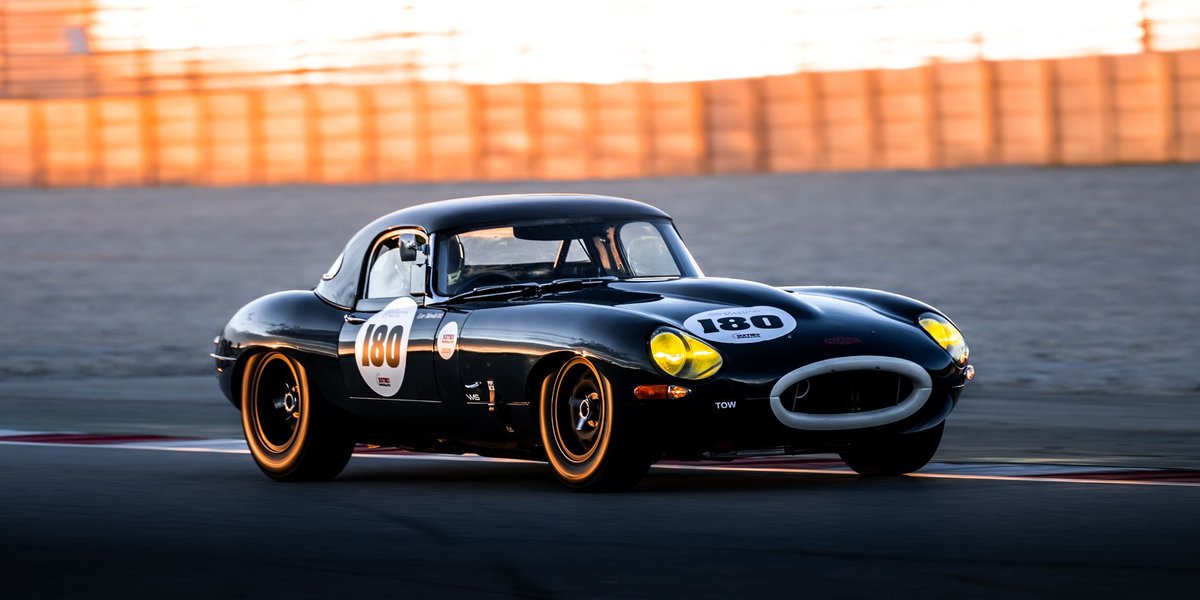
The 1940s is the strangest decade in sports car history. For the first half, almost nothing happened. Factories that should have been building roadsters were building tanks, fighter engines, and trucks, and the few cars that rolled out were leftovers from 1939 with the chrome quietly removed to save metal.
Then 1946 hit, and the dam broke.
Returning GIs had spent two years in England and Italy driving around in tiny MGs and Alfas, and they wanted that feeling back home. European factories, half-bombed and desperate for export dollars, started building the cars that would define everything that came after. The Jaguar XK120. The Porsche 356. The first Ferrari to wear the prancing horse. All of it landed in a four-year window at the end of a decade that started with rationing.
So this list splits the way the decade actually split: the wartime holdouts of 1940–45, then the postwar boom of 1946–49 that mattered far more. Fifteen cars, each with the real specs, the production numbers, and where it sits today.
Table of Contents
- What Counts as a 1940s Sports Car?
- The Wartime Pause: 1940–1945
- The Postwar Boom: 1946–1949
- The American Attempts (Before the Corvette)
- Spec & Value Comparison Table
- FAQ
What Counts as a 1940s Sports Car?
Quick definition before the list, because the genre gets muddy in this era. A sports car here means a lightweight two-seater built for driving rather than hauling — open or closed, but tuned for handling and speed over comfort or cargo. That rules out the big American luxury convertibles of the period, which were boulevard cruisers with V8s, not roadsters you’d take to a hillclimb.
It also means a lot of these cars are tiny by modern standards. An MG TC weighs less than a modern motorcycle-and-rider combination once you add fuel. The 1940s sports car was about agility, not muscle. The muscle came two decades later.
The Wartime Pause: 1940–1945
Most of the “sports cars” from these years are technically 1939 designs that limped into the new decade before production stopped entirely. They count because they were sold and driven in the 1940s, and because they bridge the gap to what came after.
1. BMW 328 (1936–1940)
The car everyone copied. The 328 ran a 2.0-liter inline-six making about 80 horsepower, with a clever cross-pushrod hemispherical head that let it breathe like a much bigger engine. A 328 won the 1940 Mille Miglia outright at an average of nearly 104 mph. Roughly 464 were built before the war shut the line down, and its DNA shows up directly in the postwar Bristol 400 and even early Jaguar thinking. If you want to understand 1940s sports cars, you start here.
2. Alfa Romeo 6C 2500 (1939–1945, then revived)
Alfa kept a trickle of 6C 2500s moving through the early war years for officials and the well-connected. The 2.5-liter twin-cam six and the Touring-bodied “Super Sport” coupes were genuinely exotic — independent suspension all around at a time when most cars still rode on cart springs. Production was minimal during the war, but the model carried straight through into the postwar period, making it one of the few real threads of continuity across the decade — and one of the more remarkable entries in Alfa Romeo’s long back catalog of older models.
3. Jaguar (SS) 100 (1936–1940)
The last hurrah of the prewar SS Jaguar line. The 3.5-liter version of the SS 100 could just about touch 100 mph, which is exactly what the name promised and very few cars of the era delivered. Only around 314 were built across both engine sizes, and the long-hood, cut-down-door silhouette is one of the most copied shapes in classic car styling. Production ended in 1940 when Jaguar pivoted entirely to the war effort.
4. MG TB / TC (1939–1940, then 1945)
The MG T-series straddles the war perfectly. The TB arrived in 1939 in tiny numbers before production halted, then MG restarted with the nearly-identical TC the moment peace returned in 1945. Same upright stance, same 1,250cc four making about 54 horsepower, same skinny wire wheels. It’s slow on paper — but the TC is arguably the single most important car on this list, and I’ll explain why in the postwar section.
The Postwar Boom: 1946–1949
This is where the decade earns its place in history. Four years, and most of the foundational sports car marques either launched or relaunched.
5. MG TC (1945–1949)
Same car as above, but it belongs here too because the TC is what actually started American sports car culture. GIs brought them home, Californians started racing them, and a generation of enthusiasts learned what a tossable lightweight felt like. About 10,000 TCs were built — huge for the era — and a healthy share crossed the Atlantic. The TC didn’t win on speed. It won by being the first affordable, fun, foreign roadster a regular American could buy and thrash. It was one of the standout machines to come out of the best cars of 1945, and every SCCA club race in the early 1950s was lousy with them.
6. Jaguar XK120 (1948)
The headline act. Jaguar showed the XK120 at the 1948 London Motor Show essentially as a styling exercise to debut its new twin-cam XK engine, and the reaction was so strong they had to put it into real production. The “120” meant 120 mph — and in 1949 a near-stock car was timed at 132.6 mph on a closed Belgian highway, making it the fastest production car in the world at the time. A 3.4-liter twin-cam six, gorgeous Malcolm Sayer-influenced bodywork, and a price that undercut everything near its performance. Around 12,000 were eventually built across all body styles.
7. Porsche 356 (1948)
The first car to wear the Porsche name. The original hand-built 356/1 roadster used a mid-mounted VW-derived flat-four making a modest 35 horsepower — but it weighed almost nothing, so it handled and went far better than the numbers suggest. Ferdinand “Ferry” Porsche built it because no one was making the car he wanted, so he made it himself. Early Gmünd-built aluminum cars number only in the dozens, which is why they’re now eight-figure museum pieces. The 356 launched a bloodline that ran for decades.
8. Ferrari 166 MM (1948)
The car that put Ferrari on the map. The 166 MM — “MM” for the Mille Miglia it was built to win — used a 2.0-liter Colombo V12 making around 140 horsepower, an astonishing output from such a small engine. The Touring “Barchetta” body, with its low slabs and cutaway sides, basically invented the modern roadster silhouette. A 166 won the 1949 Le Mans and the 1949 Mille Miglia. Fewer than 40 were built. This is where Ferrari stopped being a name on a workshop and became Ferrari.
9. Cisitalia 202 (1947)
The prettiest car nobody’s heard of. Built on humble Fiat mechanicals — a 1.1-liter four making barely 60 horsepower — the Cisitalia 202’s Pinin Farina coupe body was so influential that the Museum of Modern Art put one in its permanent collection as “rolling sculpture.” It’s the only car MoMA has ever acquired primarily as an aesthetic object. Slow, expensive, and almost commercially fatal for its maker, but it redefined what a car could look like. Around 170 were built.
10. Healey Silverstone (1949)
Donald Healey’s lightweight before the Austin-Healey deal. The Silverstone wrapped a 2.4-liter Riley four in a stripped, cycle-fendered aluminum body with the headlights tucked behind the grille and the spare wheel doubling as a rear bumper. Around 105 horsepower in a featherweight chassis made it a genuine giant-killer in club racing. Only 105 were built, and it’s the clearest link between the British trials-special tradition and the sports cars that followed — the same lightweight thinking that would shape outfits like the era’s first Lotus models just a few years later.
11. Bristol 400 (1947)
The BMW 328 reborn in England. When the war ended, Bristol acquired BMW’s 328 engine designs as war reparations and built the 400 around them — that same brilliant 2.0-liter six with the cross-pushrod head. It was a grand tourer more than a stripped racer, built to aircraft-industry tolerances (Bristol made planes), and it gave Britain a fast, civilized, beautifully engineered coupe at a time when most of the country was still on rationing.
The American Attempts (Before the Corvette)
Here’s the framing most lists skip entirely. America didn’t have a real sports car industry in the 1940s — Detroit built sedans and luxury convertibles. But a handful of stubborn individuals tried to build proper sports cars years before the Corvette arrived in 1953. Most failed commercially. All of them are fascinating.
12. Kurtis Sport Car (1949)
Frank Kurtis built Indy 500 winners, then decided to build a road car. The Kurtis Sport Car used a tube-frame chassis and slab-sided aluminum body that looked like nothing else on an American road in 1949. Buyers could spec their own engine, typically a hopped-up Ford or Cadillac V8. Only about 36 were built before Kurtis sold the design to Earl “Madman” Muntz, who turned it into the Muntz Jet. It’s the closest America got to a homegrown sports car in the decade.
13. Cunningham (1940 prototype era)
Briggs Cunningham was a wealthy sportsman determined to win Le Mans with an American car. His late-1940s efforts — starting with the Cadillac-powered specials that led to his early-1950s C-series racers — represent the first serious American assault on European sports car racing. The cars were big, V8-powered, and aimed squarely at Ferrari and Jaguar on their home turf. He never quite won outright, but he proved an American could show up and run at the front.
14. Allard J2 (1949)
Technically British, but its whole reason for existing was American V8 power, so it bridges both worlds. Sydney Allard built a brutally simple lightweight chassis and shipped many of them to the US without engines, expecting buyers to drop in a big Cadillac or Chrysler V8. The result was a wildly fast, somewhat terrifying machine that dominated American club racing around 1950. An Allard finished third at Le Mans in 1950. It’s the original “small car, huge American engine” recipe that the Cobra would perfect a decade later.
15. Crosley Hotshot (1949)
The opposite end of the spectrum, and proof America could think small. The Crosley Hotshot was a genuine American sports car — tiny, cheap, and powered by a 724cc overhead-cam four making about 26 horsepower. Doorless, weird-looking, and barely faster than a determined cyclist downhill, it nonetheless won the Index of Performance at the first Sebring race in 1950. It’s the cult underdog of the decade: the little American roadster that actually beat the Europeans on efficiency.
Spec & Value Comparison Table
A quick side-by-side of the headline numbers. Top speeds are period figures; values are rough current collector-market estimates for cars in good, usable condition and swing wildly with provenance and originality.
| Car | Year | Engine | Top Speed | Approx. Production | Est. Value Today |
|---|---|---|---|---|---|
| BMW 328 | 1936–40 | 2.0L I6 | ~93 mph | ~464 | $800k–$1.5M+ |
| Alfa Romeo 6C 2500 | 1939–45 | 2.5L I6 | ~95 mph | low hundreds | $400k–$1M+ |
| Jaguar SS 100 | 1936–40 | 3.5L I6 | ~101 mph | ~314 | $300k–$600k |
| MG TC | 1945–49 | 1.25L I4 | ~78 mph | ~10,000 | $30k–$55k |
| Jaguar XK120 | 1948–54 | 3.4L I6 | 120+ mph | ~12,000 | $90k–$180k |
| Porsche 356 (early) | 1948 | 1.1L flat-4 | ~84 mph | dozens (Gmünd) | $1M–$10M+ |
| Ferrari 166 MM | 1948 | 2.0L V12 | ~135 mph | <40 | $7M–$30M+ |
| Cisitalia 202 | 1947 | 1.1L I4 | ~96 mph | ~170 | $250k–$500k |
| Healey Silverstone | 1949 | 2.4L I4 | ~107 mph | ~105 | $150k–$300k |
| Bristol 400 | 1947 | 2.0L I6 | ~94 mph | ~700 | $90k–$160k |
| Kurtis Sport Car | 1949 | Ford/Cad V8 | ~100+ mph | ~36 | $150k–$300k |
| Allard J2 | 1949 | US V8 | 110+ mph | ~90 (J2) | $300k–$700k |
| Crosley Hotshot | 1949 | 724cc I4 | ~77 mph | ~2,500 | $15k–$35k |
FAQ
What was the first true sports car of the 1940s? If you mean a clean-sheet postwar design, the credit usually goes to the 1948 batch — the Porsche 356, the Jaguar XK120 prototype, and the Ferrari 166 MM all arrived that year. If you count cars actually sold and driven through the decade, the BMW 328 and the prewar Jaguar SS 100 came first.
Why were so few sports cars built in the early 1940s? World War II. From roughly 1942 onward, nearly every car factory in Britain, Europe, and the US converted to military production — aircraft engines, trucks, tanks, and munitions. Civilian car production largely stopped until 1945–46, which is why the decade’s sports car story is really a four-year postwar story.
Were there any American sports cars in the 1940s? A few, all from small builders rather than Detroit. The Kurtis Sport Car (1949) and Crosley Hotshot (1949) were genuine American attempts, and the Allard J2 was a British chassis built specifically around American V8s for the US market. Mass-market American sports cars didn’t arrive until the Chevrolet Corvette in 1953.
Which 1940s sports car is the best investment? The blue-chip names — early Porsche 356s, the Ferrari 166 MM, the BMW 328 — have climbed into seven and eight figures and rarely come up for sale. For a buyer who actually wants to drive one, the MG TC and the Jaguar XK120 offer the most history per dollar, with parts support and active owners’ clubs that make ownership realistic rather than a museum project.
Why does the MG TC matter so much if it’s slow? Because it started a culture, not a speed record. American servicemen brought TCs home after the war, raced them, and effectively invented club-level sports car racing in the US. The TC taught a generation what a light, balanced roadster felt like — and that demand is exactly what made the imported sports car boom of the 1950s possible.
Marco Delantero
More from Marco DelanteroHow we reviewed this article
This article was researched against manufacturer records and editorially reviewed before publishing. We accept no payment for coverage.